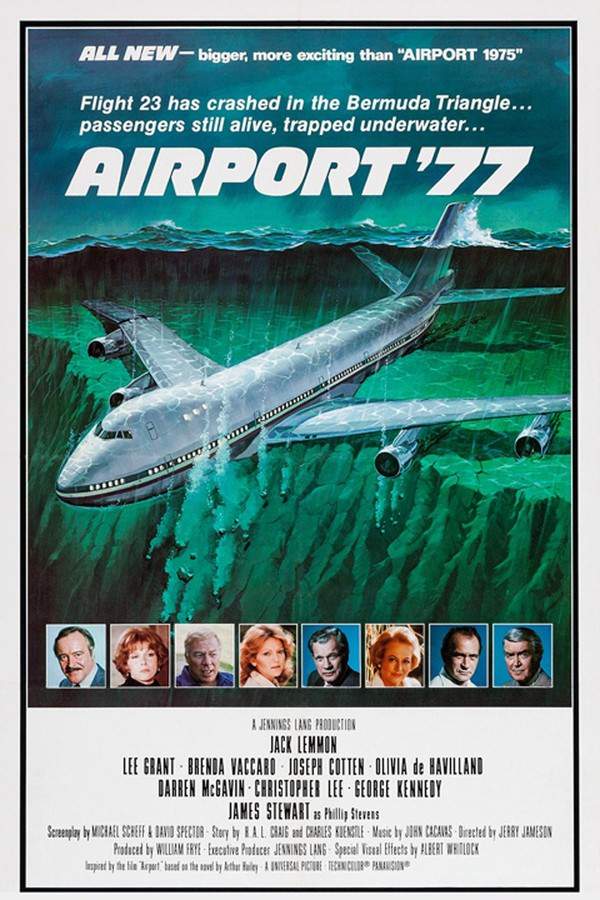
In the waning days of World War II, a Royal Air Force fighter squadron suffers a tragic toll when a command decision by their leader, a Canadian pilot named Ted Stryker, leads to the deaths of six crew members. The weight of that moment settles on Stryker as a crushing sense of guilt and self-doubt erode his confidence and drive, leaving him unable to climb back into the cockpit. Years pass, and life in civilian Winnipeg becomes a quiet struggle: Stryker takes on a string of odd jobs, his marriage falters, and the shadow of the past clings to him like a steady fog.
Then comes a crisis that pulls him back toward action. He receives a note at home—his wife Ellen has left with their young son Joey, traveling to Vancouver, taking with her a stubborn resolve to flee a life she no longer respects. Desperate for one last chance, Stryker races to Winnipeg Airport to catch Cross-Canada Air Lines Flight 714, a long journey east to west aboard a Douglas DC-4. Ellen’s refusal is clear, and yet in that moment a glimmer of hope flickers as he pleads for a chance to make things right.
The flight unfolds with unsettling tension. In the cabin, the stewardess offers meals—meat or fish—and the meal service becomes a strange prelude to danger when several passengers and the co-pilot fall ill. A doctor aboard confirms that the fish is to blame, and the aircraft’s pilot grows dangerously weak. With the captain incapacitated, the plane’s autopilot becomes the only steady thread keeping the aircraft aloft. The stewardess recognizes that Stryker is the lone passenger with actual flying experience, yet decades have passed since he last piloted anything of this size, and he has not flown in ten years.
Dense fog cloaks the route, and the aircraft cannot land at Calgary or any point east of the Canadian Rockies. The crew must press on toward Vancouver, a decision that raises the tension level even higher. Stryker’s old wartime superior, Captain Treleaven, is summoned to Vancouver to assess the situation. Treleaven carries a tough, unforgiving view of Stryker, blaming him for the wartime losses and doubting his current abilities. Yet he has no choice but to work with him, guiding Stryker through the aircraft’s systems, helping him regain a sense of competence, and teaching him how to execute a landing.
Adding to the pressure, Ellen himself joins in the cockpit to handle the radio, her own feelings of conflict and concern now visible in the shared cockpit space. The passengers’ fate weighs on every decision, and the fog-draped approach to Vancouver becomes a test of nerves, skill, and trust. The clock ticks as the autopilot’s comfort gives way to a raw, hands-on rescue effort.
With the fog stubbornly clinging to the valley and the runway, Treleaven orders a cautious circle—hours of circling to wait for the weather to lift. But Stryker makes a bold, instinctive choice: he decides to land immediately rather than continue circling in uncertainty, in order to get medical aid to potentially dying passengers as quickly as possible. The descent is rough, the landing imperfect, yet no one is injured. In that decisive moment, Stryker overcomes the demons that plagued him for years and earns renewed respect from both Ellen and Captain Treleaven.
What begins as a perilous cross-country flight becomes a turning point in a man’s life. The journey tests memory, duty, and the will to take responsibility when it matters most. The flight’s success is not simply measured in miles or a safe touch-down, but in the rekindling of courage and the reassertion of self-belief after a long, shadowed struggle. The story closes on a note of quiet achievement: a man who faced down his deepest fears regains his footing and steps forward with a steadier hand, ready to face whatever comes next with resolve.