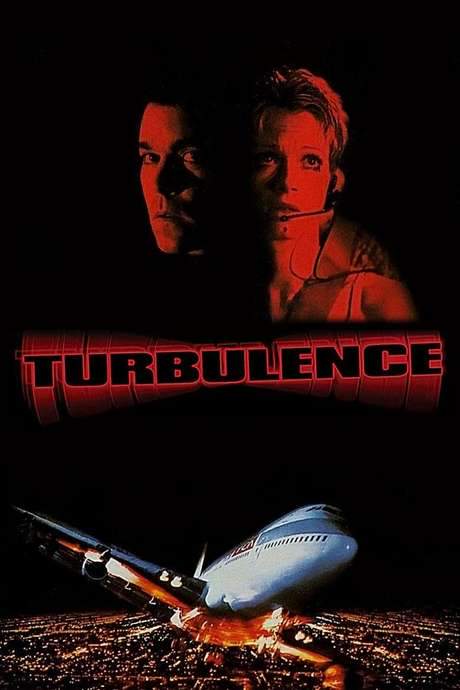
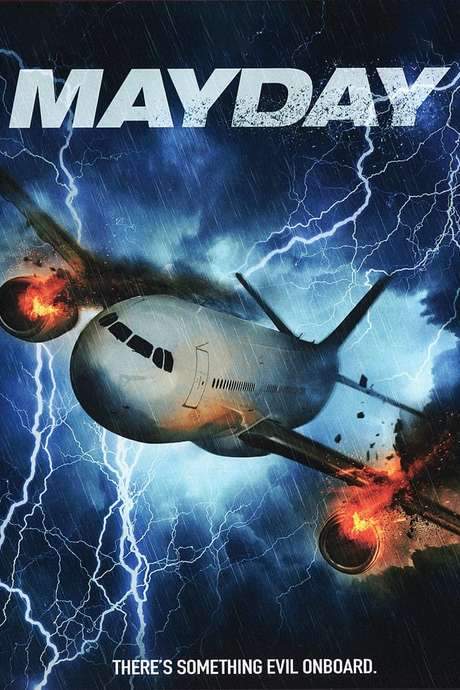
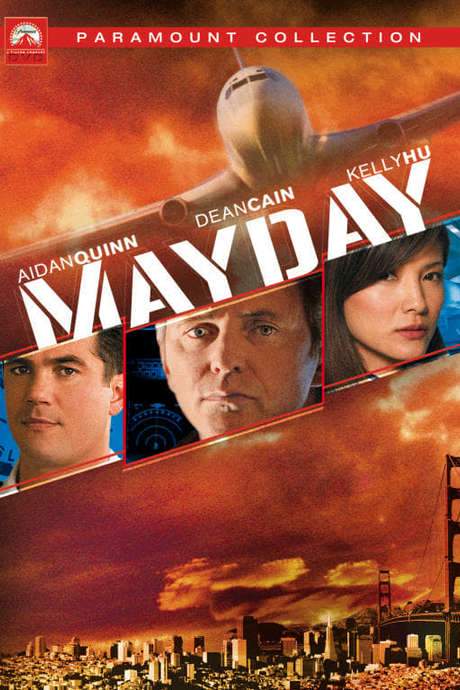
During take-off for a flight to Europe, Royce Air International Flight 115—a Boeing 747-200 bound from New York to London—is struck by lightning. The strike proves fatal to the flight crew and silences radio communications with the ground, leaving the passengers and remaining crew to improvise under extreme pressure. In the cabin, the senior flight attendant, Laurie Ann Pickett, teams up with a vigilant passenger, Brett Young, to assess what can still be done to save the aircraft. What begins as a survival-minded effort quickly shifts into a tense manual operation as their only reliable guide—the autopilot—begins to misbehave.
The autopilot starts to malfunction in unpredictable ways, steering the jet toward airfield transponders at random. Its targets include airports that are far too small to accommodate a machine of this size, forcing everyone on board to confront a frightening possibility: the traditional procedures and the pilots’ training may no longer be enough. As the aircraft deviates from its intended course, Laurie and Brett are compelled to take on responsibilities that normally belong to the cockpit crew, steering the craft toward an improvised landing solution. They weigh the risks of attempting a controlled descent without a fully functional autopilot while maintaining situational awareness of the increasingly precarious flight path.
Meanwhile, a tension-filled subplot unfolds in the cargo hold: a Rottweiler breaks free and becomes a source of stress and concern for both passengers and crew. The dog’s behavior is a microcosm of the broader panic aboard the plane, but the animal’s aggressive moments are eventually countered by understanding and care, revealing that the true danger often lies in fear and miscommunication rather than a single technical failure.
As the autopilot’s erratic behavior continues, authorities on the ground—air traffic controllers and aviation officials—grapple with a difficult question: when is it necessary to consider drastic action to prevent a far-reaching disaster? The debate grows heated as the clock ticks and the aircraft drifts over the vast expanse of the North American continent. The situation narrows toward a single, high-stakes objective: find a safe place to land. The only viable option becomes Vancouver, British Columbia, where a controlled, manual approach could still avert a catastrophe over a densely populated area.
In the end, the story unfolds as a test of human ingenuity and calm under pressure. Laurie and Brett’s collaboration, forged under extraordinary circumstances, underscores the resilience and quick-thinking required to navigate an aircraft that has lost its backbone—its connection to ground control. The narrative remains grounded in the practical realities of crisis management, the emotional toll on those aboard, and the precarious balance between improvisation and procedure when technology fails at a moment of truth.