Plot Explained Spoilers guaranteed!
Plot Explained

Browse by genre

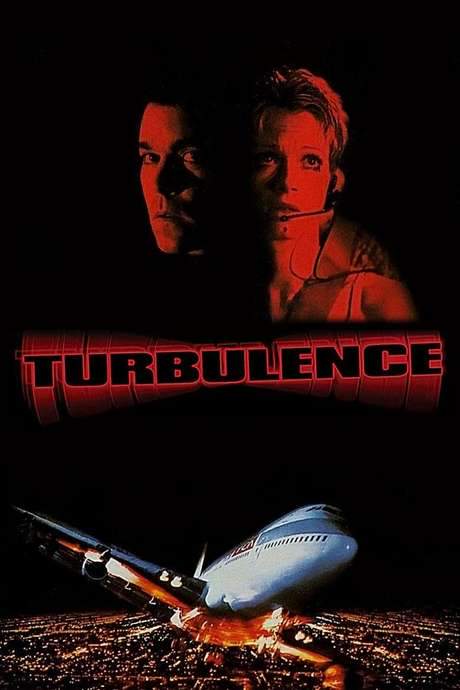
Turbulence 2: Fear of Flying (1999) movie poster

Plot Summary

Turbulence 2: Fear of Flying (1999) Plot Summary Explained

Release, runtime and language
1999 · 101 mins · English
JustWatch #16,415 14
Directed by
David Mackay
Starring
Tom Berenger, Jennifer Beals, Tom Kenny, Chilton Crane, Craig Sheffer, Jody Thompson

A nervous traveler hoping to conquer his fear of flying boards the wrong aircraft, only to see it hijacked. When the hijackers murder the pilot and threaten the passengers with a chemical‑weapons bomb, an on‑board airplane engineer steps in, racing against time to disable the device and save everyone.

On this page (6)
  1. 1 Where to watch
  2. 2 What happens: full plot
  3. 3 Plot questions answered
  4. 4 Movie threads
  5. 5 Movies like Turbulence 2: Fear of Flying
  6. 6 Every angle

Where to watch

Where to Watch Turbulence 2: Fear of Flying (1999)

Where can you watch Turbulence 2: Fear of Flying? Stream, rent or buy it in the US, including on Fawesome, Plex and Tubi TV: current JustWatch availability with up-to-date prices.

Streaming availability powered by JustWatch

Full plot summary · contains spoilers

What Happens in Turbulence 2: Fear of Flying: Full Plot Summary

The whole story of Turbulence 2: Fear of Flying (1999) explained, from the opening scene to the final frame: every key event, every twist and what it all adds up to. Read it as a quick recap before the sequel, to check a scene you missed, or to finally understand what really happened.

A group of travelers celebrate conquering their fear of flying by boarding TransContinental Airlines’ Boeing 747-200 for TransCon Flight 110, a long-haul hop that circles around Seattle–Tacoma International Airport. The mood in the cabin shifts from relieved to tense as the jet cuts through the sky, until a Czech terrorist seizes the opportunity and hijacks the flight, unveiling a toxin stored in the cargo hold and a detonator he brandishes to intimidate the crew. He forces himself into the cockpit and makes a chilling demand: land at Seattle or a nearby airport, though dreadful weather over Seattle makes that impossible for the moment. The captain pleads for patience, offering the hijacker a choice between waiting out the storm or detonating the device.

In the ensuing chaos, Elliot [Jeffrey Nordling] joins the fray; he is a passenger who asserts control after a brutal confrontation, subduing the crew and declaring himself in charge. The captain is knocked unconscious as the assault escalates, and the plane shifts from a routine flight to a high-stakes hostage crisis. Amid the confusion, Martin Messerman [Craig Sheffer], an aerospace engineer, notices that the detonator has shifted and suspects Elliot’s dangerous maneuvering. He teams up with Jessica [Jennifer Beals], a fellow passenger, to alert Seattle’s air traffic control and to piece together the hijack’s true danger. The crisis pivots on the fate of cargo box A45114, which contains the deadly toxin, and on a race against time.

Martin and Jessica manage to reach Robert Sikes [Tom Berenger], the Seattle air traffic controller, using a VOR system that Elliot initially overlooks. They learn that the toxin must be dropped over water within seven minutes to avert catastrophe, and they race to implement a precarious plan. Elliot—who has shut off the VOR to sever their line of communication—becomes more dangerous as the clock winds down. To reach safety and buy time, Martin deploys the 747’s spoilers, slowing the aircraft to a precise descent toward 10,000 feet so the cargo door can be opened without causing a catastrophic decompression. With the door ajar, he and Jessica locate the toxin in cargo box A45114 and prepare its controlled release, hoping to avert a ground disaster.

The tension peaks as Elliot shoots and fights the pair, expending ammunition while the ground crew orders a missile strike from the USS Bremerton to bring the aircraft down. In a dramatic turn, Elliot activates the detonator, but Martin and Jessica succeed in dropping the toxin out of the plane before detonation can occur. The Bremerton missile is redirected and ultimately aborted as authorities realize the immediate danger has been neutralized.

Elliot responds with a desperate escalation, bringing a passenger named Wilcox into the cockpit and forcing a brutal standoff with Martin. As the confrontation unfolds, Martin uses his grounded expertise to outmaneuver the hijacker, broadcasting the crisis to the control tower and federal agents. A tense chase spills onto the tarmac, with Trevor, Martin’s son, briefly appearing in the terminal area during the crisis, and Elliot’s henchman pursuing on the ground. A final struggle ends with Elliot wielding a wrist spike and Martin delivering a decisive, fatal stab, ending the threat once and for all.

In the aftermath, Martin is finally reunited with his son Trevor [Dillon Moen] and Jessica, and the three share a quiet relief as they prepare to leave the scene. The moment is punctuated by a personal reunion with Seattle’s air traffic controller, Robert Sikes [Tom Berenger], who steps in to greet them as the passengers begin to disembark, signaling a return to ordinary life after an extraordinary crisis. The flight, its danger contained, closes with a sense of cautious triumph and the sense that the survivors can go home.

Last updated: October 05, 2025 at 12:43

Was this helpful?

Plot questions answered

Turbulence 2: Fear of Flying Plot Explained: Your Questions Answered

The questions people ask most about Turbulence 2: Fear of Flying (1999): what happens in the confusing scenes, why the characters do what they do, the twists, hidden details and what the ending means. Each answer contains spoilers.

Q1

Why does Elliot take control of the plane after the hijacker reveals the toxin?

Elliot sees an opportunity to assert dominance during the chaos. When the Czech hijacker reveals the toxin and detonator, the cockpit crew is distracted. Elliot attacks the crew, knocking the captain unconscious and declaring himself in charge, essentially hijacking the hijacking to further his own agenda.

Foreshadowing: Early cabin tension hints at the fragile psychological state of passengers who recently overcame their fear of flying, making Elliot's violent breakout more plausible.

  • elliot takeover
  • plane hijacking
  • crew incapacitation
  • power grab
Q2

Why does Martin need to descend to 10,000 feet to open the cargo door?

At high altitudes, opening the cargo door would cause catastrophic decompression due to the pressure difference. Descending to 10,000 feet lowers the cabin pressure to a safe level, allowing the cargo door to be opened without risking the aircraft's structural integrity or the passengers' safety.

Foreshadowing: The earlier VOR communication established Martin's technical expertise with aircraft systems.

  • decompression
  • cargo door
  • altitude
  • cabin pressure
  • 747
Q3

How does the VOR system help Martin and Jessica alert authorities?

The VOR (VHF Omnidirectional Range) is a navigation system that allows aircraft to send signals to ground stations. Martin and Jessica use it to contact Seattle air traffic controller Robert Sikes, informing him about the hijacking and the toxin threat, enabling ground authorities to coordinate their response and track the plane's position.

Foreshadowing: The timeline notes that Elliot overlooks the VOR initially, underestimating its importance.

  • vor system
  • seattle atc
  • robert sikes
  • communication
  • air traffic control
Q4

Why must the toxin be dropped over water within seven minutes?

The toxin is a chemical weapon that would kill thousands if released over populated ground. Dropping it into water disperses and dilutes the substance, rendering it less lethal. The seven-minute window represents how long the plane can stay within range of Seattle before reaching densely populated areas.

Foreshadowing: The hijacker's demand to land at Seattle establishes the geographic urgency.

  • chemical weapon
  • toxin
  • water drop
  • seven minutes
  • chemical dispersion
Q5

What is cargo box A45114 and why is it critical?

Cargo box A45114 is the specific container storing the hijacker's chemical toxin. Its discovery confirms the terrorist threat is real and not a bluff, raising the stakes dramatically. Martin and Jessica must locate and dispose of this exact box to neutralize the danger.

Foreshadowing: The hijacker's earlier reveal of toxin in the cargo hold primes viewers for this specific location.

  • cargo box
  • toxin storage
  • chemical weapon
  • a45114
  • cargo bay
Q6

Why does Elliot turn off the VOR system during the crisis?

Elliot turns off the VOR to sever communication between the plane and Seattle air traffic control. By silencing the VOR, he hopes to isolate the aircraft from authorities, prevent them from coordinating a response, and maintain control over the situation without external interference.

Foreshadowing: Elliot's earlier power grab shows his willingness to use any means necessary to stay in control.

  • vor
  • communication block
  • isolation
  • eliot sabotage
Q7

Why does the military order a missile strike on the plane?

Ground controllers order the USS Bremerton to intercept the aircraft because the toxin threatens mass casualties in Seattle. If the plane approaches populated areas, destroying it is deemed necessary to prevent a larger catastrophe. The missile is only aborted once the toxin is successfully dropped into the water.

Foreshadowing: The earlier countdown and urban proximity establish the life-or-death stakes.

  • uss bremerton
  • missile strike
  • military intercept
  • threat neutralization
Q8

How does Martin manage to land a 747 with only two working engines?

The 747 is designed to fly on multiple engines, and Martin uses his aerospace engineering expertise to execute a careful two-engine landing at Sea-Tac. He coordinates with air traffic control for a controlled descent, deploying the remaining thrust and brakes precisely to bring the massive aircraft down safely despite the damage.

Foreshadowing: Martin's technical background is established early when he analyzes the detonator mechanism.

  • two engine landing
  • 747 emergency landing
  • sea-tac
  • martin messerman
Q9

What is the wrist spike Elliot uses in the final confrontation?

The wrist spike is a concealed weapon Elliot wears on his forearm. During the final tarmac confrontation, he attempts to use it against Martin, but Martin defends himself, breaks Elliot's wrist, and uses the spike to fatally stab Elliot, ending the threat permanently.

Foreshadowing: Elliot's violent escalation throughout the film establishes his willingness to use deadly weapons.

  • wrist spike
  • weapon
  • final fight
  • eliot death
  • tarmac confrontation
Q10

Who is Robert Sikes and what role does he play in the crisis?

Robert Sikes is the Seattle air traffic controller who receives Martin and Jessica's VOR distress call. He coordinates the emergency response, communicates with the military about the missile option, and guides Martin through the landing. After the crisis, he greets the survivors, providing a human connection in the aftermath.

Foreshadowing: The VOR communication scene establishes Sikes as the crucial link between the plane and ground authorities.

  • robert sikes
  • air traffic controller
  • seattle
  • coordination
  • ground control
Q11

Why does Elliot become more violent after initially seizing control?

Elliot's violence escalates as the situation spins out of his control. When Martin and Jessica successfully alert authorities, attempt to drop the toxin, and coordinate with ground control, Elliot loses his leverage. His shooting sprees and hostage-taking represent desperate attempts to maintain power and avoid capture.

Foreshadowing: The power struggle between Elliot and Martin begins when Martin notices the detonator has shifted.

  • elliot violence
  • hostage
  • desperation
  • power loss
  • escalating threat
Q12

How do the aircraft spoilers help Martin execute his plan?

Martin deploys the 747's spoilers, air brakes on the wings, to dramatically slow the aircraft. This controlled descent allows him to reach the precise altitude needed for safe cargo door operation while buying critical time for the cellphone signal and coordinating the toxin disposal with ground control.

Foreshadowing: Martin's engineering expertise is demonstrated when he analyzes the aircraft systems throughout the crisis.

  • spoilers
  • air brakes
  • descent control
  • cargo door opening
  • 747 systems

Movie threads

More Movies Like Turbulence 2: Fear of Flying, by Mood & Story

Curated lists built around what makes Turbulence 2: Fear of Flying tick: the same mood, the same kind of story or the same emotional payoff. Each list explains why these movies belong together.

Claustrophobic Containment Thrillers like Turbulence 2: Fear of Flying

Ordinary people must outsmart villains within a confined and inescapable space. If you liked the high-anxiety setting of Turbulence 2: Fear of Flying, you'll enjoy these other movies that trap their heroes in a confined space with a deadly threat. These films share a tense, fast-paced energy and a race-against-time narrative in locations like planes, trains, or isolated facilities.

  • claustrophobic
  • suspenseful
  • urgent
  • tense
  • anxious
  • high stakes
  • Tone: tense, urgent
  • Pacing: fast, relentless
Why these movies?

The story pattern: The narrative pattern involves a confined location becoming a battleground, often after a sudden hostile takeover. The protagonists, who may be ordinary people or specialists, must quickly adapt and find a way to neutralize the threat from within, with escape often impossible until the conflict is resolved. The story is a direct, linear escalation of threat and response.

Why they belong together: These movies are grouped by their shared use of a claustrophobic setting to generate relentless tension and a fast-paced, problem-solving plot. The experience is defined by high-intensity suspense and the visceral feeling of being trapped alongside the characters.

Movies with Unlikely Heroes like the Engineer in Turbulence 2: Fear of Flying

An unexpected individual must rise to the occasion to stop a terrorist plot. Fans of Turbulence 2: Fear of Flying will appreciate these stories where an ordinary or specialized professional—like an engineer, technician, or passenger—becomes the last hope during a disaster. These films focus on pragmatic problem-solving and courageous acts from unexpected sources.

  • heroic
  • suspenseful
  • cathartic
  • urgent
  • high stakes
  • improvised
  • Tone: tense, heroic
  • Pacing: fast, focused
Why these movies?

The story pattern: The narrative follows a clear villain-to-hero dynamic. After the established authorities (like pilots or security) are neutralized, a seemingly peripheral character emerges as the only one capable of saving the day. Their journey is one of rapid adaptation, using their unique expertise in a high-pressure situation to outthink the antagonists.

Why they belong together: This thread groups movies based on the compelling character arc of an 'improvised hero' and the satisfying narrative of expertise triumphing over brute force. The shared vibe is one of high-stakes problem-solving and cathartic victory achieved through intelligence and courage.

If you liked this

Movies Like Turbulence 2: Fear of Flying

Similar movies to Turbulence 2: Fear of Flying: the same genre, themes or kind of story. Each one comes with its own plot summary, timeline and ending explained.

Browse all movie summaries

Every angle

Turbulence 2: Fear of Flying (1999) Explained: Plot, Timeline & Characters

Everything about Turbulence 2: Fear of Flying in one place: what happens in the plot summary, the timeline in chronological order, the characters and meaning and a spoiler-free summary. What's After the Movie adds the cast, box office and post-credit scenes.

Coming soon on iOS and Android

The Plot Explained Movie Summary App

Plot summaries, endings explained and timelines on your phone. Catch up on any movie in minutes, save your favorites and never miss a twist again.

Be the first to know when we launch. Your email stays private, always.

Learn more about the app