Plot Explained Spoilers guaranteed!
Plot Explained

Browse by genre

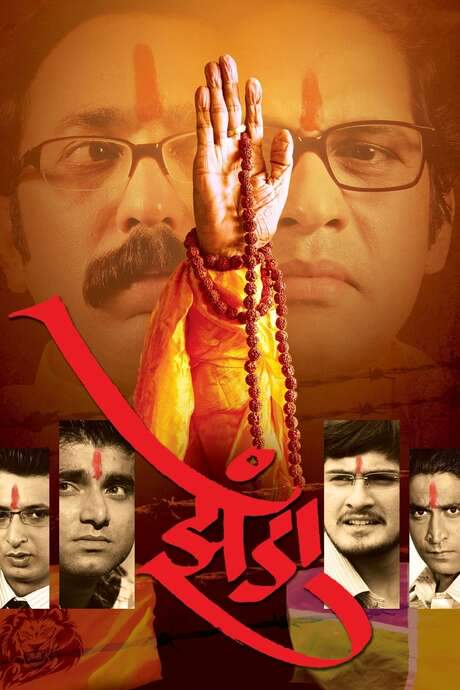
Zenda (2009) movie poster

Plot Summary

Zenda (2009) Plot Summary Explained

Release, runtime and language
2009 · More mins · Marathi
Loading streaming availability…
Directed by
Avadhoot Gupte
Starring
Chinmay Mandlekar, Santosh Juvekar, Williemgc, Ujwala Jog, Tejashri Pradhan, Siddharth Chandekar

Zenda, a 2010 Marathi film directed and scored by Avdhoot Gupte and starring Santosh Juvekar, follows four ambitious scholars seeking success amid a major party split. The narrative reflects the real‑life rivalry of cousins Raj and Uddhav Thackeray, using them as symbolic figures while highlighting Marathi youth aspirations. It opened statewide in early 2010.

On this page (6)
  1. 1 Where to watch
  2. 2 What happens: full plot
  3. 3 Plot questions answered
  4. 4 Movie threads
  5. 5 Movies like Zenda
  6. 6 Every angle
Loading streaming availability…

Full plot summary · contains spoilers

What Happens in Zenda: Full Plot Summary

The whole story of Zenda (2009) explained, from the opening scene to the final frame: every key event, every twist and what it all adds up to. Read it as a quick recap before the sequel, to check a scene you missed, or to finally understand what really happened.

The film grounds itself in the drama of real-life party workers who pledge their loyalty to a single political party, a premise that is loosely inspired by the Balasaheb Thackeray political family and their enduring influence over Maharashtra. The ensemble brings this world to life, with Chinmay Mandlekar and Santosh Juvekar portraying veterans who carry decades of party history in their bones, while Williemgc threads a sharp strategic touch through the corridors of power. Together, they paint a portrait of a movement that remains deeply rooted in the experience of the Marathi community across Maharashtra, a sentiment that the film treats with both reverence and critical distance.

The movie celebrates the party’s glorious past and its formidable organization, which has long stood as a bulwark for the Marathi voice in the region. The narrative moves through a landscape where loyalty is tested not just by ideology, but by time, memory, and the changing currents of politics. As the leadership baton passes to the next generation, a bold new leader breaks away, stirring a rift between friends who were once united by a shared cause. This fracture is dramatized through the arcs of Siddharth Chandekar, Tejashri Pradhan, and Shubhangi Gokhale, whose characters embody the tension between heritage and renewal, duty and ambition, tradition and reform.

The film also probes how political images are built and sustained in the public sphere, revealing the power of media and PR to shape perception. Campaign managers push carefully crafted narratives to win over minority vote banks, sometimes at the expense of core ideologies, a process that leaves purists and young recruits feeling displaced. In this examination, Neha Joshi and Pushkar Shotri contribute to the portrayal of the pressure-filled ecosystem where appearances can override substance, and where strategic messaging can outpace on-the-ground truth.

Amid these forces, the narrative follows the younger cohort who seek to carve out their own identities within the party framework. They step out from the long shadow cast by elder leadership, only to discover that their honest work can be eclipsed when election tickets are allotted. The struggle to be heard, to earn legitimacy, and to balance allegiance with new ideas forms a through-line that gives the film its emotional gravity. Actors such as Ujwala Jog, Sachit Patil, and Rajesh Shrungarpure populate this tremulous space with characters who embody the hope, pressure, and disillusionment that accompany political change, while remaining anchored to a collective purpose larger than any single person.

In the end, the story presents a nuanced look at loyalty, leadership, and the cost of embracing transformative change within a storied political movement. It acknowledges the powerful sense of identity tied to regional politics, while inviting viewers to question how much of that identity is preserved by enduring institutions and how much is shaped by the media narratives that surround them. The film remains a thoughtful meditation on how political communities sustain themselves, what they sacrifice for advancement, and what it means for the next generation to carry the flame forward.
Last updated: February 17, 2026 at 19:56

Was this helpful?

Plot questions answered

Zenda Plot Explained: Your Questions Answered

The questions people ask most about Zenda (2009): what happens in the confusing scenes, why the characters do what they do, the twists, hidden details and what the ending means. Each answer contains spoilers.

Q1

Why did the new leader break away from the party's core ideology?

After gaining power following the leadership transition, the new leader began pursuing independent paths and openly questioned the old guard's limitations. This breakaway marked the first public signs of divergence within the party, as the leader sought to modernize the movement's approach while the traditionalists resisted what they saw as a departure from core principles.

Foreshadowing: The early timeline shows younger activists already envisioning fresh energy and broader appeal, hinting at the eventual ideological fracture.

  • leadership split
  • party division
  • new generation
  • ideology
Q2

What caused the rift between lifelong friends in the party?

Once inseparable comrades found their loyalties pulling in opposite directions as the party split widened. They confronted each other over strategy and ideology, with some supporting the breakaway leader's modernization efforts while others remained loyal to the traditional framework. These disagreements deepened the fracture, turning personal friendships into political enemies.

Foreshadowing: The timeline notes tension between heritage and renewal, duty and ambition from the early leadership transition phase.

  • friendship
  • loyalty conflict
  • party workers
  • betrayal
Q3

How did media and PR campaigns reshape the party's public image?

The film depicts how media campaigns featuring posters, soundbites, and orchestrated events came to dominate the public sphere. Campaign managers crafted carefully curated narratives to win over minority vote banks, sometimes at the expense of core ideologies. The party leaders realized that public perception could outpace ground realities, leading to a disconnect between the party's actual work and its media portrayal.

Foreshadowing: The timeline shows media campaigns emerging during the media campaign era, after the leadership transition but before the ideological shifts.

  • media
  • PR
  • public perception
  • campaigns
  • messaging
Q4

Why were core ideologies sacrificed during election campaigns?

The narrative depicts trade-offs made to secure votes, with core beliefs trimmed to fit poll-friendly messaging. Campaign managers pushed to widen appeal to minority groups, challenging the party's traditional ideological tenets. Old-school workers watched their principles erode as electoral calculus overtook ideological purity, leaving purists feeling betrayed by compromises made in pursuit of political gain.

Foreshadowing: The pressure to appease minority voters directly preceded the ideological compromises depicted in the timeline.

  • elections
  • ideology
  • compromise
  • vote bank
  • principles
Q5

What happened to the youth who broke away to form new groups?

Disillusioned young activists struck out on their own to build alternative platforms outside the old leadership's shadow. They attempted to harness new energy and connect with voters who felt left behind by the party's shifting priorities. However, they discovered that established networks still held significant sway, making it difficult to gain traction against entrenched party structures.

Foreshadowing: The earlier pressure on youth to balance allegiance with new ideas planted the seeds for their eventual departure.

  • youth
  • new groups
  • disillusionment
  • alternative platform
  • next generation
Q6

Why did ticket allotment become such a contentious issue?

With elections looming, ticket allotment became the ultimate test of party unity. Old loyalties collided with fresh faces as the party needed to select candidates for electoral contests. Internal maneuvering exposed the fragility of the coalition, with negotiations revealing how personal ambitions and historical loyalties conflicted with merit-based selections.

Foreshadowing: The youth's struggle to be heard and earn legitimacy directly led to tensions around ticket distribution.

  • tickets
  • candidates
  • elections
  • party unity
  • nominations
Q7

What happened during the leadership transition to the next generation?

After years of service by the elder leadership, the baton passed to the next generation with mixed reactions. The film shows excitement mixed with anxiety as younger activists envisioned fresh energy and broader appeal for the party. Some worried about losing the old guard's discipline and ideological foundation, while others hoped for modernization that could expand the party's reach.

Foreshadowing: The founding days established deep loyalty to the apex leader, making any transition inherently fraught with uncertainty.

  • leadership transition
  • next generation
  • elder leaders
  • party future
Q8

How did the pressure to appeal to minority voters change the party?

Campaign managers pushed to widen the party's appeal to minority groups, directly challenging core ideological tenets. This strategic shift represented a significant departure from the party's traditional base, prioritizing electoral mathematics over pure ideology. Purists felt betrayed as the party made compromises that eroded its promised path, creating internal conflict between pragmatists and idealists.

Foreshadowing: The media and PR reshaping of the party's image created the foundation for these voter targeting strategies.

  • minority voters
  • vote bank
  • electoral strategy
  • compromise
  • coalition
Q9

What was the moral toll paid by party members throughout the conflict?

Characters grappled with the cost of loyalty and the price of power throughout the narrative. The film explores whether doing good for the community could survive the corrupting influence of political ambition. The melange of pride, betrayal, and resilience left an enduring question about what remained of the party's initial ideals after years of compromise and conflict.

Foreshadowing: The early emphasis on loyalty to the cause over personal ambitions set up the tragic irony of what members ultimately sacrificed.

  • loyalty
  • power
  • betrayal
  • moral cost
  • disillusionment
Q10

What did the party's founding days represent in the story?

The film opens with party workers rallying for Marathi community causes, building a tight grassroots base across Maharashtra towns. Leaders emphasized loyalty to the apex leadership and the collective cause over personal ambitions. The early atmosphere was charged with camaraderie, discipline, and a shared sense of purpose that would later be tested by modernization and political pragmatism.

Foreshadowing: This foundational idealism directly contrasts with the compromises and betrayals that dominate the later narrative.

  • founding
  • grassroots
  • loyalty
  • Marathi community
  • origins

Movie threads

More Movies Like Zenda, by Mood & Story

Curated lists built around what makes Zenda tick: the same mood, the same kind of story or the same emotional payoff. Each list explains why these movies belong together.

Political Thrillers of Ideological Betrayal like Zenda

Stories where ambition and political cunning shatter friendships and ideals. Discover movies like Zenda where high-stakes political rivalries and betrayals test loyalties. These tense dramas explore how ambition and media influence fracture friendships, leading to heavy emotional consequences.

  • political thriller
  • betrayal
  • tense
  • power struggle
  • disillusioned
  • ambitious
  • Tone: tense, cynical, disillusioned
  • Pacing: steady, methodical
Why these movies?

The story pattern: Narratives in this thread typically follow ambitious individuals or groups whose shared goals are corrupted by political machinations. The story methodically builds tension as alliances fracture, often culminating in a bittersweet victory that comes at a great personal cost, emphasizing the sacrifice of ideals for power.

Why they belong together: These movies are united by their focus on high-intensity political conflict, a steady pacing that builds psychological tension, and a heavy emotional weight derived from themes of disillusionment and the painful cost of ambition.

Bittersweet Journeys of Disillusioned Youth like Zenda

Coming-of-age stories where youthful ambitions are tested by harsh realities. Find movies like Zenda that follow ambitious young protagonists facing harsh realities. These dramas capture the tense and heavy experience of youthful ideals being shattered by political rivalries or systemic pressures.

  • youth aspirations
  • disillusioned
  • ambitious
  • tense
  • bittersweet
  • ideological
  • Tone: tense, heavy, bittersweet
  • Pacing: steady, character-driven
Why these movies?

The story pattern: The narrative pattern follows driven young protagonists who enter a system with high ideals. As they navigate the complexities of power, manipulation, or moral compromises, their innocence is lost. The arc typically ends on a bittersweet note, acknowledging hard-won success or independence that is tainted by the loss of friendship and purity.

Why they belong together: Movies in this thread share a focus on the emotional journey of young characters, a tense and steady narrative pace, a moderate level of plot complexity involving personal and systemic conflict, and a consistently heavy emotional weight leading to a bittersweet conclusion.

If you liked this

Movies Like Zenda

Similar movies to Zenda: the same genre, themes or kind of story. Each one comes with its own plot summary, timeline and ending explained.

Browse all movie summaries

Every angle

Zenda (2009) Explained: Plot, Timeline & Characters

Everything about Zenda in one place: what happens in the plot summary, the timeline in chronological order, the characters and meaning and a spoiler-free summary. What's After the Movie adds the cast, box office and post-credit scenes.

Coming soon on iOS and Android

The Plot Explained Movie Summary App

Plot summaries, endings explained and timelines on your phone. Catch up on any movie in minutes, save your favorites and never miss a twist again.

Be the first to know when we launch. Your email stays private, always.

Learn more about the app