Plot Explained Spoilers guaranteed!
Plot Explained

Browse by genre

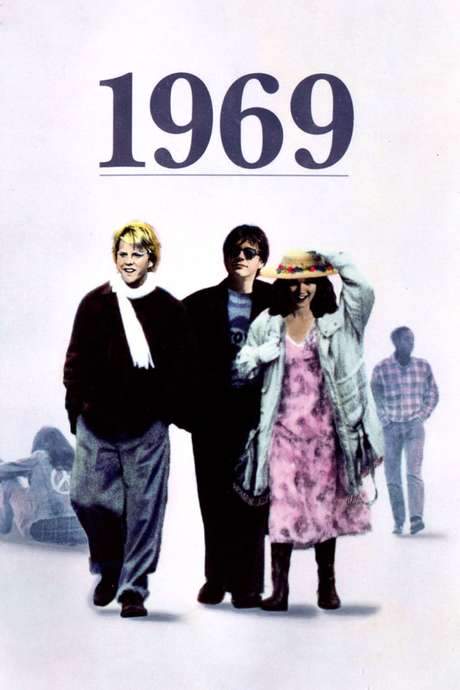
1969 (1988) movie poster

Plot Summary

1969 (1988) Plot Summary Explained

Release, runtime and language
1988 · 95 mins · English
Directed by
Ernest Thompson
Starring
Bruce Dern, Robert Downey Jr., Winona Ryder, Kiefer Sutherland, Joanna Cassidy, Paul Dillon

Set in 1969, two rebellious youths, Ralph and Scott, face adulthood amid the Vietnam War. Trapped in their small town, Scott clashes with his conservative veteran father, Cliff, while Ralph deals with his overtly sexual mother, Ev. When tragic news from the front arrives, the town, spurred by their anti‑war efforts, reexamines its stance on the conflict.

On this page (5)
  1. 1 What happens: full plot
  2. 2 Plot questions answered
  3. 3 Movie threads
  4. 4 Movies like 1969
  5. 5 Every angle

Full plot summary · contains spoilers

What Happens in 1969: Full Plot Summary

The whole story of 1969 (1988) explained, from the opening scene to the final frame: every key event, every twist and what it all adds up to. Read it as a quick recap before the sequel, to check a scene you missed, or to finally understand what really happened.

Two boys, Ralph [Robert Downey Jr.] and Scott [Kiefer Sutherland], hitchhike home from college on Easter morning, their voices echoing across the glen as the lakeside Easter Sunrise service unfolds. The moment amuses [Winona Ryder] as Beth Carr and [Joanna Cassidy] as Ev Carr, and embarrasses Scott’s parents, [Bruce Dern] as Cliff Denny and [Mariette Hartley] as Jessie Denny, who watch with a mix of pride and exasperation.

Later that day, they drive Alden Palmer Denny [Christopher Wynne], Scott’s older brother, who is shipping off to Vietnam, to the bus depot; Alden and Scott clash when Scott accuses the Marine of being afraid to go to Vietnam. Their father, Cliff, arrives with questions, while Jessie glances between concern and resolve as the family grapples with the looming conflict.

A few weeks later, Scott and Ralph return for Beth’s high school graduation, and they learn that Ralph has flunked out of college, making him eligible for the draft. The trio—Ralph, Scott, and Beth—dream of a summer spent on the road, living out of a van, soaking in the freedom and experimentation of the counterculture that seems to promise a different path from the one their families expect. They drift into a summer festival back in their hometown, only to discover that Alden has disappeared and is listed as MIA, a crushing blow that casts a pall over the celebration.

In a bold, reckless grab for control, Ralph and Scott hatch a plan to steal their draft files from the local draft board office. The scheme unravels quickly, and Ralph is arrested, jolting the pair back to the fragile line between youth’s bravado and the consequences that follow.

With Ralph behind bars, Scott resolves to dodge the draft altogether by heading to Canada, and he invites Beth to join him, proposing that they vanish from the war’s reach until it ends. The two grow closer in the van, and their feelings deepen into a quiet, urgent romance. They eventually decide to pay Ralph a visit in jail to tell him they’re leaving, only to become tangled in Ralph’s sharp, sardonic observations. He reveals that, in his own way, he wants to go to Vietnam, and learns that his friend and Beth have become intimate. The confession strains the bond between them, and Ralph’s hurt leads him to sever ties with Scott and distance himself from Beth.

Scott and Beth reach the Canada–United States border, only to hesitate at the threshold and choose to return to Maryland. Back home, they learn the painful truth: Alden has died in the line of duty. The town reels as a funeral punctuates the loss, and Scott steps forward to lead a vast downtown march in the days surrounding the ceremony. Meanwhile, Ralph is released from jail, and the friends find their way back to each other, their loyalties tested but not broken.

In the closing moments, a narration by Scott frames the film’s fate: his family and friends, along with hundreds of thousands of others, head toward Washington, D.C., to protest the Vietnam War. The story lingers on the sense that a generation’s embarkation into adulthood is inseparable from the political storms of its time, and that even amid heartbreak, unity and collective action can offer a path forward.
Last updated: October 09, 2025 at 14:34

Was this helpful?

Plot questions answered

1969 Plot Explained: Your Questions Answered

The questions people ask most about 1969 (1988): what happens in the confusing scenes, why the characters do what they do, the twists, hidden details and what the ending means. Each answer contains spoilers.

Q1

Why does Scott accuse Alden of being afraid to go to Vietnam?

Scott accuses Alden of being afraid because Scott is desperately trying to convince himself that going to Vietnam is a choice rooted in cowardice rather than duty. Scott is grappling with his own fear and confusion about the war, and by attacking Alden's courage, he's temporarily externalizing his own internal conflict. This confrontation also reveals the tension between Scott's rebellious worldview and his brother's decision to enlist.

Foreshadowing: Earlier, Scott's father Cliff is shown questioning what's really going on between the brothers, hinting at deeper unresolved tensions.

  • scott
  • alden
  • vietnam
  • accusation
  • courage
  • family tension
Q2

Why does Ralph say he wants to go to Vietnam?

Ralph reveals he wants to go to Vietnam partly because he's exhausted by his aimless existence and sees the war as a way to find purpose or prove himself. However, his declaration also comes across as wounded deflection - he's hurt that Scott is leaving him behind to flee to Canada with Beth, and the statement may be more about lashing out than genuine conviction. Ralph's desire is complicated by his rebellious nature and his need to define himself outside of his mother's shadow.

Foreshadowing: Ralph's earlier arrest for attempting to steal draft files shows he's willing to take extreme actions to control his own fate, whatever that fate may be.

  • ralph
  • vietnam
  • motivation
  • intent
  • hurt
  • deflection
Q3

Why do Scott and Beth turn back at the Canada border?

Scott and Beth hesitate at the Canada border and choose to return to Maryland because the reality of abandoning everything they've known finally overwhelms them. More importantly, they learn that Alden has died in combat while they're away, which creates an overwhelming sense of guilt and responsibility. Returning home becomes their way of facing the war's impact on their family directly rather than running from it.

Foreshadowing: Their earlier decision to visit Ralph in jail shows their internal struggle about leaving - they're already wrestling with whether escape is the right choice.

  • canada border
  • scott
  • beth
  • return
  • alden death
  • guilt
Q4

Why does Ralph cut off his friendship with Scott after the jail visit?

Ralph cuts ties with Scott because he feels betrayed on two fronts - Scott is abandoning him to go to Canada alone, and he's discovered that Scott and Beth have become intimate while Ralph was locked up. The双重 betrayal triggers Ralph's hurt and pride, leading him to lash out by claiming he wants to go to Vietnam and rejecting both of them. His harsh words are a shield against feeling left behind.

Foreshadowing: Earlier, Ralph is shown being arrested while Scott remains free, setting up the dynamic of Ralph feeling trapped while others move forward.

  • ralph
  • scott
  • friendship
  • betrayal
  • jail
  • beth
  • intimacy
Q5

Why does Scott lead the downtown march during Alden's funeral?

Scott leads the march because Alden's death transforms his perspective completely. He goes from someone who mocked his brother's military service to a young man who needs to channel his grief and guilt into action. The march becomes his way of publicly rejecting the war that killed his brother while honoring Alden's memory. His leadership also marks his transition from rebellious youth to someone taking political responsibility.

Foreshadowing: Scott's earlier accusation that Alden was afraid reveals his deep insecurity about the war - leading the march is his attempt to make amends for those words.

  • scott
  • march
  • funeral
  • alden death
  • protest
  • leadership
  • grief
Q6

How do Ralph and Scott reconcile after Ralph is released?

Ralph and Scott reconcile because the shared trauma of Alden's death and the weight of the war's impact on their town create a bridge between them. Ralph's release from jail coincides with Alden's funeral, placing both boys at the same crossroads of grief. Their reunion happens organically during this moment of collective mourning, when personal conflicts seem smaller than the loss they share. The anti-war sentiment sweeping through town also reminds them they're on the same side.

Foreshadowing: Their earlier fight in jail showed Ralph's hurt, but his statement that he "wants to go to Vietnam" was clearly aimed at hurting Scott rather than reflecting true conviction.

  • ralph
  • scott
  • reunion
  • reconciliation
  • jail release
  • funeral
  • forgiveness
Q7

Why do Ralph and Scott try to steal their draft files?

Ralph and Scott attempt to steal their draft files because they're desperate to gain control over their fates in a situation where the war seems inevitable. Ralph, now eligible for the draft after flunking out of college, and Scott, facing the same looming threat, see destroying their draft records as the ultimate act of rebellion against a system they're forced into. The plan reflects their youthful belief that they can outsmart authority, even as it quickly falls apart.

Foreshadowing: Their earlier summer of freedom and counterculture experimentation establishes their pattern of resisting traditional authority.

  • draft files
  • theft
  • ralph
  • scott
  • rebellion
  • draft board
  • arrest
Q8

What impact does Alden being listed as MIA have on the story?

Alden's MIA status creates a period of agonizing uncertainty that hangs over the entire town and particularly affects Scott's family. The ambiguous loss - not knowing whether he's alive or dead - keeps hope alive but also creates unbearable tension. This uncertainty makes the eventual confirmation of his death even more devastating, as the family has already experienced the worst-case scenario emotionally. The MIA period also allows rumors to spread through the town, amplifying the war's presence in their small community.

Foreshadowing: The friends return to their hometown during a festival, but Alden's disappearance turns the celebration somber.

  • alden
  • mia
  • missing
  • uncertainty
  • family
  • town
  • rumors
Q9

Why does Beth agree to flee to Canada with Scott?

Beth agrees to go to Canada with Scott because she's at a crossroads in her life - she's just graduated high school and faces the same uncertain future as Ralph and Scott. Her growing feelings for Scott make the decision easier, but she's also seeking the same freedom and escape from her small town's expectations. Beth's choice represents her rejection of the conventional path her mother Ev represents and her alignment with the counterculture movement the boys embody.

Foreshadowing: Beth's amusement at the boys' Easter morning antics shows her early connection to their rebellious spirit.

  • beth
  • canada
  • scott
  • flee
  • escape
  • draft
  • romance
  • freedom
Q10

Why is Ralph the one who gets arrested during the draft file heist?

Ralph gets arrested because he's the one who actually enters the draft board office to steal the files while Scott serves as lookout. The plan unravels quickly, and Ralph is caught in the act. This arrest marks a turning point because it separates Ralph from Scott - Ralph faces consequences while Scott remains free to make other choices. The arrest also accelerates Scott's decision to flee to Canada, since Ralph won't be there to join him.

Foreshadowing: The plan is described as "bold and reckless," foreshadowing its failure.

  • ralph
  • arrest
  • draft files
  • heist
  • caught
  • scott
  • consequences
Q11

Why did Ralph flunk out of college and what does it mean for the draft?

Ralph flunked out of college, which has major consequences because it makes him eligible for the military draft - college students had deferments that protected them from being drafted. This turn of events is what forces Ralph to confront the reality of the Vietnam War rather than simply discussing it philosophically from the safety of a student exemption. His academic failure becomes the catalyst for the entire chain of events that follows.

Foreshadowing: The boys' earlier Easter return from college establishes their student status, making the loss of that protection significant.

  • ralph
  • college
  • flunk
  • draft
  • deferment
  • eligibility
  • vietnam
Q12

What does the ending protest in Washington D.C. represent?

The ending protest represents the collective transformation of the characters and their town from personal grief to political action. Scott's narration describes his family and friends joining hundreds of thousands heading to Washington, showing how Alden's death and the war's impact have mobilized an entire community. The ending suggests that individual pain can fuel collective purpose, and that the journey to adulthood for this generation is inseparable from the political storms of their time.

Foreshadowing: Scott's leadership of the funeral march is the direct precursor to this larger political awakening.

  • washington dc
  • protest
  • ending
  • anti-war
  • generation
  • collective
  • hope
  • resolution

Movie threads

More Movies Like 1969, by Mood & Story

Curated lists built around what makes 1969 tick: the same mood, the same kind of story or the same emotional payoff. Each list explains why these movies belong together.

Movies about generational rebellion like 1969

Young protagonists challenge the status quo during a national upheaval. If you liked the youthful defiance in 1969, explore more movies where teens and young adults grapple with authority during turbulent times. These films share themes of political awakening, family conflict, and the painful transition to adulthood amid societal crisis.

  • rebellious
  • anxious
  • urgent
  • contemplative
  • defiant
  • somber
  • Tone: tense, rebellious, somber
  • Pacing: steady, character-driven
Why these movies?

The story pattern: Narratives in this thread typically follow young characters as their personal rebellion becomes entangled with a larger political or social conflict. The central arc involves challenging parental or governmental authority, leading to a crisis that forces a redefinition of self and values, often at a great personal cost.

Why they belong together: Movies are grouped here for their shared focus on the intense emotional experience of youthful rebellion against a powerful, often conservative, establishment. They share a tense atmosphere, heavy emotional weight, and a focus on how external crises accelerate personal growth and ideological conflict.

Movies about bittersweet political awakening like 1969

Personal tragedy sparks a painful but purposeful political awakening. Find movies similar to 1969, where a character's devastating personal loss leads to a collective political awakening. These emotionally heavy dramas explore how grief can transform into action, culminating in endings that are both sad and hopeful.

  • somber
  • bittersweet
  • contemplative
  • urgent
  • grieving
  • hopeful
  • Tone: bittersweet, somber, urgent
  • Pacing: steady, building to a climax
Why these movies?

The story pattern: This narrative pattern begins with characters living in a state of relative ignorance or passive opposition. A sudden, tragic event—often the death of a loved one—shatters their world, forcing them to confront harsh realities. The story concludes not with simple resolution, but with the characters channeling their grief into meaningful, albeit difficult, action.

Why they belong together: These films are connected by their specific emotional arc: a journey from passive anxiety to active engagement, triggered by loss. They share a bittersweet tone, a steady pacing that builds to an emotional climax, and a focus on the transformative, if painful, power of grief.

If you liked this

Movies Like 1969

Similar movies to 1969: the same genre, themes or kind of story. Each one comes with its own plot summary, timeline and ending explained.

Browse all movie summaries

Every angle

1969 (1988) Explained: Plot, Timeline & Characters

Everything about 1969 in one place: what happens in the plot summary, the timeline in chronological order, the characters and meaning and a spoiler-free summary. What's After the Movie adds the cast, box office and post-credit scenes.

Coming soon on iOS and Android

The Plot Explained Movie Summary App

Plot summaries, endings explained and timelines on your phone. Catch up on any movie in minutes, save your favorites and never miss a twist again.

Be the first to know when we launch. Your email stays private, always.

Learn more about the app