Plot Explained Spoilers guaranteed!
Plot Explained

Browse by genre

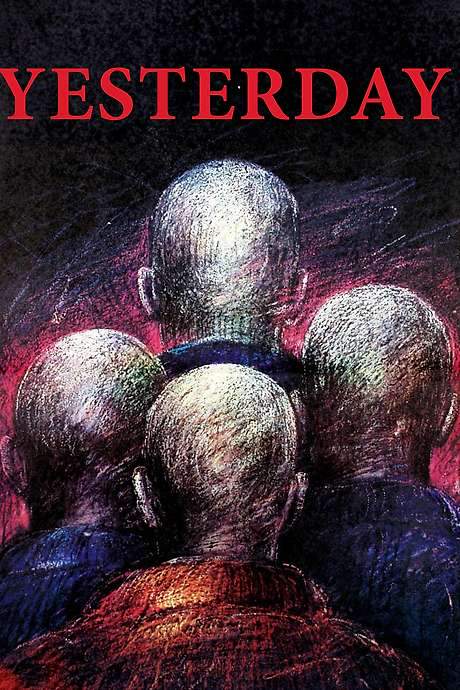
Yesterday (1988) movie poster

Characters & Themes

Yesterday (1988) Characters, Setting & Themes Explained

Release, runtime and language
1988 · 80 mins · Bulgarian
Loading streaming availability…
Directed by
Ivan Andonov
Starring
Hristo Shopov, Georgi Staykov, Krasimir Rankov, Christine Bartlett, Boris Lukanov, Pavel Popandov

Set against the backdrop of the 1960s—an era defined by the Beatles, the Rolling Stones and the sexual revolution—the film follows a Bulgarian English‑learning school where rigid, narrow‑minded teachers impose strict rules. The order sparks a student protest that channels the decade’s cultural upheaval.

On this page (8)
  1. 1 Where to watch
  2. 2 Characters explained (5)
  3. 3 Where & when it takes place
  4. 4 Themes & meaning (3)
  5. 5 Character & meaning questions
  6. 6 Movie threads
  7. 7 Movies like Yesterday
  8. 8 Every angle
Loading streaming availability…

5 main characters · contains spoilers

Yesterday Characters Explained: Who Is Who

The main characters of Yesterday (1988), heroes and villains: what drives them, how they change over the course of the story and what each of them reveals about the film's bigger ideas.

  • Ivan (Hristo Shopov)

    From an upper-class background, Ivan benefits from forgiving attitudes toward his offenses and wields social privilege within the school. He is chosen to play Holden Caulfield in a school production, hinting at his role as an observer who challenges authority through art.

    • 💼 Privilege
    • 🎭 Theatre
  • Rostislav (Georgi Staykov)

    Admitted on academic merit, Rostislav operates under intense pressure where a small mistake can lead to expulsion. He embodies the stakes of competition and the scrutiny of a system that rewards success while punishing failure.

    • 🎓 Merit
    • ⚖️ Pressure
  • Marina (Svetla Todorova)

    Marina loves gossip and drama, dragging others into the swirl of rumors. She thrives in social dynamics, serving as a catalyst for conflict and connection among the students.

    • 🗣️ Gossip
    • 🧭 Social dynamics
  • Dana (Sofiya Kuzeva)

    Daughter of a diplomat living in London, Dana returns to Bulgaria to attend the school, bringing a cosmopolitan perspective. Her presence intersects with the anti-establishment mood of the era, while the Beatles become a symbol of rebellion and shared identity.

    • 🌍 Cosmopolitan
    • 👩‍🎓 Student
  • Professor Naydenov (Stoyan Aleksiev)

    The teacher who invites Ivan to play Holden Caulfield, Naydenov embodies the teaching force that both influences and unsettles students. He fosters discussions of justice through literature, even as the school’s nervous atmosphere reveals the era’s fragility.

    • 🎓 Educator
    • 🗣️ Mentor

Last updated: February 18, 2026 at 23:06

Was this helpful?

Setting

Where and When Does Yesterday Take Place?

The setting of Yesterday (1988): the year and time period, the places and locations, and how they shape the characters, the mood and the tension of the story.

Time period

Late 1960s

Set in the late 1960s, the story places young Bulgarians in a society under totalitarian rule. Beat music, including The Beatles, becomes a symbol of youth liberation and a spark for rebellion. The era's political climate makes even friendships and romance subjects of surveillance and moral scrutiny. The period frames the characters’ quests for justice, love, and loyalty.

Location

London, Bulgaria

The film unfolds across two main settings: a London life of diplomacy at the start and a Bulgarian boarding language school later. The Bulgarian school is depicted as an elite, tightly controlled environment for children of high party functionaries. London offers a cosmopolitan backdrop that contrasts with the insular, ideologically charged school world. The settings together highlight the clash between private desires and public ideology.

  • 📍 London
  • 🌍 Bulgaria
  • 🏫 Boarding school

Last updated: February 18, 2026 at 23:06

Was this helpful?

3 major themes

Yesterday Meaning: Themes & Message Explained

What is Yesterday (1988) really about? The emotional, social and philosophical themes the film keeps returning to, its symbolism and the message beneath the surface.

  • Justice

    The film frames questions of justice against a rigid, ideology-driven system. The students debate fairness, equality, and moral choices as they navigate rules that punish even minor missteps. Holden Caulfield's presence in a school production feeds into their critique of authority. The pursuit of humane ideals challenges the regime's control, echoing the characters' desire for a fairer world.

  • Love

    Romantic feelings surface amid suspicion and state scrutiny. Relationships cross social borders within the elite school, testing loyalty and secrecy. The Beatles' music becomes a catalyst for shared emotion and a sense of freedom. The story uses love to illuminate vulnerability under a repressive political environment.

  • Resistance

    The characters' search for personal identity and autonomy acts as a form of quiet resistance. Friendship and loyalty push back against the expectations of a controlled society. The theater project and its dialogues give them a vehicle to imagine an alternate future. The escalating tension, including a pregnancy inquiry, underscores the cost of dissent.

Last updated: February 18, 2026 at 23:06

Was this helpful?

Character & theme questions

Yesterday Characters & Meaning: Your Questions Answered

The questions people ask about Yesterday (1988): who the characters really are, their relationships, what the symbols mean, where it takes place and what the movie is really about. Each answer contains spoilers.

Q1

Where does the story take place?

The movie takes place in two main settings: a Bulgarian boarding language school for children of high party functionaries, and London. The Bulgarian school is depicted as an elite, tightly controlled environment that represents the totalitarian regime, while London serves as a cosmopolitan backdrop representing freedom and personal desire.

Foreshadowing: The contrast between these settings highlights the clash between private desires and public ideology throughout the film.

  • bulgaria
  • london
  • boarding school
  • setting
  • locations
Q2

When is the movie set?

The movie is set in the late 1960s, a period marked by cultural upheaval, the Beatles, the sexual revolution, and totalitarian rule in Bulgaria. This era frames the characters' quests for justice, love, and loyalty against the backdrop of political surveillance and ideological control.

Foreshadowing: The 1960s setting allows beat music, especially The Beatles, to serve as a symbol of youth liberation and rebellion.

  • 1960s
  • late 1960s
  • era
  • time period
  • sixties
Q3

What kind of school is depicted in the film?

The Bulgarian school is an elite boarding institution for children of high party functionaries, portrayed as a tightly controlled environment where strict rules govern student life. The atmosphere is repressive and ideologically charged, with students facing severe consequences for even minor missteps.

Foreshadowing: The rigid school environment sparks a student protest that channels the decade's cultural upheaval.

  • boarding school
  • bulgarian school
  • elite school
  • education system
Q4

What are the main themes of the movie?

The film explores three interconnected themes: justice, which examines fairness and moral choices against an ideology-driven system; love, which highlights romantic relationships under state surveillance; and resistance, which follows the characters' search for personal identity and autonomy as a form of quiet dissent.

Foreshadowing: These themes intertwine through the students' theater project and their escalating challenges to authority.

  • themes
  • justice
  • love
  • resistance
  • main themes
Q5

How does the film handle the theme of justice?

The film frames questions of justice against a rigid, ideology-driven system where students debate fairness, equality, and moral choices. The decision to stage Holden Caulfield's story becomes a vehicle for critiquing authority, as the pursuit of humane ideals challenges the regime's control.

Foreshadowing: The students' discussions about justice through literature foreshadow their broader rebellion against the system.

  • justice
  • fairness
  • morality
  • authority
  • censorship
Q6

What role does love play in the story?

Romantic feelings surface amid suspicion and state scrutiny, with relationships crossing social borders within the elite school. The Beatles' music becomes a catalyst for shared emotion and a sense of freedom, illuminating vulnerability under the repressive political environment.

Foreshadowing: Love and music serve as both a source of connection and a form of quiet resistance against the controlled atmosphere.

  • love
  • romance
  • relationships
  • beatles
  • music
Q7

What does resistance mean in this context?

Resistance in the film takes the form of quiet dissent, characters searching for personal identity and autonomy through friendship, loyalty, and creative expression. The theater project gives students a vehicle to imagine an alternate future, with escalating tensions underscoring the personal cost of standing up to authority.

Foreshadowing: The blood oath taken by students at the end demonstrates how resistance creates lasting bonds despite tragedy.

  • resistance
  • dissent
  • rebellion
  • autonomy
  • identity
Q8

Who is Ivan and what is his role in the story?

Ivan comes from an upper-class background and benefits from forgiving attitudes toward his offenses due to his social privilege. He is chosen to play Holden Caulfield in a school production, which positions him as an observer who challenges authority through art and literary expression.

Foreshadowing: His role in the Holden Caulfield production hints at his potential to become a voice for rebellion.

  • ivan
  • holden caulfield
  • student
  • protagonist
  • theater
Q9

Who is Dana and what is her background?

Dana is the daughter of a diplomat living in London who returns to Bulgaria to attend the school, bringing a cosmopolitan perspective. Her presence intersects with the anti-establishment mood of the era, and The Beatles become a symbol of rebellion and shared identity through her influence.

Foreshadowing: Her London background and connection to Western music position her as a bridge between two worlds.

  • dana
  • diplomat daughter
  • london
  • beatles
  • cosmopolitan
Q10

What role does Professor Naydenov play?

Professor Naydenov is the teacher who invites Ivan to play Holden Caulfield in the school production. He embodies the teaching force that both influences and unsettles students, fostering discussions of justice through literature even as the school's nervous atmosphere reveals the era's fragility.

Foreshadowing: His decision to stage Holden Caulfield's story sets events in motion that challenge the school's authority.

  • professor naydenov
  • teacher
  • holden caulfield
  • mentor
  • literature
Q11

Who is Rostislav and what does he represent?

Rostislav was admitted to the school on academic merit and operates under intense pressure where a single mistake can lead to expulsion. He embodies the high stakes of competition within the system and represents students who have everything to lose from challenging authority.

Foreshadowing: His vulnerability within the system highlights the tragic consequences of dissent.

  • rostislav
  • academic merit
  • pressure
  • student
  • consequences
Q12

How do the different settings contrast with each other?

London represents freedom, cosmopolitan life, and private desires, while the Bulgarian boarding school represents ideological control and public conformity. This contrast highlights the clash between personal freedom and the totalitarian regime, with students navigating between their private selves and the public expectations of the state.

Foreshadowing: The settings themselves become characters, with London symbolizing what lies beyond the regime's reach.

  • london vs bulgaria
  • contrast
  • freedom vs control
  • settings

Movie threads

More Movies Like Yesterday, by Mood & Story

Curated lists built around what makes Yesterday tick: the same mood, the same kind of story or the same emotional payoff. Each list explains why these movies belong together.

Student Protest Movies like Yesterday

Young characters challenge authority in a melancholic historical drama. For viewers who enjoyed the rebellious spirit and melancholic tone of Yesterday. This section features movies like Yesterday that center on student uprisings, ideological clashes, and the emotional weight of challenging authority in a historical context.

  • rebellious
  • ideological conflict
  • generational clash
  • tragic
  • nostalgic
  • heavy
  • Tone: melancholic, tragic
  • Pacing: steady
Why these movies?

The story pattern: These narratives typically follow a group of young idealists whose growing awareness of injustice leads them to confront a powerful, inflexible system. The journey is often marked by camaraderie, moments of youthful exuberance, and ultimately, a heavy emotional cost, resulting in a bittersweet or tragic conclusion.

Why they belong together: Movies are grouped here because they share a core focus on generational conflict within an oppressive setting. They blend the personal drama of coming of age with the high stakes of political or ideological struggle, creating a specific vibe of melancholic defiance.
Bittersweet Historical Dramas like Yesterday

Emotionally heavy stories set against defining historical eras. If you liked the 1960s setting and bittersweet emotional weight of Yesterday, explore these similar movies. Find other melancholic period dramas where historical events deeply affect the characters' personal journeys and relationships.

  • melancholic
  • nostalgic
  • historical
  • bittersweet
  • reflective
  • tragic
  • Tone: melancholic, nostalgic
  • Pacing: steady
Why these movies?

The story pattern: The narrative pattern involves characters navigating personal desires and relationships within the constraints of a vividly depicted historical moment. The story is less about major events and more about their ripple effects, focusing on the emotional resonance of a bygone era and the inevitable sense of loss or change that time brings.

Why they belong together: These films are linked by their use of a nostalgic historical setting to frame a deeply emotional, character-driven story. The pacing is steady, the tone is melancholic, and the ending acknowledges both the pain and the beauty of the past, creating a powerful, bittersweet viewing experience.

If you liked this

Movies Like Yesterday

Similar movies to Yesterday: the same genre, themes or kind of story. Each one comes with its own plot summary, timeline and ending explained.

Browse all movie summaries

Every angle

Yesterday (1988) Explained: Plot, Timeline & Characters

Everything about Yesterday in one place: what happens in the plot summary, the timeline in chronological order, the characters and meaning and a spoiler-free summary. What's After the Movie adds the cast, box office and post-credit scenes.

Coming soon on iOS and Android

The Plot Explained Movie Summary App

Plot summaries, endings explained and timelines on your phone. Catch up on any movie in minutes, save your favorites and never miss a twist again.

Be the first to know when we launch. Your email stays private, always.

Learn more about the app