Plot Explained Spoilers guaranteed!
Plot Explained

Browse by genre

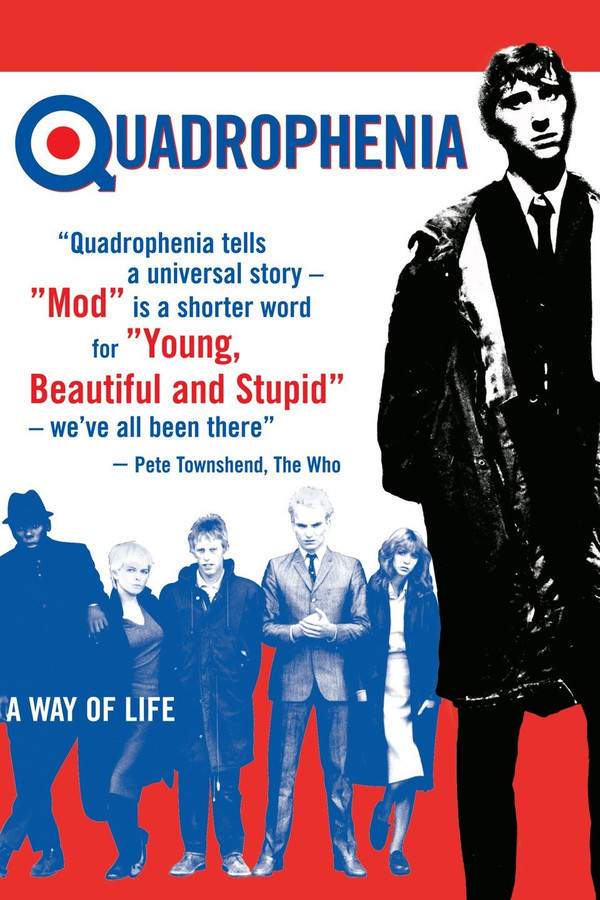
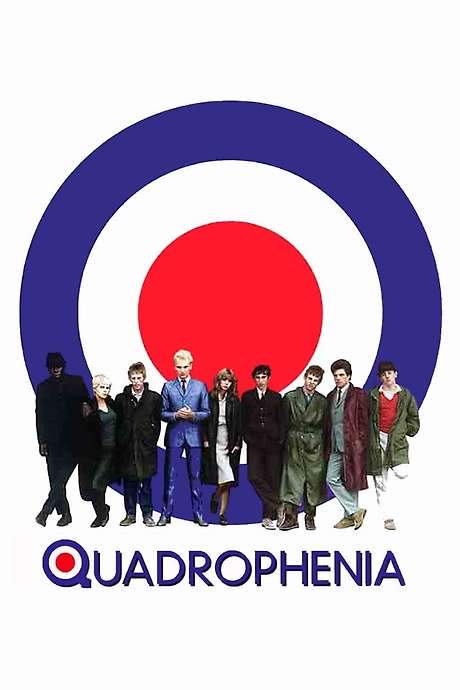
Quadrophenia (1979) movie poster

Plot Summary

Quadrophenia (1979) Plot Summary Explained

Release, runtime and language
1979 · 120 mins · English
Loading streaming availability…
Directed by
Franc Roddam
Starring
Ray Winstone, Timothy Spall, Leslie Ash, Mark Wingett, Phil Daniels, Sting

Based on The Who’s 1973 rock opera, the film follows Jimmy, a disaffected 1960s teenager stuck in a dead‑end job who seeks identity through the London Mod scene, dressing in sharp suits and cruising on his scooter. As he navigates love, rivalry and class tension, his quest for belonging drives the drama.

On this page (6)
  1. 1 Where to watch
  2. 2 What happens: full plot
  3. 3 Plot questions answered
  4. 4 Movie threads
  5. 5 Movies like Quadrophenia
  6. 6 Every angle
Loading streaming availability…

Full plot summary · contains spoilers

What Happens in Quadrophenia: Full Plot Summary

The whole story of Quadrophenia (1979) explained, from the opening scene to the final frame: every key event, every twist and what it all adds up to. Read it as a quick recap before the sequel, to check a scene you missed, or to finally understand what really happened.

In 1964, in London, a young mod named Jimmy Cooper, Phil Daniels feels stifled by his parents and a dull job as a post-room boy at an advertising firm. He channels his teenage angst into a loud mix of amphetamines, parties, scooter rides, and clashes with rival rockers, supported by his close-knit mod circle: Dave, Mark Wingett; Chalky, Phil Davis; and Spider, Gary Shail.

A brutal altercation leaves Jimmy’s childhood friend Kevin, one of the rival rockers, badly injured after an attack by hostile rockers on Spider. Jimmy initially takes part but, upon realizing Kevin is the victim, he scolds the others yet does not intervene directly, choosing instead to ride away on his scooter and vent his frustration with a loud cycle of revving engines.

The plot accelerates during a planned bank holiday weekend in a seaside town, Brighton, which becomes the stage for an escalating rivalry between mods and rockers. Jimmy hopes to stand out as a “face” and hints to Steph, a girl he admires, that she should ride with him. Steph, however, confirms she will ride with Pete, an older, well-heeled mod.

To afford their weekend, the friends try to buy recreational drugs from a London gangster, Harry North, only to be cheated with fake pills. After retaliating by vandalizing the drug dealer’s car, they steal a large quantity of their preferred “blues” from a pharmacy. They then set off on a long ride from London to the south coast, gathering on the seafront where Jimmy first spots a flamboyant scooter-riding mod he dubs Ace Face.

In a bustling dance hall, Jimmy plans to help Steph by guiding her to dance with Ace Face, but Ace Face moves in and dances with the American girl himself, forcing Steph to leave Jimmy. He attempts to win attention by climbing to the balcony edge for a moment of applause, only to be booed by the crowd and ejected by bouncers when he dives back into the audience. Steph ends up leaving with her escort, and the mood among the group shifts.

The gang spends the night sleeping rough and reconvenes at a café the next morning, then parades along the promenade, where running confrontations continue. The police close in on the rioters; Jimmy escapes with Steph, and they have sex right as police detain the rioters. Jimmy is arrested and placed in a holding cell with Ace Face, where he is fined a hefty £75—about £1,900 in 2023—while Ace Face mocks the magistrate by promising to pay on the spot with a cheque, a display that earns the respect of the other mods.

Back in London, a deep sense of despair takes hold. Jimmy’s mother throws him out after finding his stash of pills, and he quits his job, spends his severance on more drugs, and learns that Steph has become Dave’s girlfriend. After a brief fight with Dave, he discovers Steph’s new status and returns to his life’s downward spiral, with his Lambretta scooter damaged in a collision with a Royal Mail parcel van. He travels back to Brighton with a growing habit of pills and a shakier sense of direction.

Lonely and uncertain of his future, he revisits the riot sites and his encounter with Steph, only to discover that Ace Face is now working a lowly job as a bellboy at the Grand hotel. Jimmy steals Ace’s Vespa and rides toward Beachy Head, hoping to reclaim a moment of happiness in the sun. For a time he seems to savor the ride, but the moment darkens as he stares down at the sea in quiet misery. The scooter eventually crashes over the cliff’s edge, echoing the opening scene of a man walking away at sunset, completing the arc of a young life teetering between exhilaration and despair.
Last updated: October 09, 2025 at 12:34

Was this helpful?

Plot questions answered

Quadrophenia Plot Explained: Your Questions Answered

The questions people ask most about Quadrophenia (1979): what happens in the confusing scenes, why the characters do what they do, the twists, hidden details and what the ending means. Each answer contains spoilers.

Q1

Why does Jimmy ride away when Kevin is attacked?

Jimmy initially joins the attack on Kevin, who is a rival rocker and his childhood friend. Once he realizes Kevin is the victim, he stops participating but chooses not to physically intervene to save his friend. Instead, he vents his frustration by revving his scooter engine loudly, an act that reflects his inability to fully commit to either side and his growing internal conflict between loyalty and self-preservation.

Foreshadowing: This moment establishes Jimmy's pattern of backing away from decisive action despite his aggressive posturing.

  • Jimmy Cooper
  • Kevin
  • mod attack
  • scooter
  • Brighton riots
Q2

Why does Steph choose Pete instead of Jimmy?

Steph confirms she will ride with Pete, an older and more established mod whom she clearly respects and finds attractive. Pete represents the type of 'face' Jimmy aspires to be, someone with status and presence within the mod scene. Jimmy's invitation is vague and self-serving, while Pete offers the social standing and confidence that Jimmy lacks.

Foreshadowing: This rejection sets up Jimmy's desperate need to prove himself at Brighton, leading to his failed attempts to gain attention.

  • Steph
  • Pete
  • mod hierarchy
  • Brighton weekend
Q3

Why do the mods steal drugs from the pharmacy?

After being cheated with fake pills by London gangster Harry North, the mods retaliate by vandalizing his car. This doesn't satisfy their need for drugs for the Brighton trip, so they escalate to robbing a pharmacy directly to obtain a large supply of their preferred 'blues' (amphetamines). The theft is both revenge and necessity, they need drugs for the weekend and feel entitled after being swindled.

Foreshadowing: This criminal act foreshadows the escalating violence and lawlessness that culminates in the Brighton riots.

  • Harry North
  • blues
  • amphetamines
  • pharmacy robbery
  • drug deal
Q4

Why is Ace Face so important to Jimmy?

Ace Face represents everything Jimmy wants to be, a confident, stylish, and respected mod 'face' who commands attention wherever he goes. Jimmy spots Ace riding flamboyantly on Brighton's seafront and immediately idolizes him. Ace embodies the理想 of mod culture that Jimmy desperately seeks: recognition, status, and coolness. Jimmy's entire goal in Brighton is to achieve the same kind of admiration.

Foreshadowing: Jimmy's obsession with Ace Face builds toward the devastating revelation of Ace's real job, which shatters Jimmy's entire worldview.

  • Ace Face
  • mod idol
  • Jimmy Cooper
  • Brighton
  • scooter
Q5

Why does Jimmy try to help Steph dance with Ace Face?

Jimmy's plan is to guide Steph toward Ace Face so she can dance with the most impressive mod in the room, thinking this will reflect well on him as her escort. It's a misguided attempt to elevate his own status through association, helping his crush connect with the most prestigious mod would somehow validate Jimmy in the scene. The plan backfires spectacularly when Ace chooses to dance with Steph directly, leaving Jimmy humiliated.

Foreshadowing: This moment reveals Jimmy's fundamentally flawed approach to relationships and status: he treats connection as a transaction rather than something genuine.

  • Jimmy
  • Steph
  • Ace Face
  • Brighton dance hall
  • humiliation
Q6

Why is Jimmy fined £75?

Jimmy is arrested during the Brighton riots and held in a police cell alongside Ace Face. The magistrate imposes a hefty £75 fine, equivalent to roughly £1,900 in 2023, reflecting the seriousness of the violent clashes between mods and rockers. While Jimmy is being punished, Ace Face impresses the other mods by casually offering to pay the fine with a cheque, turning his arrest into a moment of street credibility.

Foreshadowing: The fine represents the first major consequence of Jimmy's reckless behavior, though he doesn't learn from it.

  • Jimmy arrest
  • £75 fine
  • Brighton riots
  • Ace Face
  • police
Q7

Why does Jimmy's mother throw him out?

Jimmy's mother evicts him after discovering his stash of amphetamines in the house. This represents the final straw in a long series of disciplinary issues and his growing self-destruction. The discovery, combined with his lost job and rebellious lifestyle, makes his presence unbearable for his parents, who have already watched him spiral throughout the film.

Foreshadowing: This eviction marks Jimmy's complete severance from conventional society and pushes him further into his self-destructive path.

  • Jimmy's mother
  • eviction
  • amphetamines
  • pills
  • London
Q8

Why does Jimmy steal Ace Face's Vespa?

After learning that Ace Face, the mod Jimmy idolizes, actually works as a lowly bellboy at the Grand Hotel, Jimmy's entire worldview collapses. The idol he wanted to become is just another working-class kid with a dead-end job. Devastated by this revelation, Jimmy steals Ace's Vespa in a desperate attempt to reclaim some of the status and freedom the scooter represented before he understood its true owner.

Foreshadowing: The theft is Jimmy's final act of rebellion, a twisted attempt to possess the identity he can no longer aspire to authentically.

  • Ace Face
  • Vespa theft
  • bellboy
  • Grand Hotel
  • Jimmy Cooper
Q9

Does Jimmy die at the end?

The film ends ambiguously but suggests Jimmy survives. He rides the stolen Vespa to Beachy Head, initially enjoying the freedom of the ride before descending into despair while staring at the sea. The scooter crashes over the cliff edge, echoing the opening scene of a man walking away at sunset. However, we never see Jimmy fall with the bike, he may have jumped off, leaving his scooter to crash while he walks away like the man in the opening shot, symbolizing his survival but continued emptiness.

Foreshadowing: The opening and closing shots mirror each other, suggesting a cyclical pattern rather than a definitive death.

  • Jimmy death
  • Beachy Head
  • cliff crash
  • ending
  • scooter
Q10

Why does Jimmy go to Beachy Head?

Jimmy travels back to Brighton desperately seeking to reclaim the excitement and purpose he felt during the weekend riots. With his life in London destroyed, evicted, unemployed, lost his girlfriend to his best friend, and his scooter damaged, he returns to the place where he felt most alive. Beachy Head represents a final attempt to reconnect with that fleeting sense of belonging and exhilaration, but instead he finds only despair.

Foreshadowing: The return to Brighton instead of moving forward signals Jimmy's inability to progress in life, trapped in the past.

  • Beachy Head
  • Brighton
  • Jimmy return
  • despair
  • suicide attempt
Q11

Why does Ace Face work as a bellboy at the Grand Hotel?

Ace Face's true occupation as a hotel bellboy shatters Jimmy's illusion that being a 'face' in the mod scene leads to a glamorous lifestyle. The flamboyant scooter-riding mod Jimmy idolized is just a regular working-class kid who goes back to a mundane job after the weekend. This reveals the hollowness of the mod identity Jimmy has been chasing, the status is temporary and superficial, masking the same class limitations Jimmy experiences.

Foreshadowing: This revelation is the catalyst for Jimmy's final breakdown and the theft of the Vespa.

  • Ace Face
  • bellboy
  • Grand Hotel
  • mod fantasy
  • class reality
Q12

Why does Steph become Dave's girlfriend?

After Jimmy is evicted, loses his job, and descends further into drug use, Steph gravitates toward Dave, Jimmy's close friend. Dave represents stability and presence, qualities Jimmy has lost. Jimmy's own self-destruction pushes people away, and Steph's shift to Dave happens naturally as Jimmy becomes increasingly unreliable and volatile. This betrayal (from Jimmy's perspective) deepens his isolation.

Foreshadowing: This relationship shift triggers Jimmy's fight with Dave and accelerates his downward spiral.

  • Steph
  • Dave
  • Jimmy
  • love triangle
  • betrayal
Q13

Why do mods and rockers fight in the movie?

The mods and rockers represent two competing youth cultures in 1960s Britain. Mods favor scooter rides, amphetamines, and sharp suits, while rockers embrace motorcycles and rock and roll. The rivalry is both cultural and class-based, with each group defining itself against the other. The Brighton bank holiday weekend becomes the flashpoint where these tensions explode into violent clashes, driven by deep-rooted tribalism and青春 identity.

Foreshadowing: The riots serve as the climactic event that brings Jimmy's conflicts to a head.

  • mods
  • rockers
  • Brighton riots
  • 1960s
  • youth culture

Movie threads

More Movies Like Quadrophenia, by Mood & Story

Curated lists built around what makes Quadrophenia tick: the same mood, the same kind of story or the same emotional payoff. Each list explains why these movies belong together.

Movies about bleak youth rebellion like Quadrophenia

Stories of teenage rebellion that lead to crushing disillusionment and alienation. For viewers who liked the angsty disillusionment of Quadrophenia, this list features similar movies about teenage rebellion and identity crises. These films explore the chaotic energy of youth subcultures, class conflict, and the heavy emotional weight of coming-of-age stories that end on a bleak note, showcasing characters who ultimately find only alienation.

  • angsty
  • disillusioned
  • alienated
  • rebellious
  • chaotic
  • desperate
  • Tone: melancholic, bleak
  • Pacing: steady, character-driven
Why these movies?

The story pattern: Narratives in this thread typically follow a linear path from fervent belonging in a group to a personal collapse. The protagonist invests their entire identity in a scene—mods, punk, gangs—driven by a desire to escape their circumstances. The story escalates through chaotic events, drug use, and peer rivalry, but the central arc is the protagonist's gradual or sudden realization of the emptiness of their ideals, leading to an isolated and hopeless ending.

Why they belong together: These films are grouped by their shared focus on the painful gap between youthful idealism and harsh reality. They share a melancholic tone, high emotional intensity, and a steady pacing that allows the character's disillusionment to build deliberately. The collective experience is one of heavy emotional weight, driven by themes of failed belonging and the inherent loneliness of growing up.

Gritty character descents into alienation like Quadrophenia

Character-driven dramas about a volatile protagonist's self-destructive spiral into isolation. If you appreciated the gritty, character-focused alienation in Quadrophenia, this collection features similar movies. These dramas follow a central protagonist on a self-destructive path, marked by high intensity, disturbing themes, and a steady pacing that builds towards a bleak ending, perfect for viewers seeking heavy, emotionally taxing stories about personal collapse.

  • alienated
  • desperate
  • self-destructive
  • lonely
  • gritty
  • intense
  • Tone: melancholic, bleak
  • Pacing: steady, deliberate
Why these movies?

The story pattern: The narrative pattern is an intimate character study of a downward spiral. The story is tightly focused on the protagonist's subjective experience as their world narrows. External conflicts with friends, family, or society reflect their internal chaos. The plot moves steadily, not with sudden twists, but with a cumulative weight of bad choices and shattered connections, culminating in a final image of absolute solitude.

Why they belong together: These movies are united by their intense focus on a single character's psychological unraveling. They share a high intensity born from emotional volatility, a steady pacing that makes the fall feel inevitable, and a consistently heavy emotional weight. The throughline is the visceral experience of watching someone desperately try, and fail, to connect with the world around them.

If you liked this

Movies Like Quadrophenia

Similar movies to Quadrophenia: the same genre, themes or kind of story. Each one comes with its own plot summary, timeline and ending explained.

Browse all movie summaries

Every angle

Quadrophenia (1979) Explained: Plot, Timeline & Characters

Everything about Quadrophenia in one place: what happens in the plot summary, the timeline in chronological order, the characters and meaning and a spoiler-free summary. What's After the Movie adds the cast, box office and post-credit scenes.

Coming soon on iOS and Android

The Plot Explained Movie Summary App

Plot summaries, endings explained and timelines on your phone. Catch up on any movie in minutes, save your favorites and never miss a twist again.

Be the first to know when we launch. Your email stays private, always.

Learn more about the app