






Plot Explained Spoilers guaranteed!
Plot Explained

Browse by genre

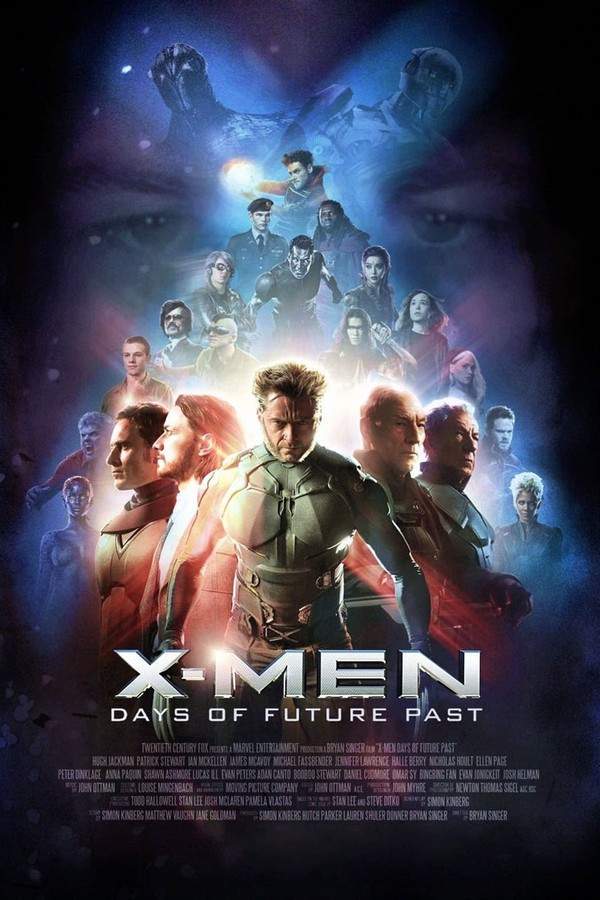
X-Men: Days of Future Past (2014) movie poster

Timeline

X-Men: Days of Future Past (2014) Timeline Explained – Every Event in Order

Release, runtime and language
2014 · 131 min · English
JustWatch #2,188 36
Directed by
Bryan Singer
Starring
Michael Fassbender, Peter Dinklage, Halle Berry, Hugh Jackman, Ian McKellen, Jennifer Lawrence
Budget
$200M

Facing extinction in a bleak future ruled by advanced robots, Wolverine is sent back in time to change the past. He must convince the original X-Men to work together against a looming threat: the creation of the Sentinels, formidable machines designed to eradicate mutants. His mission is fraught with danger, requiring him to navigate the complexities of the past and unite a fractured team to avert a devastating future.

On this page (7)
  1. 1 Where to watch
  2. 2 Events in order (14)
  3. 3 Timeline questions answered
  4. 4 The book behind the movie
  5. 5 Movie threads
  6. 6 Movies like X-Men: Days of Future Past
  7. 7 Every angle

Where to watch

Where to Watch X-Men: Days of Future Past (2014)

Where can you watch X-Men: Days of Future Past? Stream, rent or buy it in the US, including on Disney Plus, Amazon Video and Apple TV Store: current JustWatch availability with up-to-date prices.

Streaming availability powered by JustWatch

14 events in order · contains spoilers

X-Men: Days of Future Past Timeline: Events in Chronological Order

Every key event of X-Men: Days of Future Past (2014) in order, scene by scene, with when and where it takes place. Use it to untangle flashbacks, time jumps and parallel storylines, to refresh your memory before the sequel or to find the exact scene you are thinking of.

  1. Sentinels Attack in Moscow

    In a dystopian future, Sentinels, the robotic enforcers, launch a relentless assault on mutants and their human allies in Moscow. A group of mutants led by Kitty Pryde uses her ability to project a person's consciousness back in time to evade these merciless machines.

    Where
    Moscow
  2. Kitty Projects Wolverine's Consciousness

    In a desperate attempt to change the course of history, Kitty Pryde sends Wolverine's consciousness back to 1973. The goal is to prevent Mystique from assassinating Bolivar Trask, the mastermind behind the Sentinel program.

    When
    1973
  3. Meeting the Allies in China

    The team of mutants joins forces with powerful allies, including Storm, Professor Xavier, Magneto, and their younger selves. They convene in a sanctuary in China, strategizing on how to thwart the impending disaster caused by the Sentinels.

    Where
    China
  4. Awakening in the Past

    Wolverine awakens in 1973 in his younger body with his original claws intact. At the X-Mansion, he encounters Xavier and Beast, who reveal that the institution has closed due to the Vietnam War, leaving Xavier in a weakened state reliant on a serum.

    When
    1973
    Where
    X-Mansion
  5. Liberating Magneto

    Wolverine convinces Xavier to help him rescue Magneto from a high-security prison where he is held under accusations of assassinating President Kennedy. Using the super-speed of Peter Maximoff, they execute a daring prison break.

    Where
    Pentagon
  6. Trask's Struggle for Funding

    In Washington D.C., Bolivar Trask faces skepticism from the defense committee regarding his Sentinel program. He works diligently to secure funding despite pushback about the necessity of targeting mutants.

    Where
    Washington D.C.
  7. Mystique Intervenes in Saigon

    In a dangerous move, Mystique disrupts William Stryker's plans to capture a group of mutant GIs for Trask's experiments while in Saigon. This act of defiance solidifies her resolve against Trask's sinister intentions.

    Where
    Saigon
  8. Infiltrating the Peace Accords

    Mystique delves deeper into Trask's plans, recognizing the threat posed to mutants. She infiltrates the Paris Peace Accords while disguised, unaware that Xavier, Magneto, and Wolverine are racing to stop her from assassinating Trask.

    Where
    Paris
  9. Confrontation in Paris

    In Paris, a confrontation occurs between Mystique and the mutants as they attempt to prevent her from executing her planned assassination. Chaos breaks out, leading to a tense standoff where Mystique narrowly escapes.

    Where
    Paris
  10. Reveal of Mutants to Society

    The revelations surrounding mutants and their potential are brought into the public eye, leading to a significant shift in societal views. President Nixon, pressured by circumstances, greenlights Trask's Sentinel program.

  11. Xavier Rescinds His Serum

    Xavier, choosing to reignite his vision of peaceful coexistence, decides to forgo his serum, sacrificing his ability to walk in order to regain his mental powers. This manifests a newfound strength and determination in leading the mutants.

  12. Thwarting Nixon's Assassination

    As Nixon prepares to showcase Sentinel prototypes, Mystique's plan to assassinate him is intercepted by Xavier. Through his persuasion, she realizes that violence is not the answer and steps back from her efforts.

    Where
    White House
  13. Trask's Arrest and Public Shift

    In a turn of events, Mystique chooses to spare Trask, leading to his arrest under treason charges. This act of mercy shifts public perception of mutants, resulting in the cancellation of the Sentinel program.

  14. Wolverine Awakens in a New Future

    Wolverine awakens in a reformed future, greeted by familiar faces who symbolize a new era of unity. The changes initiated by Mystique's choices have transformed the world, allowing for a hopeful coexistence between humans and mutants.

Last updated: November 03, 2024 at 11:11

Was this helpful?

Timeline questions answered

X-Men: Days of Future Past Timeline Explained: Your Questions Answered

When does it happen, and why in that order? The questions people ask about the chronology of X-Men: Days of Future Past (2014): time jumps, flashbacks, cause and effect between scenes and the correct order of events, each answered with spoilers.

Q1

Why is Wolverine sent back to 1973?

Wolverine is sent back to 1973 because Kitty Pryde projects his consciousness into his younger body to prevent Mystique from assassinating Bolivar Trask. If Mystique kills Trask, she will be captured and her DNA will be used to create Sentinels that can adapt to any mutant's powers, leading to the apocalypse in the future. Wolverine must convince the young Xavier and Magneto to work together to stop her.

Foreshadowing: The opening scene in the dystopian future shows the desperate situation the mutants face, establishing why changing the past is their only hope.

  • wolverine
  • 1973
  • time travel
  • kitty pryde
  • mystique
  • bolivar trask
Q2

Why does Mystique want to kill Bolivar Trask?

Mystique wants to kill Bolivar Trask because he is the architect of the Sentinel program, a covert initiative to develop robots designed specifically to hunt and eliminate mutants. Trask has been capturing mutants for experimentation and plans to convince world leaders at the Paris Peace Accords to approve his Sentinel program, which would lead to the mass extermination of mutantkind.

Foreshadowing: Mystique's earlier intervention in Saigon, where she stops William Stryker from capturing mutant soldiers for Trask's experiments, reveals her personal vendetta against his work.

  • mystique
  • bolivar trask
  • sentinel program
  • assassination
  • mutants
Q3

How does Mystique's death lead to the Sentinel program?

If Mystique assassinates Trask in 1973, she gets captured rather than killed. Trask's company then extracts her DNA and uses it to engineer Sentinels capable of adapting to any mutant's powers. This makes the Sentinels nearly unstoppable, because they can counter any defensive mutation they encounter. Her shape-shifting abilities become the template for the very weapons designed to exterminate mutants.

Foreshadowing: The future Sentinels' ability to adapt is shown in the opening Moscow attack, demonstrating why the past must be changed.

  • mystique dna
  • sentinels
  • adaptive robots
  • bolivar trask
Q4

Why is Magneto in prison for assassinating JFK?

Magneto is imprisoned under accusations of assassinating President John F. Kennedy, which is a twist on the real-world "magic bullet theory" from the Warren Commission report. The film suggests Magneto was framed for JFK's murder, though the exact circumstances are left ambiguous. This false imprisonment keeps him locked away during the critical period when the Sentinel program could have been prevented.

Foreshadowing: The reference to the JFK assassination is planted early when Magneto is mentioned as being held in the Pentagon prison.

  • magneto
  • jfk assassination
  • pentagon prison
  • peter maximoff
Q5

Why does Professor Xavier stop using his serum?

Professor Xavier stops using his serum because he realizes that suppressing his telepathic abilities is preventing him from guiding Mystique away from violence. The serum allows him to walk but also blocks his mental powers, which he needs to communicate with and persuade Mystique during the White House confrontation. By abandoning the serum, he sacrifices his ability to walk but regains his full telepathic strength, enabling him to talk Mystique out of assassinating Nixon.

Foreshadowing: Xavier's struggle with the serum is established early, showing his dependence on it to walk.

  • professor xavier
  • serum
  • telepathy
  • walking
  • psychic powers
Q6

Why does Magneto try to kill Mystique in Paris?

Magneto attempts to kill Mystique in Paris because he believes that eliminating her will prevent her DNA from being harvested by Trask's company. If Mystique dies, Trask cannot use her shape-shifting genes to create adaptive Sentinels. However, this plan backfires because it triggers the public revelation of mutants when Magneto uses his powers, which shocks the world and ultimately leads Nixon to approve the Sentinel program.

Foreshadowing: The tension between Magneto's willingness to kill one mutant to save millions is established through his conversations with Xavier.

  • magneto
  • mystique
  • paris
  • assassination
  • sentinels
  • public reveal
Q7

How does the Sentinel program get approved after Paris?

After the confrontation in Paris, mutants are revealed to the public when Magneto uses his powers to attack the crowd and try to kill Mystique. This shocking display of mutant abilities causes President Nixon to fear mutant threats and grants approval for Trask's Sentinel program. The very event meant to prevent the Sentinel program inadvertently triggers its creation.

Foreshadowing: The chaos in Paris is designed to stop Mystique but instead creates the public panic needed for the program to pass.

  • nixon
  • sentinel program
  • paris peace accords
  • approval
  • mutants exposed
Q8

Why does Mystique spare Trask at the White House?

Mystique spares Trask because Professor Xavier uses his telepathic powers to communicate with her and convince her that killing will only make things worse. He persuades her that choosing mercy, rather than assassination, will change public perception of mutants. After Xavier's intervention, Mystique disguises herself as Nixon, stops Magneto's Sentinel attack, and allows Trask to be arrested for treason instead of killing him.

Foreshadowing: Xavier's earlier decision to stop using his serum directly enables this telepathic persuasion.

  • mystique
  • trasks
  • professor xavier
  • mercy
  • white house
  • nixon
Q9

How does the future change after the mission succeeds?

When Mystique spares Trask and he is arrested for treason, the Sentinel program is cancelled before it can begin. This prevents the creation of adaptive Sentinels, fundamentally altering the future. The dystopian timeline is erased, and Wolverine wakes up in a reformed present where characters who previously died, including Jean Grey and Cyclops, are now alive. The X-Men are united, and mutants live in a more peaceful world.

Foreshadowing: The altered future is glimpsed briefly as Wolverine transitions back, showing changes in the environment.

  • future changed
  • sentinels cancelled
  • jean grey
  • cyclops
  • new timeline
  • united mutants
Q10

Why does Mystique impersonate Stryker at the end?

At the end of the movie, Mystique impersonates William Stryker to infiltrate and extract Wolverine from whatever facility he was being held in. This shows that despite the timeline change, Stryker still exists as a threat to mutants, and Mystique continues her work protecting mutantkind through shape-shifting and infiltration.

Foreshadowing: Stryker's earlier appearance in Saigon, where he attempts to capture mutant soldiers, establishes him as an ongoing antagonist.

  • mystique
  • stryker
  • wolverine
  • impersonation
  • ending
Q11

Why does Kitty Pryde get exhausted while sending Logan back?

Kitty Pryde's ability to project consciousness into the past requires significant mental energy. The longer she maintains the connection, the more it drains her. When the Sentinels attack the sanctuary in China and get closer to finding the mutants, Kitty must concentrate harder to keep the temporal link open while also protecting the team. This nearly kills her when Logan's consciousness is suddenly pulled back during the battle.

Foreshadowing: The opening Moscow attack shows Kitty struggling to maintain the time projection while under Sentinel assault.

  • kitty pryde
  • time travel
  • exhaustion
  • sentinels
  • projection
Q12

Why does young Xavier need a serum to walk?

The young Professor Xavier in 1973 relies on a serum because he was severely injured during the Cuban Missile Crisis, as shown in the previous X-Men films. The serum allows him to walk but also suppresses his telepathic abilities, which is why he appears less powerful than his older self. The X-Mansion has also closed down due to the Vietnam War draining its staff and students.

Foreshadowing: Xavier's dependence on the serum is revealed immediately when Wolverine meets him in 1973.

  • xavier
  • serum
  • walking
  • cuban missile crisis
  • 1973
  • x-mansion

Movie threads

More Movies Like X-Men: Days of Future Past, by Mood & Story

Curated lists built around what makes X-Men: Days of Future Past tick: the same mood, the same kind of story or the same emotional payoff. Each list explains why these movies belong together.

Time-Travel Thrillers Like X-Men: Days of Future Past

High-stakes missions where altering the past is the only hope for a doomed future. If you enjoyed the desperate race against time in X-Men: Days of Future Past, you'll love these movies. This section features similar sci-fi stories where heroes embark on high-stakes missions into the past to prevent a dystopian future, blending tense action with complex, emotionally heavy stakes.

  • tense
  • urgent
  • dystopian
  • hopeful
  • suspenseful
  • epic
  • Tone: tense, urgent, hopeful
  • Pacing: fast, relentless
Why these movies?

The story pattern: This narrative pattern typically involves a dual-timeline structure, contrasting a bleak, hopeless present or future with a critical mission point in the past. The plot revolves around a small group or an individual racing to change a single, pivotal event, with the tension escalating as the stakes become global. The journey is fraught with personal sacrifice and moral dilemmas about changing history.

Why they belong together: Movies in this thread are grouped by their shared core premise: a desperate, time-sensitive mission to rewrite a catastrophic future. They share a mix of high-intensity action, complex cause-and-effect plotting, a tense tone, and an ultimately hopeful resolution where heroic sacrifice pays off.


Superhero Team-Up Movies Like X-Men: Days of Future Past

Stories where reluctant heroes must overcome differences to save the world. For fans of the epic team dynamics in X-Men: Days of Future Past, this section gathers movies with similar stories of fractured teams uniting against extinction-level threats. Explore films where powerful heroes must overcome their differences and work together in a tense, high-stakes battle for survival.

  • tense
  • epic
  • hopeful
  • teamwork
  • redemptive
  • high-stakes
  • Tone: tense, dramatic, hopeful
  • Pacing: fast, character-driven
Why these movies?

The story pattern: The narrative follows a group of characters, often with unique abilities or strong personalities, who are initially divided by conflict, mistrust, or competing philosophies. A looming catastrophe forces them to confront their differences, leading to a difficult process of reconciliation and teamwork. The climax hinges on their ability to combine their strengths and collaborate effectively to overcome an enemy they could never defeat alone.

Why they belong together: These movies are grouped by their central theme of found-family-in-adversity and the dramatic arc of a team forming under extreme pressure. They share an epic scale, heavy emotional weight centered on redemption and sacrifice, and a tone that balances tense internal conflict with rousing, hopeful resolution.

If you liked this

Movies Like X-Men: Days of Future Past

Similar movies to X-Men: Days of Future Past: the same genre, themes or kind of story. Each one comes with its own plot summary, timeline and ending explained.

Browse all movie summaries

Every angle

X-Men: Days of Future Past (2014) Explained: Plot, Timeline & Characters

Everything about X-Men: Days of Future Past in one place: what happens in the plot summary, the timeline in chronological order, the characters and meaning and a spoiler-free summary. What's After the Movie adds the cast, box office and post-credit scenes.

Coming soon on iOS and Android

The Plot Explained Movie Summary App

Plot summaries, endings explained and timelines on your phone. Catch up on any movie in minutes, save your favorites and never miss a twist again.

Be the first to know when we launch. Your email stays private, always.

Learn more about the app