Plot Explained Spoilers guaranteed!
Plot Explained

Browse by genre

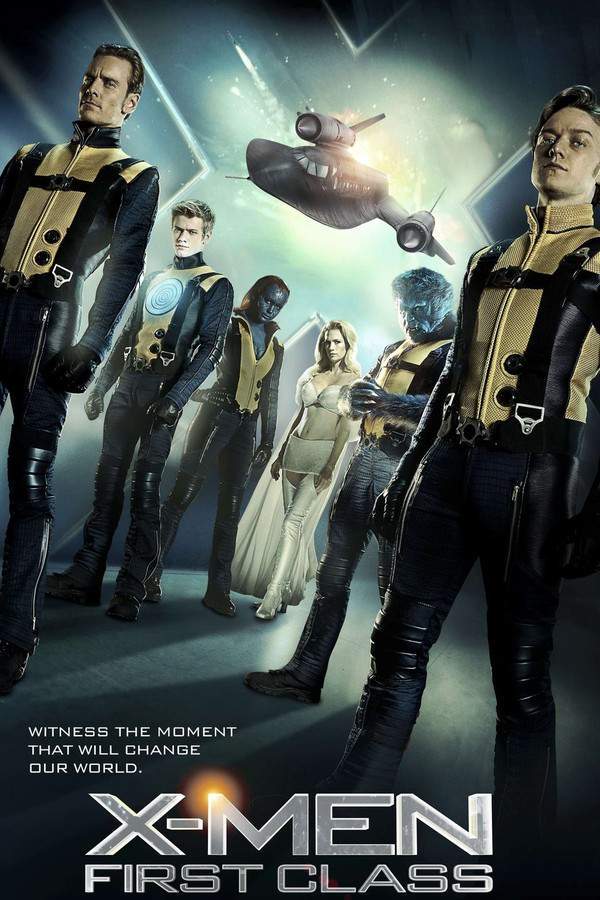
X-Men: First Class (2011) movie poster

Plot Summary

X-Men: First Class (2011) Plot Summary Explained

Release, runtime and language
2011 · 132 min · English
JustWatch #10,313 14
Directed by
Matthew Vaughn
Starring
Michael Fassbender, Jennifer Lawrence, James McAvoy, Kevin Bacon
Budget
$160M

A thrilling journey to the origins of the X-Men reveals how Charles Xavier and Erik Lensherr first discovered their mutant abilities and forged a powerful connection. As they confront a worldwide threat, their alliance is tested, forcing them to confront difficult choices that will shape their destinies and set the stage for a long-lasting conflict between Magneto's Brotherhood and Professor X's X-Men. Their actions will forever alter history.

On this page (7)
  1. 1 Where to watch
  2. 2 What happens: full plot
  3. 3 Plot questions answered
  4. 4 The book behind the movie
  5. 5 Movie threads
  6. 6 Movies like X-Men: First Class
  7. 7 Every angle

Where to watch

Where to Watch X-Men: First Class (2011)

Where can you watch X-Men: First Class? Stream, rent or buy it in the US, including on Disney Plus, HBO Max and Amazon Video: current JustWatch availability with up-to-date prices.

Streaming availability powered by JustWatch

Full plot summary · contains spoilers

What Happens in X-Men: First Class: Full Plot Summary

The whole story of X-Men: First Class (2011) explained, from the opening scene to the final frame: every key event, every twist and what it all adds up to. Read it as a quick recap before the sequel, to check a scene you missed, or to finally understand what really happened.

At a German concentration camp in Poland during 1944, a young Erik Lensherr (Michael Fassbender) experiences a traumatic separation from his parents at the hands of Nazi guards. In a moment of sheer desperation, the boy remarkably bends a metal gate with his mind until a guard forcefully knocks him unconscious. Observing from a distance is scientist Sebastian Shaw (Kevin Bacon), who summons Lensherr to showcase his powers further. Shaw cruelly orders Erik to move a coin; upon his failure, Shaw exacerbates the situation by executing Lensherr's mother right before his eyes. Consumed by rage, Erik unleashes his devastating magnetic abilities, resulting in the death of the guards and catastrophic destruction—much to Shaw's twisted delight.

Meanwhile, in Westchester County, New York, a young Charles Xavier (James McAvoy) encounters a shape-shifting girl known as Raven (Jennifer Lawrence). Disguised as his mother, Raven is rummaging through the fridge for food when Charles, using his telepathic gifts, communicates with her. Upon revealing her true blue-skinned form, they forge a bond as two unique individuals, with Charles inviting her to live with his family.

Fast forward to 1962 in Switzerland, Erik’s quest leads him to confront a banker, where he violently extracts information about Nazi gold's location in Argentina. In a tavern there, surrounded by former German soldiers, Erik unleashes his fury, killing three in his relentless pursuit of Shaw, ultimately discovering that Shaw is docked in Florida.

Meanwhile, in England, Xavier is advancing his research on mutation at Oxford University while navigating a complicated relationship with his foster sister Raven, who harbors feelings for him but feels rejected due to her appearance.

In Las Vegas, CIA agent Moira MacTaggart (played by Rose Byrne) infiltrates the Hellfire Club, where she witnesses Shaw and his dangerous cohorts—Emma Frost (January Jones), Riptide (Alex Gonzalez), and Azazel (Jason Flemyng)—threatening Colonel Hendry. Shaw's manipulation becomes clear as he exerts pressure on Hendry to adjust his stance on nuclear missile installation in Turkey, a threat underscored by Riptide’s terrifying display of power, hurling Hendry into a wall when he hesitates to comply.

Determined to expose Shaw and his mutant threat, MacTaggart seeks Xavier’s expertise on mutations. Together they strategize a plan to track down Shaw, just as the villain prepares to launch a nuclear war between the U.S. and Russia, hoping to eradicate humanity. The tension escalates when Xavier and Erik confront Shaw on his yacht. Despite Erik's intentions, Shaw's cunning tactics result in a fierce showdown, revealing the depth of their conflict.

As the two factions clash, Xavier and Lensherr gather a team of mutants, including Hank McCoy (Nicholas Hoult), leveraging a prototype Cerebro to hone their powers against Shaw's growing influence. The stakes reach a tipping point when Shaw's plans result in devastating confrontations. The conflict culminates in an epic confrontation where Lensherr, now fully embracing his identity as a mutant, must decide the fate of both his and Xavier's ideals.

In a final, heart-wrenching confrontation at sea, Lensherr’s choice to exact vengeance leads to irrevocable consequences, resulting in fractured alliances and a redefined future for mutants as he embraces his new identity as Magneto, forever altering the path ahead.
Last updated: November 02, 2024 at 13:11

Was this helpful?

Plot questions answered

X-Men: First Class Plot Explained: Your Questions Answered

The questions people ask most about X-Men: First Class (2011): what happens in the confusing scenes, why the characters do what they do, the twists, hidden details and what the ending means. Each answer contains spoilers.

Q1

Why does Sebastian Shaw kill Erik's mother in the concentration camp?

Shaw executes Erik's mother deliberately to trigger Erik's latent mutant abilities. When Erik fails to move a coin on command, Shaw shoots her in front of him, knowing that extreme emotional trauma could unlock Erik's powers. Shaw is a mutant who feeds on fear and suffering, so he manipulates Erik into embracing his hatred to achieve his full potential as a weapon.

Foreshadowing: Earlier, Shaw observes Erik bending a metal gate with his mind, confirming the boy possesses powerful mutant abilities.

  • sebastian shaw
  • erik lensherr
  • concentration camp
  • mutant abilities
  • mother death
  • trauma
Q2

Why does Erik Lensherr become Magneto?

Erik transforms into Magneto after witnessing Shaw kill his mother and experiencing the guards' brutality. The traumatic loss unleashes his magnetic powers in a destructive rage, killing the guards. Shaw's manipulation and the subsequent decades of hunting Nazis forge Erik's belief that mutants must never trust humans and must protect themselves through strength.

Foreshadowing: Shaw smiles with delight as Erik's powers emerge, revealing he orchestrated this transformation.

  • magneto
  • erik lensherr
  • transformation
  • revenge
  • mutant identity
  • fury
Q3

Why do Charles Xavier and Erik Lensherr become enemies?

Charles and Erik split because Erik chooses to kill Shaw for revenge while Charles believes Shaw should face trial and that killing is wrong. Erik views Shaw's death as justice for his mother's murder, but Charles sees it as crossing a moral line that would make Erik no better than his oppressors. This philosophical divide over whether mutants should use lethal force creates their enduring rivalry.

Foreshadowing: Their first meeting shows Charles using telepathy peacefully while Erik immediately uses his powers violently against a banker.

  • charles xavier
  • erik lensherr
  • magneto
  • professor x
  • ideological split
  • brotherhood
  • x-men
Q4

What did Sebastian Shaw do to Erik as a child?

Shaw discovered young Erik's mutant abilities at the concentration camp and deliberately exploited them. He forced Erik to demonstrate his power by ordering him to move a coin, then murdered Erik's mother when he failed. This calculated cruelty was designed to push Erik into embracing his hatred and unlocking his full potential, essentially grooming him into a weapon for years to come.


Foreshadowing: Shaw summoning Erik after his first display of power shows his predatory interest in the boy's abilities.

  • sebastian shaw
  • erik lensherr
  • childhood
  • concentration camp
  • psychological manipulation
  • grooming
Q5

Why does Raven leave Charles Xavier?

Raven leaves because she feels rejected by Charles despite their bond. Though Charles accepts her blue-skinned form, she yearns for romantic acceptance that Charles cannot provide. When Charles brings Hank McCoy to the mansion and seems more interested in developing Cerebro than in their relationship, Raven feels like an outsider in her own home and departs.

Foreshadowing: Their early encounter shows Raven hiding her true form, revealing her deep insecurity about her appearance.

  • raven
  • charles xavier
  • hank mccoy
  • rejection
  • blue skin
  • departure
Q6

What is the Hellfire Club's plan in the movie?

The Hellfire Club, led by Shaw, plans to trigger a nuclear war between the United States and the Soviet Union. By manipulating Colonel Hendry to support nuclear missile installation in Turkey and threatening to escalate tensions, Shaw hopes to spark global nuclear annihilation, believing humanity will destroy itself and allow mutants to inherit the Earth.

Foreshadowing: Emma Frost's telepathic abilities and Shaw's discussion about shaping history hint at their long-term manipulation.

  • hellfire club
  • sebastian shaw
  • nuclear war
  • cuba missile crisis
  • world domination
  • mutant supremacy
Q7

Why does Erik kill the German soldiers in Argentina?

Erik tracks down former German soldiers in an Argentina tavern who were complicit in transporting Nazi gold for Shaw. Driven by his obsessive quest for revenge, Erik tortures and kills three of them to extract information about Shaw's location. This violent pursuit demonstrates how his desire for vengeance has consumed him, turning him into a killer.

Foreshadowing: Erik's violent confrontation with the banker in Switzerland shows his ruthless methods of gathering information.

  • erik lensherr
  • nazis
  • argentina
  • revenge
  • killings
  • nazi gold
  • shaw
Q8

Why can't Charles and Erik work together against Shaw?

Despite forming an alliance to stop Shaw, Charles and Erik fundamentally disagree on how to handle the villain. When they confront Shaw on his yacht, Erik wants to kill him immediately for his crimes, but Charles insists Shaw must stand trial for his actions. This irreconcilable difference in philosophy, justice versus vengeance, destroys their partnership before it can fully develop.

Foreshadowing: Their opposing approaches are evident from their first meeting: Charles offers friendship while Erik immediately resorts to threats.

  • alliance
  • failure
  • philosophy
  • kill
  • justice
  • confrontation
  • yacht
Q9

Why does Erik choose revenge over staying with Xavier?

Erik chooses revenge because his mother's murder and years of hunting Nazis have made vengeance his entire identity. While Charles offers him a future based on hope and cooperation with humans, Erik cannot forgive Shaw or trust that humanity will accept mutants. The opportunity to finally kill Shaw proves more powerful than his friendship with Charles, sealing their permanent separation.

Foreshadowing: Erik's obsessive quest through Switzerland and Argentina shows his singular focus on finding Shaw.

  • magneto
  • revenge
  • choice
  • shaw
  • separation
  • brotherhood
  • ideology
Q10

Why is Erik's magnetic power so strong when he is angry?

Erik's mutant ability to manipulate metal is directly tied to his emotional state. His powers first manifested when he was terrified and desperate in the concentration camp, and they fully emerged in a burst of grief and rage after witnessing his mother's death. The stronger his emotions, especially hatred and grief, the more his magnetic abilities amplify, making him one of the most powerful mutants on Earth.

Foreshadowing: His first display of power occurs when he bends a gate while desperate to reach his parents.

  • magnetic powers
  • rage
  • emotions
  • mutant ability
  • concentration camp
  • intensity
Q11

Why does Shaw want to start a nuclear war?

Shaw believes humanity is inherently destructive and will eventually wipe itself out. He sees nuclear war as an accelerant that will eliminate human civilization while sparing mutants, allowing mutant-kind to become the dominant species. Rather than waiting for humans to turn on mutants, Shaw views nuclear annihilation as a preemptive strike that serves mutant interests.

Foreshadowing: Shaw's twisted satisfaction at the concentration camp reveals his philosophy that suffering and fear unlock power.

  • sebastian shaw
  • nuclear war
  • mutant supremacy
  • human extinction
  • hellfire club
  • cuba
Q12

Why do Xavier and Lensherr choose different paths for mutants?

Charles believes mutants should coexist peacefully with humans and use their abilities to protect humanity. Erik believes mutants should never trust humans and must dominate them to avoid suffering the same fate as Holocaust victims. These opposing philosophies, hope versus suspicion, integration versus separation, represent the fundamental divide that creates the X-Men versus Brotherhood conflict for decades.

Foreshadowing: Charles invites Raven to live with his family accepting her differences, while Erik's childhood trauma teaches him acceptance comes through power.

  • xavier
  • lensherr
  • philosophy
  • x-men
  • brotherhood
  • mutant future
  • ideology
  • different paths

Movie threads

More Movies Like X-Men: First Class, by Mood & Story

Curated lists built around what makes X-Men: First Class tick: the same mood, the same kind of story or the same emotional payoff. Each list explains why these movies belong together.

Superhero movies with tragic origins and fractured friendships like X-Men: First Class

Superhero stories where powerful bonds are forged and then tragically broken by ideology. Discover movies like X-Men: First Class that delve into the emotionally charged beginnings of superheroes. If you enjoyed the powerful bond and tragic ideological split between Professor X and Magneto, this thread features similar stories where found families are tested and alliances crumble under the pressure of differing worldviews.

  • tragic
  • powerful
  • conflicted
  • somber
  • high-stakes
  • revenge-driven
  • Tone: dark, bittersweet, tragic
  • Pacing: fast, character-driven
Why these movies?

The story pattern: These narratives typically follow a powerful duo or group whose shared experiences create an unbreakable bond. However, a central conflict—often a high-stakes global threat—forces them to confront their fundamental differences. The story culminates not just in overcoming the external threat, but in the poignant, inevitable fracture of their relationship, setting the stage for a long-lasting rivalry.

Why they belong together: Movies in this thread share a high emotional weight, a dark or bittersweet tone, and a focus on character-driven conflict over simple good vs. evil. They are united by the specific narrative pattern of a deep friendship or alliance that is tragically broken by ideology, leaving a lasting impact on the characters and their world.

Cold War espionage movies with superpowers like X-Men: First Class

Thrillers where superhuman abilities collide with the tense geopolitics of the Cold War. Find movies similar to X-Men: First Class that merge superhero action with Cold War intrigue. If you liked the high-stakes global crisis, era-specific settings, and the theme of mutants being weaponized in a world divided by ideology, this collection offers more thrilling stories where extraordinary powers meet historical tension.

  • tense
  • high-stakes
  • espionage
  • historical
  • geopolitical
  • gritty
  • Tone: tense, dark, high-stakes
  • Pacing: fast, thrilling
Why these movies?

The story pattern: The narrative pattern involves a hidden world of powered individuals being drawn into the covert conflicts of the Cold War era. The story often revolves around a race to secure a powerful weapon or individual that could tip the global balance of power, forcing characters to navigate espionage, betrayal, and the constant threat of worldwide destruction.

Why they belong together: These movies are grouped by their unique blend of a historical period setting (the Cold War), a fast-paced espionage plot, and the inclusion of superpowers or advanced technology. They share a high intensity, a dark and tense tone, and a focus on global stakes that feel grounded in a specific historical reality.

If you liked this

Movies Like X-Men: First Class

Similar movies to X-Men: First Class: the same genre, themes or kind of story. Each one comes with its own plot summary, timeline and ending explained.

Browse all movie summaries

Every angle

X-Men: First Class (2011) Explained: Plot, Timeline & Characters

Everything about X-Men: First Class in one place: what happens in the plot summary, the timeline in chronological order, the characters and meaning and a spoiler-free summary. What's After the Movie adds the cast, box office and post-credit scenes.

Coming soon on iOS and Android

The Plot Explained Movie Summary App

Plot summaries, endings explained and timelines on your phone. Catch up on any movie in minutes, save your favorites and never miss a twist again.

Be the first to know when we launch. Your email stays private, always.

Learn more about the app