



Plot Explained Spoilers guaranteed!
Plot Explained

Browse by genre

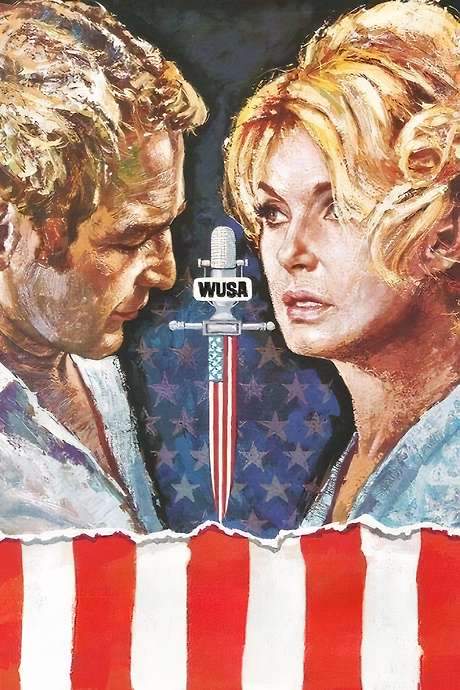
WUSA (1970) movie poster

Characters & Themes

WUSA (1970) Characters, Setting & Themes Explained

Release, runtime and language
1970 · 115 mins · English
Directed by
Stuart Rosenberg
Starring
Pat Hingle, Paul Newman, Cloris Leachman, Joanne Woodward, Bruce Cabot, Laurence Harvey

Love it or leave it. Rheinhardt, a cynical drifter, becomes an on‑air announcer for the right‑wing New Orleans station WUSA. Though he parrots the station’s reactionary editorials without agreeing, his detachment is shaken by his friend Geraldine and by Rainey, a troubled idealist neighbor who uncovers the station’s hidden, sinister agenda. As events spiral, Rheinhardt is forced to choose a side.

On this page (8)
  1. 1 Where to watch
  2. 2 Characters explained (6)
  3. 3 Where & when it takes place
  4. 4 Themes & meaning (3)
  5. 5 Character & meaning questions
  6. 6 Movie threads
  7. 7 Movies like WUSA
  8. 8 Every angle

Where to watch

Where to Watch WUSA (1970)

Where can you watch WUSA? Stream, rent or buy it in the US, including on Amazon Video, Apple TV Store and Fandango At Home: current JustWatch availability with up-to-date prices.

Streaming availability powered by JustWatch

6 main characters · contains spoilers

WUSA Characters Explained: Who Is Who

The main characters of WUSA (1970), heroes and villains: what drives them, how they change over the course of the story and what each of them reveals about the film's bigger ideas.

  • Rheinhardt (Paul Newman)

    A drifting, wary man who arrives in New Orleans seeking money and meaning. He becomes entangled with Geraldine after meeting her, and takes a job at the provocative WUSA radio station, where his skepticism clashes with the station’s propaganda. Throughout, he remains a critical observer of the forces around him, moving through the city’s counterculture and political machinations.

    • 🧭 Drifter
    • 🗣️ Cynical
    • 👥 Observer
  • Bingamon (Pat Hingle)

    Owner of the conservative WUSA station and a white supremacist figure who weaponizes propaganda to stoke fear and nostalgia. He uses editorials and orchestrated events to shape public opinion and expand his influence. His manipulation sets the events of the rally and the surrounding political theater in motion.

    • 🗣️ Manipulator
    • 🕰️ Reactionary
    • 🗞️ Media Puppeteer
  • Geraldine (Joanne Woodward)

    A woman who becomes Rheinhardt’s partner and a focal point in the story’s danger and vulnerability. Threatened by a pimp, she and Rheinhardt inhabit a harsh social landscape and confront the consequences of the rally’s chaos. Her arrest for marijuana and subsequent death reflect the personal tragedies entwined with political schemes.

    • 💔 Victim
    • 🕊️ Tragic
    • 🏘️ Bar Resident
  • Farley (Laurence Harvey)

    An old acquaintance running a scam as a preacher, he owes Rheinhardt money and emerges as a conniving figure within the city’s underbelly. Farley’s duplicity highlights the theme of opportunistic manipulation within a landscape of political rhetoric and social unrest.

    • 🗣️ Schemer
    • 🎭 Charlatan
    • 🧭 Opportunist
  • Rainey (Anthony Perkins)

    An earnest welfare surveyor who initially believes in reform yet discovers the depth of fraud and manipulation surrounding the beneficiaries. His growing horror at Bingamon’s machinations leads to a desperate attempt to act, which ends in tragedy as the crowd turns violent.

    • 🕊️ Idealist
    • 🧭 Honest
    • 🏛️ Bureaucrat
  • Clotho (Moses Gunn)

    A wealthy facilitator who guides Rainey toward beneficiaries and, behind the scenes, coordinates with Bingamon to steer the welfare narrative. Clotho embodies the role of a gatekeeper who enables systemic fraud through financial and social influence.

    • 💰 Wealthy Enabler
    • 🗝️ Gatekeeper
    • 🧭 Manipulator

Last updated: October 04, 2025 at 16:11

Was this helpful?

Setting

Where and When Does WUSA Take Place?

The setting of WUSA (1970): the year and time period, the places and locations, and how they shape the characters, the mood and the tension of the story.

Time period

Late 1960s – early 1970s

The events unfold in a contemporary era when television and radio shapes public opinion. The film depicts the rise of talk radio, media manipulation, and a climate of social upheaval, reflecting civil rights tensions and a distrust of institutions.

Location

New Orleans

New Orleans serves as the backdrop where Rheinhardt arrives and checks into a shelter. The city’s cheap housing and countercultural neighborhoods sit beside bar scenes where tensions simmer. The setting highlights a mix of hustles, counterculture, and emerging political propaganda that drives the story’s conflicts.

  • 🏙️ Urban city
  • 🎷 Jazz culture

Last updated: October 04, 2025 at 16:11

Was this helpful?

3 major themes

WUSA Meaning: Themes & Message Explained

What is WUSA (1970) really about? The emotional, social and philosophical themes the film keeps returning to, its symbolism and the message beneath the surface.

  • Media Manipulation

    The story centers on a conservative radio station that weaponizes fraud narratives to inflame listeners and justify propaganda. Rainey discovers that the station’s content is manufactured to support Bingamon’s agenda. The film shows how rhetoric can mold public perception and heighten societal divisions.

  • Power & Ideology

    Bingamon’s platform exposes how ideology and power are leveraged through media to control crowds and shape policy. A nostalgia-driven message appeals to fear and insecurity, masking exploitation as a return to ‘better times.’ The narrative reveals how wealth and influence influence public discourse and legitimacy.

  • Civil Unrest

    A hate rally culminates in violence, puncturing the illusion of order and exposing the fragility of the social fabric. Rainey’s attempt on Bingamon ends in tragedy as the crowd turns against him. Geraldine’s arrest and ultimate death underscore the human cost of hate and political theater.

Last updated: October 04, 2025 at 16:11

Was this helpful?

Character & theme questions

WUSA Characters & Meaning: Your Questions Answered

The questions people ask about WUSA (1970): who the characters really are, their relationships, what the symbols mean, where it takes place and what the movie is really about. Each answer contains spoilers.

Q1

Why is New Orleans used as the film's primary setting?

New Orleans provides a backdrop of stark contrasts, affordable housing, counterculture neighborhoods, jazz scene, and economic hardship, all simmering with racial and political tensions. The city's mix of hustles, cultural diversity, and emerging political propaganda creates the perfect environment for the story's exploration of media manipulation and social unrest.

  • new orleans
  • setting
  • city
  • backdrop
  • location
Q2

When does the movie take place?

The film is set in the late 1960s to early 1970s, a period marked by civil rights tensions, distrust of institutions, and the rise of talk radio as a powerful medium for shaping public opinion. This era provides the historical context for the film’s depiction of media manipulation and political theater.

  • time period
  • era
  • 1970s
  • historical context
  • contemporary
Q3

What does the film say about media manipulation?

WUSA depicts how a conservative radio station manufactures fraud narratives to inflame listeners and justify propaganda. The film shows that rhetoric can be weaponized to mold public perception, heighten societal divisions, and create a climate where fear and nostalgia are exploited for political gain.

  • media manipulation
  • propaganda
  • radio station
  • rhetoric
  • public opinion
Q4

How does the film explore power and ideology?

Through Bingamon's platform, the film reveals how ideology and wealth are leveraged through media to control crowds and shape policy. The nostalgia-driven message appeals to fear and insecurity, masking exploitation as a return to 'better times.' It shows how influential figures use media to legitimize their power and manipulate public discourse.

  • power
  • ideology
  • politics
  • manipulation
  • influence
  • bingamon
Q5

What role does civil unrest play in the story?

Civil unrest serves as the climax that exposes the fragility of the social fabric. A hate rally erupts into violence, puncturing any illusion of order. The narrative shows how political theater and hate speech can ignite mob violence, with tragic consequences for those caught in the turmoil.

  • civil unrest
  • violence
  • hate rally
  • social fabric
  • conflict
Q6

Who is Rheinhardt and what is his role in the story?

Rheinhardt is a cynical drifter who arrives in New Orleans seeking money and meaning. He becomes an announcer at the WUSA radio station, parroting its reactionary editorials without actually agreeing with them. Throughout the film, he remains a critical observer, a detached figure caught between the city's counterculture and the station's political machinations, never fully committing to either side.

  • rheinhardt
  • protagonist
  • drifter
  • observer
  • announcer
Q7

Who is Bingamon and what does he represent?

Bingamon is the owner of the WUSA station and a white supremacist figure who weaponizes propaganda to stoke fear and nostalgia. He uses editorials and orchestrated events to shape public opinion and expand his influence. He represents the dangerous intersection of media ownership, ideological extremism, and political manipulation.

  • bingamon
  • owner
  • radio station
  • white supremacist
  • propaganda
  • antagonist
Q8

Who is Geraldine and what does she represent?

Geraldine becomes Rheinhardt's partner and inhabits the harsh social landscape of the city, threatened by a pimp and caught in the rally's chaos. Her arrest for marijuana and subsequent death reflect the personal tragedies that unfold when individuals are caught in the crossfire of political schemes. She represents vulnerability and the human cost of the film's political world.

  • geraldine
  • partner
  • vulnerability
  • arrest
  • consequences
Q9

Who is Rainey and what is his function in the narrative?

Rainey is a welfare surveyor who initially believes in reform but discovers the depth of fraud and manipulation surrounding the beneficiaries. His growing horror at Bingamon's machinations leads him to attempt exposing the conspiracy, but his desperate act ends in tragedy when the crowd turns violent. He represents idealism corrupted by the system.

  • rainey
  • welfare
  • idealist
  • fraud
  • corruption
  • tragedy

Movie threads

More Movies Like WUSA, by Mood & Story

Curated lists built around what makes WUSA tick: the same mood, the same kind of story or the same emotional payoff. Each list explains why these movies belong together.

Movies about disillusioned idealists like in WUSA

Stories where hopeful characters are ground down by a corrupt and oppressive world. If you liked the grim exploration of idealism clashing with cynicism in WUSA, discover more movies where hopeful characters are crushed by corrupt systems. These similar political dramas and human rights stories feature heavy emotional weight and bleak endings.

  • disillusioned
  • grim
  • pessimistic
  • tense
  • oppressive
  • anxious
  • Tone: dark, bleak, pessimistic
  • Pacing: steady, methodical
Why these movies?

The story pattern: Narratives in this thread typically follow a character who begins with a sense of hope or moral purpose. As they engage with a corrupt institution, political machine, or cynical individual, their beliefs are systematically challenged and broken. The story arc is a downward spiral, often culminating in personal tragedy or a complete loss of faith.

Why they belong together: These films are grouped by their central thematic conflict—the destruction of idealism by cynicism. They share a dark, heavy tone, a steady pacing that builds towards inevitable despair, and a focus on the high-stakes emotional toll of confronting systemic corruption.


Movies about a cynic's awakening like in WUSA

A detached protagonist is forced to confront a moral crisis they tried to ignore. Find movies similar to WUSA that follow a cynical protagonist forced into a moral choice. These riveting political dramas explore themes of propaganda and individual responsibility, featuring tense pacing and heavy emotional consequences for characters who can no longer stay neutral.

  • cynical
  • tense
  • grim
  • consequential
  • morally complex
  • oppressive
  • Tone: dark, tense, grim
  • Pacing: steady build, consequential
Why these movies?

The story pattern: The narrative pattern follows a character who prioritizes self-preservation and disengagement. Their involvement in a morally dubious enterprise—like a propaganda station or criminal operation—is purely transactional. However, through their interactions with more idealistic characters or direct exposure to the consequences of their actions, their cynical armor cracks, leading to a climactic, often costly, choice.

Why they belong together: These movies share a specific character arc where a jaded individual undergoes a reluctant moral awakening. They are united by a tense, oppressive mood, a steady pacing that builds pressure on the protagonist, and a focus on the theme of moral compromise versus individual responsibility.

If you liked this

Movies Like WUSA

Similar movies to WUSA: the same genre, themes or kind of story. Each one comes with its own plot summary, timeline and ending explained.

Browse all movie summaries

Every angle

WUSA (1970) Explained: Plot, Timeline & Characters

Everything about WUSA in one place: what happens in the plot summary, the timeline in chronological order, the characters and meaning and a spoiler-free summary. What's After the Movie adds the cast, box office and post-credit scenes.

Coming soon on iOS and Android

The Plot Explained Movie Summary App

Plot summaries, endings explained and timelines on your phone. Catch up on any movie in minutes, save your favorites and never miss a twist again.

Be the first to know when we launch. Your email stays private, always.

Learn more about the app