



Plot Explained Spoilers guaranteed!
Plot Explained

Browse by genre

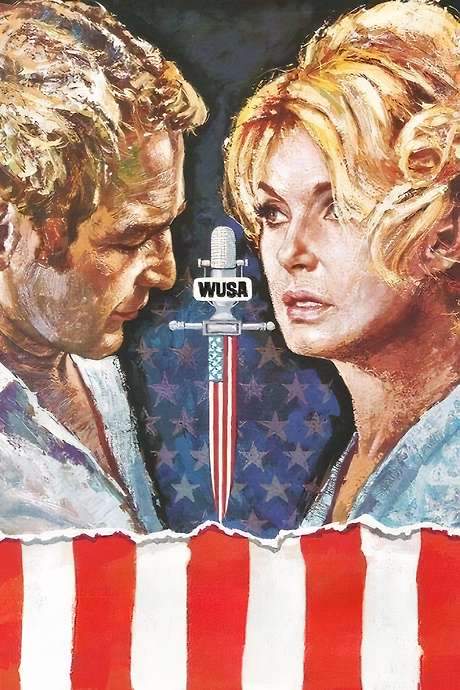
WUSA (1970) movie poster

Spoiler-Free Summary

WUSA (1970) Spoiler-Free Summary – What It's About

Release, runtime and language
1970 · 115 mins · English
Directed by
Stuart Rosenberg
Starring
Pat Hingle, Paul Newman, Cloris Leachman, Joanne Woodward, Bruce Cabot, Laurence Harvey

Love it or leave it. Rheinhardt, a cynical drifter, becomes an on‑air announcer for the right‑wing New Orleans station WUSA. Though he parrots the station’s reactionary editorials without agreeing, his detachment is shaken by his friend Geraldine and by Rainey, a troubled idealist neighbor who uncovers the station’s hidden, sinister agenda. As events spiral, Rheinhardt is forced to choose a side.

On this page (7)
  1. 1 Where to watch
  2. 2 What it is about
  3. 3 Is it worth watching?
  4. 4 After you watch
  5. 5 Movie threads
  6. 6 Movies like WUSA
  7. 7 Every angle

Where to watch

Where to Watch WUSA (1970)

Where can you watch WUSA? Stream, rent or buy it in the US, including on Amazon Video, Apple TV Store and Fandango At Home: current JustWatch availability with up-to-date prices.

Streaming availability powered by JustWatch

Spoiler-free summary · safe to read

What Is WUSA About? (No Spoilers)

The plot of WUSA (1970) without spoilers: what it is about, who it follows and where it takes place, told without the twists or the ending. Enough to decide whether it is your next watch, not enough to ruin it.

In the heat‑slick streets of New Orleans, a drifting outsider drifts into a city humming with noise, politics, and restless ambition. The atmosphere feels both gritty and electric, a place where the scent of jazz mixes with the static of a radio broadcast that never quite stops shouting. It is a world where the lines between public discourse and personal survival blur, and the city itself feels like a character—full of contradictions, color, and an undercurrent of unease.

Rheinhardt, the film’s weary protagonist, arrives with a cynical edge and a propensity for keeping emotional distance. He quickly finds work as an on‑air announcer at the right‑wing station WUSA, a job that demands he repeat incendiary editorials he never truly believes. The station’s unwavering tone clashes with the hippie‑laden neighborhoods he inhabits, creating a constant tension between his professional façade and the more questioning world around him.

Living in cheap housing with a circle of free‑spirited neighbors, Rheinhardt is drawn into a fragile domestic partnership with Geraldine, a woman whose own resilience and vulnerability hint at deeper currents beneath the city’s surface. Across the hallway, Rainey, an earnest idealist, studies the very system Rheinhardt vocalizes, slowly exposing a hidden agenda that permeates the station’s broadcasts. Their interactions pull him away from detached cynicism and toward a place where personal convictions can no longer stay buried.

The film balances an atmospheric, almost noir‑like mood with sharp social commentary, letting the audience feel the pressure of competing ideologies pressing on each character. As the city’s underbelly and the station’s rhetoric intersect, Rheinhardt finds himself at a crossroads, forced to decide whether to remain a dispassionate mouthpiece or to confront the moral complexities that swirl around him. The tension remains palpable, leaving the viewer eager to see which path he ultimately walks.

Last updated: December 04, 2025 at 23:10

Was this helpful?

What to expect

Is WUSA Worth Watching? What It Feels Like

Is it dark, sad, slow, intense or confusing? The mood of WUSA (1970) in a few tags, without a word about how it ends. Each tag opens a list of movies that feel the same.

After you watch

Seen WUSA? Now Read the Spoilers

Once you have watched WUSA (1970), come back for the full story: the plot summary with spoilers, the timeline in chronological order, the characters and meaning.

Movie threads

More Movies Like WUSA, by Mood & Story

Curated lists built around what makes WUSA tick: the same mood, the same kind of story or the same emotional payoff. Each list explains why these movies belong together.

Movies about disillusioned idealists like in WUSA

Stories where hopeful characters are ground down by a corrupt and oppressive world. If you liked the grim exploration of idealism clashing with cynicism in WUSA, discover more movies where hopeful characters are crushed by corrupt systems. These similar political dramas and human rights stories feature heavy emotional weight and bleak endings.

  • disillusioned
  • grim
  • pessimistic
  • tense
  • oppressive
  • anxious
  • Tone: dark, bleak, pessimistic
  • Pacing: steady, methodical
Why these movies?

The story pattern: Narratives in this thread typically follow a character who begins with a sense of hope or moral purpose. As they engage with a corrupt institution, political machine, or cynical individual, their beliefs are systematically challenged and broken. The story arc is a downward spiral, often culminating in personal tragedy or a complete loss of faith.

Why they belong together: These films are grouped by their central thematic conflict—the destruction of idealism by cynicism. They share a dark, heavy tone, a steady pacing that builds towards inevitable despair, and a focus on the high-stakes emotional toll of confronting systemic corruption.

Movies about a cynic's awakening like in WUSA

A detached protagonist is forced to confront a moral crisis they tried to ignore. Find movies similar to WUSA that follow a cynical protagonist forced into a moral choice. These riveting political dramas explore themes of propaganda and individual responsibility, featuring tense pacing and heavy emotional consequences for characters who can no longer stay neutral.

  • cynical
  • tense
  • grim
  • consequential
  • morally complex
  • oppressive
  • Tone: dark, tense, grim
  • Pacing: steady build, consequential
Why these movies?

The story pattern: The narrative pattern follows a character who prioritizes self-preservation and disengagement. Their involvement in a morally dubious enterprise—like a propaganda station or criminal operation—is purely transactional. However, through their interactions with more idealistic characters or direct exposure to the consequences of their actions, their cynical armor cracks, leading to a climactic, often costly, choice.

Why they belong together: These movies share a specific character arc where a jaded individual undergoes a reluctant moral awakening. They are united by a tense, oppressive mood, a steady pacing that builds pressure on the protagonist, and a focus on the theme of moral compromise versus individual responsibility.

If you liked this

Movies Like WUSA

Similar movies to WUSA: the same genre, themes or kind of story. Each one comes with its own plot summary, timeline and ending explained.

Browse all movie summaries

Every angle

WUSA (1970) Explained: Plot, Timeline & Characters

Everything about WUSA in one place: what happens in the plot summary, the timeline in chronological order, the characters and meaning and a spoiler-free summary. What's After the Movie adds the cast, box office and post-credit scenes.

Coming soon on iOS and Android

The Plot Explained Movie Summary App

Plot summaries, endings explained and timelines on your phone. Catch up on any movie in minutes, save your favorites and never miss a twist again.

Be the first to know when we launch. Your email stays private, always.

Learn more about the app