

Year: 1989
Runtime: 144 mins
Language: Korean
Director: Bae Yong-kyun
About three monks in a remote monastery; an aging master, a small orphan and a young man who left his city life to seek Enlightenment.
Get a spoiler-free look at Why Has Bodhi-Dharma Left for the East? (1989) with a clear plot overview that covers the setting, main characters, and story premise—without revealing key twists or the ending. Perfect for deciding if this film is your next watch.
In a secluded mountainside monastery, the rhythm of daily practice is punctuated by the wind through pine and the distant call of wildlife. The film opens on a humble world where silence is as much a teacher as any sutra, and the stone walls hold centuries of whispered contemplation. Within this austere setting three lives intersect: an aging master who has spent a lifetime questioning the very purpose of knowledge, a young novice seeking refuge from a bustling city, and an orphaned child whose innocence forces the others to confront the raw immediacy of compassion. The landscape itself feels like a character, its stark beauty mirroring the internal terrain the figures navigate.
Hye-gok, the venerable elder, embodies a paradox of stillness and subtle provocation, using ancient riddles to draw his disciple into a deeper awareness that resists easy answers. Ki‑bong, the novice, arrives with the quiet determination of someone who has already turned his back on a life of hardship, yet his path is tangled with lingering obligations to family and the practicalities of monastic life. Hae‑jin, the small boy, moves through the monastery with a curious mixture of resilience and naïve empathy, turning everyday moments into gentle tests of attachment and release.
The tone remains meditative, inviting viewers to linger on simple gestures—a breath, the rustle of a bird’s wing, the slow burn of incense—and to feel the weight of unspoken questions that hover like mist over the peaks. Interpersonal dynamics unfold with a softness that never feels melodramatic; instead, each character’s presence subtly reshapes the others, hinting at a collective search for an “original face” beyond the confines of identity. The film’s visual language is spare yet evocative, using long takes and natural light to underscore the quiet tension between renunciation and the inevitable pull of the world outside the cloister.
Last Updated: December 03, 2025 at 23:45
Discover curated groups of movies connected by mood, themes, and story style. Browse collections built around emotion, atmosphere, and narrative focus to easily find films that match what you feel like watching right now.
Slow-paced meditations on enlightenment, monastic life, and the search for meaning.If you liked the meditative, patient exploration of enlightenment in Why Has Bodhi-Dharma Left for the East?, you'll find similar films here. This thread gathers movies that focus on monastic life, spiritual seeking, and deep philosophical inquiry, all told with a serene and contemplative pace.
Narratives in this thread are driven by a character's internal quest for understanding, often involving a mentor-student relationship. The plot is minimalist, with pivotal moments occurring in quiet realizations or subtle interactions rather than dramatic events. The journey is cyclical and reflective, mirroring the process of spiritual practice itself.
These movies are grouped by their shared commitment to a quiet, reverent tone, a slow and deliberate pacing that allows for introspection, and a central focus on themes of enlightenment, duty, and the nature of existence. They create a specific, immersive mood of thoughtful serenity.
Stories that find profound beauty and sorrow in the acceptance of life's transient nature.For viewers seeking movies similar to Why Has Bodhi-Dharma Left for the East? that explore themes of grief, loss, and the acceptance of impermanence. These films share a bittersweet tone and a reflective pace, finding hope and peace amidst life's inevitable changes and endings.
The narrative pattern often involves characters confronting loss—of a loved one, a way of life, or their own identity—and moving through grief toward a hard-won acceptance. The conflict is internal, centered on coming to terms with reality. The ending is typically bittersweet, acknowledging pain while finding a glimmer of peace or continuity.
This grouping is defined by a shared emotional core: a melancholic yet compassionate tone, a medium emotional weight that feels deeply human, and a bittersweet ending feel. The pacing is often slow to moderate, allowing the emotional impact to settle and resonate.
Don't stop at just watching — explore Why Has Bodhi-Dharma Left for the East? in full detail. From the complete plot summary and scene-by-scene timeline to character breakdowns, thematic analysis, and a deep dive into the ending — every page helps you truly understand what Why Has Bodhi-Dharma Left for the East? is all about. Plus, discover what's next after the movie.
Read a complete plot summary of Why Has Bodhi-Dharma Left for the East?, including all key story points, character arcs, and turning points. This in-depth recap is ideal for understanding the narrative structure or reviewing what happened in the movie.
Track the full timeline of Why Has Bodhi-Dharma Left for the East? with every major event arranged chronologically. Perfect for decoding non-linear storytelling, flashbacks, or parallel narratives with a clear scene-by-scene breakdown.
Discover the characters, locations, and core themes that shape Why Has Bodhi-Dharma Left for the East?. Get insights into symbolic elements, setting significance, and deeper narrative meaning — ideal for thematic analysis and movie breakdowns.
Visit What's After the Movie to explore more about Why Has Bodhi-Dharma Left for the East?: box office results, cast and crew info, production details, post-credit scenes, and external links — all in one place for movie fans and researchers.
Discover movies like Why Has Bodhi-Dharma Left for the East? that share similar genres, themes, and storytelling elements. Whether you’re drawn to the atmosphere, character arcs, or plot structure, these curated recommendations will help you explore more films you’ll love.
Why Has Bodhi-Dharma Left for the East? (1989) Scene-by-Scene Movie Timeline
Why Has Bodhi-Dharma Left for the East? (1989) Movie Characters, Themes & Settings
Why Has Bodhi-Dharma Left for the East? (1989) Spoiler-Free Summary & Key Flow
Movies Like Why Has Bodhi-Dharma Left for the East? – Similar Titles You’ll Enjoy
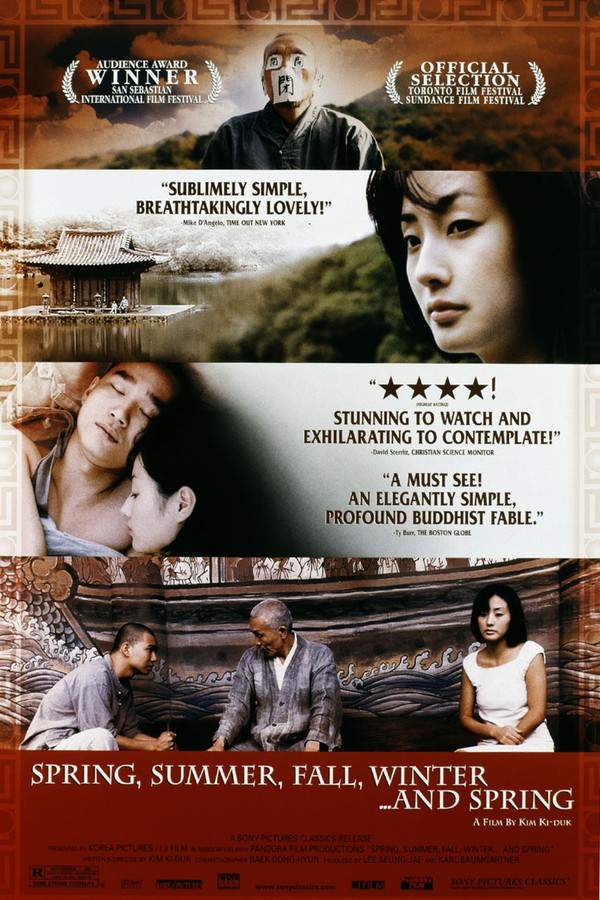
Spring, Summer, Fall, Winter... and Spring (2004) Detailed Story Recap
Himalaya (2001) Story Summary & Characters
Buddha Wild: Monk in a Hut (2006) Story Summary & Characters
A Boy and Sungreen (2018) Ending Explained & Film Insights
Samsara (2001) Spoiler-Packed Plot Recap
A Buddha (2005) Story Summary & Characters
Mandala (1981) Spoiler-Packed Plot Recap
Shaolin Master and the Kid (1978) Story Summary & Characters
Buddha (1961) Plot Summary & Ending Explained
Little Buddha (1993) Movie Recap & Themes
The Light of Asia (1925) Story Summary & Characters
Passage to Buddha (1993) Film Overview & Timeline
Temptation of a Monk (1993) Plot Summary & Ending Explained
Burrowing (2009) Complete Plot Breakdown
Bodo (1993) Ending Explained & Film Insights