Plot Explained Spoilers guaranteed!
Plot Explained

Browse by genre

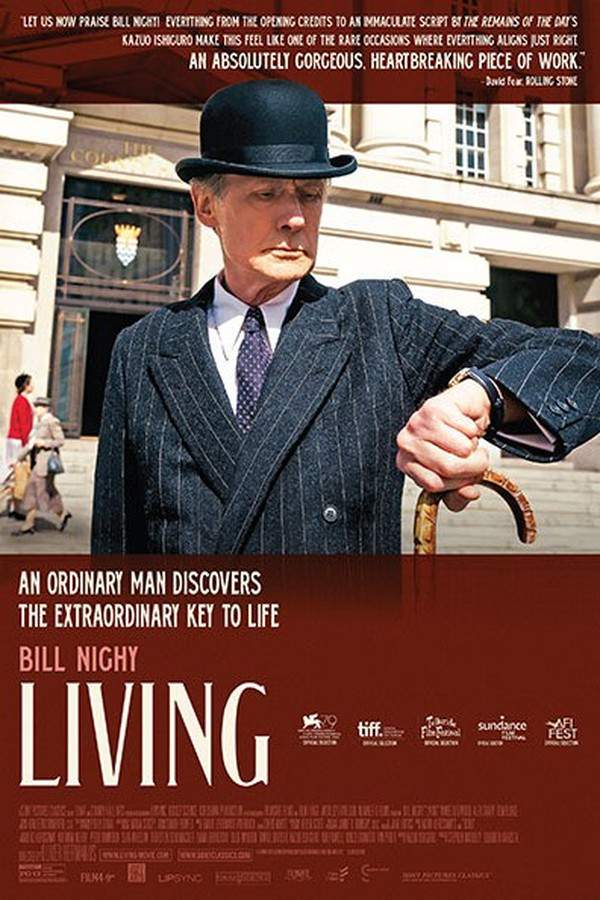
Living (2022) movie poster

Plot Summary

Living (2022) Plot Summary & Ending Explained

Release, runtime and language
2022 · 102 min · English
Echo score 75
JustWatch #258 96
Directed by
Oliver Hermanus
Starring
Adrian Rawlins, Aimee Lou Wood, Alex Sharp, Anant Varman, Bill Nighy, Hubert Burton
Budget
$10M

A man finds himself stuck in a deeply monotonous routine, longing for a way to break free. He quietly begins a journey of personal change, seeking meaning and purpose beyond the confines of his everyday life. Determined to find vibrancy and inject a sense of vitality into his stagnant existence, he embarks on a quest for transformation and a chance to truly live.

On this page (7)
  1. 1 Where to watch
  2. 2 What happens: full plot
  3. 3 Plot questions answered
  4. 4 How it ends
  5. 5 Movie threads
  6. 6 Movies like Living
  7. 7 Every angle

Where to watch

Where to Watch Living (2022)

Where can you watch Living? Stream, rent or buy it in the US, including on fuboTV, Hulu and YouTube TV: current JustWatch availability with up-to-date prices.

Streaming availability powered by JustWatch

Full plot summary · contains spoilers

What Happens in Living: Full Plot Summary

The whole story of Living (2022) explained, from the opening scene to the final frame: every key event, every twist and what it all adds up to. Read it as a quick recap before the sequel, to check a scene you missed, or to finally understand what really happened.

Rodney Williams is a dedicated bureaucrat working for the London County Council in the year 1953, feeling overwhelmed as he sits amidst towering stacks of paperwork, his inspiration seemingly depleted. A group of determined women, led by Mrs. Smith, approach the council with a heartfelt petition, seeking to transform a World War II bomb site into a children's playground. However, their request is met with indifference, as the petition is shuffled from one department to another without any real consideration. When the petition ultimately lands on Mr. Williams' desk, he adds it to his ever-growing pile, signaling to his colleagues his intention to take no meaningful action.

In a tragic turn of events, Mr. Williams learns of his terminal cancer diagnosis, yet he chooses to keep this news a secret from his son, Michael, and daughter-in-law, Fiona. Instead, he takes a drastic step, withdrawing half of his life savings and purchasing a fatal dose of sleeping medication with plans to end his life in a serene seaside resort. At the moment of decision, however, he finds himself unable to proceed with his plan and instead encounters Mr. Sutherland, an insomniac writer in a local restaurant, whom he gifts the sleeping medicine.

Moved by Mr. Williams' poignant story, Sutherland takes him out for a memorable evening. During their escapade, Williams trades in his traditional bowler hat for a stylish fedora. At a pub, he unexpectedly connects with his past, singing “The Rowan Tree,” a Scottish folk song that resonates deeply with his childhood. Upon returning to London, although he avoids returning to work, Williams has a chance meeting with Miss Harris, a former colleague now working at a restaurant. Their lunch together is noticed by a meddlesome neighbor, causing Fiona to demand that Michael confront his father about potential gossip.

As time goes on, Williams struggles to convey his diagnosis to Michael, with both father and son unable to breach the subject clouded by unspoken emotions. As his health deteriorates, Williams increasingly cherishes the company of Harris, whose youthful enthusiasm he longs to regain. Realizing that he wants to leave a positive mark on the world, Williams inspires his office to take action in constructing the children's playground that was once sidelined. He successfully advocates for the project, confronting his superiors to expedite the process, yet he tragically passes away shortly after its completion.

At his funeral, a heartfelt gathering of those he impacted, Michael speculates to Harris that his father may have confided in her about his condition, a revelation that leaves lingering questions. Motivated by Williams' legacy, his former colleagues vow to change their ways, but the pressures of their roles quickly lead them back to their old habits. Mr. Wakeling, a new recruit in the office, discovers a letter left by Williams encouraging him to remember the playground during tough times. A visit to the playground reveals a heartwarming encounter when a police officer recounts seeing Williams enjoy a moment of solace there just before he died, swinging in the snow and singing “The Rowan Tree.” The officer grapples with guilt for allowing Williams to sit outside in his fragile condition, but Wakeling reassures him that in that moment, Williams was likely experiencing greater joy than he had in a long time.
Last updated: November 16, 2024 at 12:27

Was this helpful?

Plot questions answered

Living Plot Explained: Your Questions Answered

The questions people ask most about Living (2022): what happens in the confusing scenes, why the characters do what they do, the twists, hidden details and what the ending means. Each answer contains spoilers.

Q1

Why does Rodney keep his cancer diagnosis secret from his son?

Rodney chooses to hide his terminal diagnosis because he cannot find the words to tell Michael. Throughout the film, both father and son attempt to discuss the matter but are unable to breach the subject clouded by unspoken emotions. Rodney decides to bear this burden alone, preferring to spare his son the pain of knowing about his impending death rather than facing a difficult conversation.

  • cancer diagnosis
  • terminal illness
  • family secrets
  • michael
  • father son relationship
Q2

Why does Rodney give his sleeping pills to Mr. Sutherland?

At the moment Rodney plans to take his own life at the seaside resort, he finds himself unable to go through with it. Instead, he encounters Mr. Sutherland, an insomniac writer who struggles to sleep. Moved by their conversation and his own reluctance to die, Rodney gives Sutherland the sleeping medication, symbolically releasing his plan to end his life while also offering help to someone else who needed it.

  • sleeping pills
  • suicide
  • Mr Sutherland
  • insomnia
  • gift
Q3

What causes Rodney to suddenly care about the women's playground petition?

After receiving his terminal diagnosis and experiencing his night out with Sutherland, Rodney gains a new perspective on life. He realizes he wants to leave a positive mark on the world rather than simply existing. This change in outlook motivates him to advocate for the children's playground that the women had requested, transforming from someone who shuffled their petition without consideration into someone who confronts his superiors to get the project approved.

  • playground petition
  • Mrs Smith
  • legacy
  • purpose
  • change
Q4

Why does Rodney plan to end his life at the seaside resort?

After learning of his terminal cancer diagnosis, Rodney withdraws half his life savings and purchases a fatal dose of sleeping medication with the intention of traveling to a serene seaside resort to end his life. The location represents his desire for a peaceful, solitary departure away from his ordinary life and family responsibilities. However, at the crucial moment, he is unable to proceed with his plan.

  • seaside resort
  • suicide
  • terminal cancer
  • death plan
Q5

What is the significance of Rodney singing "The Rowan Tree"?

"The Rowan Tree" is a Scottish folk song that resonates deeply with Rodney because it connects to his childhood memories. While at the pub with Mr. Sutherland, Rodney sings this song and it serves as a powerful moment of nostalgia, reminding him of the vibrant life he once had. This moment also foreshadows his death, as the police officer later recounts seeing him swinging and singing the same song at the playground just before he died.

Foreshadowing: The song becomes a final moment of joy that Rodney revisits before his death.

  • The Rowan Tree
  • Scottish folk song
  • childhood
  • nostalgia
  • memory
Q6

What does Miss Harris represent in Rodney's life?

Miss Harris is a former colleague whom Rodney encounters working at a restaurant after his return from the seaside. As Rodney's health deteriorates, he develops a deep friendship with her. Her youthful enthusiasm reignites a spark in him and brings a sense of joy and purpose during his final days. Their connection gives Rodney something to cherish beyond his illness, and he longs to regain the vitality she represents.

  • Miss Harris
  • friendship
  • youth
  • vitality
  • hope
Q7

How does Rodney die in the film?

Rodney passes away from his terminal cancer shortly after the children's playground project is completed. He does not die at the seaside resort where he originally planned to end his life. Instead, he returns to London, advocates for the playground, and dies peacefully after seeing his final achievement come to fruition. A police officer later recounts seeing Rodney enjoying a moment of solitude at the playground, swinging and singing "The Rowan Tree" just before his death.

  • death
  • cancer
  • playground
  • final moments
Q8

What is the letter that Rodney leaves for Mr. Wakeling?

Mr. Wakeling is a new recruit in the office who discovers a letter left by Rodney after his death. The letter encourages Wakeling to remember the playground during tough times. This message serves as Rodney's enduring legacy, offering hope and perspective to others facing difficult moments in their lives. The letter represents Rodney's final gift to someone he never met, passing on the meaning he found in his last days.

  • letter
  • Mr Wakeling
  • legacy
  • inspiration
  • message
Q9

Why does Fiona demand Michael confront his father about gossip?

Fiona becomes concerned after she notices Rodney having lunch with Miss Harris at a restaurant. A meddlesome neighbor observes their meeting and gossip begins to spread. Fiona worries about what people might think of her father-in-law's behavior and demands that Michael confront his father about the situation. This moment highlights the social pressures and expectations that still surround Rodney even as he faces his mortality.

  • Fiona
  • Michael
  • gossip
  • Miss Harris
  • neighbor
Q10

Do Rodney's colleagues actually change after his death?

At Rodney's funeral, his former colleagues are motivated by his legacy and vow to change their ways. However, the film reveals that the pressures of their roles quickly lead them back to their old habits. This realistic portrayal shows that while Rodney's impact was meaningful, genuine change in a bureaucratic system is difficult to sustain. Only Mr. Wakeling, as a new recruit, carries forward Rodney's message through the letter about the playground.

  • colleagues
  • bureaucracy
  • change
  • legacy
  • Wakeling

Ending explained

What Happens at the End of Living?

How Living (2022) ends, in short: the final scene, the last twist and what it means for the characters. The full ending explained, with every spoiler, lives on its own page.

Read the full ending explained

In the end, Williams’ final act of building the children’s park becomes a powerful symbol of how he chose to live his last months. Despite his initial reluctance and the routinized, emotionless life he had led, Williams’ encounter with his mortality pushed him to leave a lasting positive impact. His efforts to ensure the park’s construction before he died show that he finally understood what truly matters—bringing happiness to others rather than merely fulfilling bureaucratic duties. Williams' dedication inspires his colleagues to take their work more seriously, even though most revert to old habits. However, Williams himself remains the only one who keeps his commitment, exemplified by his decision to visit the park after his death, where he genuinely feels joyful swinging in the snow, despite risking his health. This act signifies that he finally embraced life fully, choosing authentic happiness over societal conventions and superficial success.

Ultimately, Williams' journey is about recognizing the importance of genuine human connection, purpose, and joy in the fleeting span of life. His final project, the children’s park, stands as a testament to his transformation — from a man living a mechanical existence to someone who, in facing death, understood that living means caring for others and finding joy in simple acts. His legacy continues through the park and the impact it has on the community, inspiring others to rethink what it means to truly live. The film closes on the image of children laughing and playing in the park, a beautiful reminder that even in life's brevity, meaningful acts and love can leave an enduring mark.

Living ending explained in full

Movie threads

More Movies Like Living, by Mood & Story

Curated lists built around what makes Living tick: the same mood, the same kind of story or the same emotional payoff. Each list explains why these movies belong together.

Movies about late-life transformation like Living

Stories of older characters discovering new purpose and meaning in their twilight years. If you enjoyed the quiet journey of self-discovery in Living, explore more movies about characters finding new purpose in their later years. These films share a reflective, tender approach to stories of personal awakening and legacy.

  • reflective
  • hopeful
  • tender
  • lonely
  • poignant
  • quiet
  • Tone: melancholic, reflective, hopeful
  • Pacing: slow, deliberate
Why these movies?

The story pattern: These narratives often follow a linear, character-driven path where an external catalyst (like a diagnosis or a loss) prompts a reevaluation of a life lived. The protagonist embarks on a quest, not for grand adventure, but for personal meaning, connection, or to leave a small but meaningful mark on the world.

Why they belong together: They are grouped by their shared focus on the emotional arc of an older protagonist, a melancholic yet hopeful tone, and a contemplative pacing that allows for deep character reflection. The experiences are defined by a bittersweet mix of regret and redemption.

Movies about bittersweet legacies like Living

Character-driven stories where confronting mortality leads to a poignant, purposeful final act. For viewers who appreciated the poignant ending of Living, this collection features similar stories where characters facing their mortality strive to leave a meaningful legacy. These dramas balance sadness with hope, focusing on quiet, profound personal journeys.

  • bittersweet
  • poignant
  • hopeful
  • melancholic
  • tender
  • reflective
  • Tone: bittersweet, melancholic, tender
  • Pacing: slow, character-focused
Why these movies?

The story pattern: The plot is typically straightforward, centered on a character who receives a terminal prognosis or faces an undeniable end. This revelation becomes the catalyst for a focused mission—often a small, personal project—that allows them to find peace, connect with others, and ensure their life concludes with a sense of purpose rather than despair.

Why they belong together: These films share a specific emotional recipe: a melancholic tone underpinned by hopefulness, a slow and thoughtful pacing that emphasizes reflection, and a definitively bittersweet ending that acknowledges loss while celebrating a life meaningfully concluded.

If you liked this

Movies Like Living

Similar movies to Living: the same genre, themes or kind of story. Each one comes with its own plot summary, timeline and ending explained.

Browse all movie summaries

Every angle

Living (2022) Explained: Plot, Ending, Timeline & Characters

Everything about Living in one place: what happens in the plot summary, the timeline in chronological order, the characters and meaning, the ending explained and a spoiler-free summary. What's After the Movie adds the cast, box office and post-credit scenes.

Coming soon on iOS and Android

The Plot Explained Movie Summary App

Plot summaries, endings explained and timelines on your phone. Catch up on any movie in minutes, save your favorites and never miss a twist again.

Be the first to know when we launch. Your email stays private, always.

Learn more about the app