Plot Explained Spoilers guaranteed!
Plot Explained

Browse by genre

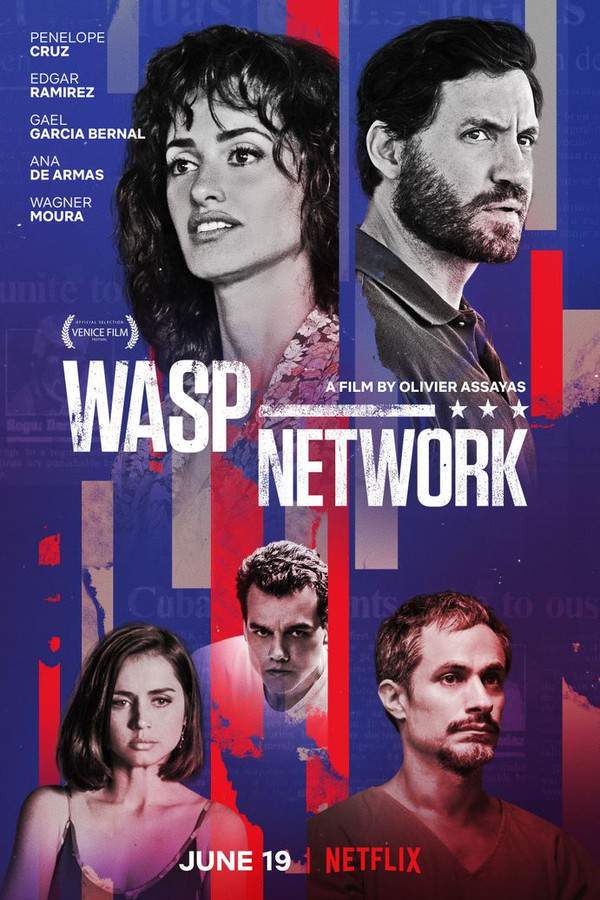
Wasp Network (2020) movie poster

Plot Summary

Wasp Network (2020) Plot Summary Explained

Release, runtime and language
2020 · 127 min · English
Echo score 60
Loading streaming availability…
Directed by
Olivier Assayas
Starring
Gael García Bernal, Penélope Cruz, Leonardo Sbaraglia, Édgar Ramírez, Ana de Armas, Wagner Moura
Budget
$10.5M

In 1990s Florida, René González, a former Cuban pilot who defected, begins a new life. He becomes involved with the Wasp Network, a secret organization of exiles working to protect Cuba by infiltrating and gathering intelligence on anti-Castro groups operating within the United States. As he delves deeper into this world of espionage, he faces complex moral dilemmas and risks exposure while navigating a dangerous web of deception.

On this page (6)
  1. 1 Where to watch
  2. 2 What happens: full plot
  3. 3 Plot questions answered
  4. 4 Movie threads
  5. 5 Movies like Wasp Network
  6. 6 Every angle
Loading streaming availability…

Full plot summary · contains spoilers

What Happens in Wasp Network: Full Plot Summary

The whole story of Wasp Network (2020) explained, from the opening scene to the final frame: every key event, every twist and what it all adds up to. Read it as a quick recap before the sequel, to check a scene you missed, or to finally understand what really happened.

In Havana during the early 1990s, René González makes a significant decision to leave behind his wife, Olga Salanueva, and their daughter, Irma Gonzalez, in Cuba as he embarks on a new chapter in the United States. He undertakes this perilous journey by clandestinely flying to Miami in a stolen Antonov An-2. Upon arrival, González quickly becomes involved with a group of Cuban exiles known as Brothers to the Rescue, who oppose Castro's government from their base in Florida. This organization not only seeks to disrupt the Cuban regime through military maneuvers but also aims to undermine the Cuban tourism industry, dropping provocative flyers over Cuban airspace.

The backdrop to this saga includes a secret network on the island called la Red Avispa, which is orchestrated by Gerardo Hernández, also referred to as Manuel Viramontez. The Cuban American National Foundation (CANF) and Brothers to the Rescue engage in a myriad of activities, ranging from disseminating propaganda about Havana to smuggling drugs and weapons, while also executing terrorist operations directed by Luis Posada Carriles.

The tension escalates dramatically in 1996 when two Cessna Skymasters from Brothers to the Rescue are shot down by Cuban MiGs over the Caribbean, resulting in the tragic deaths of four aviators. Amid this tumult, Juan Pablo Roque, another Cuban pilot, seeks asylum by swimming to Guantanamo Bay Naval Base. Once he arrives in Miami, he serves as an FBI informant while piloting for Brothers to the Rescue. His newfound life of luxury, complete with expensive clothing and a Rolex watch, culminates in his marriage to Ana Margarita Martínez.

After enduring numerous bureaucratic hurdles, Olga and Irma are finally granted permission to leave Cuba and reunite with René in Miami. However, before the journey, Viramontez warns Olga that her husband is no mere traitor or gusano (Spanish for worm), but a hero and a deep-cover intelligence agent within the CANF, a secret she must keep to protect their safety and that of the Wasp Network.

In a troubling twist, in El Salvador in 1997, Raúl Cruz León is recruited to plant C-4 explosives in Havana hotels. His mission results in tragedy when an Italian tourist loses their life, leading to his capture by Cuban authorities while his organization turns its back on him.

Ultimately, René González, Manuel Viramontez, and the entire Wasp Network are apprehended by the FBI. They face serious charges, including conspiracy to commit espionage and murder, as they await a potentially long prison sentence under the scrutiny of Judge Joan A. Lenard. Surprisingly, in an interview, Fidel Castro publicly supports their actions. Despite offers from the FBI promising sentence reductions in exchange for information, René stands firm in his refusal to cooperate.
Last updated: November 16, 2024 at 15:22

Was this helpful?

Plot questions answered

Wasp Network Plot Explained: Your Questions Answered

The questions people ask most about Wasp Network (2020): what happens in the confusing scenes, why the characters do what they do, the twists, hidden details and what the ending means. Each answer contains spoilers.

Q1

Why did René González join Brothers to the Rescue after defecting from Cuba?

René González joined Brothers to the Rescue as part of his cover as a Cuban defector. In reality, he was a deep-cover intelligence agent for the Wasp Network (la Red Avispa), tasked with infiltrating anti-Castro exile groups in Miami. His role within the organization allowed him to gather intelligence on their activities, including their military maneuvers, propaganda operations, and potential terrorist plots against the Cuban government.

Foreshadowing: The warning from Viramontez to Olga about René being a hero and deep-cover agent foreshadows his true mission within the exile community.

  • René González
  • Brothers to the Rescue
  • Wasp Network
  • cover identity
  • Cuban espionage
Q2

What was the Wasp Network doing in the United States?

The Wasp Network was a Cuban intelligence operation run by Manuel Viramontez (Gerado Hernández) that infiltrated anti-Castro organizations in Florida, primarily the Cuban American National Foundation (CANF) and Brothers to the Rescue. Their mission was to gather intelligence on these groups' activities, which included disseminating propaganda against Havana, smuggling drugs and weapons, and planning terrorist operations. The network operated as a double agent operation, embedding agents within the exile community to monitor and disrupt actions threatening Cuba.

  • Wasp Network
  • la Red Avispa
  • Manuel Viramontez
  • CANF
  • Cuban espionage
  • infiltration
Q3

Why was Juan Pablo Roque working as an FBI informant?

Juan Pablo Roque initially defected from Cuba by swimming to Guantanamo Bay Naval Base and joining Brothers to the Rescue in Miami. However, he was simultaneously working as an FBI informant, feeding information about the exile group's activities to American authorities. His dual loyalty was driven by a deal that allowed him to live a comfortable life in Miami, complete with luxury goods. This made him a dangerous double agent within the Brothers to the Rescue, as he betrayed both Cuban intelligence and the exile community.

Foreshadowing: The film hints at shifting allegiances early on, as Roque's defection appears convenient given his pilot skills.

  • Juan Pablo Roque
  • FBI informant
  • Brothers to the Rescue
  • double agent
  • defector
Q4

What happened when the Brothers to the Rescue planes were shot down in 1996?

In 1996, two Cessna Skymasters operated by Brothers to the Rescue were shot down by Cuban MiG fighter jets over the Caribbean Sea. All four aviators on board were killed. This incident marked a major escalation in the conflict between Cuba and the exile groups, as Cuba claimed the planes had entered its airspace, while the exiles insisted they were over international waters. The tragedy deepened the rift and increased tensions between the two sides.

  • 1996 plane shooting
  • Cessna Skymasters
  • Brothers to the Rescue
  • Cuban MiGs
  • four aviators killed
Q5

Why did Olga keep René's true identity secret after learning he was a spy?

Olga Salanueva kept René's secret after Viramontez warned her that he was not a traitor but a deep-cover intelligence agent because revealing the truth would have endangered both her family and the entire Wasp Network. Olga understood that her husband had been operating under a false defector identity to protect her and their daughter, Irma. By maintaining the appearance that René had genuinely abandoned his family, she preserved his cover and ensured the safety of the intelligence operation.

Foreshadowing: This secret creates dramatic tension during Olga and Irma's reunion with René in Miami, as Olga must reconcile her husband's public betrayal with his hidden loyalty.

  • Olga Salanueva
  • René González secret
  • Wasp Network cover
  • family safety
  • espionage
Q6

What was the 1997 bombing in Havana and why did it lead to Raúl Cruz León's arrest?

In 1997, Raúl Cruz León was recruited in El Salvador by exile organizations connected to CANF to plant C-4 explosives in hotels in Havana. His mission was part of a broader campaign to damage Cuba's tourism industry and destabilize the government. However, the bombing killed an Italian tourist, which drew international attention. Cuban authorities caught Cruz León, and despite his organization's involvement in planning the attack, they abandoned him, leaving him to face Cuban justice alone.

  • 1997 Havana bombing
  • Raúl Cruz León
  • C-4 explosives
  • Italian tourist killed
  • hotel bombing
Q7

Why did Fidel Castro publicly support René González and the Wasp Network after their arrest?

Fidel Castro publicly supported René González and the Wasp Network because they were operating as Cuban intelligence agents carrying out state-sanctioned espionage against exile groups planning terrorist attacks on Cuba. From Cuba's perspective, the Wasp Network was defending the country against what it considered terrorism sponsored by the Cuban American National Foundation and Brothers to the Rescue. Castro's endorsement validated their mission and framed them as patriotic agents rather than criminals.

  • Fidel Castro
  • René González support
  • Wasp Network
  • Cuban government
  • espionage validation
Q8

Why did René González refuse to cooperate with the FBI despite facing prison time?

René González refused to cooperate with the FBI even when offered sentence reductions in exchange for information because doing so would have betrayed his fellow agents in the Wasp Network and compromised Cuba's intelligence operations. His refusal demonstrated loyalty to his handlers, his network, and his cause. This steadfast commitment to silence, despite the severe legal consequences, defined his character as someone who prioritized collective loyalty over personal self-preservation.

  • René González FBI deal
  • refusal to cooperate
  • prison sentence
  • loyalty
  • Wasp Network betrayal
Q9

Why did René González steal an Antonov An-2 to flee Cuba?

René González stole an Antonov An-2 aircraft to flee Cuba in the early 1990s because it was one of the few ways a Cuban pilot could defect to the United States without being detected. The Antonov An-2 was a slow, biplane utility aircraft that could fly at low altitudes, making it difficult for radar detection. By flying a stolen plane directly to Miami, René created the appearance of a genuine defection, which became essential cover for his subsequent infiltration work with the Wasp Network.

  • Antonov An-2
  • stolen plane
  • Cuba defection
  • René González flight
  • Miami escape
Q10

How were the Wasp Network and the Cuban American National Foundation connected?

The Wasp Network operated within the Cuban American National Foundation (CANF) as part of its intelligence-gathering mission. CANF was a prominent Miami-based organization that publicly advocated for regime change in Cuba but was also implicated in covert activities, including drug smuggling, weapons trafficking, and terrorist operations. Cuban agents like René González infiltrated CANF to monitor these activities and gather evidence of plots against Cuba, making CANF both a target of espionage and a vehicle for the network's operations.

  • Cuban American National Foundation
  • CANF
  • Wasp Network infiltration
  • espionage organization
  • Miami exile groups

Movie threads

More Movies Like Wasp Network, by Mood & Story

Curated lists built around what makes Wasp Network tick: the same mood, the same kind of story or the same emotional payoff. Each list explains why these movies belong together.

Complex Spy Webs and Moral Compromises like in Wasp Network

Spy films where the true cost of loyalty is measured in shattered lives. Find movies like Wasp Network that explore the intricate and morally complex world of espionage. These films are tense political thrillers focusing on the heavy emotional weight of betrayal, difficult loyalties, and the psychological toll of living a double life, often leading to somber and thought-provoking conclusions.

  • tense
  • morally ambiguous
  • claustrophobic
  • somber
  • anxious
  • gripping
  • Tone: tense, morally ambiguous, somber
  • Pacing: steady, methodical
Why these movies?

The story pattern: Stories in this thread typically follow agents or informants navigating a labyrinth of shifting allegiances. The narrative structure is often complex, weaving together multiple perspectives to reveal a larger, unsettling picture of political machinations. Character arcs revolve around moral erosion, the strain of maintaining a cover, and the ultimate sacrifice of personal relationships for a cause.

Why they belong together: These movies are grouped together because they share a high-stakes, tense atmosphere centered on espionage, but prioritize psychological depth over action. They feature a steady, methodical pacing that allows for complex plotting and a heavy emotional focus on the moral dilemmas and personal costs faced by those in the shadows.

Slow Burn Dread in a Claustrophobic System like in Wasp Network

Stories where characters are methodically trapped by an unforgiving political machine. Discover movies similar to Wasp Network that create a slow burning sense of claustrophobic dread. These films feature characters trapped within vast, unforgiving systems, where the tension builds methodically towards a grim or mixed outcome, leaving a heavy emotional impact focused on themes of entrapment and powerlessness.

  • claustrophobic
  • tense
  • slow burn
  • dread
  • anxious
  • somber
  • Tone: tense, claustrophobic, bleak
  • Pacing: steady, slow burn
Why these movies?

The story pattern: The narrative pattern involves protagonists who initially believe they can navigate or manipulate a system, only to find themselves progressively more trapped and powerless. The pacing is steady and deliberate, allowing dread to accumulate like pressure in a sealed container. Endings are often bleak or mixed, reflecting the difficulty of achieving a clear victory against an overwhelming force.

Why they belong together: These films are united by their specific mood mix: a tense, anxious, and claustrophobic atmosphere combined with a steady, relentless pacing that creates a feeling of inescapable fate. They share a high intensity driven by psychological pressure rather than constant action, and often explore disturbing themes of entrapment and institutional power.

If you liked this

Movies Like Wasp Network

Similar movies to Wasp Network: the same genre, themes or kind of story. Each one comes with its own plot summary, timeline and ending explained.

Browse all movie summaries

Every angle

Wasp Network (2020) Explained: Plot, Timeline & Characters

Everything about Wasp Network in one place: what happens in the plot summary, the timeline in chronological order, the characters and meaning and a spoiler-free summary. What's After the Movie adds the cast, box office and post-credit scenes.

Coming soon on iOS and Android

The Plot Explained Movie Summary App

Plot summaries, endings explained and timelines on your phone. Catch up on any movie in minutes, save your favorites and never miss a twist again.

Be the first to know when we launch. Your email stays private, always.

Learn more about the app