Plot Explained Spoilers guaranteed!
Plot Explained

Browse by genre

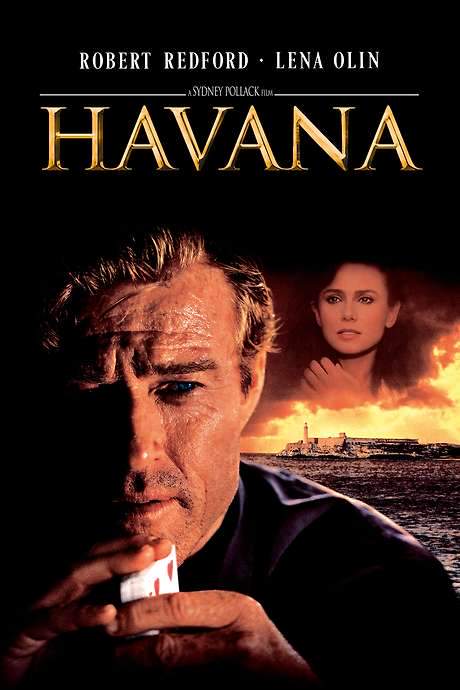
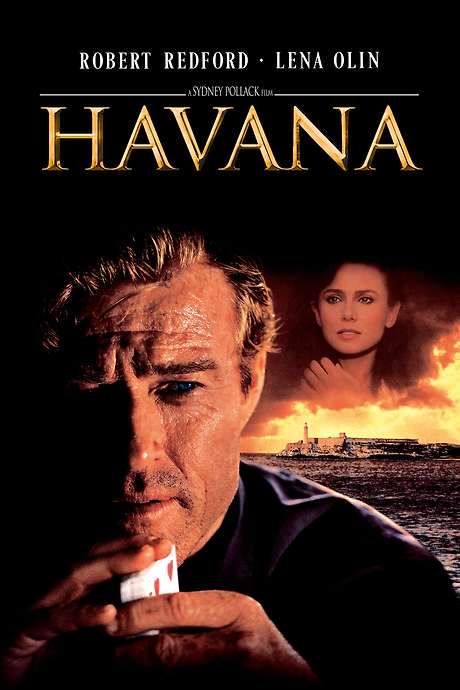
Havana (1990) movie poster

Plot Summary

Havana (1990) Plot Summary Explained

Release, runtime and language
1990 · 144 mins · English
Directed by
Sydney Pollack
Starring
Robert Redford, Richard Farnsworth, Alan Arkin, Mark Rydell, Richard Portnow, Tony Plana
Budget
$40M

A distrustful high‑stakes gambler arrives in revolutionary Cuba, drawn to the city's dangerous allure. He seeks big poker wins, but his world shifts when he falls for the wife of a Communist revolutionary. Their forbidden love ignites passion and peril amid the upheaval of the Cuban Revolution.

On this page (6)
  1. 1 Where to watch
  2. 2 What happens: full plot
  3. 3 Plot questions answered
  4. 4 Movie threads
  5. 5 Movies like Havana
  6. 6 Every angle

Where to watch

Where to Watch Havana (1990)

Where can you watch Havana? Stream, rent or buy it in the US, including on Amazon Video, Apple TV Store and Fandango At Home: current JustWatch availability with up-to-date prices.

Streaming availability powered by JustWatch

Full plot summary · contains spoilers

What Happens in Havana: Full Plot Summary

The whole story of Havana (1990) explained, from the opening scene to the final frame: every key event, every twist and what it all adds up to. Read it as a quick recap before the sequel, to check a scene you missed, or to finally understand what really happened.

On Christmas Eve, 1958, as Cuba’s revolution edges toward its crescendo, Roberta Duran enlists the help of Jack Weil, Robert Redford, to smuggle radios for the insurgents hiding in the hills. Weil agrees only because he is drawn by a romantic interest in her, and the arrangement feels like a dangerous, glittering bargain. When they meet again for the promised payoff, Roberta reveals she is married, shattering Weil’s hopeful illusion and setting a precarious course through a world of risk and loyalty.

In Havana, Weil reconnects with a Cuban journalist acquaintance, and during a night on the town they unexpectedly cross paths with Roberta and her husband, Dr. Arturo Duran, a recognized revolutionary leader. Duran asks for Weil’s continued aid, but Weil, wary and overwhelmed, refuses to be drawn deeper into the conflict. This moment marks the uneasy blend of charm and duty that threads through Weil’s choices.

After a night of hedonistic excess, Weil learns from the newspapers that Duran has been arrested and killed, a blow that leaves him reeling yet still technically entangled in the game. He presses on with the poker schedule, a distraction that mingles with real danger when he meets the head of the secret police. The news of Roberta’s arrest and torture follows, and Weil uses leverage over a debt-ridden player to secure her release, a move that binds his fate to hers in increasingly intimate ways.

Roberta, shaken by danger and captivity, takes shelter in Weil’s apartment, then vanishes that afternoon, leaving Weil to confront the price of attachment in a country tearing itself apart. Realizing he has fallen in love with her, and buoyed by the encouragement of an old gambling friend, Weil ventures into Cuba’s interior to locate her at Duran’s old estate. He persuades Roberta to return with him to Havana and to leave the country together, even as he reveals a secret: a diamond concealed in a lump on his arm—insurance from a youth spent in risk and riskier gambles. Plans are set for her to depart by boat, but when Weil returns to the apartment he is confronted by two Cubans who inform him that Duran’s men want him to extract Roberta from the country.

A CIA acquaintance, Marion Chigwell, confirms that Duran is alive, and Weil uses that leverage to coerce Chigwell into assisting with the rescue. Posing as an agent, Weil visits Duran, who is being held by the chief of the secret police, and tells the officer that Washington intends to free Duran, offering a $50,000 payoff. To fund the rescue, Weil visits a doctor and a jeweler to convert the diamond into cash, all while telling Roberta that her husband is still alive. Overwhelmed by the deception and the stakes, Roberta departs to search for Duran herself.

Back at the casino, Weil dominates the big games with a blend of nerve and nerve-racking risk, and the casino’s manager, Joe Volpi, forgives him, recognizing that Weil’s primary aim has always been saving Roberta. As New Year’s Eve 1959 arrives, the revolution triumphs and the social order in Havana collapses in a chaotic exodus: the upper classes flee as the streets erupt in celebration, destruction, and renewal. Weil and Volpi decide it’s time to leave, yet the morning after finds Weil preparing to depart when Chigwell delivers a new, surprising line of work: he is told of a different book ahead. Roberta appears at the door, noticing the bandage on Weil’s arm and understanding the cost he paid to rescue her and her husband. She chooses to stay with the revolution, and Weil is deeply changed by the experience.

Four years pass. In 1963, Weil drives down to the Florida Keys, gazing out toward Havana and hoping to glimpse a boat carrying Roberta. He knows the ferry no longer runs, yet he continues the yearly vigil, a quiet testament to what Cuba’s upheaval did to him—and what it said about the rest of his life. The changes in Cuba echo across the United States, reminding Weil that escape is not the same as freedom, and that love, loyalty, and atonement can endure even as the world around them shifts beneath their feet.

- The tale is driven by the fragile thread between desire and duty, the lure of easy fortune, and the stubborn pull of a promise kept under impossible circumstances. The characters navigate a landscape where loyalties are tested, where wealth and power blur moral lines, and where a single act of courage can redefine a man’s future. The story leaves us with a mirrored image of departure and longing: a man who watches the horizon for a boat that may never return, and a woman who chooses a future rooted in a cause greater than any single plan.

Last updated: October 09, 2025 at 14:30

Was this helpful?

Plot questions answered

Havana Plot Explained: Your Questions Answered

The questions people ask most about Havana (1990): what happens in the confusing scenes, why the characters do what they do, the twists, hidden details and what the ending means. Each answer contains spoilers.

Q1

Why does Jack agree to help smuggle radios for the revolutionaries?

Jack agrees because he's immediately drawn to Roberta romantically. Even though he understands the danger of smuggling radios for Cuban insurgents during the revolution, the promise of seeing her again and the allure of her company override his usual caution. His motivation is fundamentally selfish, he sees the arrangement as a romantic bargain rather than a political commitment.

  • roberta
  • jack
  • smuggling
  • radios
  • revolution
  • motivation
Q2

Why does Roberta hide that she's married when she first meets Jack?

Roberta doesn't reveal she's married to Arturo Duran during their initial meeting because she's desperate to secure help for the revolutionaries and knows that mentioning her husband's identity could complicate or endanger the mission. She reveals the truth only when they meet for the payoff, which shatters Jack's romantic illusion and sets their relationship on a far more complicated trajectory.

  • roberta
  • marriage
  • arturo duran
  • secret
  • deception
Q3

Is Arturo Duran actually killed after his arrest?

No. The newspapers report that Duran has been arrested and killed, which sends Jack into shock and deepens his involvement. However, it's later revealed through Jack's CIA acquaintance Marion Chigwell that Duran is still alive and being held by the chief of the secret police. The false report creates a crucial turning point that drives much of the plot's second half.

  • arturo duran
  • death
  • alive
  • secret police
  • newspaper
  • deception
Q4

How does Jack manage to free Roberta from prison?

Jack uses leverage over a debt-ridden gambler at the casino to secure Roberta's release. This desperate act marks his transition from a self-interested gambler to someone deeply entangled in the revolution's human cost, binding his fate to Roberta's in increasingly intimate and dangerous ways.

  • roberta
  • prison
  • release
  • casino
  • debtor
  • leverage
Q5

Why does Jack pretend to be a CIA agent to free Duran?

After learning that Duran is actually alive but detained by the secret police chief, Jack hatches a risky plan to pose as a CIA operative. He tells the chief that Washington intends to free Duran and offers a $50,000 payoff. This elaborate deception is his only avenue to rescue both Roberta and her husband, leveraging the political complexity of the revolution.

  • cia
  • jack
  • impersonation
  • duran
  • secret police
  • rescue
  • bribe
Q6

What is the significance of the diamond Jack has in his arm?

Jack reveals a diamond concealed in a lump on his arm, personal insurance from his youth spent in high-risk gambling. He sells it to fund the $50,000 bribe needed to free Duran. The diamond represents his lifelong philosophy of hedging bets and preparing for disaster, and sacrificing it shows the depth of his commitment to rescuing Roberta and her husband.

Foreshadowing: Early scenes establish Jack as a calculated gambler who never takes uncalculated risks.

  • diamond
  • arm
  • insurance
  • gamble
  • money
  • bribe
  • sacrifice
Q7

Why does Roberta leave Jack after learning her husband is alive?

Overwhelmed by the deception and high stakes, Roberta decides to leave Jack to search for Duran herself. She had believed her husband was dead and had begun to accept a new life with Jack, but learning he's alive compels her to find him directly. This choice reflects her enduring loyalty to the revolution and to her husband, even as she's grown to love Jack.

  • roberta
  • leave
  • arturo duran
  • love
  • loyalty
  • departure
Q8

Why does Roberta choose to stay in Cuba instead of leaving with Jack?

When Roberta appears at Jack's door on January 1, 1960, she sees the bandage on his arm and realizes the price he paid to rescue her and her husband. Despite her love for Jack, she chooses to stay with the revolution, a cause greater than any single relationship. Her decision reflects the film's central theme of loyalty to a cause versus personal happiness.

  • roberta
  • revolution
  • stay
  • cuba
  • sacrifice
  • choice
  • cause
Q9

What does Jack's yearly vigil from the Florida Keys represent?

In 1963, Jack drives to the Florida Keys annually, gazing toward Havana hoping to glimpse a boat carrying Roberta. He knows the ferry no longer runs but continues this ritual as a quiet testament to what Cuba's upheaval did to him. The vigil represents enduring love, loss, and the lasting impact of political revolution on individual lives, escape is not the same as freedom.

  • florida keys
  • vigil
  • boat
  • longing
  • memory
  • cuba
  • hope
Q10

Why does the casino manager Joe Volpi forgive Jack's gambling debts?

Despite Jack's reckless behavior and unpaid debts, Joe Volpi forgives him at the casino, recognizing that Jack's primary aim throughout has been saving Roberta rather than profiting from gambling. Volpi understands that Jack's gambling nerve was always in service of something deeper, a rescue mission driven by love rather than greed.

  • joe volpi
  • casino
  • forgive
  • debt
  • gambling
  • understanding
Q11

How does the revolutionary victory transform Havana on New Year's Eve 1959?

On December 31, 1959, the revolutionaries win and Havana erupts. The upper classes flee in a chaotic exodus, abandoning luxury while the streets erupt in celebration, destruction, and renewal. The casinos are trashed in a spontaneous show of power, and the old social order collapses entirely, setting the stage for Jack and Volpi's departure.

  • revolution
  • new years eve
  • 1959
  • havana
  • change
  • exodus
  • celebration
Q12

Why does Jack become so deeply involved in the revolution's dangers?

Jack's involvement escalates from romantic interest to genuine commitment because he falls in love with Roberta. What begins as a selfish arrangement to win her affection transforms into profound personal sacrifice, risking his life, spending his savings, and enduring physical pain. His transformation from a cynical gambler to someone capable of heroism is driven entirely by love.

Foreshadowing: His initial refusal to help Duran shows his self-preservation, but Roberta's capture reverses this.

  • jack
  • involvement
  • love
  • roberta
  • sacrifice
  • change
  • revolution

Movie threads

More Movies Like Havana, by Mood & Story

Curated lists built around what makes Havana tick: the same mood, the same kind of story or the same emotional payoff. Each list explains why these movies belong together.

Political Romance Dramas like Havana

Forbidden love that ignites and smolders amidst a crumbling political order. If you liked the passionate but dangerous love story set against the Cuban Revolution in 'Havana,' you'll find more movies like it here. This list features intense romantic dramas where personal relationships are tested by the fires of political turmoil, betrayal, and societal collapse.

  • political
  • romantic
  • dangerous
  • feverish
  • melancholic
  • fatalistic
  • Tone: tense, passionate, melancholic
  • Pacing: steady, escalating
Why these movies?

The story pattern: These stories follow an outsider or conflicted individual who becomes entangled in a romantic relationship with someone deeply involved in a political cause. The central conflict arises from the collision of personal desire with public duty, often leading to sacrifices, betrayals, and a bittersweet resolution as the revolutionary tide rises.

Why they belong together: Movies are grouped here based on their shared core of a high-romance, high-tension narrative set within a volatile political landscape. They deliver a heavy emotional weight by exploring the moral ambiguity and fatalistic choices that define love in a time of chaos.

Noir Thrillers in Decadent Settings like Havana

A cynical outsider navigates the treacherous allure of a city on the brink. For viewers who enjoyed the dangerous allure and cynical gambler protagonist of 'Havana,' this collection gathers similar movies. Discover thrillers and dramas about morally ambiguous characters navigating treacherous, exotic locales that are beautiful but on the verge of self-destruction.

  • noir
  • dangerous
  • cynical
  • melancholic
  • decadent
  • treacherous
  • Tone: tense, melancholic, cynical
  • Pacing: steady, methodical
Why these movies?

The story pattern: The narrative pattern involves a protagonist, often a gambler, smuggler, or detective, operating in a vividly drawn, decadent city. Their initial self-interest is challenged when they form a connection that pulls them into a larger, dangerous conflict, testing their cynicism and leading to a transformative, often costly, experience.

Why they belong together: These films share a specific atmospheric vibe: a tense, melancholic mood built on a foundation of moral ambiguity, high personal risk, and a setting that is as much a character as the people. The pacing is steady, building a sense of inevitable doom amidst a backdrop of feverish allure.

If you liked this

Movies Like Havana

Similar movies to Havana: the same genre, themes or kind of story. Each one comes with its own plot summary, timeline and ending explained.

Browse all movie summaries

Every angle

Havana (1990) Explained: Plot, Timeline & Characters

Everything about Havana in one place: what happens in the plot summary, the timeline in chronological order, the characters and meaning and a spoiler-free summary. What's After the Movie adds the cast, box office and post-credit scenes.

Coming soon on iOS and Android

The Plot Explained Movie Summary App

Plot summaries, endings explained and timelines on your phone. Catch up on any movie in minutes, save your favorites and never miss a twist again.

Be the first to know when we launch. Your email stays private, always.

Learn more about the app