







Plot Explained Spoilers guaranteed!
Plot Explained

Browse by genre

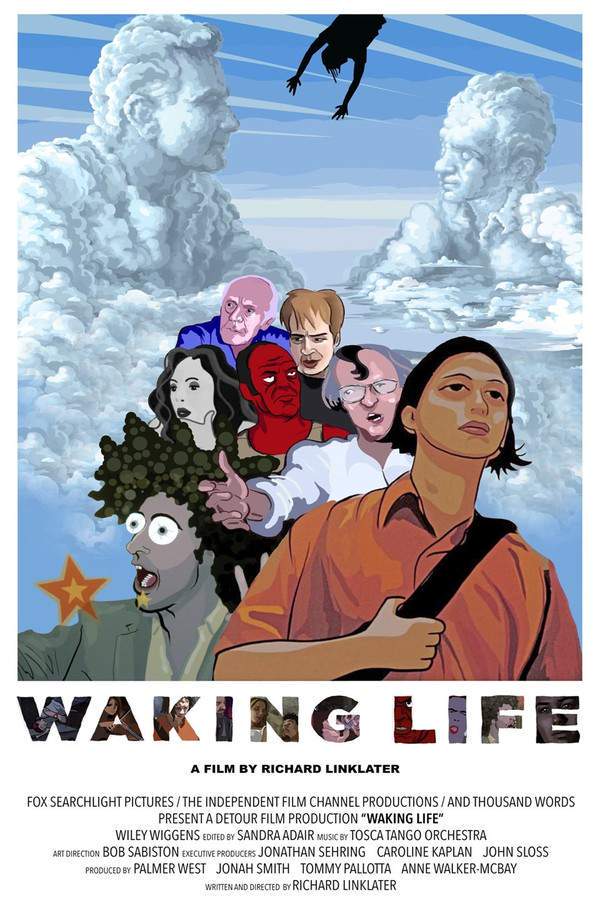
Waking Life (2001) movie poster

Characters & Themes

Waking Life (2001) Characters, Setting & Themes Explained

Release, runtime and language
2001 · 99 min · English
JustWatch #1,084 11
Directed by
Richard Linklater

Wiley Wiggins finds himself drifting through a series of interconnected dreams, encountering a diverse cast of characters who challenge his perception of reality. The film explores themes of consciousness, free will, and the nature of existence as he grapples with the blurring lines between his waking life and the dream world. Through philosophical conversations and surreal situations, he questions the very nature of being and the choices that shape our lives.

On this page (8)
  1. 1 Where to watch
  2. 2 Characters explained (1)
  3. 3 Where & when it takes place
  4. 4 Themes & meaning (3)
  5. 5 Character & meaning questions
  6. 6 Movie threads
  7. 7 Movies like Waking Life
  8. 8 Every angle

Where to watch

Where to Watch Waking Life (2001)

Where can you watch Waking Life? Stream, rent or buy it in the US, including on Amazon Prime Video, Amazon Video and Apple TV Store: current JustWatch availability with up-to-date prices.

Streaming availability powered by JustWatch

1 main characters · contains spoilers

Waking Life Characters Explained: Who Is Who

The main characters of Waking Life (2001), heroes and villains: what drives them, how they change over the course of the story and what each of them reveals about the film's bigger ideas.

  • Unnamed Young Man

    The protagonist traverses a surreal dream landscape, grappling with complex ideas about life and consciousness. At first a passive observer, he gradually awakens to the realization of his dream state, engaging with other dream figures. The character's evolution embodies the struggle between acceptance and inquiry.

    • 🌌 Dreamer
    • 🤔 Thinker

Last updated: October 22, 2024 at 19:06

Was this helpful?

Setting

Where and When Does Waking Life Take Place?

The setting of Waking Life (2001): the year and time period, the places and locations, and how they shape the characters, the mood and the tension of the story.

Time period

The narrative unfolds in an indefinite timeframe, emphasizing a departure from conventional storytelling. It seems to exist outside of a specific historical context, focusing instead on timeless philosophical questions. This lack of temporal grounding reinforces the film's exploration of dreams and consciousness.

Location

The film adopts a dream-like setting where the boundaries between reality and imagination blend seamlessly. Characters engage in deep philosophical discourse in various informal locations, suggesting a vibrant, intellectual community. The landscapes are not defined by physical geography but by abstract thought, reflecting the inner states of the protagonist.

Last updated: October 22, 2024 at 19:06

Was this helpful?

3 major themes

Waking Life Meaning: Themes & Message Explained

What is Waking Life (2001) really about? The emotional, social and philosophical themes the film keeps returning to, its symbolism and the message beneath the surface.

  • Existentialism

    The film deeply engages with existential themes, questioning the nature of reality and free will. Characters ponder their existence and the meaning behind life, mirroring the thoughts of various philosophers. This exploration encourages viewers to reflect on their own perceptions of reality.

  • Dream vs. Reality

    The dichotomy between dreams and reality is central to the film’s narrative. The protagonist’s journey illustrates the complexities of consciousness, inviting the audience to consider how dreams can illuminate truths about existence. It challenges the perception of life as a mere illusion.

  • Philosophical Discourse

    Through diverse conversations, the film serves as a platform for philosophical dialogue. Topics like metaphysics and social philosophy emerge organically, showcasing the intellect of its characters. This thematic focus positions the film as an exploration of human thought and inquiry.

Last updated: October 22, 2024 at 19:06

Was this helpful?

Character & theme questions

Waking Life Characters & Meaning: Your Questions Answered

The questions people ask about Waking Life (2001): who the characters really are, their relationships, what the symbols mean, where it takes place and what the movie is really about. Each answer contains spoilers.

Q1

Where does Waking Life take place?

The film takes place in a dream-like setting where the boundaries between reality and imagination blend seamlessly. Rather than specific physical locations, the scenes exist in abstract landscapes that reflect inner thoughts and philosophical states. Characters engage in deep conversations in informal settings like cafés, fields, and empty rooms, suggesting a vibrant intellectual community that exists somewhere between consciousness and unconsciousness.

  • dream setting
  • surreal locations
  • abstract setting
  • dream world
Q2

When is Waking Life set?

Waking Life exists outside of any specific time period. The film deliberately avoids historical anchoring, instead embracing an indefinite timeframe that reinforces its timeless philosophical questions about consciousness and existence. This lack of temporal grounding emphasizes that the ideas being discussed, free will, reality, and meaning, are universal concerns that transcend any particular era.

  • time period
  • setting
  • timeless
  • indefinite time
Q3

What are the main themes of Waking Life?

The film explores three interconnected themes: existentialism, the boundary between dreams and reality, and philosophical discourse. It questions the nature of reality and free will, asking whether life has inherent meaning. The protagonist's journey illustrates how dreams can reveal truths about existence. Additionally, the film uses diverse conversations to explore metaphysics and social philosophy, positioning itself as an exploration of human thought and inquiry.

  • themes
  • existentialism
  • dream vs reality
  • philosophy
  • consciousness
Q4

What does Waking Life say about dreams versus reality?

The film presents dreams and reality as deeply intertwined, challenging the perception that life is merely an illusion. The protagonist's journey through various dream states demonstrates how dreams can illuminate truths about existence that waking consciousness might miss. Rather than dismissing dreams as meaningless, the film suggests they offer a legitimate lens for exploring consciousness, identity, and the nature of being.

  • dreams
  • reality
  • consciousness
  • illusion
  • perception
Q5

What does Waking Life say about existence and free will?

Waking Life engages deeply with existential questions about whether humans truly have free will and what meaning exists in life. Through various characters pondering their existence, the film mirrors philosophical debates about determinism versus choice. It encourages viewers to reflect on their own perceptions of reality and consider whether they are truly awake or also trapped in their own limited understanding of existence.

  • existentialism
  • free will
  • meaning of life
  • determinism
  • purpose
Q6

Who is the main character in Waking Life?

The protagonist is an unnamed young man (played by Wiley Wiggins) who drifts through a surreal dream landscape, encountering various characters. Initially a passive observer, he gradually awakens to the realization that he is dreaming. His evolution embodies the struggle between simply accepting his situation and actively questioning it, representing the universal human journey from passivity to conscious inquiry.

  • protagonist
  • main character
  • Wiley Wiggins
  • dreamer
  • unnamed young man
Q7

What kind of conversations do characters have in Waking Life?

Characters engage in deep philosophical discourse covering topics like metaphysics, the nature of reality, free will versus determinism, social philosophy, and the purpose of existence. These conversations serve as the film's primary narrative vehicle, with diverse speakers offering different perspectives on consciousness and meaning. The dialogue is intellectually rigorous but presented in accessible, informal settings.

  • philosophy
  • conversations
  • dialogue
  • discourse
  • intellectuals
Q8

Why does Waking Life use rotoscoped animation?

Waking Life uses rotoscoped animation, a technique where animators draw over live-action footage, to create its distinctive dreamlike quality. This approach produces figures that seem to float between states of consciousness, reinforcing the film's themes of blurred boundaries between reality and dreams. The whimsical, drifting animation style supports the serious philosophical content while maintaining a sense of fluidity and transition appropriate to the dream narrative.

  • animation
  • rotoscope
  • visual style
  • animation technique
  • surreal
Q9

What does the ending of Waking Life mean?

The film ends with the protagonist levitating into the sky, a moment that remains intentionally ambiguous. This can be interpreted as transcendence, a literal awakening to a higher state of consciousness, or as dissolution, where the dreamer simply dissolves back into the dream state. The open-ended conclusion reflects the film's central questions about whether awakening is possible or whether the cycle of dreaming and waking continues indefinitely.

  • ending
  • conclusion
  • levitation
  • transcendence
  • ambiguity
  • interpretation
Q10

What is the tone of Waking Life?

The film balances a whimsical tone, driven by its surreal, drifting animation style and playful dream logic, with profound intellectual weight. While the animation feels light and abstract, the underlying themes of existential inquiry and consciousness are serious. This combination creates a unique atmosphere where users can engage with complex philosophical ideas through an accessible, visually interesting medium.

  • tone
  • mood
  • whimsical
  • surreal
  • atmosphere
  • style

Movie threads

More Movies Like Waking Life, by Mood & Story

Curated lists built around what makes Waking Life tick: the same mood, the same kind of story or the same emotional payoff. Each list explains why these movies belong together.

Dreamlike Philosophical Movies like Waking Life

Films that use surreal dream logic to explore profound questions about existence. If you enjoyed the deep discussions and surreal animation of Waking Life, explore more movies that use dreamlike narratives to tackle big ideas about reality and existence. These films share a similar contemplative and disorienting feel, blending fantasy and philosophy.

  • dreamlike
  • philosophical
  • surreal
  • contemplative
  • disorienting
  • ethereal
  • Tone: whimsical, contemplative
  • Pacing: slow, meandering
Why these movies?

The story pattern: Stories in this thread often lack a traditional plot, instead following a protagonist on a meandering journey through a series of encounters or visions. The narrative structure is typically nonlinear, mimicking the logic of a dream, and progresses through dialogue-driven explorations of abstract themes rather than action or conflict.

Why they belong together: These movies are grouped together because they prioritize intellectual exploration over plot, using a dreamlike or surreal aesthetic as a vehicle for philosophy. They share a specific mood of contemplative wonder and a pacing that allows for deep, often disorienting, reflection.

Abstract and Contemplative Movies Similar to Waking Life

Slow-paced, visually striking films where mood and ideas replace traditional plot. Fans of Waking Life's unique structure and philosophical tone will find similar experiences here. Discover movies that are more about the journey than the destination, using slow pacing and complex ideas to create a deeply thoughtful and visually immersive viewing experience.

  • contemplative
  • atmospheric
  • abstract
  • meditative
  • thought-provoking
  • visual
  • Tone: contemplative, ambiguous
  • Pacing: very slow, atmospheric
Why these movies?

The story pattern: The narrative pattern is defined by its looseness. These films often follow an episodic or vignette-based structure, connecting scenes through a central mood or theme rather than a cause-and-effect plot. Character arcs are subtle, if present at all, with the focus being on a shift in perception or understanding.

Why they belong together: They are connected by a shared approach to filmmaking that values introspection and aesthetic experience. The combination of slow pacing, medium emotional weight, complex ideas, and a tendency towards ambiguous endings creates a coherent vibe of thoughtful, open-ended exploration.

If you liked this

Movies Like Waking Life

Similar movies to Waking Life: the same genre, themes or kind of story. Each one comes with its own plot summary, timeline and ending explained.

Browse all movie summaries

Every angle

Waking Life (2001) Explained: Plot, Timeline & Characters

Everything about Waking Life in one place: what happens in the plot summary, the timeline in chronological order, the characters and meaning and a spoiler-free summary. What's After the Movie adds the cast, box office and post-credit scenes.

Coming soon on iOS and Android

The Plot Explained Movie Summary App

Plot summaries, endings explained and timelines on your phone. Catch up on any movie in minutes, save your favorites and never miss a twist again.

Be the first to know when we launch. Your email stays private, always.

Learn more about the app