Plot Explained Spoilers guaranteed!
Plot Explained

Browse by genre

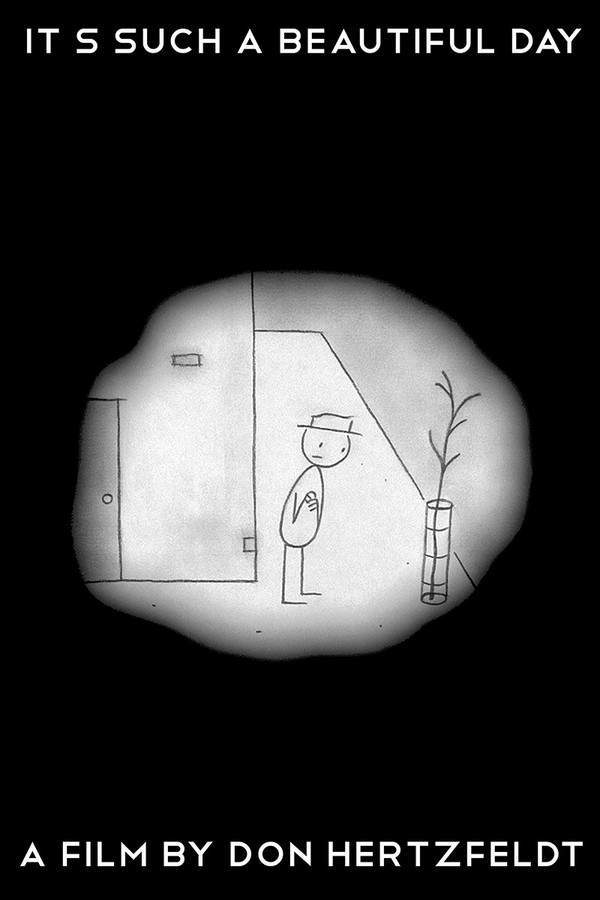
It's Such a Beautiful Day (2012) movie poster

Plot Summary

It's Such a Beautiful Day (2012) Plot Summary Explained

Release, runtime and language
2012 · 62 min · English
Directed by
Don Hertzfeldt

A simple stick figure navigates a world filled with existential dread and surreal encounters in this animated film. The story follows his journey as he confronts profound questions about life, death, and the nature of reality. Through whimsical adventures and poignant reflections, the film explores the human condition with humor and stunning visuals, offering a unique and thought-provoking experience.

On this page (7)
  1. 1 Where to watch
  2. 2 What happens: full plot
  3. 3 Plot questions answered
  4. 4 Movie threads
  5. 5 Movies like It's Such a Beautiful Day
  6. 6 Categories
  7. 7 Every angle

Where to watch

Where to Watch It's Such a Beautiful Day (2012)

Where can you watch It's Such a Beautiful Day? Stream, rent or buy it in the US, including on Vimeo: current JustWatch availability with up-to-date prices.

Streaming availability powered by JustWatch

Full plot summary · contains spoilers

What Happens in It's Such a Beautiful Day: Full Plot Summary

The whole story of It's Such a Beautiful Day (2012) explained, from the opening scene to the final frame: every key event, every twist and what it all adds up to. Read it as a quick recap before the sequel, to check a scene you missed, or to finally understand what really happened.

Bill is a man whose life is portrayed through an innovative use of split-screen windows, with narration provided (by Don Hertzfeldt, uncredited). Struggling with an unnamed illness, Bill's existence appears to be mundane until the reality of his deteriorating health begins to unravel. During routine meetings with his ex-girlfriend, he confronts the stark reality of his condition; during a visit to the doctor, he learns that his illness is progressively worsening. As the days unfold, Bill's hallucinations intensify, leading to a mental breakdown that culminates in him fainting in an alley.

In an effort to assist him in his recovery, Bill's mother arrives to care for him. However, a moment of confusion leads Bill to mistakenly attack her, believing she intends him harm. Subsequently, he is hospitalized, where his fluctuating health perplexes his doctor. In a surprising twist, the medical team concludes that Bill will not pass away, a revelation that creates discomfort among his family members. The very next day, Bill attempts to return to work.

The narrative also delves into Bill's childhood, as the Narrator recounts the tragic story of his half-brother, Randall, who met an untimely death while chasing a bird into the sea. Following this incident, Bill’s mother became excessively protective, rarely allowing Bill outside and eventually driving his stepfather away. The Narrator elaborates on the surreal and often tragic lineage of Bill's family, many of whom battled mental illness and faced grim ends.

After a brief spell out of the hospital, Bill receives a call about his mother’s passing, attributed to a "fit of senile hysterics." Following her funeral, he discovers a notebook filled with love notes intended for him during his childhood. In an unexpected follow-up appointment, Bill learns from his doctor that there appears to be nothing physically wrong. However, while out for lunch, he suffers a seizure, causing a rush of fragmented memories from his early years to flood back.

Bill finds himself back in the hospital once more, with regular visits from his ex-girlfriend. A new doctor probes into Bill's past, exposing a troubling inability to recall basic details of his life. After undergoing a brain examination filled with odd and nonsensical questions, Bill's doctor informs him that he's struggling to differentiate between past and present. It’s implied that many of his childhood memories may be fabrications.

After being discharged to receive familial care, Bill returns home only to find it deserted. As he grapples with his memory loss, he begins to forget routine tasks like grocery shopping or taking walks, remaining oblivious to his condition. Ultimately, his doctor breaks the news that Bill’s time is limited.

This harrowing revelation prompts a profound transformation in Bill, as he begins to observe the small, often overlooked details of life. The animation style shifts dramatically in tune with his changing perspective, incorporating vibrant, full-color photography into the scenes. Acting on instinct, Bill rents a car to visit his childhood home. There, he reconnects with his uncle, who provides him the address of a nursing home where he can meet his estranged father, a man he has not seen since his youth. After reconciling with his father and offering forgiveness, Bill continues his journey.

Feeling increasingly unwell, he takes the time to rest beneath a tree, and the screen fades to black. In an imaginative twist, the Narrator proposes an alternate fate for Bill, one where he achieves immortality, engaging in remarkable feats, ultimately outlasting the human race, witnessing the slow, cosmic twilight of the universe as stars gradually fade into darkness.

Last updated: November 16, 2024 at 17:55

Was this helpful?

Plot questions answered

It's Such a Beautiful Day Plot Explained: Your Questions Answered

The questions people ask most about It's Such a Beautiful Day (2012): what happens in the confusing scenes, why the characters do what they do, the twists, hidden details and what the ending means. Each answer contains spoilers.

Q1

Why was Bill's family uncomfortable when the doctors said he wouldn't die?

The family had already mentally prepared themselves for Bill's imminent death, so when doctors revealed he wouldn't die, it shattered their expectations. This created an uncomfortable situation where they had to readjust their hopes and confront the reality that they would have to continue caring for Bill as his condition slowly deteriorated rather than facing a definitive end.

  • family reaction
  • bill prognosis
  • medical news
  • hospital
Q2

What was wrong with Bill and what caused his symptoms?

Bill suffered from an unnamed neurological illness that caused memory loss, seizures, hallucinations, and an inability to distinguish between past and present. The film suggests it may have been partially psychosomatic, as his final doctor appointment revealed nothing physically wrong, yet his symptoms continued to worsen.

  • bills illness
  • memory loss
  • seizures
  • hallucinations
  • neurological
Q3

Why did Bill attack his mother?

During a moment of confusion caused by his deteriorating mental state, Bill perceived his mother as a threat and mistakenly attacked her. This incident reflected his inability to distinguish reality from his fragmented perceptions, leading to his hospitalization.

  • bills mother
  • hospitalization
  • attack
  • confusion
Q4

What happened to Bill's half-brother Randall?

Randall was Bill's half-brother who drowned as a child while chasing a bird into the sea. This tragedy profoundly impacted Bill's mother, causing her to become excessively protective of Bill and rarely allowing him outside, eventually driving his stepfather away.

Foreshadowing: The film establishes early on that Randall's death shaped the family's dynamics.

  • randall
  • half-brother
  • drowning
  • childhood trauma
  • family tragedy
Q5

Why did Bill's mother become so protective of him?

After losing her son Randall to a tragic accident, Bill's mother became terrified of losing another child. She confined Bill indoors and controlled his life tightly, which ultimately drove his stepfather away and created a strained relationship that persisted into Bill's adult life.

  • mother
  • protection
  • overbearing
  • randall death
  • childhood
Q6

What was in the notebook Bill found after his mother's funeral?

The notebook contained love notes that Bill's mother had written for him during his childhood but never gave him. This discovery revealed a hidden layer of maternal affection beneath her strict and protective exterior, showing she had always loved him deeply despite her controlling behavior.

  • notebook
  • love notes
  • mother
  • bill childhood
  • memory
Q7

Were Bill's childhood memories actually real?

The film suggests Bill's childhood memories may have been fabrications. His doctor noted he struggled to differentiate between past and present, and many of his vivid childhood recollections, including the story of Randall, may have been imagined or embellished memories created by his deteriorating mind.

  • childhood memories
  • unreliable narrator
  • randall
  • reality vs fantasy
  • memory loss
Q8

What happened to Bill at the end of the film?

After reconciling with his estranged father and visiting his childhood home, Bill lay down beneath a tree feeling increasingly unwell, and the screen faded to black. The film leaves his ultimate fate ambiguous, whether he died there or simply rested is never confirmed.

  • bills death
  • ending
  • final scene
  • tree
  • reconciliation
Q9

What was the alternate ending with Bill becoming immortal?

The Narrator offers a fantastical alternate fate where Bill achieves immortality, living extraordinary life after life and ultimately outliving humanity entirely. He witnesses the universe's heat death as stars fade into darkness. This surreal sequence represents either a dying mind's fantasy or a cosmic joke about facing the inevitable.

  • alternate ending
  • immortality
  • universe
  • narrator
  • cosmic
Q10

What caused Bill to change his perspective after learning he was dying?

When Bill's doctor informed him his time was limited, he experienced a profound shift and began noticing small, beautiful details in everyday life he had previously overlooked. The animation style itself transformed to vibrant full-color photography, reflecting his changed outlook on existence.

  • bills transformation
  • acceptance
  • death
  • dying
  • perspective change

Movie threads

More Movies Like It's Such a Beautiful Day, by Mood & Story

Curated lists built around what makes It's Such a Beautiful Day tick: the same mood, the same kind of story or the same emotional payoff. Each list explains why these movies belong together.

Surreal Psychological Journeys like It's Such a Beautiful Day

Stories where characters confront mortality and reality through a surreal lens. If you liked the surreal exploration of memory and mortality in It's Such a Beautiful Day, you'll find similar themes in these movies. This list features animated and live-action films that use dreamlike sequences to delve into existential dread, mental illness, and the beauty of fleeting moments.

  • existential
  • surreal
  • meditative
  • unsettling
  • psychological
  • dreamlike
  • Tone: melancholic, surreal, meditative
  • Pacing: variable, contemplative
Why these movies?

The story pattern: These narratives often follow a protagonist's psychological unraveling, where the line between reality and hallucination blurs. The journey is non-linear, moving through fragmented memories and symbolic encounters, leading to an ambiguous or cosmic resolution that challenges conventional notions of life and death.

Why they belong together: Movies in this thread are grouped by their shared focus on internal, existential crises expressed through surrealism. They combine a melancholic tone with a complex narrative structure and heavy emotional weight, creating a distinct, thought-provoking vibe.

Animated Meditations on Life like It's Such a Beautiful Day

Deeply personal animated stories that explore heavy themes with artistic visuals. For viewers seeking movies like It's Such a Beautiful Day, this list highlights similar animated films with a heavy emotional core. These stories use distinctive animation styles to explore profound themes of family, trauma, and the human condition, offering a poignant and reflective viewing experience.

  • melancholic
  • poignant
  • meditative
  • reflective
  • artistic
  • unsettling
  • Tone: melancholic, poignant, reflective
  • Pacing: slow, variable
Why these movies?

The story pattern: The narrative often feels like a stream of consciousness, focusing on the protagonist's internal world and memories. The plot is secondary to the emotional and thematic exploration, resulting in a character-driven journey that is more about feeling and reflection than conventional storytelling.

Why they belong together: These films are united by their use of animation as a tool for deep psychological and emotional exploration. They share a melancholic mood, a meditative pace, and a willingness to sit with heavy, sometimes disturbing, themes without offering easy answers.

If you liked this

Movies Like It's Such a Beautiful Day

Similar movies to It's Such a Beautiful Day: the same genre, themes or kind of story. Each one comes with its own plot summary, timeline and ending explained.

Browse all movie summaries

Categories

Movie Lists Featuring It's Such a Beautiful Day

It's Such a Beautiful Day appears in these hand-built movie categories. Each one groups movies by a specific mood, theme or story type, with their plot summaries and endings explained.

View all movie categories

Every angle

It's Such a Beautiful Day (2012) Explained: Plot, Timeline & Characters

Everything about It's Such a Beautiful Day in one place: what happens in the plot summary, the timeline in chronological order, the characters and meaning and a spoiler-free summary. What's After the Movie adds the cast, box office and post-credit scenes.

Coming soon on iOS and Android

The Plot Explained Movie Summary App

Plot summaries, endings explained and timelines on your phone. Catch up on any movie in minutes, save your favorites and never miss a twist again.

Be the first to know when we launch. Your email stays private, always.

Learn more about the app