Plot Explained Spoilers guaranteed!
Plot Explained

Browse by genre

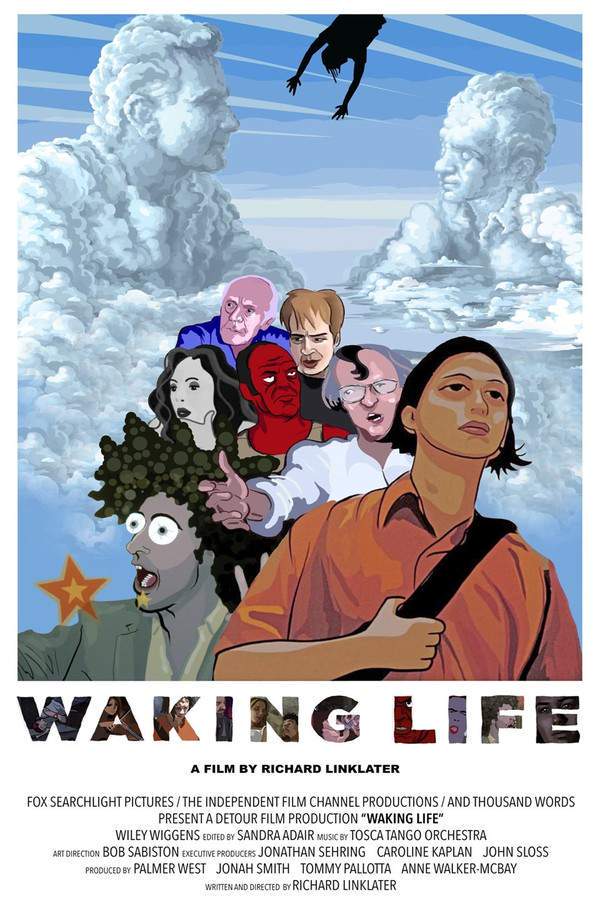
Waking Life (2001) movie poster

Timeline

Waking Life (2001) Timeline Explained – Every Event in Order

Release, runtime and language
2001 · 99 min · English
Loading streaming availability…
Directed by
Richard Linklater

Wiley Wiggins finds himself drifting through a series of interconnected dreams, encountering a diverse cast of characters who challenge his perception of reality. The film explores themes of consciousness, free will, and the nature of existence as he grapples with the blurring lines between his waking life and the dream world. Through philosophical conversations and surreal situations, he questions the very nature of being and the choices that shape our lives.

On this page (6)
  1. 1 Where to watch
  2. 2 Events in order (12)
  3. 3 Timeline questions answered
  4. 4 Movie threads
  5. 5 Movies like Waking Life
  6. 6 Every angle
Loading streaming availability…

12 events in order · contains spoilers

Waking Life Timeline: Events in Chronological Order

Every key event of Waking Life (2001) in order, scene by scene, with when and where it takes place. Use it to untangle flashbacks, time jumps and parallel storylines, to refresh your memory before the sequel or to find the exact scene you are thinking of.

  1. The Protagonist's Journey Begins

    The film opens with an unnamed young man who finds himself in a dream-like reality filled with fluid transitions. As he navigates this surreal landscape, he soon realizes that everything around him is part of an intricate dream.

  2. Meeting Diverse Characters

    As the protagonist travels, he encounters a range of eccentric intellectuals, artists, and ordinary individuals in diners. Each character engages him in philosophical discussions that challenge his understanding of free will, metaphysics, and the meaning of existence.

    Where
    Various locations in a dreamscape
  3. Exploration of Philosophical Themes

    Throughout his journey, the dialogues touch on existentialism, situationist politics, and even film theory, particularly referencing André Bazin. These conversations reflect the intricacies of life and delve into the existential questions that haunt humanity.

  4. Witnessing Random Conversations

    The narrative shifts perspectives, allowing viewers to overhear deep conversations among couples and random individuals. These moments highlight how various people grapple with their own thoughts about reality and existence.

  5. First Encounter with the Protagonist's Imaginary Muse

    The protagonist's journey takes a pivotal turn when he meets a captivating woman who engages him with her creative ideas. This encounter becomes a turning point, as he begins to notice the dreamlike quality of her existence.

  6. Awakening to His Dream State

    As conversations with various figures continue, the young man starts to awaken to the realization that he is trapped in a dream. This recognition of his state as merely a construct of his imagination instills both fear and curiosity within him.

  7. Engaging with Dream Figures

    Transitioning from a passive observer, the protagonist begins to interact with other dream figures. Engaging them in conversation, he uncovers layers of his own psyche while confronting the limits of his dream world.

  8. Confrontation with a Reflection of Himself

    The protagonist encounters a character that resembles himself, leading to a profound and poignant discussion. This exchange delves into themes of reality versus perception, suggesting that all experiences might merely be fleeting moments misinterpreted as time.

  9. Philosophical Revelation

    In this candid dialogue, he comes to grips with the notion that life is a continual rejection of the divine invitation to connect with the universe. It proposes that dreams hold insightful reflections of reality's infinite aspects.

  10. The Elevator Scene

    In a significant and visual echo to earlier in the film, the protagonist finds himself walking into a driveway. He attempts to grasp a car handle but instead experiences an upward lift into the sky, signifying a break from earthly constraints.

    Where
    Driveway
  11. Ascension into the Sky

    As he levitates above the familiar scenery, the protagonist rises into the azure sky. This climax reflects a liberating moment, transcending the confines of his dream state and hinting at liberation from life's deceptions.

  12. Final Disappearance

    Ultimately, the protagonist vanishes from sight as he ascends higher, encapsulating the dream-like journey he has undergone. This ending leaves viewers contemplating the nature of reality and the possibilities that lie in dreams.

Last updated: November 15, 2024 at 20:36

Was this helpful?

Timeline questions answered

Waking Life Timeline Explained: Your Questions Answered

When does it happen, and why in that order? The questions people ask about the chronology of Waking Life (2001): time jumps, flashbacks, cause and effect between scenes and the correct order of events, each answered with spoilers.

Q1

Why does the protagonist realize he's trapped in a dream?

The protagonist gradually becomes aware of his dream state through repeated false awakenings and encounters with dream figures who behave inconsistently. After meeting a captivating woman who approaches him with creative musings, he realizes she is merely a figment of his imagination. This moment of recognition, that none of the characters are real, triggers his shift from passive observer to active participant in the dream world, as he begins openly engaging with other figures while grappling with the unsettling truth of being trapped.

Foreshadowing: Earlier scenes show the protagonist drifting through fluid transitions without clear boundaries, establishing the surreal nature of his reality before he explicitly recognizes it as a dream.

  • dream state
  • false awakening
  • lucid dreaming
  • subconscious
Q2

Who is the woman the protagonist meets in the dream?

The woman who approaches the protagonist with her creative ideas is a manifestation of his own imagination, a dream figure rather than a real person. Her existence within the dream serves as a catalyst for the protagonist's awakening to his circumstances. He recognizes that she lacks the coherence of a real person, which prompts him to question the nature of all the characters he encounters throughout his journey.

Foreshadowing: The film establishes early on that the protagonist is navigating a dreamscape populated entirely by constructs of his mind.

  • imaginary woman
  • dream figure
  • muse
  • subconscious creation
Q3

What does the character who resembles the protagonist represent?

The character that resembles the protagonist represents a self-confrontation, an embodiment of his own psyche engaging in dialogue about the nature of reality. This meeting is the narrative's philosophical climax, where the protagonist grapples with the idea that reality might be a singular moment misinterpreted as time, and that life itself involves a continuous rejection of a divine invitation to unify with the universe.

Foreshadowing: The protagonist's earlier passive observation of dream figures evolves into this direct confrontation with an aspect of himself.

  • self reflection
  • duality
  • inner dialogue
  • consciousness
Q4

What is the divine invitation the film mentions?

The divine invitation refers to a spiritual or metaphysical opportunity to merge with the universal consciousness, to recognize the interconnected nature of existence beyond the illusion of individual selfhood. The film suggests that ordinary living involves constantly refusing this invitation, preferring the comfort of separation and the deception of life as we perceive it. Dreams, in this context, offer glimpses into the infinite aspects of reality that become accessible when one accepts this invitation.

Foreshadowing: Earlier philosophical discussions about unity and consciousness prepare the groundwork for this revelation.

  • divine invitation
  • unity
  • consciousness
  • spirituality
  • transcendence
Q5

Why does the protagonist levitate at the end of the film?

The protagonist's levitation represents a transcendence of earthly constraints and a literal breaking free from the dream state's illusion. After his philosophical revelation about the nature of reality and the divine invitation, his physical ascension through the sky symbolizes either liberation from the cycle of dreams or a dissolution of individual identity into something larger. The scene echoes an earlier moment where a child floats in the same driveway, suggesting this is a recurring moment of transcendence within the dream.

Foreshadowing: The opening scene features a child floating in a driveway, creating visual symmetry with the protagonist's final levitation.

  • levitation
  • ascension
  • transcendence
  • freedom
  • sky
Q6

What is the significance of the child floating at the beginning?

The floating child appears at both the beginning and end of the film, establishing a symbolic cycle and foreshadowing the protagonist's own transcendence. The child represents the possibility of breaking free from physical limitations, a preview of what the protagonist will ultimately achieve. This visual echo suggests that the protagonist's journey may be recurring or that the child is a younger version of himself within the dream logic.

Foreshadowing: This image directly anticipates the protagonist's final levitation in the same driveway location.

  • floating child
  • symbolism
  • recurrence
  • foreshadowing
Q7

What happens when the protagonist tries to grab the car handle?

When the protagonist walks into the driveway and reaches for a car's handle, he expects to interact with the physical world like in waking life. Instead, rather than grasping the handle, he experiences an upward lift that carries him into the sky. This moment marks the collapse of his remaining attachment to ordinary reality, he attempts the familiar action but is instead pulled upward, signifying his release from the dream's constraints.

Foreshadowing: The protagonist's earlier realization that he is in a dream removes his investment in physical interactions, making this transformation possible.

  • car handle
  • driveway
  • transformation
  • ascension
Q8

What is the film's message about the nature of reality?

The film suggests that our perceived reality may be no more substantial than a dream, that what we experience as time and separate existence could be a single moment misinterpreted. The protagonist's journey through the dream world serves as a vehicle to question the boundary between waking life and dreams, ultimately proposing that reality itself could be a construct. The ending implies that true liberation comes from recognizing and accepting the fluid nature of existence rather than clinging to the illusion of fixed reality.

Foreshadowing: Philosophical dialogues throughout the film consistently challenge the distinction between reality and dream.

  • reality
  • dream
  • perception
  • illusion
  • consciousness
  • existence
Q9

What are the false awakening scenes in the film?

False awakenings are moments where the protagonist believes he has woken up from his dream only to discover he is still within the dream. These episodes reinforce the film's exploration of consciousness and the difficulty of distinguishing between sleeping and waking states. Each false awakening adds to the protagonist's growing suspicion that his reality is not what it appears to be, eventually leading to his full recognition that he is trapped in a persistent dream state.

Foreshadowing: The protagonist's early confusion about transitions between scenes hints at the unstable nature of his experience.

  • false awakening
  • sleep
  • consciousness
  • lucidity
Q10

What happens when the protagonist disappears at the end?

The protagonist's final disappearance as he ascends into the sky represents either transcendence or dissolution, interpretation remains deliberately open. He rises higher until vanishing from sight, leaving viewers to contemplate whether he has achieved liberation from the dream cycle, dissolved into universal consciousness, or simply ended one dream to potentially begin another. This ambiguous conclusion aligns with the film's broader exploration of consciousness and the uncertain boundary between existence and nonexistence.

Foreshadowing: The entire journey has been building toward this moment of potential release or transformation.

  • disappearance
  • transcendence
  • ending
  • liberation
  • dissolution

Movie threads

More Movies Like Waking Life, by Mood & Story

Curated lists built around what makes Waking Life tick: the same mood, the same kind of story or the same emotional payoff. Each list explains why these movies belong together.

Dreamlike Philosophical Movies like Waking Life

Films that use surreal dream logic to explore profound questions about existence. If you enjoyed the deep discussions and surreal animation of Waking Life, explore more movies that use dreamlike narratives to tackle big ideas about reality and existence. These films share a similar contemplative and disorienting feel, blending fantasy and philosophy.

  • dreamlike
  • philosophical
  • surreal
  • contemplative
  • disorienting
  • ethereal
  • Tone: whimsical, contemplative
  • Pacing: slow, meandering
Why these movies?

The story pattern: Stories in this thread often lack a traditional plot, instead following a protagonist on a meandering journey through a series of encounters or visions. The narrative structure is typically nonlinear, mimicking the logic of a dream, and progresses through dialogue-driven explorations of abstract themes rather than action or conflict.

Why they belong together: These movies are grouped together because they prioritize intellectual exploration over plot, using a dreamlike or surreal aesthetic as a vehicle for philosophy. They share a specific mood of contemplative wonder and a pacing that allows for deep, often disorienting, reflection.

Abstract and Contemplative Movies Similar to Waking Life

Slow-paced, visually striking films where mood and ideas replace traditional plot. Fans of Waking Life's unique structure and philosophical tone will find similar experiences here. Discover movies that are more about the journey than the destination, using slow pacing and complex ideas to create a deeply thoughtful and visually immersive viewing experience.

  • contemplative
  • atmospheric
  • abstract
  • meditative
  • thought-provoking
  • visual
  • Tone: contemplative, ambiguous
  • Pacing: very slow, atmospheric
Why these movies?

The story pattern: The narrative pattern is defined by its looseness. These films often follow an episodic or vignette-based structure, connecting scenes through a central mood or theme rather than a cause-and-effect plot. Character arcs are subtle, if present at all, with the focus being on a shift in perception or understanding.

Why they belong together: They are connected by a shared approach to filmmaking that values introspection and aesthetic experience. The combination of slow pacing, medium emotional weight, complex ideas, and a tendency towards ambiguous endings creates a coherent vibe of thoughtful, open-ended exploration.

If you liked this

Movies Like Waking Life

Similar movies to Waking Life: the same genre, themes or kind of story. Each one comes with its own plot summary, timeline and ending explained.

Browse all movie summaries

Every angle

Waking Life (2001) Explained: Plot, Timeline & Characters

Everything about Waking Life in one place: what happens in the plot summary, the timeline in chronological order, the characters and meaning and a spoiler-free summary. What's After the Movie adds the cast, box office and post-credit scenes.

Coming soon on iOS and Android

The Plot Explained Movie Summary App

Plot summaries, endings explained and timelines on your phone. Catch up on any movie in minutes, save your favorites and never miss a twist again.

Be the first to know when we launch. Your email stays private, always.

Learn more about the app