Plot Explained Spoilers guaranteed!
Plot Explained

Browse by genre

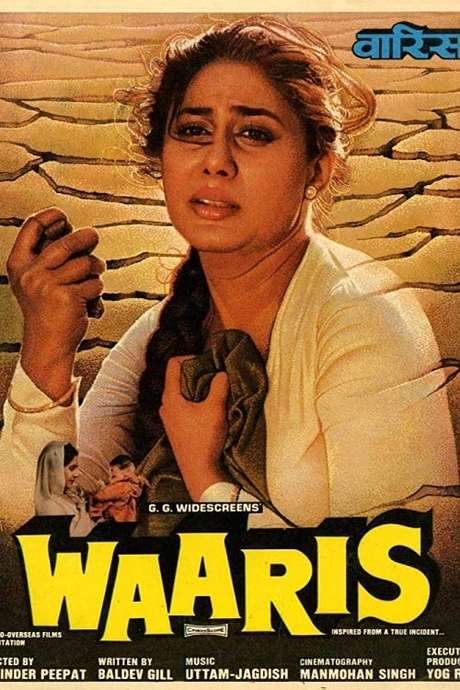
Waaris (1988) movie poster

Characters & Themes

Waaris (1988) Characters, Setting & Themes Explained

Release, runtime and language
1988 · 150 mins · Hindi
Directed by
Ravindra Peepat
Starring
Navneet Nishan, Amrita Singh, Raj Babbar, Amrish Puri, Smita Patil

A multi‑millionaire’s unequal division of his property sparks a bitter family feud. One son murders his father and is imprisoned. Years later, the grandson is slain by the other son’s descendants in a land dispute. The widowed mother, desperate to protect the inheritance, seeks a new heir by remarrying.

On this page (6)
  1. 1 Characters explained (10)
  2. 2 Where & when it takes place
  3. 3 Themes & meaning (4)
  4. 4 Character & meaning questions
  5. 5 Movie threads
  6. 6 Every angle

10 main characters · contains spoilers

Waaris Characters Explained: Who Is Who

The main characters of Waaris (1988), heroes and villains: what drives them, how they change over the course of the story and what each of them reveals about the film's bigger ideas.

  • Paramjit (Paro)

    played by Smita Patil

    Paro is a poor, devoted wife who marries Shravan. She fights to safeguard the family land and pressure the need for a new heir, while maintaining compassion for her in-laws. Her courage culminates in a final act to protect the baby, at the cost of her own life.

    • ❤️ Protagonist
    • 👪 Family loyalty
    • 🌾 Land defense
  • Kishan Singh

    The multi-millionaire patriarch who drafts a will dividing his estate among his two sons and the grandchild. His plan triggers jealousy and violence after his murder by Dulla, setting the plot in motion.

    • 💼 Authority
    • 🧭 Family feud
    • 🗝️ Inheritance
  • Gajjan

    Shravan's father and elder son who upholds the old order but is wary of Dulla's ambition. He is slow to forgive but ultimately faces danger when Dulla and his sons move to seize the land.

    • 🏡 Patriarch
    • 🛡️ Protector
    • 🪶 Family ties
  • Dulla

    A ruthless and vengeful figure who resents his lack of share and schemes with his sons to claim the land by any means. His power-hungry plans lead to brutal murders and a final confrontation with Paro.

    • 🔥 Antagonist
    • 🗡️ Power grab
    • 🧨 Family feud
  • Shravan

    Gajjan's son who marries Paro, becoming the living link to the ancestral estate. His murder by a hired assailant intensifies the conflict and fuels Dulla's vendetta.

    • 💑 Marriage
    • 🕯️ Loss
    • 🏡 Heir
  • Shibo

    Paro's sister who forms a complex bond with Binder and ends up marrying Gajjan to produce a new heir. She plays a pivotal role in protecting the baby.

    • 💞 Family sacrifice
    • 🛡️ Protector
    • 🕊️ Love vs duty
  • Binder

    A local ally who helps defend the family and later aids Shibo in protecting the child. He embodies communal resistance against Dulla's violent schemes.

    • 🧭 Ally
    • 🛡️ Village guardian
    • 🪖 Resistance
  • Thade

    One of Dulla's sons who participates in violent acts against the family, dies in a confrontation with villagers.

    • ⚔️ Son of Dulla
    • 🗡️ Violent antagonist
  • Dara

    Dulla's other son who is swept up in the murderous family feud and meets his end in a village confrontation.

    • ⚔️ Family member
    • 🗡️ Villain
  • Chhote

    The mentally challenged son of Dulla who is involved in attempts to seize the baby and who dies by accidental electrocution during the final confrontation.

    • 🧠 Vulnerable
    • ⚔️ Villainous schemes
    • 🪫 Accident

Last updated: October 04, 2025 at 14:04

Was this helpful?

Setting

Where and When Does Waaris Take Place?

The setting of Waaris (1988): the year and time period, the places and locations, and how they shape the characters, the mood and the tension of the story.

Time period

The tale spans generations in a rural Indian agrarian setting, moving from the patriarch's will to marriage alliances and revenge. The era is defined by customary norms, family honor, and village enforcement of order. The action highlights generational shifts in wealth, duty, and the meaning of legacy.

Location

India, rural village, farm land

The story unfolds in a traditional Indian rural landscape centered on a family-owned farm. The village is tight-knit, with loyalties and feuds shaped by land and inheritance. The farm serves as both livelihood and symbol of ancestral power that drives conflict across generations.

  • ❄️ Village life
  • 🏡 Rural setting
  • 🌾 Farm setting

Last updated: October 04, 2025 at 14:04

Was this helpful?

4 major themes

Waaris Meaning: Themes & Message Explained

What is Waaris (1988) really about? The emotional, social and philosophical themes the film keeps returning to, its symbolism and the message beneath the surface.

  • Inheritance

    A will dividing Kishan Singh's estate triggers a ruthless fight for control. Dulla's grievance over the share fuels plots to seize land by any means. Shravan's birthright becomes the spark for murder, and the family fractures as loyalties shift. Ultimately, the land's value tests love, loyalty, and justice.

  • Love and Duty

    Paro's love for Shravan binds two families, yet her sense of duty to protect the ancestral land drives strategic choices. She pushes for remarriage to create a rightful heir and safeguard the estate from Dulla's schemes. Personal happiness clashes with family responsibilities. Sacrifices become a recurring answer to preserve the lineage.

  • Violence

    Violence escalates from murder to open ambushes as the kin fight over inheritance. Dulla and his sons dramatize the lengths people will go to claim what they consider theirs. Shravan's killing and the village's counter-attacks reveal a community governed by fear and retaliation. The climax exposes how vengeance corrodes families and communities.

  • Sacrifice

    Self-sacrifice becomes the ultimate instrument to protect the child and the land. Paro sacrifices her life to stop Dulla and ensure the heir's safety, embodying the cost of keeping a family legacy intact. Shibo also makes painful concessions for her sister's sake. The ending underscores that lasting peace often demands personal loss.

Last updated: October 04, 2025 at 14:04

Was this helpful?

Character & theme questions

Waaris Characters & Meaning: Your Questions Answered

The questions people ask about Waaris (1988): who the characters really are, their relationships, what the symbols mean, where it takes place and what the movie is really about. Each answer contains spoilers.

Q1

What is the setting of the film and why does it matter?

The film takes place in a traditional Indian rural village centered on a family-owned farm. The agricultural setting matters because land represents ancestral power, wealth, and family legacy in rural Indian society. The farm is both livelihood and symbol, making the inheritance dispute a matter of survival and honor rather than mere property rights.

  • rural india
  • village setting
  • farm land
  • ancestral home
Q2

When does the story take place?

The story spans generations in a rural Indian agrarian setting without a specific date. The era is defined by customary norms, family honor, and village enforcement of social order. This timeless quality reflects stories of inheritance and feuds that have played out across generations in Indian villages, where traditional values clash with greed and ambition.

  • time period
  • rural india
  • generational story
  • traditional values
Q3

What is the central theme of the movie?

The central theme is inheritance and how the fight over land and property destroys families. A will dividing Kishan Singh's estate triggers a ruthless battle for control that spans generations. The story shows how greed for land and wealth poisons relationships, leads to murders, and ultimately tears the family apart while testing loyalty, love, and justice.

  • inheritance
  • land dispute
  • family property
  • wealth conflict
Q4

How does violence drive the story forward?

Violence escalates from murder to open ambushes as family members fight over inheritance. Dulla and his sons commit brutal acts to claim what they believe is rightfully theirs, including killing Shravan. The village responds with counter-attacks, revealing a community trapped in cycles of fear and retaliation. The film shows how vengeance corrodes both families and the entire community.

  • violence
  • revenge
  • murder
  • family feud
Q5

Who is Paro and what motivates her?

Paro (played by Smita Patil) is a poor, devoted wife who marries Shravan to become part of the family. Her primary motivation is safeguarding the ancestral land and ensuring a rightful heir to preserve the family legacy. She represents the tension between personal happiness and family duty, ultimately making the ultimate sacrifice to protect the child and end the cycle of violence.

  • paro
  • smita patil
  • protagonist
  • sacrifice
Q6

Who is Dulla and why is he the antagonist?

Dulla is a ruthless and vengeful figure who resents being denied a share in his father's estate. His deep-seated grievance fuels his schemes to seize the land through any means necessary, including murder. He leads his sons in violent attacks against the family, becoming the primary source of conflict. His unbounded ambition and willingness to kill make him the story's chief antagonist.

  • dulla
  • antagonist
  • villain
  • greed
Q7

What does the film say about sacrifice?

The film presents sacrifice as the ultimate instrument for protecting family legacy. Paro sacrifices her life to stop Dulla and ensure the heir's safety, showing that lasting peace often demands personal loss. Shibo also makes painful concessions by marrying Gajjan to produce an heir. The bittersweet ending underscores that protecting the family name comes at a tremendous human cost.

  • sacrifice
  • paro's death
  • family legacy
  • peace
Q8

How does love and duty conflict in the story?

Paro's love for Shravan binds two families together, yet her sense of duty to protect the ancestral land drives her strategic choices. She pushes for remarriage to create a rightful heir and safeguard the estate from Dulla's schemes. Personal happiness constantly clashes with family responsibilities, with sacrifice becoming the recurring answer to preserve the lineage.

  • love
  • duty
  • family honor
  • personal sacrifice
Q9

What is Kishan Singh's role in the story?

Kishan Singh is the multi-millionaire patriarch who drafts a will dividing his estate among his two sons and his grandchild. His decision to divide the property triggers the entire conflict, as his murder by one son sets the plot in motion. He represents the founding generation whose choices echo through generations, ultimately causing the very destruction he likely sought to prevent.

  • kishan singh
  • patriarch
  • will
  • estate
Q10

How does the village community function in the story?

The village operates as a tight-knit community where loyalties and feuds are shaped by land and inheritance. The village enforces social order through customary norms and collective action. When Dulla's violence escalates, villagers rally to defend the family, with Binder leading communal resistance. The village becomes both witness and participant in the family's destruction.

  • village
  • community
  • social order
  • collective action
Q11

Who is Binder and what is his significance?

Binder is a local ally who helps defend the family against Dulla's violent schemes. He embodies communal resistance and represents the villagers who choose to stand against injustice. Binder later aids Shibo in protecting the child, showing that honor and loyalty exist outside the immediate family circle.

  • binder
  • ally
  • village defense
  • support
Q12

How does the conflict span generations?

The conflict begins with Kishan Singh's will dividing his estate, leading to his murder by one son. Years later, the grandson Shravan is killed in the continuing land dispute. The feud passes to the next generation with Dulla's sons participating in violence, creating a pattern where inheritance disputes become a multigenerational curse that destroys multiple family members.

  • generational conflict
  • family feud
  • inheritance cycle

Movie threads

More Movies Like Waaris, by Mood & Story

Curated lists built around what makes Waaris tick: the same mood, the same kind of story or the same emotional payoff. Each list explains why these movies belong together.

Vengeful Family Sagas like Waaris

Stories where deep-seated family feuds spiral into cycles of revenge and tragedy. If you were gripped by the bitter feud in Waaris, explore more movies like it. These dramas feature intense family conflicts over inheritance or honor, leading to murder and a relentless, tragic cycle of revenge. Discover similar stories of families destroyed from within by the high emotional weight of vengeance.

  • vengeful
  • tragic
  • grim
  • tense
  • desperate
  • somber
  • Tone: dark, tense, tragic
  • Pacing: fast, driven by pivotal events
Why these movies?

The story pattern: Stories in this thread typically begin with a foundational betrayal or injustice within a family, such as an unfair inheritance or a murder. This act triggers a chain reaction of revenge across generations, where characters are driven by a desperate need for retribution, often leading to further tragedy and a morally complex, bittersweet resolution.

Why they belong together: These movies are grouped by their core focus on a multi-generational family feud driven by vengeance. They share a dark, tense tone, high emotional intensity, and a narrative structure where past sins dictate the tragic present, creating a cohesive experience of epic family tragedy.


High-Stakes Inheritance Dramas like Waaris

Narratives where the fight for a legacy unleashes greed, betrayal, and violence. For viewers who enjoyed the tense land dispute and inheritance battle in Waaris, this collection features similar movies. These dramas center on bitter conflicts over a family fortune or property, leading to betrayal, violence, and tragic consequences. Find films with the same gripping, high-stakes tension and exploration of greed's destructive power.

  • anxious
  • tense
  • gripping
  • desperate
  • somber
  • grim
  • Tone: somber, anxious, desperate
  • Pacing: fast, propulsive
Why these movies?

The story pattern: The narrative pattern involves a coveted inheritance—be it land, money, or a business—that creates immediate tension and rivalry among potential heirs. This external catalyst exposes deep-seated family dysfunctions, often culminating in acts of betrayal, manipulation, or even murder as characters fight to secure their claim, resulting in a tragic or bittersweet outcome.

Why they belong together: Movies are grouped here by their central plot device: a high-stakes inheritance that serves as the catalyst for intense drama. They share a desperate, anxious mood, a fast-paced unraveling of familial trust, and themes of greed and sacrifice, providing a consistent vibe of high-tension familial conflict.

Every angle

Waaris (1988) Explained: Plot, Timeline & Characters

Everything about Waaris in one place: what happens in the plot summary, the timeline in chronological order, the characters and meaning and a spoiler-free summary. What's After the Movie adds the cast, box office and post-credit scenes.

Coming soon on iOS and Android

The Plot Explained Movie Summary App

Plot summaries, endings explained and timelines on your phone. Catch up on any movie in minutes, save your favorites and never miss a twist again.

Be the first to know when we launch. Your email stays private, always.

Learn more about the app