Plot Explained Spoilers guaranteed!
Plot Explained

Browse by genre

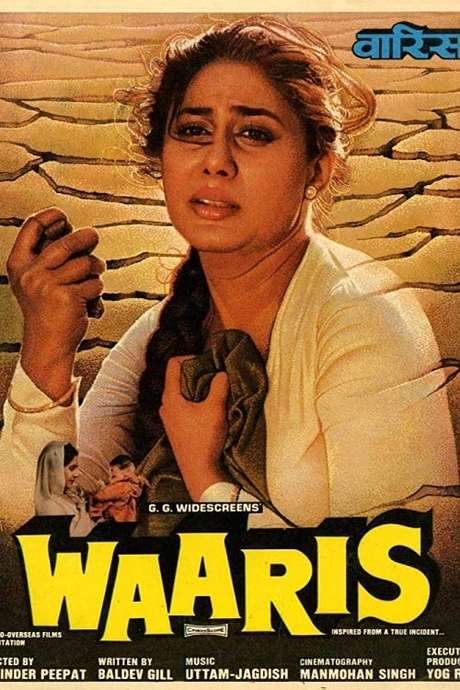
Waaris (1988) movie poster

Plot Summary

Waaris (1988) Plot Summary Explained

Release, runtime and language
1988 · 150 mins · Hindi
Directed by
Ravindra Peepat
Starring
Navneet Nishan, Amrita Singh, Raj Babbar, Amrish Puri, Smita Patil

A multi‑millionaire’s unequal division of his property sparks a bitter family feud. One son murders his father and is imprisoned. Years later, the grandson is slain by the other son’s descendants in a land dispute. The widowed mother, desperate to protect the inheritance, seeks a new heir by remarrying.

On this page (4)
  1. 1 What happens: full plot
  2. 2 Plot questions answered
  3. 3 Movie threads
  4. 4 Every angle

Full plot summary · contains spoilers

What Happens in Waaris: Full Plot Summary

The whole story of Waaris (1988) explained, from the opening scene to the final frame: every key event, every twist and what it all adds up to. Read it as a quick recap before the sequel, to check a scene you missed, or to finally understand what really happened.

Kishan Singh, a wealthy widower, draws up a will that reshapes the family fortune. He orders his ancestral property to be split equally between his two sons, Gajjan and Dulla, while Shravan, Gajjan’s son, is named to inherit the farm. Dulla, furious at receiving nothing for his own three sons, confronts Kishan in a heated quarrel that ends with Kishan murdered by Dulla. The law takes its course, and Dulla is jailed, leaving his sons in the care of their elder brother Gajjan.

Years pass, and Shravan meets a poor young woman, Paramjit, Smita Patil — known as Paro — and the two marry. On the wedding day, Dulla is released from prison and reenters the family’s life, bringing with him the same old bitterness and a ruthless hunger to claim what he believes is rightfully theirs. He lures his sons into a scheme to seize the land by any means, fanning resentment that has cooled little since Kishan’s death. A jealous admirer of Paro becomes entangled in Dulla’s plans, and while Shravan visits a nearby village as part of his duties, the conspirator stabs him and kills him, then runs off. Dulla’s sons, Thade and Dara, burn the killer alive to erase any trace of their involvement.

Paro is left devastated by Shravan’s death. Dulla presses Gajjan to marry Paro off to his own mentally challenged son, Chhote, to ensure that Shravan’s farm lands stay within the family line. The proposal is met with fierce resistance from Paro, who sees the danger of letting the land fall into the wrong hands. She pushes for Gajjan to remarry so a new heir can be produced, and she suggests his younger sister Shibo as a prospective wife. Shibo, however, loves Binder and desires him, not Gajjan. Still, Shibo’s devotion to her sister leads her to sacrifice her own happiness to secure Paro’s peace; she agrees to marry Gajjan, and soon she bears him a son, a rightful heir. Paro treats this child with maternal warmth, grateful that Shravan’s land will stay protected far from Dulla and his sons.

Still unable to accept defeat, Dulla and his henchmen intensify their plot. They ambush Gajjan and murder him, then launch an assault on the house to eliminate Shibo and her newborn son. Paro holds the line, protecting the infant as Shibo seeks help from Binder. Together with the village, they fend off Dulla’s goons and shield the baby. Chhote is accidentally electrocuted when he tries to snatch the child, while Thade is cornered by villagers and stabbed with a pitchfork. Dara is struck down by Dulla’s gunfire, dying from his injuries as Dulla’s grip on reality slips further away.

With his heirs dead and the land slipping through his fingers, a deranged Dulla advances on the baby with a sword. Paro intervenes once more, sacrificing herself to kill Dulla and save the child. In her final moments, she asks forgiveness from Paro and Binder, entrusting them to care for the baby and the family’s ancestral land. The film closes on the quiet resolve of Paro’s loved ones who carry forward the legacy she fought so hard to protect, honoring her sacrifice and the stubborn hope that the land will belong to those who value it most.

Last updated: October 09, 2025 at 14:18

Was this helpful?

Plot questions answered

Waaris Plot Explained: Your Questions Answered

The questions people ask most about Waaris (1988): what happens in the confusing scenes, why the characters do what they do, the twists, hidden details and what the ending means. Each answer contains spoilers.

Q1

Why did Dulla kill his father Kishan Singh?

Dulla killed Kishan Singh because he was furious with the will. Kishan divided the ancestral property equally between his two sons Gajjan and Dulla, but named Shravan (Gajjan's son) to inherit the farm. Dulla received nothing for his own three sons, which he saw as a gross injustice. During a heated confrontation about the will, the argument escalated and Dulla murdered his father.

Foreshadowing: The will's unequal terms regarding Shravan's inheritance are established early, setting the deadly conflict in motion.

  • dulla
  • kishan singh
  • murder
  • will
  • inheritance
  • property dispute
Q2

Who killed Shravan and why?

Shravan was killed by a disguised ex-admirer of Paro who was manipulated by Dulla. Dulla, bitter about losing the land, had been schemesing with his sons Thade and Dara to claim the inheritance. He used this jealous admirer to orchestrate the murder while Shravan was fulfilling post-wedding duties in a poor village. The killer stabbed Shravan and fled, after which Thade and Dara burned him alive to eliminate any evidence linking Dulla's family to the crime.

Foreshadowing: Dulla's return during the wedding rekindles his old grievances and sets up his revenge plot.

  • shravan
  • killed
  • murder
  • paramjit
  • admirer
  • dulla
Q3

Why did Dulla want Paro to marry his son Chhote?

Dulla proposed that Paro marry his mentally challenged son Chhote as a scheme to keep Shravan's farm land within his own family line. After Shravan's death, Dulla saw an opportunity to control the inheritance by forcing Paro into his family through marriage to Chhote. This would have given Dulla's line dominion over the land without any actual blood claim to it.

Foreshadowing: Dulla's obsession with the farm begins with the original will dispute.

  • dulla
  • chhote
  • marriage proposal
  • paro
  • land
  • inheritance scheme
Q4

Why did Shibo agree to marry Gajjan?

Shibo agreed to marry Gajjan to protect Paro and ensure the continuation of Shravan's bloodline. After Shravan's death, Paro feared that if she married Dulla's son Chhote, the farm would fall into Dulla's control. Paro convinced Gajjan to remarry and suggested Shibo as a bride. Though Shibo loved Binder and not Gajjan, she sacrificed her personal happiness to bear a new heir who would protect Shravan's land from Dulla's greedy grasp.

Foreshadowing: Paro's earlier rejection of Dulla's proposal shows her desperation to keep the land safe.

  • shibo
  • gajjan
  • marriage
  • sacrifice
  • binder
  • heir
  • land protection
Q5

Why did Dulla kill Gajjan?

Dulla killed Gajjan because he could not accept that the farm would pass to Shibo's newborn son, who was the rightful heir to Shravan's inheritance. With Gajjan alive, the baby represented a direct threat to Dulla's decades-long quest to claim the ancestral land for his own line. Dulla and his goons ambushed Gajjan and murdered him, then launched an assault on the house to eliminate the infant and complete their takeover of the property.

Foreshadowing: Dulla's relentless pursuit of the land traces back to his original anger over the will.

  • dulla
  • gajjan
  • murder
  • ambush
  • baby
  • heir
  • land dispute
Q6

How did Paro die in the end?

Paro died sacrificing herself to save the baby. After Dulla killed Gajjan and attacked the house to murder the infant, Paro defended the child alongside Shibo and the villagers. In the final confrontation, with all his other heirs dead (Chhote electrocuted, Thade and Dara killed), a deranged Dulla lunged at the baby with a sword. Paro intervened and killed Dulla to save the child, but died from her wounds. In her final moments, she asked forgiveness from Binder and Shibo and entrusted them to care for the baby and protect the land.

Foreshadowing: Paro had been protecting the baby throughout the siege, showing her unwavering commitment.

  • paro
  • sacrifice
  • death
  • dulla
  • baby
  • final battle
Q7

What happened to Thade and Dara?

Thade and Dara, Dulla's sons, died during the final assault on the farm. Thade was ambushed and stabbed by villagers with a pitchfork while trying to capture the baby. Dara was killed when caught in the crossfire of Dulla's gunfire during the chaotic battle, Dulla's own gun struck him, causing fatal wounds. Their deaths, along with Chhote's accidental electrocution, left Dulla with no surviving heirs, driving him to his final desperate attack on the infant.

Foreshadowing: The villagers' involvement in the defense was hinted at when Shibo fled to Binder for help.

  • thade
  • dara
  • deaths
  • villagers
  • battle
  • dulla's sons
Q8

Why did Paro push for Gajjan to remarry?

Paro pushed for Gajjan to remarry because she feared losing Shravan's farm to Dulla's family. After Shravan's murder, Dulla wanted Paro to marry his mentally challenged son Chhote, which would have given Dulla control over the land. To prevent this, Paro convinced Gajjan that they needed a new heir, a child born from a new marriage who would have a legitimate blood claim to the farm and could protect it from Dulla's greedy designs.

Foreshadowing: Dulla's marriage proposal was explicitly designed to seize control of the land.

  • paro
  • gajjan
  • remarry
  • heir
  • land protection
  • dulla scheme
Q9

Why did Kishan Singh's will cause such a bitter feud?

Kishan Singh's will triggered the feud because it favored Gajjan's son Shravan over Dulla's three sons. Kishan divided the ancestral property equally between his two sons, but specifically named Shravan to inherit the farm, a decision that excluded Dulla's children entirely. This perceived injustice drove Dulla to murder his own father, and the resulting cycle of revenge and violence consumed multiple generations of the family.

Foreshadowing: The will's terms are revealed at the very beginning, establishing the root cause of all subsequent tragedy.

  • kishan
  • will
  • property
  • feud
  • inheritance dispute
  • shravan
  • dulla
Q10

How did the baby survive the final attack?

The baby survived because of Paro's sacrifice and the combined defense of Shibo, Binder, and the villagers. When Dulla's gang attacked, Paro held off the attackers while Shibo fled to get help from Binder. Together with the village community, they organized a resistance that fended off Dulla's goons. Even when Dulla himself attacked, Paro gave her life to stop him, ensuring the infant lived to inherit the ancestral land.

Foreshadowing: Binder's involvement was secured when Shibo went to him for help during the assault.

  • baby
  • survival
  • defense
  • villagers
  • binder
  • shibo
  • protection
Q11

Why did Dulla become deranged by the end of the movie?

Dulla became deranged after losing everything, his freedom, his sons, and his grip on reality. Years of imprisonment for killing his father, followed by decades of failed schemes to claim the land, drove him to madness. When his final plan collapsed with the deaths of his sons Thade and Dara during the farm siege, Dulla snapped completely. He fired blindly in the chaos, accidentally killing his own son Dara, and then advanced on the baby with a sword in a final, unhinged attempt to seize the inheritance.

Foreshadowing: Dulla's obsession with the land has been building since Kishan's murder decades earlier.

  • dulla
  • deranged
  • madness
  • loss
  • sons
  • obsession
  • land

Movie threads

More Movies Like Waaris, by Mood & Story

Curated lists built around what makes Waaris tick: the same mood, the same kind of story or the same emotional payoff. Each list explains why these movies belong together.

Vengeful Family Sagas like Waaris

Stories where deep-seated family feuds spiral into cycles of revenge and tragedy. If you were gripped by the bitter feud in Waaris, explore more movies like it. These dramas feature intense family conflicts over inheritance or honor, leading to murder and a relentless, tragic cycle of revenge. Discover similar stories of families destroyed from within by the high emotional weight of vengeance.

  • vengeful
  • tragic
  • grim
  • tense
  • desperate
  • somber
  • Tone: dark, tense, tragic
  • Pacing: fast, driven by pivotal events
Why these movies?

The story pattern: Stories in this thread typically begin with a foundational betrayal or injustice within a family, such as an unfair inheritance or a murder. This act triggers a chain reaction of revenge across generations, where characters are driven by a desperate need for retribution, often leading to further tragedy and a morally complex, bittersweet resolution.

Why they belong together: These movies are grouped by their core focus on a multi-generational family feud driven by vengeance. They share a dark, tense tone, high emotional intensity, and a narrative structure where past sins dictate the tragic present, creating a cohesive experience of epic family tragedy.

High-Stakes Inheritance Dramas like Waaris

Narratives where the fight for a legacy unleashes greed, betrayal, and violence. For viewers who enjoyed the tense land dispute and inheritance battle in Waaris, this collection features similar movies. These dramas center on bitter conflicts over a family fortune or property, leading to betrayal, violence, and tragic consequences. Find films with the same gripping, high-stakes tension and exploration of greed's destructive power.

  • anxious
  • tense
  • gripping
  • desperate
  • somber
  • grim
  • Tone: somber, anxious, desperate
  • Pacing: fast, propulsive
Why these movies?

The story pattern: The narrative pattern involves a coveted inheritance—be it land, money, or a business—that creates immediate tension and rivalry among potential heirs. This external catalyst exposes deep-seated family dysfunctions, often culminating in acts of betrayal, manipulation, or even murder as characters fight to secure their claim, resulting in a tragic or bittersweet outcome.

Why they belong together: Movies are grouped here by their central plot device: a high-stakes inheritance that serves as the catalyst for intense drama. They share a desperate, anxious mood, a fast-paced unraveling of familial trust, and themes of greed and sacrifice, providing a consistent vibe of high-tension familial conflict.

Every angle

Waaris (1988) Explained: Plot, Timeline & Characters

Everything about Waaris in one place: what happens in the plot summary, the timeline in chronological order, the characters and meaning and a spoiler-free summary. What's After the Movie adds the cast, box office and post-credit scenes.

Coming soon on iOS and Android

The Plot Explained Movie Summary App

Plot summaries, endings explained and timelines on your phone. Catch up on any movie in minutes, save your favorites and never miss a twist again.

Be the first to know when we launch. Your email stays private, always.

Learn more about the app