







Plot Explained Spoilers guaranteed!
Plot Explained

Browse by genre

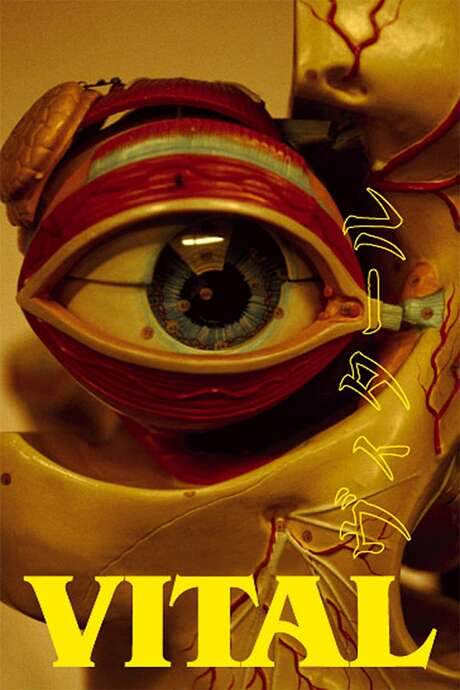
Vital (2004) movie poster

Characters & Themes

Vital (2004) Characters, Setting & Themes Explained

Release, runtime and language
2004 · 86 mins · Japanese
Directed by
Shinya Tsukamoto
Starring
Kiki, Jun Kunimura, Tadanobu Asano, Hana Kino, Kazuyoshi Kushida, Ittoku Kishibe

After a serious accident wipes away his memory, a young man regains consciousness in a hospital and becomes fascinated by a textbook filled with dissection drawings. This newfound intrigue leads him to enroll in medical school, where he initially draws the admiration of a fellow student. However, his attention soon turns obsessive toward the pale, lifeless woman laid out on the cadaver table, whose presence dominates his thoughts.

On this page (7)
  1. 1 Where to watch
  2. 2 Characters explained (3)
  3. 3 Where & when it takes place
  4. 4 Themes & meaning (3)
  5. 5 Character & meaning questions
  6. 6 Movie threads
  7. 7 Every angle

Where to watch

Where to Watch Vital (2004)

Where can you watch Vital? Stream, rent or buy it in the US, including on ARROW, Hoopla and Kanopy: current JustWatch availability with up-to-date prices.

Streaming availability powered by JustWatch

3 main characters · contains spoilers

Vital Characters Explained: Who Is Who

The main characters of Vital (2004), heroes and villains: what drives them, how they change over the course of the story and what each of them reveals about the film's bigger ideas.

  • Hiroshi Takagi (Tadanobu Asano)

    Hiroshi is a medical student who wakes in a hospital with memory loss after a car crash that killed his girlfriend Ryoko. His drive to recover his memory pulls him back into anatomy and cadaver study, shaping his sense of self. He oscillates between scientific curiosity and emotional vulnerability as he confronts who he was and who he wants to become.

    • 🩺 Medical Student
    • 🧠 Memory
    • 💔 Grief
  • Ikumi (Kiki)

    Ikumi is a medical student who becomes infatuated with Hiroshi and pursues a complicated relationship with him. Her feelings turn possessive as Hiroshi devotes himself to uncovering Ryoko’s past, and she experiences jealousy when his attention remains tied to the dead girlfriend. Her attachment reveals the tension between desire and ethical boundaries in a medical setting.

    • 💘 Infatuation
    • 💔 Jealousy
  • Ryoko Ooyama (Nami Tsukamoto)

    Ryoko is Hiroshi’s late girlfriend whose death triggers his memory loss and sets him on a path of self-discovery. The body Hiroshi dissects is revealed to be hers, intensifying his recollection and forcing him to confront their relationship. Her memory lingers as the catalyst for the transformation he undergoes during medical training.

    • 💔 Ex-girlfriend
    • 🩹 Tragedy

Last updated: February 20, 2026 at 18:29

Was this helpful?

Setting

Where and When Does Vital Take Place?

The setting of Vital (2004): the year and time period, the places and locations, and how they shape the characters, the mood and the tension of the story.

Time period

Present day

The narrative takes place in modern times within a university medical program and affiliated hospital. Medical education and cadaver dissection are depicted as central activities that shape the plot. The contemporary setting highlights the clash between scientific pursuit and personal memory.

Location

Japan, hospital, medical school

The story unfolds in contemporary Japan, mainly inside a hospital and a medical school. The hospital setting frames the injuries, memory loss, and recovery, while the cadaver labs at the medical school drive the central investigation into identity. These locations anchor the protagonist’s transformation from amnesiac to a self-aware medical student.

  • 🇯🇵 Japan
  • 🏥 Hospital
  • 🎓 Medical School

Last updated: February 20, 2026 at 18:29

Was this helpful?

3 major themes

Vital Meaning: Themes & Message Explained

What is Vital (2004) really about? The emotional, social and philosophical themes the film keeps returning to, its symbolism and the message beneath the surface.

  • Memory

    Memory drives the plot as Hiroshi pieces together who he is after the accident. The discovery that his past is entangled with Ryoko’s death pushes him to revisit people, places, and choices he had forgotten. Recollection becomes both a tool and a fault line, revealing how memory shapes identity and decisions.

  • Love Obsession

    Ikumi’s infatuation with Hiroshi evolves into a complex, possessive attachment as he pursues the truth about Ryoko. The relationship tests boundaries within the medical classroom, highlighting how desire can complicate ethical lines. Jealousy surfaces when Hiroshi’s attention is directed toward the dead and toward rebuilding his life.

  • Anatomy Mortality

    The cadaver dissection becomes a literal and symbolic arena where life, death, and memory intersect. The body Hiroshi studies is Ryoko, turning anatomy into a confrontation with mortality and identity. The pursuit of anatomical knowledge collides with emotional truth, revealing the limits of science in solving personal mysteries.

Last updated: February 20, 2026 at 18:29

Was this helpful?

Character & theme questions

Vital Characters & Meaning: Your Questions Answered

The questions people ask about Vital (2004): who the characters really are, their relationships, what the symbols mean, where it takes place and what the movie is really about. Each answer contains spoilers.

Q1

Where does Vital take place?

The movie is set in contemporary Japan, primarily in a hospital and a medical school. The hospital serves as the setting where the protagonist recovers from his injuries and memory loss, while the medical school’s cadaver labs become the central location for his studies and investigation into his past.

  • japan
  • hospital
  • medical school
  • setting
  • locations
Q2

When does Vital take place?

Vital is set in the present day within a Japanese university medical program and its affiliated hospital. The contemporary setting emphasizes the clash between scientific medical pursuit and the deeply personal mystery of memory and identity.

  • present day
  • modern era
  • time period
  • japan
Q3

What are the main themes in Vital?

The film explores three interconnected themes: Memory, which drives Hiroshi's journey to reconstruct his identity after the accident; Love Obsession, shown through Ikumi's possessive attachment and the complicated relationships between the characters; and Anatomy Mortality, where cadaver dissection becomes both literal and symbolic in examining life, death, and identity.

  • memory
  • love
  • obsession
  • mortality
  • anatomy
  • themes
Q4

How does memory function as a theme in Vital?

Memory is central to the film, as Hiroshi pieces together who he is after losing his past in the accident. The discovery that his past is entangled with Ryoko's death forces him to revisit forgotten people and choices. The film examines how memory shapes identity and decisions, showing recollection as both a tool and a fault line.

  • memory
  • identity
  • amnesia
  • recovery
  • forgotten past
Q5

Who is Hiroshi in Vital?

Hiroshi is a medical student who wakes in a hospital with memory loss after a car crash that killed his girlfriend Ryoko. His drive to recover his memory pulls him into anatomy and cadaver study, where he oscillates between scientific curiosity and emotional vulnerability as he confronts who he was and who he wants to become.

  • hiroshi
  • protagonist
  • medical student
  • amnesia
Q6

Who is Ikumi and what is her role?

Ikumi is a fellow medical student who becomes infatuated with Hiroshi. Her feelings evolve into a complex, possessive attachment as Hiroshi pursues the truth about Ryoko. She experiences jealousy when his attention remains tied to the dead girlfriend, revealing the tension between desire and ethical boundaries in the medical environment.

  • ikumi
  • character
  • love interest
  • medical student
Q7

Who is Ryoko and why is she important?

Ryoko was Hiroshi's girlfriend whose death in the car crash triggered his memory loss. She is the deceased woman whose body Hiroshi studies in the cadaver lab, making her memory the catalyst for his transformation throughout medical training. Her identity is central to the film's exploration of loss and memory.

  • ryoko
  • deceased girlfriend
  • cadaver
  • death
Q8

What does the cadaver represent in Vital?

The cadaver dissection serves as both a literal and symbolic arena where life, death, and memory intersect. Since the body Hiroshi studies is Ryoko, anatomy becomes a confrontation with mortality and identity. The film reveals the limits of scientific pursuit in solving personal mysteries, as anatomical knowledge collides with emotional truth.

  • cadaver
  • dissection
  • death
  • mortality
  • symbolism
  • anatomy
Q9

What is the tone and emotional weight of Vital?

Vital has a melancholic, slow-paced tone characterized by quiet sadness and introspection rather than overt terror. The film deals with heavy themes of death, dissection, and profound loss. Its intensity comes from the unsettling premise of obsession with a deceased lover's cadaver, combined with the emotional weight of memory loss and grief.

  • tone
  • melancholy
  • emotional weight
  • grief
  • atmosphere
Q10

How does the medical school setting influence the story?

The medical school and hospital settings are essential to the film's themes. The cadaver labs become the literal and symbolic arena where Hiroshi confronts identity and mortality. The medical environment also highlights the tension between scientific curiosity and emotional truth, with the classroom becoming a space where complex relationships and ethical boundaries are tested.

  • medical school
  • hospital
  • setting
  • anatomy lab
  • environment

Movie threads

More Movies Like Vital, by Mood & Story

Curated lists built around what makes Vital tick: the same mood, the same kind of story or the same emotional payoff. Each list explains why these movies belong together.

Medical melancholia and obsession like in Vital

Where grief and the clinical gaze blur into unsettling obsession. For viewers captivated by Vital's unsettling blend of medical imagery and obsessive grief, this list features movies like Vital that use hospitals, dissection, and clinical settings to explore heavy themes of loss, memory, and emotional turmoil in a slow, atmospheric way.

  • clinical
  • obsessive
  • unsettling
  • somber
  • atmospheric
  • contemplative
  • Tone: melancholic, unsettling, somber
  • Pacing: slow, contemplative
Why these movies?

The story pattern: Stories in this thread often follow a character who, through trauma or circumstance, becomes fixated on a patient, a body, or a medical mystery. The narrative unfolds slowly, prioritizing internal psychological exploration over external plot, as the boundaries between professional observation and personal obsession dangerously dissolve.

Why they belong together: These films are grouped by their shared high emotional weight, melancholic tone, and use of medical themes to explore intense psychological states. They share a slow, contemplative pacing that allows the unsettling atmosphere to build, creating a cohesive experience of somber obsession.
Identity unraveled by trauma like in Vital

Protagonists rebuild a shattered self after catastrophic loss. If you were fascinated by Vital's portrayal of a man reconstructing his identity after amnesia, these movies like Vital feature similar journeys of self-discovery following trauma, with a heavy emotional weight, ambiguous endings, and a slow, thoughtful pacing.

  • identity crisis
  • contemplative
  • lonely
  • atmospheric
  • emotional
  • grief
  • Tone: melancholic, contemplative, heavy
  • Pacing: slow, introspective
Why these movies?

The story pattern: The narrative pattern involves a protagonist thrust into a state of confusion or blankness, often through amnesia or profound grief. The plot focuses on their attempt to reclaim or redefine their identity, navigating fragmented memories and emotional disconnection, leading to an ambiguous or open-ended resolution about who they have become.

Why they belong together: These films are connected by their focus on the fragile nature of identity and the heavy emotional toll of reconstructing a self. They share a slow, deliberate pacing that mirrors the patient, often painful process of introspection, and frequently conclude with ambiguous endings that reflect the ongoing nature of healing.

Every angle

Vital (2004) Explained: Plot, Timeline & Characters

Everything about Vital in one place: what happens in the plot summary, the timeline in chronological order, the characters and meaning and a spoiler-free summary. What's After the Movie adds the cast, box office and post-credit scenes.

Coming soon on iOS and Android

The Plot Explained Movie Summary App

Plot summaries, endings explained and timelines on your phone. Catch up on any movie in minutes, save your favorites and never miss a twist again.

Be the first to know when we launch. Your email stays private, always.

Learn more about the app