Plot Explained Spoilers guaranteed!
Plot Explained

Browse by genre

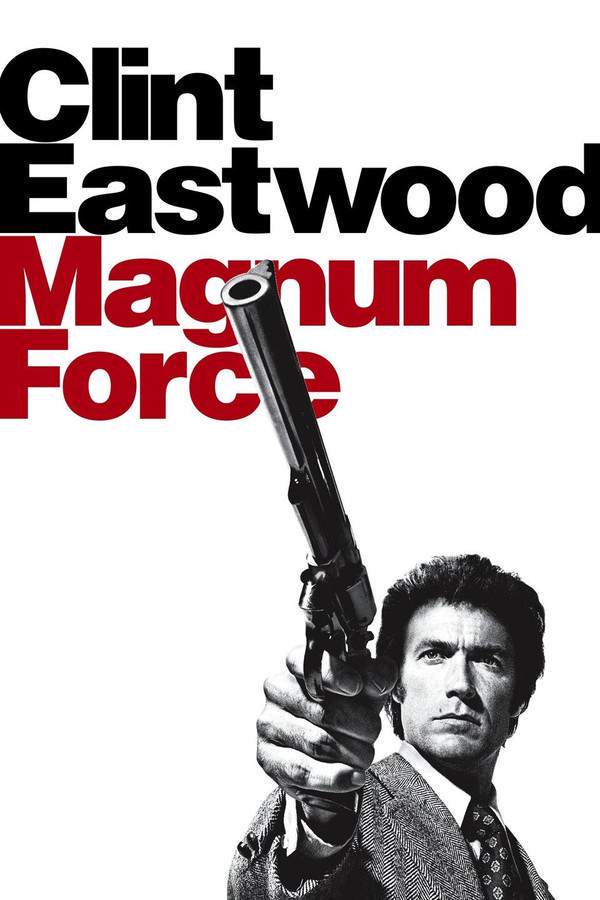
Magnum Force (1973) movie poster

Plot Summary

Magnum Force (1973) Plot Summary Explained

Release, runtime and language
1973 · 124 min · English
Directed by
Ted Post
Starring
Clint Eastwood, Hal Holbrook, Tim Matheson, David Soul, Felton Perry, Kip Niven

In a gritty San Francisco, Detective "Dirty Harry" Callahan investigates a vigilante group targeting criminals who have avoided justice through legal loopholes. As Callahan pursues the gang, he suspects a connection to a series of murders, and his investigation leads him to believe his former partner may be involved, forcing him to confront a deeply personal and dangerous situation.

On this page (7)
  1. 1 Where to watch
  2. 2 What happens: full plot
  3. 3 Plot questions answered
  4. 4 Movie threads
  5. 5 Movies like Magnum Force
  6. 6 Categories
  7. 7 Every angle

Where to watch

Where to Watch Magnum Force (1973)

Where can you watch Magnum Force? Stream, rent or buy it in the US, including on Amazon Video, Apple TV Store and Fandango At Home: current JustWatch availability with up-to-date prices.

Streaming availability powered by JustWatch

Full plot summary · contains spoilers

What Happens in Magnum Force: Full Plot Summary

The whole story of Magnum Force (1973) explained, from the opening scene to the final frame: every key event, every twist and what it all adds up to. Read it as a quick recap before the sequel, to check a scene you missed, or to finally understand what really happened.

The film opens with a striking visual of a Smith & Wesson Model 29 revolver against a red backdrop, accompanied by the ominous voice of Inspector 'Dirty' Harry Callahan (Clint Eastwood). He declares, "This is the .44 Magnum, the most powerful handgun in the world. And it could blow your head clean off. Do you feel lucky?" As the credits roll, the story sets a dark tone, revealing the aftermath of a heinous crime involving Carmine Ricca (Hal Holbrook), a labor racketeer who escapes justice. Following his acquittal for the murder of a union leader and his family, Ricca's freedom ignites fury among protesters outside the courthouse.

Meanwhile, a San Francisco Police Department motorcycle cop, who is later revealed to harbor a vengeful persona, witnesses the chaos and takes matters into his own hands. He pulls over Ricca's limousine under the guise of issuing a ticket but swiftly turns the encounter deadly, executing all occupants: Ricca, his attorney, and their driver in cold blood.

As the narrative unfolds, Harry and his partner, Early Smith (Felton Perry), are drawn into the investigation amid tensions with Lt. Neil Briggs (Mitch Ryan), who loathes Harry's maverick style. Harry, unimpressed by the bureaucratic constraints, exclaims, "A man's got to know his limitations." This friction hints at the philosophical clash between traditional law enforcement and a more brutal approach to justice.

Amidst escalating violence, a chilling scene unfolds at San Francisco International Airport, where Harry dons a pilot's uniform to thwart a hijacking. This not only showcases his resolve but also deepens his rivalry with Lt. Briggs, who is forced to acknowledge Harry's effectiveness despite his disdain for Harry's methods.

The plot thickens as Harry encounters rookie cops, notably Philip Sweet (Tim Matheson), John Davis (David Soul), Donald "Red" Astrachan (Kip Niven), and Michael Grimes (Robert Urich),who share a camaraderie that history suggests may be tested by the rising tide of violence. Their camaraderie is juxtaposed against the backdrop of an emerging vigilante, the motorcycle cop, whose ruthlessness escalates following a slaughter at a gangster's swimming party.

As the vigilante's audacious killings prompt Harry to confront corruption within the force, he grapples with a profound moral quandary. The unidentified cop who carries out the executions soon reveals himself as John Davis, thrusting Harry into a web of deception and betrayal.

Climbing the tension to a climactic confrontation, Harry's investigations lead him to the realization that the law he cherishes may be intertwined with moral ambiguity. Tragedy strikes when Harry's ally, Charlie McCoy (Mitch Ryan), is killed, propelling Harry into a determined pursuit of justice.

The final confrontation showcases the deadly stakes of Harry’s commitment to his principles as he faces off against both the corrupt police force and the killers. In an explosive climax, following several harrowing encounters, Harry confronts Lt. Briggs, revealing the complexity of loyalty and the price of justice in a world marred by corruption.

As the narrative winds down, Harry’s chilling acknowledgment of the consequences of his choices echoes the film's darker themes. He resolutely states, "I'm afraid you've misjudged me," ultimately cementing his struggle against a system he both serves and despises. The film ends with him walking away, a true embodiment of the saying, "A man's got to know his limitations," leaving audiences pondering the costs of moral integrity in a corrupt world.

Last updated: November 03, 2024 at 12:40

Was this helpful?

Plot questions answered

Magnum Force Plot Explained: Your Questions Answered

The questions people ask most about Magnum Force (1973): what happens in the confusing scenes, why the characters do what they do, the twists, hidden details and what the ending means. Each answer contains spoilers.

Q1

Why does the motorcycle cop start killing criminals in Magnum Force?

The motorcycle cop is driven to vigilantism after witnessing Carmine Ricca, a labor racketeer, escape justice for murdering a union leader and his family. Ricca's acquittal in court sparks public outrage, and the cop decides to take matters into his own hands by executing Ricca and his associates during a traffic stop. This act sets off the chain of vigilante killings that Harry investigates throughout the film.

Foreshadowing: The film opens with Harry's monologue about the power of the .44 Magnum, establishing that lethal force will be a central theme.

  • motorcycle cop
  • vigilante
  • Carmine Ricca
  • killing
  • court acquittal
Q2

Who is behind the vigilante killings in Magnum Force?

John Davis, one of the rookie cops Harry befriends, is revealed to be the vigilante killer operating within the police force. He is the unidentified motorcycle cop who has been executing criminals who escaped legal justice. His actions escalate from targeting known criminals to a broader campaign of assassination, ultimately forcing Harry to confront both the corruption and the moral complexities of his fellow officers.

Foreshadowing: The rookie cops are introduced alongside hints of an emerging vigilante within the police force, with their camaraderie juxtaposed against the escalating violence.

  • John Davis
  • vigilante
  • rookie cop
  • killer identity
  • police corruption
Q3

How does Harry discover the vigilante's identity?

Harry's investigation leads him to uncover the pattern of executions and connect them to the police force. As he probes deeper into the corrupt elements within the department, he gradually pieces together the evidence that points to John Davis. The revelation comes when the unidentified cop reveals himself as John Davis during the escalating conflict, forcing Harry to confront the reality that someone he trusted is behind the murders.

Foreshadowing: The tension between Harry and Lt. Briggs hints at institutional corruption that Harry must navigate while investigating.

  • Harry investigation
  • vigilante identity
  • John Davis reveal
  • police corruption
Q4

What happens to John Davis at the end of Magnum Force?

John Davis is killed during the final confrontation with Harry. After his identity as the vigilante is revealed, Harry faces off against both Davis and the corrupt elements within the police force. The climax involves Harry confronting Lt. Briggs and the vigilante killers, resulting in Davis's death as Harry upholds the law despite his personal sympathy for Davis's cause.

Foreshadowing: The escalating violence and Harry's moral quandary foreshadow the inevitable violent confrontation between Harry and the vigilantes.

  • John Davis death
  • final confrontation
  • vigilante killed
  • Harry
Q5

Why does Harry turn against the vigilante cops despite sympathizing with their goals?

Harry opposes the vigilante cops because their actions undermine the rule of law he serves, even when the legal system fails. While he understands their frustration with criminals escaping justice, Harry believes that extra-legal executions make them no better than the criminals they kill. His partner Early Smith reinforces this stance, and Harry ultimately chooses to pursue justice through proper channels rather than endorse murder, even when those channels are flawed.

Foreshadowing: Harry's clashes with Lt. Briggs throughout the film establish his stance on operating within the law despite his maverick methods.

  • Harry moral stance
  • rule of law
  • vigilante justice
  • police ethics
Q6

Who kills Charlie McCoy in Magnum Force?

Charlie McCoy, Harry's ally, is killed by the vigilante cops or their associates within the corrupt police force. His death occurs as part of the escalating violence that accompanies the vigilante campaign, serving as a warning to Harry and those who might oppose the corrupt elements within the department. McCoy's murder propels Harry into an even more determined pursuit of justice, demonstrating the personal cost of his investigation.

Foreshadowing: The rising tension and threats against Harry throughout the investigation foreshadow the danger faced by his allies.

  • Charlie McCoy death
  • ally killed
  • police corruption
  • Harry investigation
Q7

What is the moral dilemma Harry faces in Magnum Force?

Harry grapples with a profound conflict between his duty to uphold the law and his understanding of why the vigilante cops chose to execute criminals who escaped justice. He recognizes the corruption within the system and the failures of the legal process that allowed criminals like Carmine Ricca to go free, yet he cannot condone murder as a solution. This internal struggle represents the film's central theme of operating in a morally gray area while trying to maintain one's integrity.

Foreshadowing: Harry's statement about knowing his limitations hints at his awareness of the boundaries between justice and vengeance.

  • Harry moral dilemma
  • vigilantism
  • justice vs revenge
  • ethical conflict
Q8

What does Harry mean by "A man's got to know his limitations" in Magnum Force?

The quote reflects Harry's acknowledgment of the boundaries of his own abilities and the limits of what he can achieve within a corrupt system. It underscores the film's themes of moral complexity, where Harry must navigate between his personal ethics and the realities of institutional corruption. The statement also highlights his self-awareness about working within the law while recognizing its imperfections, ultimately accepting that he cannot single-handedly fix a broken justice system.

Foreshadowing: Harry's early confrontation with Lt. Briggs establishes the tension between his methods and institutional constraints.

  • quote meaning
  • limitations
  • Harry Callahan
  • moral integrity
Q9

How does Magnum Force end for Harry Callahan?

The film ends with Harry walking away from the chaos, having defeated the vigilante cops and exposed the corruption within the force, but left alienated and cynical. After confronting Lt. Briggs and the killers, Harry makes the chilling statement "I'm afraid you've misjudged me," indicating his awareness of how his actions have been perceived. He departs as a man who has upheld the law but remains deeply troubled by its limitations, embodying the bittersweet conclusion where justice is served but at a significant personal and moral cost.

Foreshadowing: The buildup of corruption and violence throughout the narrative prepares for this climactic resolution.

  • film ending
  • Harry walks away
  • justice served
  • bittersweet conclusion
Q10

Why is the execution of Carmine Ricca significant to the plot?

Carmine Ricca's execution by the vigilante cop is the catalyst for the entire narrative. His acquittal for murdering a union leader and his family represents the failure of the justice system, sparking public outrage and providing the vigilante's justification for taking lethal action. This first killing establishes the pattern of the vigilante campaign and sets Harry on the path of investigation, creating the central conflict between lawful procedure and extra-legal justice that defines the film.

Foreshadowing: The opening scene's focus on Ricca's acquittal and the public protest immediately establish the motivation for vigilantism.

  • Carmine Ricca execution
  • first killing
  • court acquittal
  • vigilante motivation
Q11

What is the relationship between Harry and Lt. Briggs in Magnum Force?

Lt. Neil Briggs represents the institutional side of law enforcement that opposes Harry's maverick methods. Throughout the film, Briggs despises Harry's unconventional approach but is forced to acknowledge his effectiveness. Their rivalry intensifies as Harry investigates the vigilante killings and uncovers corruption within the force. In the climax, Harry confronts Briggs directly, revealing the complexities of loyalty within a corrupt system and challenging Briggs's authority and ethics.

Foreshadowing: Early friction between Harry and Briggs establishes their adversarial relationship that builds toward confrontation.

  • Lt. Briggs
  • Harry rivalry
  • police hierarchy
  • institutional conflict
Q12

What is the purpose of the airport hijacking scene in Magnum Force?

The airport hijacking scene serves multiple purposes: it demonstrates Harry's willingness to go undercover and use unconventional methods to stop crime, showcases his physical capabilities, and further deepens his rivalry with Lt. Briggs. By donning a pilot's uniform to thwart the hijacking, Harry proves his effectiveness despite his maverick style, forcing Briggs to grudgingly acknowledge his skills while continuing to oppose his methods. The scene also provides action variety and reinforces Harry's reputation as an unconventional but capable detective.

Foreshadowing: This scene occurs after Harry joins the investigation, showing his proactive approach to crimefighting.

  • airport hijacking
  • Harry undercover
  • pilot uniform
  • action sequence

Movie threads

More Movies Like Magnum Force, by Mood & Story

Curated lists built around what makes Magnum Force tick: the same mood, the same kind of story or the same emotional payoff. Each list explains why these movies belong together.

Police Corruption Thrillers Like Magnum Force

Unyielding detectives confront corruption and question their own code. Find more movies like Magnum Force where a veteran detective uncovers deep-seated corruption. These tense, gritty thrillers explore themes of betrayal, vigilante justice, and the heavy moral weight of policing a broken system.

  • gritty
  • tense
  • morally ambiguous
  • cynical
  • suspenseful
  • brutal
  • Tone: dark, cynical, tense
  • Pacing: steady, investigative
Why these movies?

The story pattern: The narrative typically centers on a methodical investigation that reveals institutional rot, often implicating colleagues. The protagonist's journey is one of increasing isolation and moral conflict, balancing a personal sense of justice against the strictures of the law they are sworn to uphold.

Why they belong together: These movies are grouped by their shared focus on a morally ambiguous protagonist, a DARK tone rooted in systemic failure, and a HEAVY emotional weight stemming from betrayal and ethical dilemmas within a police or justice setting.

Movies About Vigilante Justice Like Magnum Force

Stories where taking the law into your own hands comes at a devastating cost. If you liked the moral conflict of vigilantism in Magnum Force, explore these films. They feature tense, high-intensity stories where characters bypass the legal system, leading to brutal confrontations and bittersweet resolutions about the true cost of justice.

  • tense
  • brutal
  • morally complex
  • vengeful
  • suspenseful
  • grim
  • Tone: dark, morally complex, brutal
  • Pacing: steady, escalating
Why these movies?

The story pattern: These stories often begin with a clear, morally justified target for vigilante action, but quickly spiral into complexity. The plot forces characters—and the audience—to question the methods used, leading to a climax that rarely offers clean victory, instead emphasizing the cyclical nature of violence and the burden of playing judge, jury, and executioner.

Why they belong together: Movies here share a central thematic focus on vigilante justice, a HIGH intensity due to violent confrontations, a DARK tone, and typically a BITTERSWEET or bleak ending that underscores the heavy price of operating outside the law.

If you liked this

Movies Like Magnum Force

Similar movies to Magnum Force: the same genre, themes or kind of story. Each one comes with its own plot summary, timeline and ending explained.

Browse all movie summaries

Categories

Movie Lists Featuring Magnum Force

Magnum Force appears in these hand-built movie categories. Each one groups movies by a specific mood, theme or story type, with their plot summaries and endings explained.

View all movie categories

Every angle

Magnum Force (1973) Explained: Plot, Timeline & Characters

Everything about Magnum Force in one place: what happens in the plot summary, the timeline in chronological order, the characters and meaning and a spoiler-free summary. What's After the Movie adds the cast, box office and post-credit scenes.

Coming soon on iOS and Android

The Plot Explained Movie Summary App

Plot summaries, endings explained and timelines on your phone. Catch up on any movie in minutes, save your favorites and never miss a twist again.

Be the first to know when we launch. Your email stays private, always.

Learn more about the app