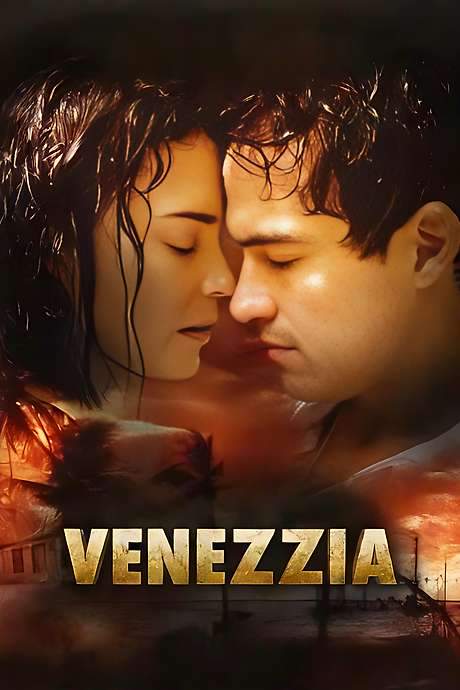
Set against the backdrop of World War II in early 1942, when the United States has joined the Allied effort after Pearl Harbor, this historical drama from director Haik Gazarian blends war, espionage, and a dangerous romance. Oil is the lifeblood of the war machine, powering fighter planes, battleships, jeeps, and more, and with German U-boats prowling the Caribbean off the coast of Venezuela, guarding the oil fields becomes a mission of national importance.
Frank Moore, Alfonso Herrera, an American communications expert with fluent Spanish, is sent to the coastal village of Puerto Miranda to help monitor German plans and keep tabs on potential attacks. His assignment places him in a tense environment where wartime discipline and paranoia run high, and he must prove his value in a role that demands both technical skill and cultural sensitivity. He quickly finds his path blocked by the unit’s commander, Capt. Enrique Salvatierra, Rafael Romero, an authoritarian and short-tempered officer whose strict code and quick temper challenge Moore at every turn. The friction between Moore’s measured, analytical approach and Salvatierra’s forceful leadership creates a charged dynamic that threads through the operation.
The tension deepens when Moore crosses paths with Venezzia, Ruddy Rodriguez, Salvatierra’s wife, a woman whose presence is as captivating as it is dangerous in a war-torn landscape. Their first encounters carry a spark that quickly grows into a forbidden attraction, drawing them toward each other despite the risks. As the pair navigate hushed conversations and stolen moments near the oil facilities and along the restless sea, their relationship becomes a fragile beacon of personal hope in a world defined by suspicion and peril. The romance is framed as star-crossed, a fragile flame that could burn out the moment it’s discovered and could jeopardize Moore’s mission as well as their futures.
The romance unfolds under the ever-present shadow of espionage. Moore faces the dual pressures of duty to protect the vital oil fields and the allure of a relationship that could compromise security, especially if misread as treason or as an attempt to undermine wartime objectives. The possibility that Moore might be a double agent adds a layer of psychological tension, turning every glance and every whispered plan into a potential danger. In a setting where information is currency and miscommunication can be fatal, trust becomes the most fragile resource of all.
As events escalate, the narrative stays grounded in the personal costs of war—the choices that lovers must make when loyalty and desire pull in opposing directions. The film keeps its focus on the human stakes within a broader geopolitical struggle, showing how a single romance can ripple outward, affecting cooperation among allies, the protection of strategic assets, and the safety of a community living under the constant threat of attack. Throughout, the story remains intimate and restrained, letting emotion, tension, and moral ambiguity drive the drama rather than spectacle alone.
In the end, the film presents a nuanced portrait of courage—not just the courage to fight, but the courage to love, to distrust, and to choose truth over secrecy when the fate of many depend on the answers that can only be found in the quiet, dangerous spaces between duty and desire.