Plot Explained Spoilers guaranteed!
Plot Explained

Browse by genre

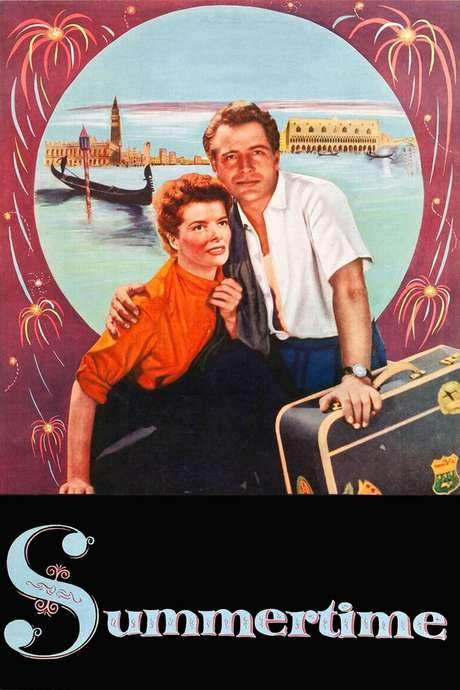
Summertime (1955) movie poster

Plot Summary

Summertime (1955) Plot Summary Explained

Release, runtime and language
1955 · 100 mins · English
JustWatch #14,464 7
Directed by
David Lean
Starring
Katharine Hepburn, Mari Aldon, Rossano Brazzi, Darren McGavin, André Morell, Isa Miranda

Yearning for love after a lifelong routine, middle‑aged Ohio secretary Jane Hudson decides to spend her savings on a summer in Venice. In the enchanting canals of the famed city she encounters the sophisticated Renato Di Rossi, the man she has imagined, offering the romance she thought she would never find. She embraces the city’s art, music and cuisine, letting its beauty awaken a new chapter of hope and affection.

On this page (6)
  1. 1 Where to watch
  2. 2 What happens: full plot
  3. 3 Plot questions answered
  4. 4 Movie threads
  5. 5 Movies like Summertime
  6. 6 Every angle

Where to watch

Where to Watch Summertime (1955)

Where can you watch Summertime? Stream, rent or buy it in the US, including on HBO Max, TCM and Kanopy: current JustWatch availability with up-to-date prices.

Streaming availability powered by JustWatch

Full plot summary · contains spoilers

What Happens in Summertime: Full Plot Summary

The whole story of Summertime (1955) explained, from the opening scene to the final frame: every key event, every twist and what it all adds up to. Read it as a quick recap before the sequel, to check a scene you missed, or to finally understand what really happened.

Jane Hudson Katharine Hepburn is an unmarried, middle-aged woman from Akron, Ohio, who freely calls herself a “fancy secretary” as she savors a long-cherished dream: a summer trip to Venice. She travels with a hopeful heart, saved for years, imagining the romance and mystery of the city afloat on the vaporetto toward a hotel that promises new warmth. On the way, she meets two fellow Americans, Lloyd McIlhenny MacDonald Parke and Edith McIlhenny Jane Rose, who become companions in this new chapter. At the Pensione Fiorini, a widow named Signora Fiorini Isa Miranda welcomes them, and the group is joined by Eddie Yaeger Darren McGavin, a young American painter, and his wife Phyl Yaeger Mari Aldon. A local boy, Mauro Gaetano Autiero, filches a smile and a banana of mischief, quietly nudging Jane’s first steps into the city’s rhythms.

That first Venetian evening, the Piazza San Marco seems to shimmer with newfound possibilities, and the sight of couples in perfect harmony makes Jane feel acutely alone. As she sits at a lively outdoor café, a lone Italian man fixes his gaze on her, a glance that makes her nerves flare and her breath catch. She bolts away, unsettled, yet the memory lingers as she ventures deeper into the city’s labyrinth of beauty and risk.

The next day brings a clue to one of Venice’s oldest mysteries. In a small antiques shop, Jane spots a vivid red glass goblet in the window and steps inside. The owner, Renato de Rossi Rossano Brazzi, reassures her that the goblet is a genuine 18th‑century artifact and walks her through the art of bargaining. She leaves with it, thrilled by the purchase and its promise of a continuing connection. Renato hints that he might search for a matching goblet, and Jane, eager for another encounter, returns the following day with Mauro. But Renato is not there, and to her mortification, she accidentally loses her balance and topples into a canal while filming his shop. She begs Mauro to take her back to Pensione Fiorini, bruised but not broken.

That night, Renato visits the pensione and confesses a more personal truth: he is attracted to Jane. She resists at first, wary of repeating past disappointments, yet he challenges her with a warning that she should not waste a chance at happiness. Just as she appears ready to say yes to dinner, the McIlhennys return from a Murano excursion, the couple having bought a set of new red goblets similar to the one Jane bought. Renato insists his goblet is authentic and assures her that the same designs have endured for centuries. Her anger softens, and the lure of a shared dream—plus the promise of a musical night in the Piazza—pulls her toward him.

That moonlit concert in the piazza, set to the overture of Rossini’s La gazza ladra, creates a magical stage for their burgeoning romance. A flower seller approaches, and Jane chooses a simple gardenia, a choice Renato accepts with a tender, almost astonished smile. As they wander Venice together, Jane’s gardenia slips from her grip and sinks into a canal, despite Renato’s every effort to retrieve it. They return to the pensione, where Renato’s kiss deepens their connection, and Jane sighs the words that have grown in her heart: > I love you.

The following day, Jane indulges in salon treatments and new clothes in anticipation of another evening with Renato. She waits at the piazza as, offscreen, a surprising revelation rocks the foundations of what she believes. Renato’s nephew—or so she’s led to think—Vito de Rossi [Jeremy Spenser] reveals that he is Renato’s son, and the truth blooms in one startling moment: Renato is married with several children. Stunned, Jane seeks refuge in a bar and confides in Phyl that a marriage between Eddie and Signora Fiorini has become a complicated affair. Renato answers with a hard truth of his own—things are different in Italy, and his own marriage is not a simple matter to untangle. He insists his relationship with Jane is not a private nuisance but a separate kind of happiness, and his insistence unsettles her even as it entices her. He accuses her of immaturity, urging her to accept what she can have rather than chase something unattainable. In the end, she chooses to go forward with him, and their night on an open-air courtyard, where they dance beneath the stars, seems to write a new line into her life. The pair move on to Renato’s home, where they consummate their relationship as fireworks glimmer in the distance.

Their days together drift across Burano in soft, dreamlike rhythms. Jane, feeling the inevitability of an ending she cannot fully accept, decides to return home early. Renato pleads with her to stay, but she believes it is better to leave a party before it ends. At the railway station, Mauro reappears, offering Jane a small gift as a blessing for the road ahead. When the train begins to move, Renato darts after it, the distance between them closing with a final gesture. He presses a package toward the train window, but the carriage rocks away too quickly; at last, he stops, opens the box, and lifts out a final gardenia, a symbol of a romance that has bloomed and then receded, leaving Jane with the memory of a summer that altered the course of her life.
Last updated: October 09, 2025 at 09:31

Was this helpful?

Plot questions answered

Summertime Plot Explained: Your Questions Answered

The questions people ask most about Summertime (1955): what happens in the confusing scenes, why the characters do what they do, the twists, hidden details and what the ending means. Each answer contains spoilers.

Q1

Why does Jane continue seeing Renato after discovering he's married?

Jane struggles with the moral conflict but ultimately chooses to embrace the romance despite knowing Renato is married. Renato argues that relationships in Italy work differently and accuses her of immaturity for not accepting what happiness she can have. Jane decides to live in the moment rather than deny herself the experience, viewing it as a brief but meaningful chapter in her life.

Foreshadowing: Earlier in the film, Renato warns Jane not to waste a chance at happiness, setting up her eventual decision to pursue the relationship despite knowing the complications.

  • Jane Hudson
  • Renato
  • married affair
  • Venice romance
  • moral conflict
Q2

Why does Jane decide to leave Venice early despite her feelings for Renato?

After spending idyllic days in Burano, Jane realizes she cannot sustain a relationship built on infidelity and secrecy. She believes it's better to leave the romance before it turns bitter, wanting to preserve the memory of something beautiful rather than watch it deteriorate into unhappiness. She tells Renato not to come to the station, yet secretly hopes he will anyway.

Foreshadowing: The repeated theme of impermanence throughout the film, the gardenia sinking into the canal, the fireworks fading, foreshadows her decision to end things on her own terms.

  • Jane leaves Venice
  • Burano
  • ending romance
  • train station scene
Q3

What does the gardenia symbolize at the end of the movie?

The gardenia becomes a symbol of Jane and Renato's brief romance. Jane drops the first gardenia into the canal, and Renato's final gift to her at the train station is another gardenia, showing that their connection, while fleeting, has come full circle. The flower represents the beauty and fragility of their love, something precious that slips away despite efforts to hold onto it.

Foreshadowing: Jane chooses a simple gardenia over the more elaborate orchid Renato expects, signaling her preference for authenticity over grand romantic gestures.

  • gardenia symbolism
  • Venice romance
  • flower meaning
  • ending scene
Q4

Why does Renato chase the train at the station?

Renato runs after the departing train because he cannot accept Jane leaving without a proper goodbye. He attempts to hand her a package through the train window, a final gift. When the train moves too fast, he opens the box himself and retrieves the gardenia inside, symbolizing his attempt to hold onto their connection until the very end.

Foreshadowing: This echoes earlier moments when Renato tries to retrieve the gardenia Jane dropped into the canal but fails, reinforcing the theme of love slipping away despite one's efforts.

  • Renato chase
  • train station
  • farewell scene
  • gardenia gift
Q5

Why does Jane resist Renato's advances at first?

Jane resists initially because she has spent years disappointed in love and fears another rejection. She's also wary of pursuing a romance with a stranger in a foreign country. Renato challenges her directly, warning that she shouldn't waste a chance at happiness, which gradually breaks down her defenses.

Foreshadowing: On her first evening in Venice, Jane feels overwhelmed by couples in the Piazza San Marco and is unsettled when an Italian man watches her, establishing her conflicted feelings about romance.

  • Jane resistance
  • Renato courtship
  • Venice romance
  • emotional walls
Q6

What is the significance of the red glass goblet Jane buys?

The red goblet serves as the initial connection between Jane and Renato. She purchases it from his antique shop, and he offers to find a matching one, creating an excuse for future meetings. When the McIlhennys return with similar goblets from Murano, Jane briefly suspects Renato of swindling her, but he explains that similar designs have been used for centuries, maintaining the authenticity of their encounter.

Foreshadowing: Renato's reassurance that the goblet represents enduring design mirrors how he later describes Italian relationships, as having different but lasting traditions.

  • red glass goblet
  • antique shop
  • Renato
  • Murano glass
Q7

What is the affair between Eddie and Signora Fiorini about?

Eddie Yaeger, a young American painter staying at the pensione, is having an affair with the widowed Signora Fiorini, who owns the guesthouse. Jane learns about this complicated situation from Phyl in a bar, which adds to the atmosphere of romantic entanglements and moral ambiguity in Venice. The affair parallels Jane's own relationship with Renato, highlighting the theme of relationships outside societal norms.

Foreshadowing: The Pensione Fiorini brings together various lonely travelers, creating fertile ground for romantic complications that unfold throughout the film.

  • Eddie Yaeger
  • Signora Fiorini
  • affair
  • pensione
  • moral ambiguity
Q8

Why does Jane fall into the canal while filming?

Jane returns to Renato's shop the next morning with Mauro, but Renato isn't there. While trying to film the storefront as a memento, she accidentally steps backward into the canal. The mishap is humiliating and reinforces her social clumsiness in Venice. She asks Mauro to take her back to the pensione, bruised but determined to continue her vacation.

Foreshadowing: This accident happens shortly after she purchased the goblet, showing her eagerness to return to the shop even without confirmation that Renato would be there.

  • Jane canal fall
  • filming accident
  • Mauro
  • comic mishap
Q9

Why is Renato not at his shop when Jane returns the next day?

The summary doesn't explicitly state why Renato is absent, but it appears to be a coincidence that frustrates Jane's hope for another encounter. This absence leads to her canal accident, which ironically brings Renato to the pensione that evening to confess his attraction to her, turning a humiliating moment into a turning point in their relationship.

Foreshadowing: Jane's earlier purchase of the goblet and Renato's hint that he might find a matching one had created anticipation for their next meeting.

  • Renato shop
  • Venice antique store
  • Jane disappointment
Q10

What role does Mauro play in Jane's Venice experience?

Mauro is a local Venetian boy who first appears stealing a smile and a banana, establishing his mischievous nature. He becomes Jane's occasional guide and intermediary throughout her trip, taking her back to the pensione after her canal accident and later appearing at the train station to give her a parting gift. His presence represents Jane's immersion into local Venetian life.

Foreshadowing: Mauro's final appearance at the station, offering Jane a trinket for her journey, closes the circle of her Venetian adventure.

  • Mauro
  • local Venetian boy
  • guide
  • parting gift

Movie threads

More Movies Like Summertime, by Mood & Story

Curated lists built around what makes Summertime tick: the same mood, the same kind of story or the same emotional payoff. Each list explains why these movies belong together.

Bittersweet Summer Romances like in Summertime

Passionate, fleeting summer affairs in beautiful, faraway places. If you liked the poignant and passionate affair in Summertime, explore other movies about fleeting summer loves. These films share a dreamy atmosphere, a focus on self-discovery, and a bittersweet emotional core, perfect for viewers seeking similar romantic drama stories.

  • romantic
  • melancholic
  • dreamlike
  • nostalgic
  • yearning
  • hopeful
  • Tone: bittersweet, romantic, melancholic
  • Pacing: slow, atmospheric
Why these movies?

The story pattern: The narrative follows a protagonist, often at a personal crossroads, who travels to a beautiful locale and enters a transformative romance. The relationship is intense and awakening, but complicated by circumstances like cultural differences or infidelity, leading to an emotionally resonant, bittersweet conclusion.

Why they belong together: These movies are grouped by their shared emotional arc: the euphoric high of a new romance set against the backdrop of a stunning vacation, intertwined with the inevitable melancholy of its impermanence. The tone, pacing, and focus on emotional awakening create a cohesive, deeply felt experience.

Movies about Midlife Awakenings like Summertime

Stories of personal rediscovery and new beginnings in middle age. Discover movies similar to Summertime that explore stories of self-discovery and romantic reawakening in middle age. If you liked Jane Hudson's journey, you'll find other compelling dramas about characters breaking free from routine to find new passion and purpose.

  • introspective
  • hopeful
  • yearning
  • melancholic
  • contemplative
  • emotional
  • Tone: bittersweet, introspective, hopeful
  • Pacing: slow, character-driven
Why these movies?

The story pattern: The narrative centers on a middle-aged protagonist feeling stuck in a life of quiet loneliness or routine. A catalyst—often a trip or a new person—propels them into an unfamiliar world, challenging their perceptions and leading to significant emotional growth and a changed perspective on life.

Why they belong together: These films are connected by their focus on a specific, relatable life stage. They share a contemplative, often slow pace that allows for deep character reflection, a medium to heavy emotional weight, and a tone that balances hope with the complexities of starting over.

If you liked this

Movies Like Summertime

Similar movies to Summertime: the same genre, themes or kind of story. Each one comes with its own plot summary, timeline and ending explained.

Browse all movie summaries

Every angle

Summertime (1955) Explained: Plot, Timeline & Characters

Everything about Summertime in one place: what happens in the plot summary, the timeline in chronological order, the characters and meaning and a spoiler-free summary. What's After the Movie adds the cast, box office and post-credit scenes.

Coming soon on iOS and Android

The Plot Explained Movie Summary App

Plot summaries, endings explained and timelines on your phone. Catch up on any movie in minutes, save your favorites and never miss a twist again.

Be the first to know when we launch. Your email stays private, always.

Learn more about the app