Plot Explained Spoilers guaranteed!
Plot Explained

Browse by genre

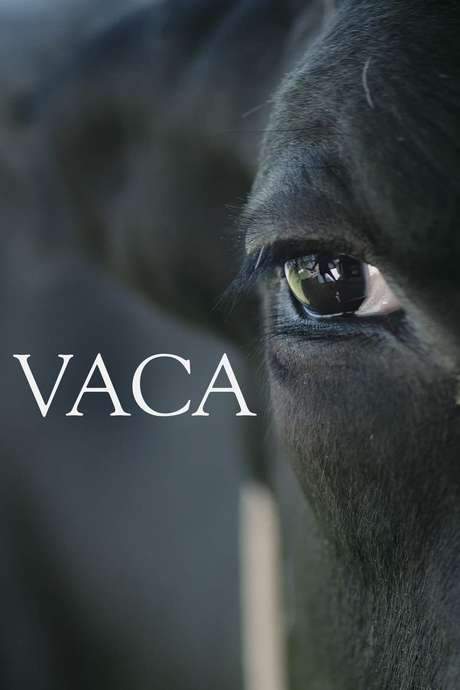
Vaca (2018) movie poster

Plot Summary

Vaca (2018) Plot Summary Explained

Release, runtime and language
2018 · 16 mins · Catalan
Loading streaming availability…
Starring
Pepo Blasco, Marta Bayarri

Trapped in a monotonous job at a slaughterhouse, a woman unexpectedly finds a chance to break free from her routine. Marta Bayarri and Pepo Blasco lead the cast in this short film, directed and written by Marta Bayarri. It explores themes of escape and the search for a different path, offering a glimpse into a life yearning for change.

On this page (5)
  1. 1 Where to watch
  2. 2 What happens: full plot
  3. 3 Plot questions answered
  4. 4 Movie threads
  5. 5 Every angle
Loading streaming availability…

Full plot summary · contains spoilers

What Happens in Vaca: Full Plot Summary

The whole story of Vaca (2018) explained, from the opening scene to the final frame: every key event, every twist and what it all adds up to. Read it as a quick recap before the sequel, to check a scene you missed, or to finally understand what really happened.

1875, Biscay during the Third Carlist War — In the heat of a grueling frontline, army sergeant Carmelo Mendiluze learns from a young errand boy, Ilegorri, that his neighbor Manuel Iriguíbel has joined the exhausted battalion. A cautious bond forms as Carmelo befriends the inexperienced Manuel, whose reputation as an expert aizcolari (log cutter) cannot mask the tremor of fear that grips him under fire. When Manuel panics and the battle ends, he crawls away from a trove of the dead, naked and smeared with the blood of a mortally wounded neighbor, Mendiluze. The escape goes unseen by all but a solitary cow, a quiet witness to a man’s crushing shame. The war leaves a mark on villages, families, and memory, setting in motion a feud that will echo for decades.

1905, rural Guipúzcoa — a clash of families and buried secrets — Thirty years later, the Mendiluze and Iriguíbel kin are still bound by old resentments. Manuel, now an elderly figure, is tainted in local eyes as a coward, spending his days painting the family cows under the watchful gaze of his three granddaughters, the offspring of Ignacio Iriguíbel and Madalen. Ignacio and Carmelo’s son, Juan Mendiluze, keep the traditional crafts alive, turning to aizcolari skills as a lifeline for the two families’ legacies. Amid the friction, a new spark flickers: Catalina, Juan’s sister, quietly harbors a deep attraction for Ignacio, a passion that Ignacio reluctantly reciprocates as they practice log-cutting in the woods. Paulina, the Mendiluze widow, warns that Ignacio’s affection could doom the Mendiluze clan. In a bid to tilt the fragile balance between rival clans, the grown Ilegorri engineers a public competition between Ignacio and Juan. Ignacio’s victory launches him on a rising arc as a celebrated aizcolari, while Catalina and Ignacio begin a secret, increasingly dangerous affair that braids together love, pride, and danger.

1915, spring — fame, fault lines, and a concealed family tree — A decade later, Ignacio returns from national contests a celebrated figure, yet the triumph has cooled his warmth at home: Madalen’s memory lingers as Ignacio’s neglect of his wife strains the household. Catalina reenters his life, and together they have a ten-year-old son, Peru, whose existence tightens the knot of loyalties and loyalties betrayed. After Madalen’s death, the frayed bond between Juan and Catalina grows even more brittle, with Juan’s troubling, lingering incestuous fixation on his sister threatening to unravel everything. To escape an impossible gravity, Catalina and Ignacio plot to take Peru and the pair’s shared history to a new land in America. A fragile friendship forms among the children—Peru, Catalina’s son with Ignacio, and Cristina, his half-sister—under the wary supervision of their fragile grandfather, Manuel, as they wander the mountain forests. The adults’ past choices collide with the ethical shadows of their actions, and the family’s secret history pushes them toward perilous futures. In the end, Peru and Cristina’s bond is tested when their parents attempt to flee together, leaving behind a path that will redefine bloodlines and loyalties.

1936, summer, Civil War shadows — a village, a frontier, and a reckoning — The landscape grows even more dangerous as Peru, now a photojournalist returning to the Basque lands, finds the Mendiluze farmhouse empty and the political ground shifting under the Nationalists’ ascent. Juan, wearing the Carlist red with a stubborn pride, stands with the Nationalist side, while Peru returns to the Iriguíbel farmhouse seeking shelter and truth. Cristina resumes a fragile bond with Lucas, Iligorri’s son, as the men of the region seek refuge in the forest as war roars through the valley. Lucas dies in the turmoil, and Peru is captured among the survivors. The fate of the men is sealed with executions, yet Peru is spared when Juan recognizes him as his nephew—a moment that bridges generations and loyalties in a single breath. Reunited with Cristina, Peru and Cristina press onward toward the frontier, chasing a future beyond the mountains that once held them in their childhood games and dangerous secrets.

This sweeping saga, spanning generations and wars, threads together memory, family feuds, forbidden love, and the enduring craft of the Basque people. It follows how a single act of fear or courage can ripple through decades, shaping identities and destinies long after the battles fade. The film renders a landscape where tradition, ambition, and longing collide, inviting viewers to witness how past choices haunt present lives and may yet steer the course toward a precarious, hopeful horizon.
Last updated: October 01, 2025 at 13:05

Was this helpful?

Plot questions answered

Vaca Plot Explained: Your Questions Answered

The questions people ask most about Vaca (2018): what happens in the confusing scenes, why the characters do what they do, the twists, hidden details and what the ending means. Each answer contains spoilers.

Q1

Why did Manuel Iriguíbel run from battle in 1875?

Manuel panicked under fire during the Carlist War battle in Biscay. Despite being a skilled aizcolari (log cutter), he froze when the fighting intensified. After the battle ended, he crawled away from the dead, naked and smeared with the blood of his mortally wounded neighbor Carmelo Mendiluze, while everyone else had already left. A lone cow witnessed his shame, and the rumor of his cowardice branded him and his family for decades.

  • manuel iriguíbel
  • cowardice
  • carlist war
  • 1875
  • battle
  • shame
Q2

What started the Mendiluze and Iriguíbel family feud?

The feud originated in 1875 when Manuel Iriguíbel fled from battle, leaving his neighbor Carmelo Mendiluze mortally wounded. Though Carmelo survived initially, Manuel's act of cowardice, seen only by a cow, stuck to him and his family. When the narrative jumps to 1905, the Mendiluzes still resent the Iriguíbels for this shame, and the grudge shapes every interaction between the two families.

Foreshadowing: The 1875 battle scene establishes the root of all future conflicts between the families.

  • family feud
  • mendiluze
  • iriguibel
  • shame
  • cowardice
  • generations
Q3

Why did Catalina and Ignacio risk everything for their affair?

Catalina Mendiluze and Ignacio Iriguíbel fell deeply in love despite belonging to rival families locked in a generations-old grudge. Their attraction began during the 1905 log-cutting competition where Ignacio proved himself a master aizcolari. Paulina Mendiluze warned Catalina that pursuing this relationship would destroy their family, but the pull between them was irresistible. They maintained a secret affair for years, eventually having a son named Peru.

Foreshadowing: The log-cutting competition in 1905 is where Catalina first notices Ignacio's rising prominence.

  • catalina
  • ignacio
  • forbidden love
  • affair
  • family feud
  • aizcolari
Q4

Why did Catalina and Ignacio leave Peru behind when they went to America?

Around 1925, Catalina and Ignacio finally decided to escape the oppressive atmosphere of rural Guipúzcoa and the weight of their secret. They eloped to America together, taking their son Peru with them initially. However, their plans changed, and Peru ended up being raised separately from his half-sister Cristina. The exact circumstances of this separation remain tied to the family's complicated dynamics and the need to protect their secret from the feud's toxicity.

  • peru
  • america
  • elope
  • catalina
  • ignacio
  • children
  • separation
Q5

Why does Juan Mendiluze resent Catalina so deeply?

Juan's hatred of his sister Catalina stems from multiple layers. Beyond the family feud making any Mendiluze-Iriguíbel connection traitorous, Juan harbors an incestuous fixation on Catalina himself. When she chooses Ignacio instead, Juan's resentment turns toxic. After Madalen's death and the families' tensions escalate, Juan's bitterness grows dangerous, threatening to expose the affair and ruin everyone involved.

Foreshadowing: Paulina's warning in 1905 about the consequences of Catalina's attraction to Ignacio hints at the family's reaction to her choices.

  • juan mendiluze
  • catalina
  • resentment
  • incest
  • family feud
  • hatred
Q6

Why did Juan spare Peru from execution during the Civil War?

In 1936, Peru was captured by Nationalist forces along with other men from the region. Juan Mendiluze, now wearing a Carlist red beret with the Nationalists, recognized Peru as his nephew, the son of his sister Catalina and Ignacio Iriguíbel. Despite his bitter resentment toward Catalina and the Iriguíbel family, Juan chose family blood over old grievances and intervened to spare Peru's life, allowing him to flee with Cristina toward the French frontier.

  • juan
  • peru
  • execution
  • civil war
  • nephew
  • spared
  • nationalists
Q7

What is the relationship between Peru and Cristina?

Peru and Cristina are half-siblings, both children of Ignacio Iriguíbel but from different mothers. Cristina is the daughter of Madalen (Ignacio's wife), while Peru is the son of Catalina (Ignacio's longtime lover). Despite being half-siblings and products of a forbidden affair that fractured two families, they form a close bond during their childhood under their grandfather Manuel's watch. At the film's end, they escape together toward the French frontier, their relationship untested but their bond unbroken.

Foreshadowing: The children play together in the mountain forests while Manuel watches over them in 1925.

  • peru
  • cristina
  • half-siblings
  • ignacio
  • children
  • escape
  • france
Q8

What is the significance of the cow witnessing Manuel's cowardice?

The cow is the sole witness to Manuel Iriguíbel's shame in 1875, he escapes the battlefield naked and bloodied, seen only by this animal. The title "Vaca" (Cow in Spanish) suggests this moment is the symbolic heart of the entire saga. The cow represents mute judgment and the idea that certain acts of cowardice or shame are witnessed even when humans look away, haunting families for generations.

  • cow
  • witness
  • shame
  • cowardice
  • title
  • symbol
  • manuel
Q9

Why does Peru return to Guipúzcoa in 1936?

Peru returns to his homeland as a photojournalist covering the Spanish Civil War. Having grown up in America after his parents eloped, he comes back to document the conflict tearing through the Basque region. His return forces a reckoning, Juan now fights with the Nationalists, the family farms have become shelters, and Peru must confront the family secrets and feuds his parents fled decades earlier.

  • peru
  • photojournalist
  • 1936
  • civil war
  • return
  • basque country
Q10

Why does Ignacio neglect his wife Madalen after becoming famous?

After Ignacio wins the 1905 log-cutting competition and gains fame as an aizcolari, he becomes celebrated throughout the region. This success goes to his head, and he grows cold toward his wife Madalen. His affair with Catalina continues and intensifies, leading to their son Peru's birth. When Madalen dies, Ignacio's neglect is cited as a contributing factor to the household's deterioration, and his attention remains fixed on Catalina rather than his marital family.

Foreshadowing: Ignacio's victory in the competition marks the beginning of his rise and subsequent neglect.

  • ignacio
  • madalen
  • neglect
  • fame
  • aizcolari
  • affair
  • wife

Movie threads

More Movies Like Vaca, by Mood & Story

Curated lists built around what makes Vaca tick: the same mood, the same kind of story or the same emotional payoff. Each list explains why these movies belong together.

Generational sagas with family secrets like Vaca

Epic stories where the past's dark secrets haunt and shape each new generation. If you liked the intricate family dynamics and buried truths in Vaca, explore more movies like it. This collection features epic dramas where generations are bound by secrets, shame, and the unresolved ghosts of the past, creating a heavy, contemplative viewing experience.

  • epic
  • somber
  • introspective
  • oppressive
  • fatalistic
  • nostalgic
  • Tone: melancholic, somber, introspective
  • Pacing: variable, shifting between slow reflection and intense revelation
Why these movies?

The story pattern: Stories in this thread typically unfold across multiple timelines, revealing how a single event or forbidden act in the past creates a domino effect. Characters in the present are often unknowingly trapped by this legacy, and the narrative journey involves uncovering the truth and confronting a haunted family history to seek liberation.

Why they belong together: These movies are grouped by their structural complexity and thematic focus on inherited trauma. They share a melancholic, often oppressive atmosphere, a heavy emotional weight, and a pacing that allows for deep immersion into the lives of a large ensemble cast across a significant span of time.

Movies with an oppressive atmosphere and yearning for escape like Vaca

Character-driven stories where a heavy environment fuels a desperate need for freedom. For viewers who appreciated the heavy, melancholic mood and the central theme of seeking freedom in Vaca. These similar movies feature characters trapped by their circumstances, whether by social obligation, a grim job, or a haunted past, all building towards a poignant, often ambiguous, flight towards an uncertain future.

  • oppressive
  • claustrophobic
  • somber
  • introspective
  • grim
  • yearning
  • Tone: melancholic, grim, oppressive
  • Pacing: slow to steady, building unease
Why these movies?

The story pattern: The narrative pattern involves a protagonist constrained by a monotonous, grim, or psychologically taxing environment. The plot is driven by their growing awareness of their entrapment and their search for an opportunity, however small or risky, to escape. The journey is internal as much as external, focusing on the emotional cost of confinement and the fragile hope of liberation.

Why they belong together: These films share a cohesive and powerful vibe defined by a melancholic or somber tone, high emotional intensity, and a palpable sense of oppression. They are united by the central motif of 'escape'—not just physical, but emotional and psychological—from a life that feels predetermined and suffocating.

Every angle

Vaca (2018) Explained: Plot, Timeline & Characters

Everything about Vaca in one place: what happens in the plot summary, the timeline in chronological order, the characters and meaning and a spoiler-free summary. What's After the Movie adds the cast, box office and post-credit scenes.

Coming soon on iOS and Android

The Plot Explained Movie Summary App

Plot summaries, endings explained and timelines on your phone. Catch up on any movie in minutes, save your favorites and never miss a twist again.

Be the first to know when we launch. Your email stays private, always.

Learn more about the app