Plot Explained Spoilers guaranteed!
Plot Explained

Browse by genre

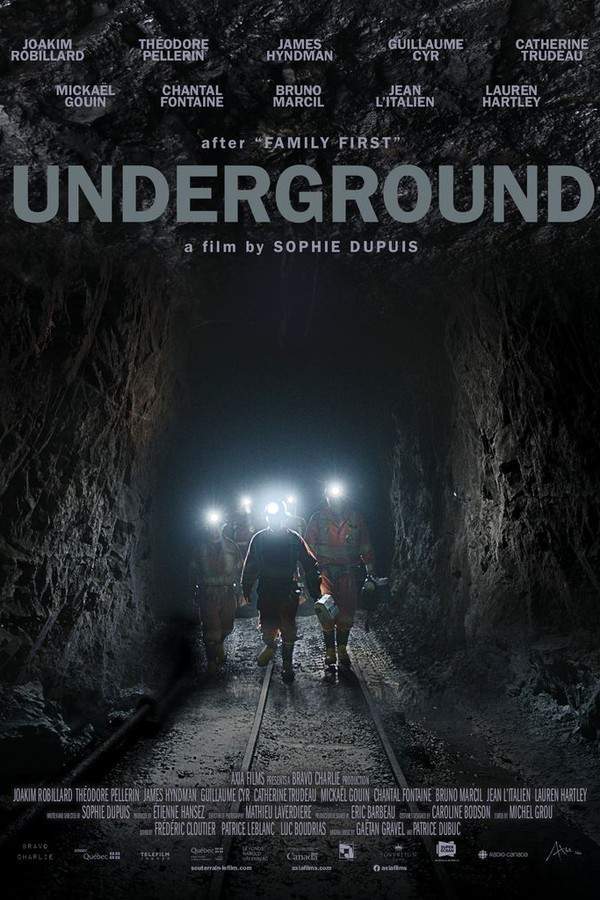
Underground (1997) movie poster

Plot Summary

Underground (1997) Plot Summary Explained

Release, runtime and language
1997 · 170 min · French
Directed by
Emir Kusturica
Starring
Ernst Stötzner, Bora Todorovic, Danilo 'Bata' Stojkovic, Lazar Ristovski, Miki Manojlovic, Milena Pavlovic

Haunted by a troubled past, Maxime works in a dangerous underground mine. He is expecting a child with his girlfriend and cares for his disabled friend Julien, who seeks a chance at redemption. When a sudden explosion traps several miners, Maxime must confront his personal demons while risking his own life to lead the rescue effort. The film explores themes of guilt, hope, and the resilience of the human spirit amidst the harsh realities of a close-knit mining community.

On this page (6)
  1. 1 Where to watch
  2. 2 What happens: full plot
  3. 3 Plot questions answered
  4. 4 Movie threads
  5. 5 Movies like Underground
  6. 6 Every angle

Where to watch

Where to Watch Underground (1997)

Where can you watch Underground? Stream, rent or buy it in the US, including on Darkroom, Cineverse and Xumo Play: current JustWatch availability with up-to-date prices.

Streaming availability powered by JustWatch

Full plot summary · contains spoilers

What Happens in Underground: Full Plot Summary

The whole story of Underground (1997) explained, from the opening scene to the final frame: every key event, every twist and what it all adds up to. Read it as a quick recap before the sequel, to check a scene you missed, or to finally understand what really happened.

Underground chronicles the intertwined lives of two friends during significant historical events: World War II, the Cold War, and the Yugoslav Wars. The narrative begins on the morning of April 6, 1941, in Belgrade, the heart of the Kingdom of Yugoslavia. We meet two charming rogues, Petar Popara, affectionately known as Crni (or Blacky), and Marko Dren, who are returning home after a wild night. As they cruise through the city on a horse-drawn carriage, accompanied by a lively brass band, they boastfully sing and wreak havoc.

Their escapade brings them to the Kalemegdan fortress, where they cheerfully greet Marko's brother, Ivan, who is seen tending to the animals at the zoo. Ivan, a stutterer with a physical disability, greets them with warmth despite his responsibilities. However, the revelry comes to an abrupt halt when Blacky’s pregnant wife, Vera, appears — angry and determined, she chastises him for his reckless behavior, warning him of her intentions to leave, just like Marko's wife left him. Despite this, Marko drunkenly reveals their enrollment of Blacky into the Communist Party (KPJ), which Vera ignores due to her anger over his irresponsibility.

As the story transitions to 1941, the mundane troubles of Blacky’s home life dramatically intersect with the chaos of war. They wake up on a Sunday to the horrifying sound of Nazi aircraft, leading to a bomb drop on their beloved Belgrade. While the city plunges into chaos, Blacky defiantly continues to eat breakfast, and Marko fails to complete an intimate encounter with a prostitute due to the clamor of war. Blacky later ventures outside to survey the destruction, where he encounters the devastated Ivan, who tries to rescue a baby chimp named Soni. In a moment of camaraderie amidst despair, Blacky advises Ivan to maintain his composure — a reflection of their friendship’s depth.

As the level of conflict escalates, Blacky allies himself with Marko and other communists, engaging in clandestine activities including the theft of German weapon shipments. Meanwhile, he visits his mistress, Natalija Zovkov, an acclaimed actress struggling under German occupation, all while caring for her ailing brother, Bata. Blacky navigates their risky relationship, gifting her stolen jewelry while she grapples with the dangers posed by the Germans, particularly as she catches the eye of an influential German officer.

By 1944, the war escalates ever more, leading to a tragic sequence of events involving love and betrayal. Blacky organizes a celebration for his son’s birthday in a dingy communist hideout, amid deep sadness for the loss of his beloved Vera. Tension rises as Marko, now a party secretary, engages in corrupt weapon dealings. In a desperate series of events, driven by twisted loyalty and desperation, Blacky’s rage escalates, culminating in violence at a theater where the stakes of loyalty are tested.

The film transitions from wartime trauma to the struggles of the Cold War era in 1961, where the intrigue surrounding Marko's deception deepens. He keeps Blacky, who is thought dead, hidden in a cellar, manipulating events to sustain a façade. Marko’s ruse is elaborate, involving staged air raids and fake news announcements, ensuring that Blacky remains in the dark about the war's resolution. As Marko enjoys his newfound power and status, Blacky remains a prisoner of the past, preparing secret weapons for a fictional war yet to end.

The final chapter, set against the backdrop of the Yugoslav Wars in 1992, is marked by betrayal, loss, and the ache of nostalgia. Ivan reappears, confronting Marko, leading to their tragic fates intertwined in violence and conflict. In a surreal twist, the film concludes with all those lost, living and deceased, coming together at a wedding, where Ivan delivers a poignant monologue, encapsulating the melancholy and the enduring bonds of friendship and love amid the ruins of history.

Last updated: April 16, 2025 at 14:33

Was this helpful?

Plot questions answered

Underground Plot Explained: Your Questions Answered

The questions people ask most about Underground (1997): what happens in the confusing scenes, why the characters do what they do, the twists, hidden details and what the ending means. Each answer contains spoilers.

Q1

Why does Marko keep Blacky hidden in the cellar during the Cold War?

Marko maintains the deception to sustain his political power and status. After the war, he convinces Blacky that the conflict continues by staging fake air raids and broadcasting fabricated news reports. This allows Marko to live off the supplies meant for Blacky's resistance cell while presenting himself as a war hero. The lie also protects Marko from accountability for his corrupt dealings and betrayals during the war period.

Foreshadowing: Earlier scenes show Marko engaging in corrupt weapon trades while Blacky organized resistance activities, hinting at his moral corruption.

  • marko
  • blacky
  • cellar
  • deception
  • cold war
  • political lies
Q2

How does Blacky become trapped in the cellar for decades?

In 1944, during a confrontation at the theater, Marko tells Blacky that the war continues and persuades him to hide in a cellar to avoid German raids. Blacky believes he is waiting out the final stages of WWII, but Marko maintains the ruse long after the war ends. Using staged air raids and fake radio broadcasts, Marko manipulates Blacky into remaining hidden while he builds his political career.

Foreshadowing: Marko's earlier corrupt dealings and his quick rise to power hint at his willingness to deceive.

  • blacky
  • cellar
  • trapped
  • ww2
  • cold war
  • marko's deception
Q3

Why does the film end with a wedding ceremony?

The surreal wedding brings together all characters, both living and dead, as a symbolic reconciliation and closure. This ending represents the unbreakable bonds of friendship despite the betrayals, traumas, and deaths caused by decades of war and manipulation. The wedding serves as a metaphorical marriage between the past and present, acknowledging the losses while celebrating the enduring connections that transcend death.

Foreshadowing: Throughout the film, Ivan repeatedly expresses longing for the friendship they once had, foreshadowing this ultimate reunion.

  • wedding
  • ending
  • surreal
  • reunion
  • ivan
  • blacky
  • marko
Q4

What happens to Vera, Blacky's wife?

Vera dies during the war. She was pregnant with Blacky's child and died sometime before the 1944 birthday celebration scene, which Blacky organizes while mourning her loss. Her death deeply affects Blacky, contributing to his emotional state and his willingness to continue fighting. Her absence also makes Blacky more vulnerable to Marko's deception.

Foreshadowing: The film opens with Vera confronting Blacky about his irresponsible behavior and warning she will leave him, establishing her as someone who matters deeply to him.

  • vera
  • death
  • blacky's wife
  • war
  • pregnant
Q5

How does the relationship between Blacky and Marko change throughout the film?

Initially, they are close friends and fellow revelers who engage in mischief together. When war begins, they become resistance comrades. However, Marko's corruption grows as he engages in weapon dealing and ultimately betrays Blacky by trapping him in the cellar to maintain his power. By 1992, their relationship becomes one of victim and manipulator, culminating in Ivan confronting Marko over his betrayal of Blacky.

Foreshadowing: Early scenes show Marko enrolling Blacky in the Communist Party without Blacky's knowledge, hinting at Marko's manipulative nature.

  • marko
  • blacky
  • friendship
  • betrayal
  • corruption
  • evolution
Q6

What triggers the events of 1992 in the film?

The 1992 storyline emerges from the consequences of Marko's decades-long deception. Ivan, who has survived all these years, discovers the truth about what Marko did to Blacky. This revelation, set against the backdrop of the actual Yugoslav Wars, triggers Ivan's confrontation with Marko. The historical conflict mirrors the personal betrayals, as Yugoslavia itself is breaking apart just as the truth about the characters' relationships is revealed.

Foreshadowing: Marko's elaborate lies during the Cold War section plant the seeds for this eventual reckoning.

  • 1992
  • yugoslav wars
  • ivan
  • marko
  • confrontation
  • breakup
Q7

How does Natalija's storyline unfold throughout the decades?

Natalija is a famous actress having an affair with Blacky during WWII while living under German occupation. She has an ailing brother named Bata whom Blacky helps care for. Her storyline intersects with the resistance when she attracts the attention of a German officer. By 1944, tensions around her relationship with Blacky contribute to the growing conflict. Her fate after the war is less clear, but her relationship with Blacky represents one of the personal connections lost to the chaos of war.

Foreshadowing: Blacky steals German weapons and gives the stolen jewelry to Natalija, showing both his risk-taking and genuine feelings for her.

  • natalija
  • actress
  • affair
  • blacky
  • ww2
  • german occupation
Q8

What is the significance of the chimp Soni?

Soni is a baby chimp that Ivan tries to rescue during the 1941 bombing of Belgrade. This moment highlights Ivan's compassionate nature despite his stutter and physical disability. The chimp represents the innocence and vulnerability caught in the chaos of war. While Soni's ultimate fate is not detailed, the scene establishes Ivan as someone who cares for vulnerable creatures, contrasting with the violence surrounding him.

Foreshadowing: Ivan's role as a zookeeper and his care for animals at Kalemegdan establishes his character from the opening scenes.

  • soni
  • chimp
  • ivan
  • belgrade
  • bombing
  • rescue
Q9

Why does Ivan confront Marko in 1992?

Ivan confronts Marko because he has learned the truth about Marko's deception, that Blacky has been alive but hidden in the cellar for decades while Marko built his political career on lies. This confrontation represents the long-overdue reckoning for Marko's betrayal of both Blacky and Ivan. Their conflict is also intertwined with the broader historical context of Yugoslavia's breakup, making it both a personal and political reckoning.

Foreshadowing: Earlier scenes show Ivan's warm relationship with Blacky and his trust in Marko, making his eventual betrayal more devastating.

  • ivan
  • marko
  • confrontation
  • 1992
  • betrayal
  • truth
Q10

How does the film use surrealism in its ending?

The ending blends realism with fantasy by bringing together living and dead characters at a wedding celebration. This surreal approach is characteristic of director Emir Kusturica's style, using magical realism to process the trauma of Yugoslav history. The wedding serves as both a literal reunion and a metaphorical statement about friendship transcending death and betrayal. It transforms the narrative from political tragedy into something approaching mythological resolution.

Foreshadowing: The fast-paced, chaotic tone throughout the film, with its brass bands and comedic moments amid tragedy, establishes this blend of surrealism and social commentary.

  • surrealism
  • magical realism
  • ending
  • wedding
  • kusturica
  • yugoslav history
Q11

What happens to Marko by the end of the film?

Marko's fate in 1992 involves a violent confrontation with Ivan, who has discovered his decades-long deception. The specific details of Marko's death are part of the tragic climax that precedes the surreal wedding ending. His story represents the ultimate consequences of betrayal and manipulation, his political power and lies ultimately lead to his destruction, mirroring the collapse of Yugoslavia itself.

Foreshadowing: Marko's corrupt dealings, his betrayal of Blacky, and his exploitation of his friend's trust all foreshadow his tragic end.

  • marko
  • death
  • ivan
  • 1992
  • confrontation
  • betrayal consequences
Q12

Why does the film span multiple historical periods?

The film uses three distinct historical periods, World War II (1941-1944), the Cold War (1961), and the Yugoslav Wars (1992), to create an allegory of Yugoslav history. Each period reflects themes of betrayal, deception, and the cycle of violence that plagued the region. By showing how the characters' personal relationships are shaped by these larger political events, the film comments on how historical trauma repeats across generations and how individual greed and manipulation contribute to national tragedies.
Foreshadowing: The opening scene's chaotic celebration contrasts with the war that immediately follows, setting up the pattern of joy disrupted by historical forces.

  • historical periods
  • ww2
  • cold war
  • yugoslav wars
  • allegory
  • yugoslavia
  • cyclical trauma

Movie threads

More Movies Like Underground, by Mood & Story

Curated lists built around what makes Underground tick: the same mood, the same kind of story or the same emotional payoff. Each list explains why these movies belong together.

Epic historical satires like Underground

Surreal, satirical epics that use personal stories to reflect on national trauma. If you liked the chaotic, allegorical journey of Underground, explore more movies that blend grand historical narratives with surreal satire. These films use personal stories to reflect on national identity and political turmoil, offering a unique and frenetic viewing experience for fans of ambitious, thought-provoking cinema.

  • satirical
  • epic
  • chaotic
  • surreal
  • tragic
  • historical
  • Tone: dark, satirical, tragic
  • Pacing: fast, chaotic, episodic
Why these movies?

The story pattern: Stories in this thread often span long periods of history, using the fates of a core group of characters to allegorize national conflicts and ideologies. The narrative structure is frequently non-linear or episodic, jumping between key historical moments to highlight the absurdity and tragedy of war and political shifts. Character arcs are intertwined with the fate of nations.

Why they belong together: These films are grouped by their shared ambition to use cinema as a tool for political and historical critique, their blending of dark humor with profound tragedy, and their chaotic, surreal aesthetic that captures the disorienting nature of living through history.
Movies about fractured friendships like Underground

Stories where deeply flawed friendships are tested by trauma and time. Fans of Underground's exploration of loyalty and betrayal will appreciate these stories about complex friendships tested by war and time. Discover movies that delve into the heavy themes of guilt, redemption, and the bittersweet endurance of bonds, perfect for viewers who enjoy emotionally rich character dramas.

  • melancholic
  • tragic
  • bittersweet
  • nostalgic
  • oppressive
  • emotional
  • Tone: melancholic, bittersweet, tragic
  • Pacing: steady, character-driven
Why these movies?

The story pattern: The narrative follows a central friendship through a series of trials, often involving a major betrayal or shared trauma that creates a lasting rift. The story explores the consequences of this fracture over time, with characters grappling with guilt and the possibility of forgiveness. The climax often involves a confrontation or reunion that provides a melancholic but meaningful resolution.

Why they belong together: These movies are united by their deep focus on the dynamics of friendship as a primary driver of the plot, their exploration of heavy themes like guilt and redemption, and their consistent delivery of a bittersweet, emotionally resonant conclusion that acknowledges loss while honoring connection.

If you liked this

Movies Like Underground

Similar movies to Underground: the same genre, themes or kind of story. Each one comes with its own plot summary, timeline and ending explained.

Browse all movie summaries

Every angle

Underground (1997) Explained: Plot, Timeline & Characters

Everything about Underground in one place: what happens in the plot summary, the timeline in chronological order, the characters and meaning and a spoiler-free summary. What's After the Movie adds the cast, box office and post-credit scenes.

Coming soon on iOS and Android

The Plot Explained Movie Summary App

Plot summaries, endings explained and timelines on your phone. Catch up on any movie in minutes, save your favorites and never miss a twist again.

Be the first to know when we launch. Your email stays private, always.

Learn more about the app