Plot Explained Spoilers guaranteed!
Plot Explained

Browse by genre

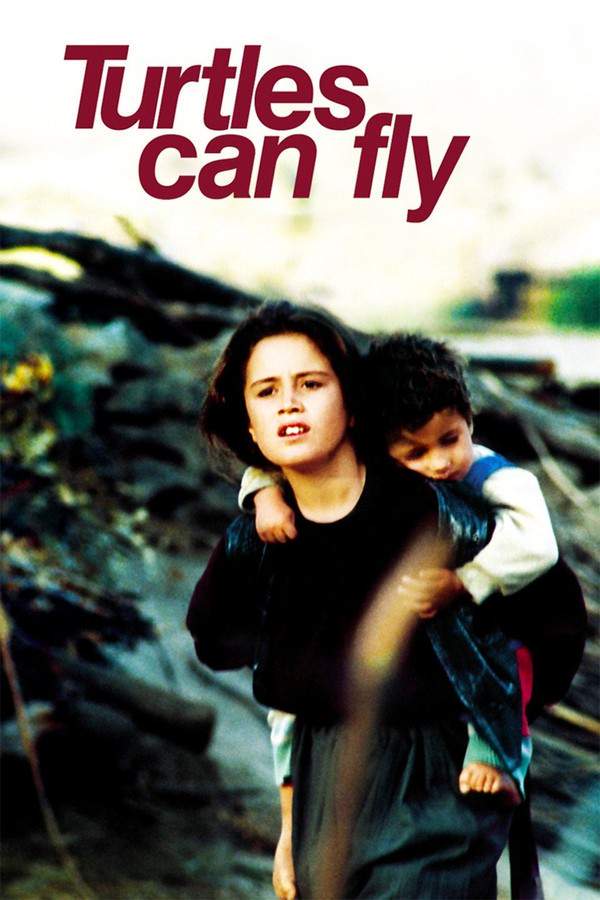
Turtles Can Fly (2005) movie poster

Timeline

Turtles Can Fly (2005) Timeline Explained – Every Event in Order

Release, runtime and language
2005 · 98 min · Kurdish
Directed by
Bahman Ghobadi
Starring
Avaz Latif, Soran Ebrahim

Amidst the looming shadow of the Iraq War, this drama portrays the lives of children in Kurdistan facing displacement and hardship. They navigate a world shaped by conflict, where hope is scarce and the impact of war weighs heavily on their young lives. The film offers a poignant look at resilience and the enduring spirit of those affected by devastating circumstances.

On this page (5)
  1. 1 Events in order (15)
  2. 2 Timeline questions answered
  3. 3 Movie threads
  4. 4 Movies like Turtles Can Fly
  5. 5 Every angle

15 events in order · contains spoilers

Turtles Can Fly Timeline: Events in Chronological Order

Every key event of Turtles Can Fly (2005) in order, scene by scene, with when and where it takes place. Use it to untangle flashbacks, time jumps and parallel storylines, to refresh your memory before the sequel or to find the exact scene you are thinking of.

  1. Setting the Scene

    The story begins in a Kurdish refugee camp located on the Iraq–Turkey border, a place bustling with life just before the US invasion of Iraq. This backdrop highlights the tension and uncertainty facing the refugees as they navigate their precarious existence.

    When
    Just before the US invasion of Iraq
    Where
    Kurdish refugee camp
  2. Introduction of Kak Satellite

    Thirteen-year-old Soran Ebrahim is introduced as Kak Satellite, a nickname earned for his skills in installing satellite dishes. He becomes a central figure in the camp, eagerly connecting local villages to news updates about Saddam Hussein.

    Where
    Kurdish refugee camp
  3. Kak Satellite's Leadership

    Kak Satellite emerges as a dynamic yet manipulative leader among the local children. His leadership is showcased in their dangerous task of sweeping and clearing minefields, where they remain remarkably spirited amidst the risks.

    Where
    Kurdish refugee camp
  4. Introduction of Agrin

    Agrin, a girl from Halabja, arrives at the camp and captures Kak Satellite's attention. Her presence brings both hope and emotional turmoil as she grapples with her trauma and responsibilities for her disabled brother, Hengov.

    Where
    Kurdish refugee camp
  5. Hengov's Burden

    Hengov, Agrin's disabled brother, struggles with his clairvoyant abilities that have caused shame and hardship. Their family life is further complicated by the care of a blind toddler named Riga, whom they consider family despite the painful memories he represents.

    Where
    Kurdish refugee camp
  6. Agrin's Past Trauma

    Agrin's backstory reveals a haunting past involving a violent encounter with Ba'ath soldiers, resulting in the birth of Riga. This trauma continues to overshadow her existence, as she battles feelings of anger and guilt towards the child.

  7. Agrin's Struggle with Maternal Instincts

    In her desperation, Agrin contemplates abandoning Riga and considers taking her life as a means of escape. Her mental state deteriorates further when she attempts to drown herself in a nearby lake, highlighting her emotional turmoil.

    Where
    Nearby lake
  8. Riga's Dangerous Wander

    While tied to a tree to alleviate her burden, Riga wanders into a minefield, setting the stage for a dramatic rescue. Kak Satellite bravely ventures to save him but is injured by an explosive during the chaotic attempt.

    Where
    Minefield
  9. Agrin's Desperate Act

    In a tragic turn of events, Agrin ties Riga to a rock and throws him into the lake as a final act of despair. She then chooses to leap off a cliff, believing it to be the only way to escape her pain.

    Where
    Cliff
  10. Hengov's Grief

    After perceiving a foreboding vision, Hengov rushes from their tent only to find too late that both Agrin and Riga are gone. His disability renders him unable to retrieve his nephew's body from the lake, deepening his grief.

    Where
    Lake
  11. Hengov's Lament

    Hengov mourns on the cliff's edge, where Agrin ended her life. This moment captures the power of unresolved trauma and the weight of familial connections as he grapples with the loss.

    Where
    Cliff
  12. Kak Satellite's Disillusionment

    With severe injuries and a heart filled with sorrow, Kak Satellite watches the American soldiers pass by. The hope that once accompanied their arrival is replaced by a grim realization of lost innocence and shattered dreams.

    Where
    Kurdish refugee camp
  13. The Camp's Ongoing Struggles

    Despite the tragedies that unfold, the refugee camp continues to operate under the looming threat of danger. The resilience of the children and their pursuit for communication contrasts sharply with the violent reality surrounding them.

    Where
    Kurdish refugee camp
  14. A Glimpse of Hope

    As the children of the camp look for ways to connect with the world outside, there remains a flicker of hope for a better future. Their resourcefulness and desire for information symbolize a deeper yearning for freedom and stability.

    Where
    Kurdish refugee camp
  15. The Aftermath of War

    In the aftermath of the events, the camp is forever changed, with its inhabitants marked by both loss and survival. The story serves as a poignant reminder of the devastating impact of war on innocent lives.

    Where
    Kurdish refugee camp

Last updated: November 15, 2024 at 20:16

Was this helpful?

Timeline questions answered

Turtles Can Fly Timeline Explained: Your Questions Answered

When does it happen, and why in that order? The questions people ask about the chronology of Turtles Can Fly (2005): time jumps, flashbacks, cause and effect between scenes and the correct order of events, each answered with spoilers.

Q1

Why does Agrin treat Riga with such hostility?

Agrin views Riga as a living reminder of the brutal gang rape she suffered at the hands of Ba'ath soldiers. She gave birth to him as a result of that violent attack, and every time she looks at the child, she is confronted with her trauma. This psychological burden becomes unbearable, leading her to see Riga not as her son but as evidence of her violation.

Foreshadowing: Earlier scenes show Agrin consistently withdrawing from Riga and struggling to bond with him, establishing her deep emotional wounds.

  • riga
  • agrin
  • trauma
  • gang rape
  • halabja
  • child birth
Q2

Why does Kak Satellite risk his safety for Agrin and Riga?

Kak Satellite develops romantic feelings for Agrin despite her emotional distance. His attraction to her drives him to help rescue Riga from the minefield, even though he knows the danger involved. This motivation stems from his desire to prove his worth and earn her affection.

Foreshadowing: The narrative establishes Kak Satellite's interest in Agrin from the moment she arrives at the camp, and he frequently seeks her attention.

  • kak satellite
  • agrin
  • rescue
  • love
  • feelings
Q3

Why does Agrin ultimately drown Riga and commit suicide?

Agrin reaches a breaking point after Riga wanders into the minefield and Kak Satellite is injured trying to save him. She sees Riga's survival as perpetuating her trauma, and her own failure to protect him as confirmation of her inadequacy. In despair, she ties him to a rock and throws him into the lake, then jumps off a cliff, believing death is the only escape from her unbearable pain.

Foreshadowing: Agrin's earlier suicide attempt by drowning in the lake and her repeated thoughts of abandoning Riga foreshadow this tragic final act.

  • agrin
  • riga
  • drowning
  • suicide
  • despair
  • cliff
Q4

Why is Hengov unable to save Agrin and Riga despite his clairvoyant abilities?

Although Hengov possesses clairvoyant visions, they come too late or lack sufficient clarity to prevent tragedy. When he perceives danger, his physical disability prevents him from acting quickly enough. By the time he reaches the lake, both Agrin and Riga are already dead, and his disability prevents him from retrieving Riga's body from the water.

Foreshadowing: Hengov's visions have already caused him distress earlier in the film, showing his inability to change what he foresees.

  • hengov
  • clairvoyance
  • disability
  • vision
  • too late
Q5

How does Kak Satellite get injured in the minefield?

When Riga wanders into the active minefield, Kak Satellite attempts a rescue despite knowing the danger. During his attempt to reach the child, he triggers an explosive device that leaves him severely injured. This event marks a turning point where his youthful optimism and leadership begin to collapse.

Foreshadowing: The dangerous nature of the children's work clearing mines has been established throughout the film, making this injury an inevitable consequence.

  • kak satellite
  • minefield
  • injury
  • rescue
  • riga
Q6

Why does Kak Satellite become disillusioned with the American soldiers?

Kak Satellite initially views the Americans as hopeful liberators, learning English from them and eagerly connecting villages to news about Saddam's fall. However, after his injury and the subsequent tragedies, he watches the American soldiers pass by without offering help. This moment shatters his belief in their promised salvation, revealing the harsh reality that their intervention brings neither rescue nor justice to the refugees.

Foreshadowing: His earlier enthusiasm about satellite dishes and American updates establishes his initial faith in their presence.

  • american soldiers
  • kak satellite
  • disillusionment
  • invasion
  • broken promises
Q7

Why do the refugee children work clearing landmines?

The children engage in the deadly task of sweeping minefields because it provides essential income in their desperate circumstances. Kak Satellite acts as their leader, organizing the work and trading the undetonated mines they recover. Despite the constant danger and frequent injuries, this work is one of the few opportunities available for survival in the camp.

Foreshadowing: The opening scenes establish the children's dangerous occupation as their primary means of subsistence.

  • children
  • minefield
  • clearing
  • survival
  • labor
  • trade
Q8

Why does Hengov's clairvoyant ability bring him shame?

Hengov's clairvoyant visions have branded him as cursed or dangerous within his community. His ability to foresee tragic events marks him as different and unclean, contributing to his marginalized status. Despite caring for his sister and nephew, his reputation as a seer isolates him and adds to the family's suffering.

Foreshadowing: Early descriptions establish Hengov as an outcast whose visions have created hardship for the family.

  • hengov
  • clairvoyance
  • shame
  • disability
  • outcast
  • seer
Q9

Why does Agrin flee to the refugee camp?

Agrin escapes to the camp from Halabja, likely fleeing the aftermath of chemical warfare or violence that killed her family. She arrives with her disabled brother Hengov and the toddler Riga, seeking safety and shelter. However, she finds no refuge from her internal trauma, which follows her wherever she goes.

Foreshadowing: The film's reference to Halabja connects to the historic chemical attack, establishing why Agrin would have fled that region.

  • agrin
  • halabja
  • refugee camp
  • flight
  • violence
Q10

Why is Riga blind?

Riga's blindness is not explicitly explained in the narrative, but it adds to his vulnerability and dependence on Agrin and Hengov. As a child born from violence, his disabilities, both physical and situational, symbolize the lasting physical and psychological damage inflicted upon the victims of war.

Foreshadowing: Riga's blindness is established when he is introduced as a blind toddler in the care of Agrin and Hengov.

  • riga
  • blind
  • disability
  • child
  • vulnerability

Movie threads

More Movies Like Turtles Can Fly, by Mood & Story

Curated lists built around what makes Turtles Can Fly tick: the same mood, the same kind of story or the same emotional payoff. Each list explains why these movies belong together.

Movies about children in war like Turtles Can Fly

Unflinching stories about the profound trauma and loss of innocence suffered by children in conflict zones. For viewers seeking more movies like Turtles Can Fly, this section features powerful dramas that explore the impact of war on children. These films share a similar heavy emotional weight and bleak tone, focusing on themes of survival, trauma, and the loss of innocence in conflict zones.

  • harrowing
  • traumatic
  • bleak
  • oppressive
  • somber
  • despairing
  • Tone: bleak, harrowing
  • Pacing: steady, methodical
Why these movies?

The story pattern: Narratives in this thread typically follow children or a group of children as their world is irrevocably shattered by war. The journey is one of disillusionment, moving from a semblance of normalcy into a harsh reality of survival, often culminating in tragic losses and a profound, lingering sense of despair without redemption.

Why they belong together: These films are grouped together because they share a specific thematic focus on the cost of war paid by children. The connection is forged through their intense, heavy emotional weight, consistently bleak tone, and a commitment to portraying the traumatic psychological impact rather than glorifying combat.


Bleak and hopeless movies like Turtles Can Fly

Stories that offer no respite or hopeful resolution, culminating in profound tragedy. If you appreciated the unflinching pessimism and tragic ending of Turtles Can Fly, this collection features similar films with bleak tones and sad endings. These movies share a steady pacing that builds towards despair, offering no redemption for their characters and leaving viewers with a heavy emotional impact.

  • bleak
  • hopeless
  • tragic
  • somber
  • melancholic
  • despairing
  • Tone: bleak, despairing, tragic
  • Pacing: steady, inevitable
Why these movies?

The story pattern: The narrative pattern is one of accumulating tragedy. Characters' efforts are ultimately futile against overwhelming forces, and the story arc concludes with devastating losses—such as death, suicide, or complete psychological breakdown—reinforcing a worldview devoid of hope or meaning.

Why they belong together: The coherence of this thread comes from a shared emotional destination: a profoundly sad and hopeless ending. The films are united by their bleak tone, heavy emotional weight, and a narrative structure that methodically eliminates any possibility of a positive outcome, creating a specific, challenging viewing experience.

If you liked this

Movies Like Turtles Can Fly

Similar movies to Turtles Can Fly: the same genre, themes or kind of story. Each one comes with its own plot summary, timeline and ending explained.

Browse all movie summaries

Every angle

Turtles Can Fly (2005) Explained: Plot, Timeline & Characters

Everything about Turtles Can Fly in one place: what happens in the plot summary, the timeline in chronological order, the characters and meaning and a spoiler-free summary. What's After the Movie adds the cast, box office and post-credit scenes.

Coming soon on iOS and Android

The Plot Explained Movie Summary App

Plot summaries, endings explained and timelines on your phone. Catch up on any movie in minutes, save your favorites and never miss a twist again.

Be the first to know when we launch. Your email stays private, always.

Learn more about the app