Plot Explained Spoilers guaranteed!
Plot Explained

Browse by genre

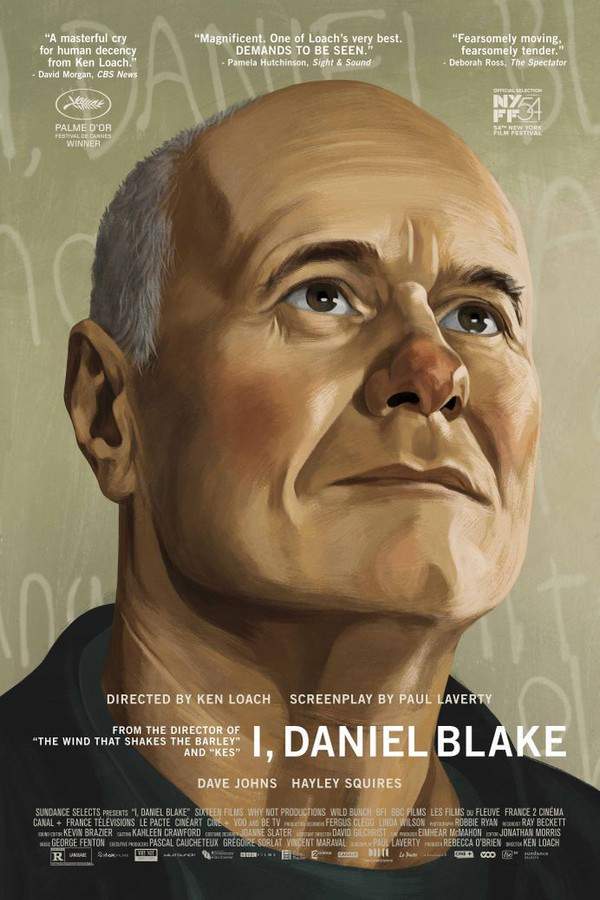
I, Daniel Blake (2016) movie poster

Plot Summary

I, Daniel Blake (2016) Plot Summary Explained

Release, runtime and language
2016 · 100 min · English
Loading streaming availability…
Directed by
Ken Loach
Starring
Briana Shann, Dave Johns, Dylan McKiernan, Hayley Squires, Sharon Percy

After suffering a heart attack, Daniel Blake, a widowed carpenter, finds himself struggling to navigate the complexities of the welfare system. Determined to maintain his dignity and fight for his rights, he encounters obstacles and frustrations while seeking support. His experiences unexpectedly forge connections with others facing similar challenges, revealing the resilience of the human spirit and the power of community in the face of adversity.

On this page (6)
  1. 1 Where to watch
  2. 2 What happens: full plot
  3. 3 Plot questions answered
  4. 4 Movie threads
  5. 5 Movies like I, Daniel Blake
  6. 6 Every angle
Loading streaming availability…

Full plot summary · contains spoilers

What Happens in I, Daniel Blake: Full Plot Summary

The whole story of I, Daniel Blake (2016) explained, from the opening scene to the final frame: every key event, every twist and what it all adds up to. Read it as a quick recap before the sequel, to check a scene you missed, or to finally understand what really happened.

Widower Daniel Blake, portrayed by Dave Johns, is a 59-year-old carpenter living in Newcastle who has experienced a heart attack at work. Following his health setback, his cardiologist advises against returning to work, yet a work capability assessment surprisingly deems him fit, resulting in the denial of his employment and support allowance. The assessment is conducted by a non-medical professional, who merely collects answers without grasping their implications.

This disheartening situation illustrates how the Government's employment and support services have outsourced their responsibilities to a private agency, stripping the process of essential human touch. Frustrations escalate when Daniel discovers that his doctor was never contacted regarding his work capability and that the application process for an appeal is daunting, especially since he lacks computer skills.

In his struggle for support, Daniel forms a bond with Katie, a single mother played by Hayley Squires, who faces her own hardships after being sanctioned for arriving late at a job center. Recently relocated from a London homeless hostel to Newcastle, Katie and her children find themselves without affordable housing. Daniel steps in to assist by repairing items, sharing advice on heating their home without electricity, and crafting wooden toys for the children.

Next door lives China, portrayed by Kema Sikazwe, an African American man engaging in shady dealings by using Daniel's address to receive shipments of counterfeit shoes from China, which he sells at discounted rates. Amidst this turbulent scenario, Daniel is ensnared in the welfare bureaucracy after his application for employment benefits is denied. Despite being instructed by his doctor not to work, he is pressured to seek jobs in order to qualify for Jobseeker benefits.

As David navigates this maze of bureaucracy, his appeal for benefits remains stagnant, as it must go through a lengthy reconsideration process. The agency then sanctions Daniel for not demonstrating sufficient effort in job searching, leading to a nerve-wracking four-week Job Seekers Allowance sanction, with potential subsequent sanctions lasting up to 13 weeks or more.

Despite the warnings of sympathetic agency worker Ann (Kate Rutter), Daniel decides against continuing his Job Seeker allowance. Meanwhile, Katie faces dire circumstances; overwhelmed by hunger, she breaks down at a food bank and, later caught shoplifting, is offered a job in a brothel. Concerned for her, Daniel confronts her at the brothel and pleads with her to leave the job, but she tearfully insists that she has no other way to provide for her children.

Fulfilling the conditions of Job Seeker’s allowance requires Daniel to continue job hunting. However, he declines an opportunity at a scrapyard, respecting his doctor’s advice against working too soon. Frustrated by the agency's demands, he protests, spray-painting "I, Daniel Blake, demand my appeal date before I starve" on their building. This act garners sympathy from the public, including fellow benefit claimants, but ultimately leads to his arrest and a warning.

In a desperate bid to escape his mounting despair, Daniel isolates himself and sells most of his belongings. Yet, an act of kindness from Daisy, played by Briana Shann, Katie's daughter, who brings him a homemade meal, revives his spirit.

On the day of his appeal, Katie stands by Daniel's side in court, where a welfare adviser expresses confidence in his case. However, upon seeing the judge and the doctor assigned to determine his fate, anxiety overwhelms him, leading to another heart attack in the restroom, resulting in his untimely death.

At Daniel’s public health funeral, Katie reads a poignant eulogy, reciting his planned appeal speech. In it, Daniel articulates the deep disappointment he felt about how the welfare system failed him, reducing him to a mere number rather than recognizing him as a man who had contributed honorably to society.
Last updated: November 16, 2024 at 14:42

Was this helpful?

Plot questions answered

I, Daniel Blake Plot Explained: Your Questions Answered

The questions people ask most about I, Daniel Blake (2016): what happens in the confusing scenes, why the characters do what they do, the twists, hidden details and what the ending means. Each answer contains spoilers.

Q1

Why was Daniel denied employment and support allowance after his heart attack?

Daniel was denied benefits because a work capability assessment declared him fit to work, despite his cardiologist advising against returning to work. The assessment was conducted by a non-medical professional who simply collected answers without understanding their implications. This decision directly led to the denial of his employment and support allowance.

Foreshadowing: Earlier, the film establishes that the welfare system has outsourced assessments to a private agency, removing essential human judgment.

  • work capability assessment
  • benefits denial
  • heart attack
  • welfare system
Q2

Why did the work capability assessment declare Daniel fit to work?

The work capability assessment declared Daniel fit to work despite his heart attack because it was conducted by a non-medical professional who merely recorded his answers without comprehending their significance. The assessor had no medical training to understand how Daniel's health condition would affect his ability to work.

  • work capability assessment
  • medical decision
  • fitness to work
Q3

Why wasn't Daniel's doctor contacted about the work capability assessment?

Daniel's doctor was never contacted because the assessment process does not automatically include consultation with the claimant's medical professionals. The system relies solely on the assessmenter's evaluation, which in Daniel's case was conducted by a non-medical staff member without the ability to interpret complex health conditions.

Foreshadowing: This omission highlights the film's earlier portrayal of a dehumanized bureaucratic process.

  • doctor consultation
  • welfare bureaucracy
  • medical evidence
Q4

Why was Katie sanctioned at the job center?

Katie was sanctioned for arriving late to a job center appointment. This penalty left her and her children without stable housing, as they had recently relocated from a London homeless hostel to Newcastle. The sanction compounded her existing struggles as a single mother trying to rebuild their lives.

  • job center sanction
  • single mother
  • housing struggle
Q5

Why did Katie accept a job at the brothel?

Katie accepted the job at the brothel after being overwhelmed by hunger and breaking down at a food bank, then getting caught shoplifting. Desperate to provide for her children with no other viable options, she felt compelled to take the job despite the personal cost.

Foreshadowing: Earlier, the film shows Katie breaking down at a food bank due to hunger, establishing her desperate situation.

  • brothel
  • desperation
  • poverty
  • single mother
Q6

Why did Daniel spray-paint the welfare agency building?

Daniel spray-painted the message "I, Daniel Blake, demand my appeal date before I starve" on the welfare agency building because he was frustrated by their demands that he search for jobs despite his doctor's advice not to work, while his appeal remained stuck in a lengthy reconsideration process. The protest was an act of desperation against a system he felt was pushing him toward starvation.

  • protest
  • appeal
  • welfare sanctions
  • desperation
Q7

Why did Daniel suffer a heart attack on the day of his appeal?

Daniel suffered a fatal heart attack in the courtroom restroom because the stress and anxiety of facing the judge and the doctor assigned to determine his fate became overwhelming. Despite the welfare adviser expressing confidence in his case, the psychological toll of his prolonged struggle with the system triggered another cardiac event.

Foreshadowing: The film establishes Daniel's fragile health condition from his initial heart attack, making this tragic outcome feel inevitable.

  • heart attack
  • appeal
  • stress
  • death
Q8

What happened to Katie after Daniel's death?

After Daniel's death, Katie attended his public health funeral and delivered a heartfelt eulogy, reciting parts of his planned appeal speech. This final act honored his struggle and highlighted the systemic failures that contributed to his tragic fate.

  • funeral
  • eulogy
  • Katie
  • outcome
Q9

Why was Daniel sanctioned for not job hunting?

Daniel was sanctioned because the welfare agency determined he was not demonstrating sufficient effort in searching for jobs. Despite his doctor's explicit advice against working, he was required to actively seek employment to qualify for Job Seeker's Allowance. This contradiction in the system's demands reflects the film's critique of bureaucratic inflexibility.

  • job seekers allowance
  • sanction
  • bureaucracy
Q10

Why did Daniel sell most of his belongings?

Daniel sold most of his belongings during a period of isolation and deepening despair as he struggled to survive while waiting for his appeal. The sale represented his desperate attempt to generate income after being sanctioned and denied benefits, illustrating the extreme financial pressure claimants face.

Foreshadowing: The sanction notice earlier placed Daniel in this dire financial situation.

  • selling belongings
  • financial desperation
  • isolation
Q11

Who was China and what was his relationship with Daniel?

China was Daniel's next-door neighbor who engaged in illegal dealings by using Daniel's address to receive shipments of counterfeit shoes from China, which he then sold at discounted rates. While Daniel was aware of these shady activities, the relationship existed as a minor subplot highlighting the precarious circumstances of those living on the margins.

  • China
  • counterfeit shoes
  • neighbor
  • illegal activity
Q12

Why did Daisy bring Daniel a homemade meal?

Daisy, Katie's daughter, brought Daniel a homemade meal as an act of kindness after he had isolated himself and sold most of his belongings in despair. This gesture provided Daniel with a moment of hope and human connection, temporarily reviving his spirit before his eventual death.

Foreshadowing: Earlier, Daniel had helped Katie by crafting wooden toys for her children, establishing their bond.

  • Daisy
  • kindness
  • homemade meal
  • hope
Q13

Why did Katie and her children lack affordable housing in Newcastle?

Katie and her children lacked affordable housing because they had recently been relocated from a homeless hostel in London to Newcastle. This displacement, combined with being sanctioned at the job center, left them without the financial means to secure stable accommodation, forcing them into precarious living conditions.

  • housing
  • homeless
  • relocation
  • single mother
Q14

What did Daniel plan to say in his appeal speech?

In his planned appeal speech, Daniel intended to express his deep disappointment with how the welfare system had failed him, reducing him to a mere number rather than recognizing him as a man who had contributed honorably to society throughout his life. The speech encapsulated his fight for dignity and recognition within a dehumanizing system.

Foreshadowing: This speech was recited at his funeral, providing closure to his story.

  • appeal speech
  • dignity
  • society contribution
  • systemic failure

Movie threads

More Movies Like I, Daniel Blake, by Mood & Story

Curated lists built around what makes I, Daniel Blake tick: the same mood, the same kind of story or the same emotional payoff. Each list explains why these movies belong together.

Movies about systemic injustice like I, Daniel Blake

Stories of ordinary people fighting to maintain their dignity within crushing bureaucracies. Find more movies like I, Daniel Blake that portray the fight for human dignity against bureaucratic systems. These films often feature working-class characters, heavy emotional weight, and a bleak tone, capturing the frustrating reality of navigating welfare, healthcare, or justice systems.

  • frustrating
  • oppressive
  • gritty
  • resigned
  • compassionate
  • desperate
  • Tone: bleak, frustrating
  • Pacing: steady, methodical
Why these movies?

The story pattern: The narrative pattern follows a protagonist, often an everyman, who is systematically worn down by a complex and unfeeling institution. The conflict is not with a villain but with a faceless process, leading to a journey of increasing frustration and isolation, though often punctuated by moments of human solidarity.

Why they belong together: These films are grouped by their core thematic conflict: the individual versus the system. They share a grounded, often bleak tone, a steady pacing that builds frustration, and a deep emotional investment in the protagonist's dignified struggle against dehumanizing forces.

Gritty social realism movies like I, Daniel Blake

Unflinching and compassionate looks at life on the economic margins. Discover gritty social realism films similar to I, Daniel Blake. These movies depict urban poverty, financial desperation, and the bonds formed in adversity, often with a bleak tone, steady pacing, and a heavy emotional weight that offers a stark look at contemporary life.

  • gritty
  • desperate
  • compassionate
  • melancholic
  • oppressive
  • resigned
  • Tone: bleak, compassionate
  • Pacing: steady, immersive
Why these movies?

The story pattern: These narratives are typically linear and character-driven, following individuals or families as they navigate the tangible challenges of poverty—hunger, eviction, unemployment. The plot is less about major events and more about the cumulative weight of daily hardship, often leading to a sobering or tragic conclusion that underscores systemic failure.

Why they belong together: Movies in this thread are united by their unflinching focus on economic hardship and their commitment to social realism. They share a specific mood blend of gritty, desperate, and compassionate, with a straightforward narrative style that prioritizes emotional truth over plot complexity.

If you liked this

Movies Like I, Daniel Blake

Similar movies to I, Daniel Blake: the same genre, themes or kind of story. Each one comes with its own plot summary, timeline and ending explained.

Browse all movie summaries

Every angle

I, Daniel Blake (2016) Explained: Plot, Timeline & Characters

Everything about I, Daniel Blake in one place: what happens in the plot summary, the timeline in chronological order, the characters and meaning and a spoiler-free summary. What's After the Movie adds the cast, box office and post-credit scenes.

Coming soon on iOS and Android

The Plot Explained Movie Summary App

Plot summaries, endings explained and timelines on your phone. Catch up on any movie in minutes, save your favorites and never miss a twist again.

Be the first to know when we launch. Your email stays private, always.

Learn more about the app