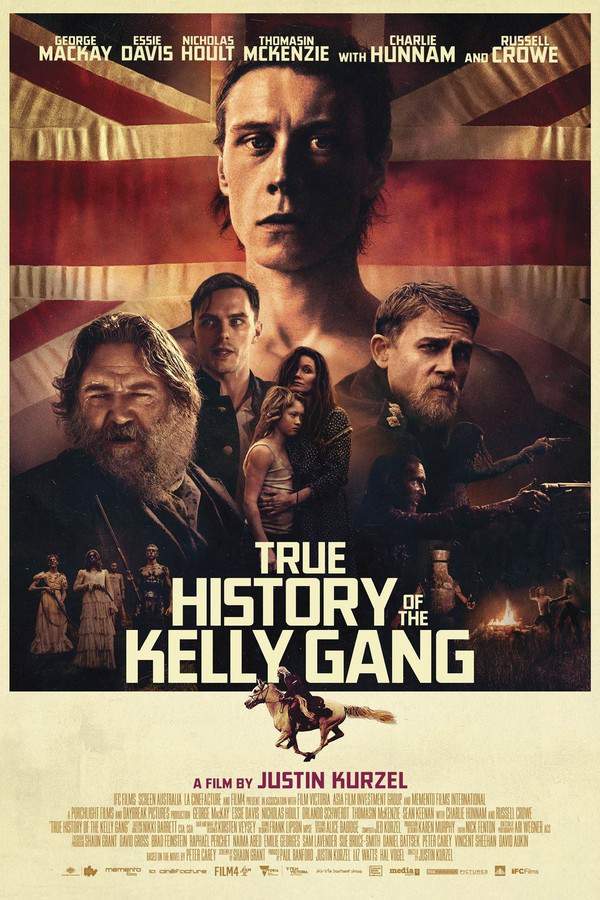
In 19th-century Australia, Ned Kelly, portrayed by George MacKay, grows up in a harsh landscape under oppressive English rule. His mother, Essie Davis, encourages rebellion, while he finds guidance from bushranger Harry Power, played by Russell Crowe. This mentorship leads Ned down a path of vengeance as he fights for survival and rallies others to challenge their oppressors, leading to escalating conflict and a fight for freedom.
Find where to stream, rent, or buy True History of the Kelly Gang (2020) in the US with current JustWatch availability, up-to-date pricing, and platform listings for subscription, rental, and digital purchase options.
Warning: spoilers below!
Haven’t seen True History of the Kelly Gang yet? This summary contains major spoilers. Bookmark the page, watch the movie, and come back for the full breakdown. If you're ready, scroll on and relive the story!
Read the complete plot breakdown of True History of the Kelly Gang (2020), including all key story events, major twists, and the ending explained in detail. Discover what really happened, and what it all means.
Based on Peter Carey's novel of the same name, this film presents a dramatically reimagined tale of the life of Australian bushranger Ned Kelly and his gang, who evade the law during the tumultuous 1870s.
The story begins with Ned's father, John "Red" Kelly (played by Gentle Ben Corbett), an Irishman deported to a prison colony in Van Diemen's Land. He eventually establishes his family in Victoria, Australia, after marrying Ellen Kelly (Essie Davis). Tragically, Red's numerous run-ins with the authorities culminate in his imprisonment and subsequent death when Ned is just twelve.
Ned, portrayed by Orlando Schwerdt as a boy and later by George MacKay as a young man, demonstrates courage and compassion early on; he even risks his life to save a drowning boy. However, he is shaken to discover his father's unorthodox methods during outlaw raids. Meanwhile, Ellen struggles to support her children through various means, including her tumultuous relationship with Sgt. O'Neill (Charlie Hunnam) and her romantic entanglements, the most notable being with the infamous bushranger Harry Power (Russell Crowe), who becomes a mentor to young Ned.
As the narrative unfolds, under Harry's influence, Ned becomes embroiled in criminal activities. After a violent confrontation with Sgt. O'Neill, Ned ends up in prison for three years. Once released, he returns to his mother's home, where he falls in love with a young Irish prostitute named Mary (Thomasin McKenzie). However, tragedy strikes when Constable Fitzpatrick (Nicholas Hoult) arrives to arrest the Kelly family, leading to a dramatic defense by Ned against the constable.
Ned and his brother Dan (Sean Keenan) then take refuge in the hills, rallying friends like Steve Hart (Louis Hewison) and Joe Byrne (Sean Keenan), forming what becomes known as the Kelly Gang. Their spirit is fueled by a sense of oppression as they see themselves as Irish warriors against the English rule. As tensions escalate, the authorities arrest Ned's mother and baby sister, pressuring him to surrender, but instead, he retaliates by killing Fitzpatrick.
The gang gains notoriety after ambushing a group of constables at Stringybark Creek, where Ned demonstrates his lethal skill. They take refuge in Glenrowan, hosting several captives, including the local schoolmaster (Jacob Collins-Levy), who prompts Ned to document his story. However, their plans are thwarted by betrayal, leading to a climactic shootout fraught with surreal moments. In the end, despite their valiant efforts, the gang is overwhelmed, and Ned is convicted of murder, ultimately facing his fate at the Old Melbourne Gaol, encouraged by his mother to “die like a Kelly.”
Last updated: November 16, 2024 at 13:58
Explore frequently asked questions about True History of the Kelly Gang (2020) with spoiler-rich answers covering the full plot summary, major story beats, character motivations, hidden details, and ending meaning. This movie summary FAQ helps explain confusing scenes, plot twists, and narrative decisions in clear, searchable detail.
Harry Power saw potential in the young Ned Kelly and recognized a shared spirit of rebellion against English oppression. After beginning a relationship with Ned's mother Ellen, Power took Ned under his wing, teaching him the skills of outlaw life. This mentorship fundamentally shaped Ned's path toward bushranging and his eventual conflict with authorities.
Earlier in the film, Ellen's difficult circumstances and her connection to Power set the stage for this influential relationship.
Ned killed Constable Fitzpatrick as a desperate act of defiance when Fitzpatrick arrived to arrest the Kelly family. Rather than surrender, Ned chose to fight back against the authorities who had oppressed his family and destroyed his father. This violent response escalated the conflict and directly led to Ned becoming a fugitive.
The arrest of Ned's mother and baby sister had already pushed Ned toward extreme action, making this confrontation inevitable.
The authorities arrested Ned's mother Ellen and his baby sister as leverage to force Ned into surrendering. Knowing Ned's fierce loyalty to his family, the police hoped this would bring an end to his outlaw activities. Instead, this tactic only strengthened Ned's resolve to fight back violently against the oppression he had endured.
Tensions between the Kelly family and authorities had been building throughout the film, culminating in this cruel tactic.
Ned's friends Steve Hart and Joe Byrne joined the gang because they shared his view of the authorities as oppressive English overlords treating Irish settlers as second-class citizens. Inspired by Ned's leadership and his willingness to fight back, they rallied to his cause, seeing the Kelly Gang as a way to resist systemic injustice and fight for their rights as Irish Australians.
The film establishes early on the deep sense of oppression felt by Irish communities under English rule.
The Kelly Gang ambushed the constables at Stringybark Creek as a strategic move to obtain weapons and supplies while evading capture. Ned demonstrated deadly accuracy during this encounter, which cemented the gang's reputation as dangerous outlaws and intensified the manhunt against them.
The gang's growing desperation for resources and their status as fugitives made such confrontations increasingly likely.
The Kelly Gang chose Glenrowan as their refuge because it offered a strategic location where they could hide from authorities while planning their next move. The local schoolmaster encouraged Ned to document his story there, giving the gang a brief moment of reflection on their cause before everything fell apart.
The gang had been constantly moving and running from police, making a temporary hideout necessary for survival.
Ned Kelly wanted to document his story so the world would understand his motivations and see the Kelly Gang as Irish warriors fighting against English oppression rather than mere criminals. The schoolmaster at Glenrowan encouraged him to write his account, giving Ned a chance to shape his legacy and explain the injustices that had driven him to outlawry.
Ned had consistently expressed resentment toward how Irish Australians were treated by British authorities.
The betrayal at Glenrowan came from someone within or close to the gang's circle, leading police directly to their location. This betrayal resulted in the climactic shootout that overwhelmed the Kelly Gang, ending their resistance and sealing their fate.
The intense pressure of the manhunt and the rewards offered for information created an environment where trust was fragile.
Ned Kelly was executed for murder after being convicted at trial. Despite his attempts to frame his actions as resistance to oppression, the courts judged him guilty of killing Constable Fitzpatrick and other crimes. He faced his execution at Old Melbourne Gaol, drawing strength from his mother's final words to "die like a Kelly."
The film had established throughout that the authorities would show no mercy to Irish rebels.
Ned Kelly turned to crime primarily due to his father's legacy and the mentorship of Harry Power, combined with the oppressive English rule that crushed Irish families. After his father's death and his own three-year imprisonment for defending his mother against Sgt. O'Neill, Ned emerged with deep anger toward authorities. When the police targeted his family and tried to use his mother and sister as leverage, Ned had no choice but to fight back as an outlaw.
Ned's childhood act of heroism contrasted sharply with the criminal path he would later follow, showing how oppression corrupted his trajectory.
Ned's violent confrontation with Sergeant O'Neill stemmed from O'Neill's abusive and tumultuous relationship with Ned's mother Ellen. The conflict represented Ned's desperate attempt to protect his family from exploitation by the authorities. This violent encounter directly resulted in Ned's three-year imprisonment, which only deepened his bitterness toward the system.
Ellen Kelly's difficult relationships with authority figures had created tension throughout Ned's childhood.
Ned's father John "Red" Kelly died in prison after numerous run-ins with the authorities. As an Irishman deported to Van Diemen's Land, Red struggled against the colonial system and was repeatedly imprisoned for his criminal activities. His death when Ned was only twelve left the family destitute and set Ned on his own tragic path.
The film establishes early that the Kelly family's struggles with authority spanned generations.
Discover curated groups of movies connected by mood, themes, and story style. Browse collections built around emotion, atmosphere, and narrative focus to easily find films that match what you feel like watching right now.
Mythic portrayals of rebels crushed by an oppressive system, ending in tragedy.Explore movies like True History of the Kelly Gang that chronicle the rise and fall of infamous figures. If you liked the gritty, mythic portrayal of Ned Kelly's doomed rebellion, you'll find similar biographical crime dramas and Westerns about outlaws fighting a losing battle against the system.
These narratives typically follow a linear or episodic biographical path, tracing the subject's life from formative trauma to a life of crime fueled by righteous anger or circumstance. The central conflict is with an oppressive establishment, leading to escalating violence that culminates in a final, tragic confrontation.
Movies in this thread share a dark, mythic tone, a steady biographical pacing, and a heavy emotional weight rooted in themes of oppression and rebellion. They are united by the specific character arc of a charismatic but doomed figure whose fight for freedom ends in a sorrowful, definitive defeat.
Stories set in harsh pasts where survival demands brutal, morally complex choices.Find movies similar to True History of the Kelly Gang that are set in brutal historical periods. These films share a dark, gritty tone and depict characters fighting for survival against systemic oppression. If you appreciated the film's unflinching look at a harsh past, you'll enjoy these somber historical dramas.
The narratives often feature a coming-of-age element within a brutal environment, where a young protagonist is hardened by conflict with authority figures or a hostile system. The journey is one of escalating desperation, where acts of violence are framed as necessary for survival, leading to a bleak, often sad conclusion that underscores the cyclical nature of oppression.
These movies are connected by their oppressive atmosphere, high intensity stemming from constant conflict, and a dark, gritty aesthetic. They share a common focus on the psychological and physical toll of surviving in a ruthlessly inequitable historical world.
Don't stop at just watching - explore True History of the Kelly Gang in full detail. From the complete plot summary and scene-by-scene timeline to character breakdowns, thematic analysis, and a deep dive into the ending - every page helps you truly understand what True History of the Kelly Gang is all about. Plus, discover what's next after the movie.
Track the full timeline of True History of the Kelly Gang with every major event arranged chronologically. Perfect for decoding non-linear storytelling, flashbacks, or parallel narratives with a clear scene-by-scene breakdown.
Discover the characters, locations, and core themes that shape True History of the Kelly Gang. Get insights into symbolic elements, setting significance, and deeper narrative meaning - ideal for thematic analysis and movie breakdowns.
Discover movies like True History of the Kelly Gang that share similar genres, themes, and storytelling elements. Whether you’re drawn to the atmosphere, character arcs, or plot structure, these curated recommendations will help you explore more films you’ll love.
True History of the Kelly Gang (2020) Scene-by-Scene Movie Timeline
True History of the Kelly Gang (2020) Movie Characters, Themes & Settings
True History of the Kelly Gang (2020) Spoiler-Free Summary & Key Flow
Movies Like True History of the Kelly Gang – Similar Titles You’ll Enjoy
Sweet Country (2018) Full Movie Breakdown
The Proposition (2006) Detailed Story Recap
High Ground (2021) Ending Explained & Film Insights
The Tracker (2004) Plot Summary & Ending Explained
Outlaws (2019) Detailed Story Recap
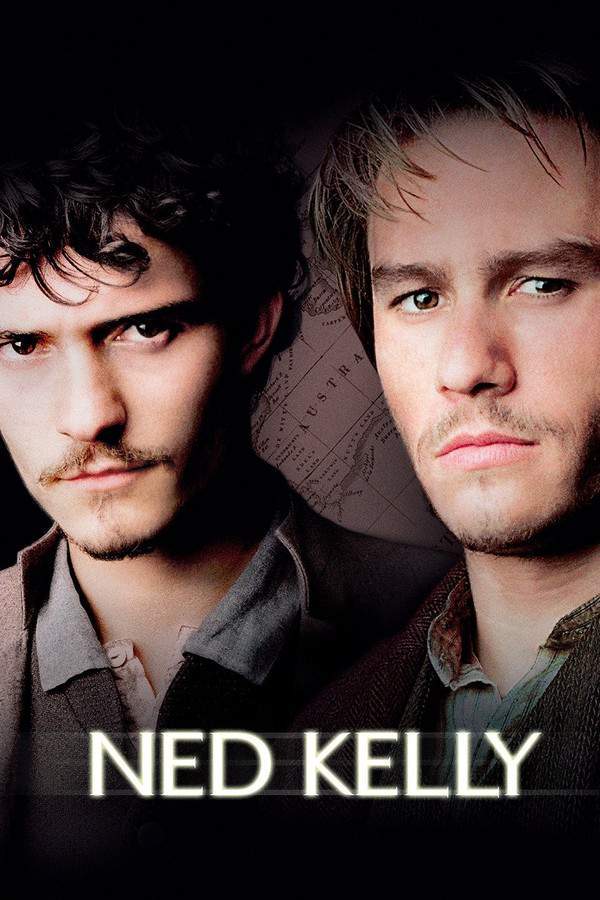
Ned Kelly (2004) Film Overview & Timeline
Animal Kingdom (2010) Spoiler-Packed Plot Recap
Quigley Down Under (1990) Story Summary & Characters
Rob Roy (1995) Plot Summary & Ending Explained
The Legend of Ben Hall (2016) Movie Recap & Themes
True History of the Kelly Gang (2019) Ending Explained & Film Insights
Kangaroo (1952) Full Movie Breakdown
Machine-Gun Kelly (1958) Full Summary & Key Details
Botany Bay (1952) Ending Explained & Film Insights
Ned Kelly (1970) Movie Recap & Themes