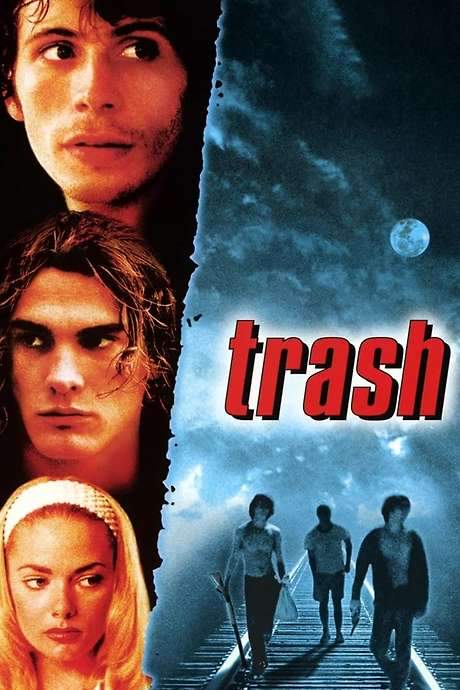
Plot Explained Spoilers guaranteed!
Plot Explained

Browse by genre

Trash (1970) movie poster

Timeline

Trash (1970) Timeline Explained – Every Event in Order

Release, runtime and language
1970 · 110 mins · English
Directed by
Paul Morrissey
Starring
Joe Dallesandro, Jane Forth, Holly Woodlawn, Roberto D'Alessandro, Andrea Feldman, John Putnam

Joe, a heroin addict, spends a single day pursuing his next fix while his volatile, on‑and‑off relationship with his sexually frustrated girlfriend unravels. He overdoses in front of an affluent couple, tries to deceive welfare officials by having Holly fake a pregnancy to secure methadone treatment, and repeatedly disappoints the women around him with drug‑induced impotence.

On this page (5)
  1. 1 Events in order (11)
  2. 2 Timeline questions answered
  3. 3 Movie threads
  4. 4 Movies like Trash
  5. 5 Every angle

11 events in order · contains spoilers

Trash Timeline: Events in Chronological Order

Every key event of Trash (1970) in order, scene by scene, with when and where it takes place. Use it to untangle flashbacks, time jumps and parallel storylines, to refresh your memory before the sequel or to find the exact scene you are thinking of.

  1. Morning drift through New York

    Joe, a heroin addict, steps out into New York City at first light. He drifts through crowded streets, indifferent to the bustle around him as the day begins to shape itself around his habit. The city becomes a backdrop to his aimless movements and partial recollection of where he is going.

    When
    Morning
    Where
    New York City streets
  2. Home base: Lower East Side apartment

    The Lower East Side apartment where Joe and Holly live acts as the film's center. They argue and reconcile in quick, improvised exchanges that reveal their codependency and fragile attachment. The tense, intimate moments at home anchor the day amid the surrounding chaos.

    When
    Day
    Where
    Lower East Side apartment
  3. Holly's welfare scheme

    Holly devises an improvised plan to secure welfare benefits, clinging to a possible lifeline for themselves. The pursuit triggers awkward stalls, small triumphs, and renewed disputes as reality intrudes on their hope. Joe watches with a mix of detachment and concern.

    When
    Day
    Where
    Apartment and welfare office
  4. Go-go dancer encounter

    In public spaces, Joe crosses paths with a go-go dancer (Geri Miller), a bright, impulsive presence that punctures his routine. The brief contact injects movement, humor, and a fleeting sense of connection into the day. It underscores Joe's distance from ordinary warmth.

    When
    Afternoon
    Where
    Public venue or street
  5. Welfare investigator arrives

    Michael Sklar's welfare investigator arrives, turning the private struggle into an official inquiry. The encounter strains Holly's scheme and tests Joe's tolerance for surveillance and obligation. The moment highlights how authority and dependency collide in their fragile partnership.

    When
    Afternoon
    Where
    Apartment
  6. Upper-class couple vignette

    Joe encounters the frustrated upper-class couple played by Jane Forth and Bruce Pecheur, a window into social pretensions and disconnection. Their interactions mix satire with a tinge of tenderness, revealing desire and dissatisfaction beneath polished surfaces. The scene adds a counterpoint to Joe and Holly's instability.

    When
    Afternoon
    Where
    Couple's home or social setting
  7. Street eccentric

    Between the main encounters, Joe and Holly drift through a parade of eccentric city characters who punctuate the day with odd humor and harsh honesty. Each vignette distills the film's blend of bleakness and humanity. The random meetings emphasize the unpredictability of their world.

    When
    Afternoon–Evening
    Where
    City streets
  8. Evening tenderness amid chaos

    Amid chaos, there are brief glimmers of tenderness between Joe and Holly that hint at real care beneath addiction. They share a moment of closeness before the world intrudes again. Those scenes underscore the fragility and depth of their bond.

    When
    Evening
    Where
    Apartment
  9. Return to the apartment

    As night approaches, the couple drifts back to their home, exhausted by the day’s turbulence. The apartment becomes a sanctuary that never fully offers safety, only a pause before more chaos. Their routine continues to bind them together despite everything.

    When
    Evening
    Where
    Lower East Side apartment
  10. City hums on

    The city outside remains a living, breathing backdrop—half welcoming, half hostile—while Joe and Holly cling to each other. Street sounds, distant laughter, and surprising encounters echo through the walls. The dual sense of connection and isolation deepens as night falls.

    When
    Night
    Where
    Apartment
  11. Ending unresolved

    The film ends on a quiet, unresolved note, with Joe and Holly still tethered to their chaotic routine. Addiction and codependency persist as the city continues around them. The last image implies nothing has changed—and everything is at stake.

    When
    Night
    Where
    Apartment

Last updated: February 24, 2026 at 13:51

Was this helpful?

Timeline questions answered

Trash Timeline Explained: Your Questions Answered

When does it happen, and why in that order? The questions people ask about the chronology of Trash (1970): time jumps, flashbacks, cause and effect between scenes and the correct order of events, each answered with spoilers.

Q1

Why does Holly try to fake a pregnancy for welfare benefits?

Holly attempts to fake a pregnancy as a desperate scheme to secure welfare benefits and access methadone treatment for Joe. The couple is struggling financially and emotionally, and the welfare system becomes their only lifeline. The fake pregnancy is meant to expedite the approval process, but the scheme ultimately collapses when the welfare investigator arrives to verify the claim, exposing their precarious situation.

Foreshadowing: Earlier in the day, Holly and Joe discuss their financial desperation while in their apartment, hinting at the lengths Holly will go to survive.

  • holly
  • fake pregnancy
  • welfare benefits
  • methadone
  • scheme
Q2

Why does Joe experience impotence throughout the film?

Joe suffers from drug-induced impotence due to his heroin addiction. The substance severely affects his physical performance, repeatedly disappointing the women around him. This impotence becomes a recurring source of tension and frustration, particularly in his relationship with Holly, who is sexually frustrated. It underscores how addiction permeates every aspect of his life, destroying not just his health but his intimate relationships.

Foreshadowing: Joe's sluggish, apathetic movement through the city from the very first scene hints at a body already compromised by substance abuse.

  • joe
  • heroin
  • impotence
  • addiction
  • sexual frustration
Q3

Why do Joe and Holly stay together despite their toxic relationship?

Joe and Holly's relationship is deeply codependent, more rooted in mutual need than genuine love. Both are trapped in cycles of addiction and poverty, and their bond provides a fragile sense of stability in an otherwise chaotic existence. They argue and reconcile quickly, with the Lower East Side apartment serving as their only sanctuary. Despite Joe's repeated disappointments, his drug pursuits, impotence, and emotional unavailability, Holly remains devoted, just as Joe keeps returning to her despite his wanderings.

Foreshadowing: The quick transitions between heated arguments and tender moments in their apartment early on establish their volatile but inseparable dynamic.

  • joe
  • holly
  • codependency
  • relationship
  • addiction
Q4

Why does Joe overdose in front of the affluent couple?

Joe overdoses after pursuing his heroin fix desperately throughout the day. When he encounters the upper-class couple (Jane and Bruce), his physical state deteriorates rapidly due to prolonged drug use and lack of food or proper care. The overdose occurs as a tragic culmination of his addiction-driven existence, exposing the stark contrast between his world of poverty and desperation and their insulated lifestyle. The incident adds to the film's exploration of class divisions and the randomness of tragedy.

Foreshadowing: Joe's aimless drifting through the city, coupled with his indifferent attitude toward his own survival, foreshadows his body's eventual collapse.

  • joe
  • overdose
  • affluent couple
  • heroin
  • class
Q5

Why does Joe spend the entire day wandering through New York City?

Joe wanders through New York City primarily in pursuit of his next heroin fix. His day is structured around obtaining and using drugs, with everything else, his relationship with Holly, his encounters with various characters, filtered through the lens of his addiction. The city serves as both a hunting ground for drugs and a backdrop to his fragmented existence. His wandering is aimless yet purposeful, driven by habit and physiological need rather than genuine intention.

Foreshadowing: The film opens with Joe stepping out into the city at first light, immediately establishing his addiction as the driving force of his daily routine.

  • joe
  • new york city
  • wandering
  • heroin
  • addiction
Q6

Why does Holly pursue welfare benefits when Joe seems indifferent?

Holly pursues welfare benefits because she is the one who must maintain some stability in their lives. While Joe drifts through his addiction with detachment, Holly takes initiative to secure resources, demonstrating her role as the more practical partner despite her own vulnerabilities. Her scheme to fake a pregnancy reveals her desperation to provide for both of them, even as Joe watches with his characteristic mix of concern and apathy. The dynamic highlights how their codependency requires one of them to hold things together, even minimally.

Foreshadowing: From the early apartment scenes, Holly is shown organizing and planning while Joe observes passively, establishing her as the pragmatic force in their relationship.

  • holly
  • welfare
  • scheme
  • Joe indifference
  • survival
Q7

What is the purpose of the other characters like the go-go dancer and upper-class couple?

The various characters Joe encounters, including the go-go dancer Geri Miller, the welfare investigator Michael Sklar, the upper-class couple Jane and Bruce, and eccentrics like Rich Girl and Johnny, serve to expose different facets of New York City's social landscape. They contrast with Joe and Holly's world of poverty and addiction, revealing class divisions, societal neglect, and the desperation that permeates different levels of society. Each vignette adds texture to the film, reinforcing its exploration of isolation, desire, and the human condition across social strata.

Foreshadowing: The film's structure deliberately weaves these encounters together, using them to build a broader portrait of urban life beyond the central relationship.

  • supporting characters
  • go-go dancer
  • upper-class couple
  • social contrast
  • New York City
Q8

Why does the film end without any resolution or change?

The film ends on an unresolved note intentionally, reflecting the cyclical, inescapable nature of addiction and codependency. Joe and Holly return to their apartment, exhausted but still bound to each other and to their destructive routine. The lack of redemption or hope is central to the film's bleak tone, nothing changes because the systems and personal demons trapping them are too powerful to overcome. The ending is not a plot point but a statement about the persistence of addiction and the way it traps people in endless, unresolved cycles.

Foreshadowing: The steady, day-in-the-life structure with its series of vignettes reinforces the sense of repetition and entrapment that the ending confirms.

  • ending
  • no resolution
  • addiction cycle
  • codependency
  • bleak tone
Q9

Why does Joe appear emotionally detached throughout the film?

Joe's emotional detachment stems directly from his heroin addiction, which creates a barrier between him and meaningful emotional engagement. His apathetic responses to Holly's efforts, his wandering attention, and his failure to act decisively in crisis situations all reflect how substances blunt his capacity for genuine connection. This detachment is not a character flaw but a consequence of addiction, making his occasional moments of tenderness with Holly all the more significant as rare glimpses of his pre-addiction self.

Foreshadowing: Joe's very first scene shows him drifting through the city 'indifferent to the bustle around him,' establishing his detached state from the opening moments.

  • joe
  • emotional detachment
  • heroin
  • apathy
  • addiction effects
Q10

Why does Holly continue to support Joe despite his repeated failures?

Holly stays with Joe because their relationship is built on codependency and mutual need rather than healthy love. Both are trapped in poverty and addiction, and leaving would mean facing the terrifying unknown alone. Holly's devotion is also a reflection of her own desperation, she believes she can help him, or at least that their chaotic arrangement is better than complete isolation. The film portrays her loyalty as both tragic and a product of their shared circumstances.

Foreshadowing: The apartment scenes show Holly quickly forgiving Joe after arguments and immediately supporting his needs, establishing the pattern of unconditional support.

  • holly
  • loyalty
  • codependency
  • Joe failures
  • desperation

Movie threads

More Movies Like Trash, by Mood & Story

Curated lists built around what makes Trash tick: the same mood, the same kind of story or the same emotional payoff. Each list explains why these movies belong together.

Raw Descent Dramas Like Trash

Raw and gritty day-in-the-life stories of characters trapped by their circumstances. Movies like Trash that explore the gritty, day-to-day struggle of characters trapped in cycles of addiction and urban decay. If you were captivated by the unflinching realism and bleak atmosphere, these films offer similar experiences of human desperation.

  • gritty
  • desperate
  • raw
  • bleak
  • claustrophobic
  • anxious
  • Tone: bleak, raw, desperate
  • Pacing: steady, observational
Why these movies?

The story pattern: These narratives typically follow a 'day-in-the-life' or 'descent' structure, often linear, where characters are driven by a singular, destructive need. The story unfolds through a series of vignettes or encounters that highlight their powerlessness against their environment and vices, usually ending without redemption.

Why they belong together: Movies are grouped here for their shared focus on raw, unglamorous depictions of struggle, their consistently bleak tone, and their immersive, character-driven pacing that creates a palpable sense of despair and entrapment.
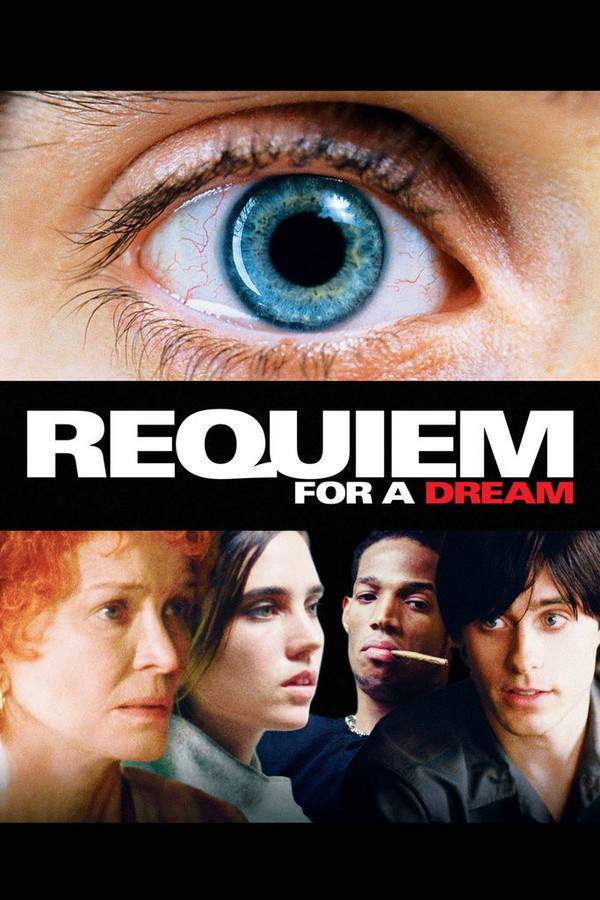
Movies About Codependent Relationships Like Trash

Stories exploring volatile partnerships defined by manipulation and shared dysfunction. If you were fascinated by the volatile dynamic between Joe and Holly in Trash, these films explore similar themes of toxic codependency, emotional manipulation, and relationships built on shared dysfunction rather than love.

  • codependency
  • volatile
  • dysfunctional
  • manipulative
  • desperate
  • raw
  • Tone: bleak, intense, raw
  • Pacing: steady, character-driven
Why these movies?

The story pattern: The narrative often revolves around a couple whose bond is rooted in mutual damage or addiction. Their interactions are a push-and-pull of dependence and resentment, with plot points frequently involving manipulation, betrayal, and a failure to break free from the destructive cycle.

Why they belong together: These films are connected by their intense focus on the dark side of human connection. They share a heavy emotional weight and often a bleak tone, portraying relationships not as romantic escapes but as traps that exacerbate the characters' problems.

If you liked this

Movies Like Trash

Similar movies to Trash: the same genre, themes or kind of story. Each one comes with its own plot summary, timeline and ending explained.

Browse all movie summaries

Every angle

Trash (1970) Explained: Plot, Timeline & Characters

Everything about Trash in one place: what happens in the plot summary, the timeline in chronological order, the characters and meaning and a spoiler-free summary. What's After the Movie adds the cast, box office and post-credit scenes.

Coming soon on iOS and Android

The Plot Explained Movie Summary App

Plot summaries, endings explained and timelines on your phone. Catch up on any movie in minutes, save your favorites and never miss a twist again.

Be the first to know when we launch. Your email stays private, always.

Learn more about the app