Plot Explained Spoilers guaranteed!
Plot Explained

Browse by genre

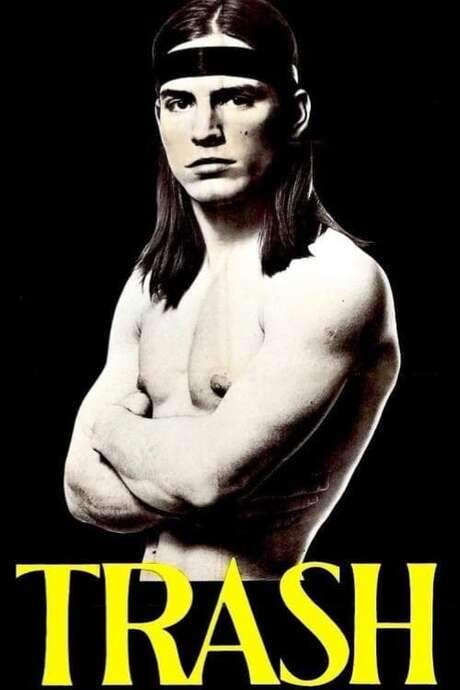
Trash (1970) movie poster

Characters & Themes

Trash (1970) Characters, Setting & Themes Explained

Release, runtime and language
1970 · 110 mins · English
Directed by
Paul Morrissey
Starring
Joe Dallesandro, Jane Forth, Holly Woodlawn, Roberto D'Alessandro, Andrea Feldman, John Putnam

Joe, a heroin addict, spends a single day pursuing his next fix while his volatile, on‑and‑off relationship with his sexually frustrated girlfriend unravels. He overdoses in front of an affluent couple, tries to deceive welfare officials by having Holly fake a pregnancy to secure methadone treatment, and repeatedly disappoints the women around him with drug‑induced impotence.

On this page (7)
  1. 1 Characters explained (6)
  2. 2 Where & when it takes place
  3. 3 Themes & meaning (4)
  4. 4 Character & meaning questions
  5. 5 Movie threads
  6. 6 Movies like Trash
  7. 7 Every angle

6 main characters · contains spoilers

Trash Characters Explained: Who Is Who

The main characters of Trash (1970), heroes and villains: what drives them, how they change over the course of the story and what each of them reveals about the film's bigger ideas.

  • Joe Smith (Joe Dallesandro)

    Joe Smith is a heroin addict wandering the city, moving through a sequence of loosely connected encounters over a single day. He is emotionally distant and largely unresponsive, his addiction shaping every choice and interaction. Though often passive, his presence destabilizes those around him, including his partner Holly. His actions drive much of the day’s rhythm and the film's episodic, improvisational tone.

    • 💊 Addiction
    • 🎭 Drama
    • 🗺️ Urban life
  • Holly Sandiago (Holly Woodlawn)

    Holly Sandiago is Joe's dramatic but devoted girlfriend who anchors the film's emotional core. She tries to secure welfare benefits, reflecting determination to sustain their precarious life. Her devotion is intense and sometimes enmeshing, while her improvisational schemes mirror the city's energy. Through Holly, the film explores care that coexists with strain in a fragile relationship.

    • 💞 Codependency
    • 🧭 Relationship dynamics
    • 🎭 Drama
  • Jane (Jane Forth)

    Jane is part of the frustrated upper-class couple, embodying discontent and disconnect within the urban landscape. Her interactions with Joe and Holly offer a counterpoint to street-level chaos, highlighting class tensions amid the city’s chaos. She represents a detached, privileged viewpoint struggling to relate to the surrounding instability. Jane's presence underscores social critique within the narrative.

    • 🎭 Drama
    • 💼 Class tension
    • 🗺️ Urban life
  • Bruce (Bruce Pecheur)

    Bruce is Jane's husband, another face of the upper-class couple. He embodies discomfort with their sheltered lifestyle when faced with the city’s chaos and improvisation. His exchanges reveal strains between status and survival, illustrating social distance in a dense urban setting. Bruce highlights the film’s cross-section of society living in parallel yet disconnected rhythms.

    • 💼 Class tension
    • 🗺️ Urban life
    • 🧭 Social dynamics
  • Geri (Geri Miller)

    Geri Miller appears as the go-go dancer encountered in one vignette, embodying the city’s countercultural fringe. Her presence injects performance energy and a sense of nightlife into the day, showing how street life intersects with Joe and Holly’s world. She illustrates the varied lives that brush against the central couple, offering brief warmth amid the chaos.

    • 🎶 Go-go culture
    • 🧭 Counterculture
    • 🗺️ Street life
  • Mr. Michaels (Michael Sklar)

    Mr. Michaels is the welfare investigator who appears in the bureaucratic strand of the day. He embodies institutional scrutiny and the pressure of social services on marginal lives. His interactions push the couple toward confrontation with reality, exposing the gap between aid and need. The encounter adds a sharp note of social critique to the improvisational narrative.

    • 💼 Bureaucracy
    • 🧾 Welfare
    • 🗺️ Policy

Last updated: February 19, 2026 at 09:19

Was this helpful?

Setting

Where and When Does Trash Take Place?

The setting of Trash (1970): the year and time period, the places and locations, and how they shape the characters, the mood and the tension of the story.

Time period

Early 1970s

The events unfold over a single day in early 1970s New York, a period marked by urban decay and counterculture currents. The time frame emphasizes poverty, drug use, and a sense of cultural experimentation permeating the city. The narrative compresses a full day into a sequence of loosely connected vignettes anchored by the couple's chaotic routine.

Location

New York City, Lower East Side

Set in the Lower East Side of New York City, the film folds between a shabby apartment and the surrounding streets. The neighborhood is depicted as gritty, chaotic, and economically worn, mirroring the characters' unsettled lives. The apartment serves as the film's core, where confrontations, reconciliations, and improvised schemes unfold.

  • 🏙️ Cityscape
  • 🌆 Grimy neighborhood
  • 🎭 Counterculture

Last updated: February 19, 2026 at 09:19

Was this helpful?

4 major themes

Trash Meaning: Themes & Message Explained

What is Trash (1970) really about? The emotional, social and philosophical themes the film keeps returning to, its symbolism and the message beneath the surface.

  • Addiction

    Drug addiction drives the narrative, shaping every encounter and decision. Joe's heroin use fuels his apathy, unpredictability, and emotional unavailability. The film uses episodic vignettes to show how addiction fragments relationships and daily life. Recovery or stability remains elusive, highlighting a life lived on the margins.

  • Codependency

    The relationship between Joe and Holly is defined by mutual need and facilitation. They rely on each other to navigate the day, even as their bond becomes a source of conflict and fatigue. Tender moments sit beside manipulative schemes, illustrating how codependency sustains a chaotic routine. The film uses their dynamic to critique intimate relationships under strain.

  • Urban Decay

    New York's streets and interiors are depicted as rough, decaying spaces. The city acts as a character, shaping interactions and mirroring the characters' fragility. The go-go dancer, welfare investigator, and upper-class couple appear as pockets of society caught in the urban drift. The setting amplifies a sense of instability and improvisation.

  • Absurdity

    Scenes blend humor with bleakness, creating an offbeat tone. Vignettes mix mundane routines with outrageous behavior, highlighting the film's unconventional sensibility. The humor sits alongside harsh realities, reflecting the unpredictability of a day lived in transit.

Last updated: February 19, 2026 at 09:19

Was this helpful?

Character & theme questions

Trash Characters & Meaning: Your Questions Answered

The questions people ask about Trash (1970): who the characters really are, their relationships, what the symbols mean, where it takes place and what the movie is really about. Each answer contains spoilers.

Q1

Where is the film set?

The film takes place in the Lower East Side of New York City. The story unfolds between a shabby apartment and the surrounding streets, with the neighborhood depicted as gritty, chaotic, and economically worn. This urban environment mirrors the unsettled lives of the characters, serving as both backdrop and thematic element.

  • lower east side
  • new york city
  • setting
  • locations
  • urban environment
Q2

What time period does the film depict?

The events unfold over a single day in early 1970s New York, a period marked by urban decay and counterculture currents. This era emphasizes poverty, drug use, and cultural experimentation permeating the city. The time frame grounds the narrative in a specific historical moment known for social upheaval and economic struggle.

  • 1970s
  • time period
  • early 1970s
  • new york
  • era
  • historical context
Q3

How does the film portray addiction?

Drug addiction drives the narrative, shaping every encounter and decision. The protagonist's heroin use fuels his apathy, unpredictability, and emotional unavailability. The film uses episodic vignettes to show how addiction fragments relationships and daily life, with recovery or stability remaining elusive. This creates a portrait of existence lived on the margins of society.

  • addiction
  • heroin
  • drug use
  • substance abuse
  • dependency
Q4

What defines Joe and Holly's relationship?

The relationship between Joe and Holly is defined by mutual need and facilitation. They rely on each other to navigate the day, even as their bond becomes a source of conflict and fatigue. Tender moments sit beside manipulative schemes, illustrating how codependency sustains a chaotic routine. Their dynamic serves as a critique of intimate relationships under strain.

  • joe
  • holly
  • relationship
  • codependency
  • couple
  • dependency
Q5

How does the setting contribute to the film's themes?

New York's streets and interiors are depicted as rough, decaying spaces. The city functions as a character, shaping interactions and mirroring the characters' fragility. Various social figures, the go-go dancer, welfare investigator, and upper-class couple, appear as pockets of society caught in urban drift. The setting amplifies instability and improvisation throughout the narrative.

  • urban decay
  • new york city
  • setting
  • city as character
  • environment
Q6

What is the film's tonal approach?

Scenes blend humor with bleakness, creating an offbeat tone. Vignettes mix mundane routines with outrageous behavior, highlighting the film's unconventional sensibility. The humor sits alongside harsh realities, reflecting the unpredictability of a day lived in transit. This tonal mix contributes to the film's raw and unconventional portrayal of marginal existence.

  • tone
  • absurd
  • humor
  • bleak
  • dark comedy
  • stylistic approach
Q7

Who is Joe and what role does he play?

Joe Smith is a heroin addict wandering the city throughout a single day. He is emotionally distant and largely unresponsive, with his addiction shaping every choice and interaction. Though often passive, his presence destabilizes those around him, including his partner Holly. His actions drive the film's episodic, improvisational tone and represent the film's exploration of addiction's impact on self and others.

  • joe
  • protagonist
  • addict
  • character role
  • heroin addict
Q8

Who is Holly and what is her significance?

Holly Sandiago is Joe's dramatic but devoted girlfriend who anchors the film's emotional core. She attempts to secure welfare benefits, reflecting determination to sustain their precarious life. Her devotion is intense and sometimes enmeshing, while her improvisational schemes mirror the city's energy. Through Holly, the film explores care that coexists with strain in a fragile relationship.

  • holly
  • girlfriend
  • partner
  • character role
  • welfare
Q9

How does the film address class differences?

The film presents a cross-section of society living in parallel yet disconnected rhythms. Jane and Bruce represent an affluent, frustrated upper-class couple whose interactions with Joe and Holly offer counterpoint to street-level chaos. Their presence highlights class tensions amid the city's economic divide. The welfare investigator embodies institutional scrutiny, adding another layer of social critique to the narrative.

  • class
  • society
  • social critique
  • upper class
  • welfare
  • inequality
Q10

What cultural context does the film reflect?

Set in early 1970s New York, the film captures the era's counterculture currents and urban decay. The setting reflects a period of social experimentation, economic struggle, and cultural upheaval. The neighborhood's gritty, chaotic atmosphere embodies the tension between mainstream society and marginal existences, with drug use and poverty representing broader societal issues of the time.

  • counterculture
  • 1970s
  • cultural context
  • new york
  • subculture
  • era

Movie threads

More Movies Like Trash, by Mood & Story

Curated lists built around what makes Trash tick: the same mood, the same kind of story or the same emotional payoff. Each list explains why these movies belong together.

Raw Descent Dramas Like Trash

Raw and gritty day-in-the-life stories of characters trapped by their circumstances. Movies like Trash that explore the gritty, day-to-day struggle of characters trapped in cycles of addiction and urban decay. If you were captivated by the unflinching realism and bleak atmosphere, these films offer similar experiences of human desperation.

  • gritty
  • desperate
  • raw
  • bleak
  • claustrophobic
  • anxious
  • Tone: bleak, raw, desperate
  • Pacing: steady, observational
Why these movies?

The story pattern: These narratives typically follow a 'day-in-the-life' or 'descent' structure, often linear, where characters are driven by a singular, destructive need. The story unfolds through a series of vignettes or encounters that highlight their powerlessness against their environment and vices, usually ending without redemption.

Why they belong together: Movies are grouped here for their shared focus on raw, unglamorous depictions of struggle, their consistently bleak tone, and their immersive, character-driven pacing that creates a palpable sense of despair and entrapment.
Movies About Codependent Relationships Like Trash

Stories exploring volatile partnerships defined by manipulation and shared dysfunction. If you were fascinated by the volatile dynamic between Joe and Holly in Trash, these films explore similar themes of toxic codependency, emotional manipulation, and relationships built on shared dysfunction rather than love.

  • codependency
  • volatile
  • dysfunctional
  • manipulative
  • desperate
  • raw
  • Tone: bleak, intense, raw
  • Pacing: steady, character-driven
Why these movies?

The story pattern: The narrative often revolves around a couple whose bond is rooted in mutual damage or addiction. Their interactions are a push-and-pull of dependence and resentment, with plot points frequently involving manipulation, betrayal, and a failure to break free from the destructive cycle.

Why they belong together: These films are connected by their intense focus on the dark side of human connection. They share a heavy emotional weight and often a bleak tone, portraying relationships not as romantic escapes but as traps that exacerbate the characters' problems.

If you liked this

Movies Like Trash

Similar movies to Trash: the same genre, themes or kind of story. Each one comes with its own plot summary, timeline and ending explained.

Browse all movie summaries

Every angle

Trash (1970) Explained: Plot, Timeline & Characters

Everything about Trash in one place: what happens in the plot summary, the timeline in chronological order, the characters and meaning and a spoiler-free summary. What's After the Movie adds the cast, box office and post-credit scenes.

Coming soon on iOS and Android

The Plot Explained Movie Summary App

Plot summaries, endings explained and timelines on your phone. Catch up on any movie in minutes, save your favorites and never miss a twist again.

Be the first to know when we launch. Your email stays private, always.

Learn more about the app