Plot Explained Spoilers guaranteed!
Plot Explained

Browse by genre

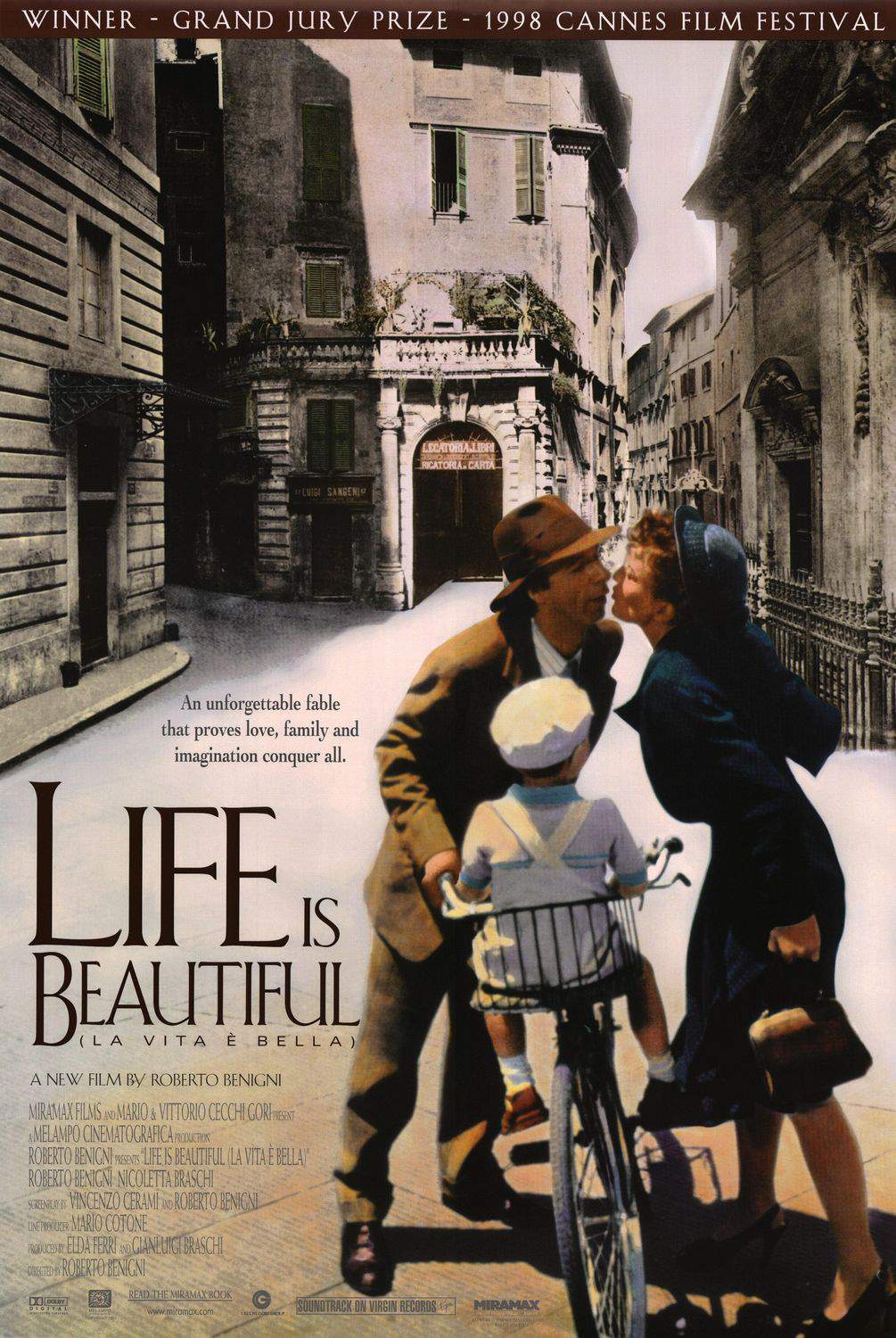
Life Is Beautiful (1998) movie poster

Plot Summary

Life Is Beautiful (1998) Plot Summary Explained

Release, runtime and language
1998 · 116 min · Korean
JustWatch #2,222 105
Starring
Nicoletta Braschi, Roberto Benigni

During World War II, a Jewish Italian book seller and his young son are deported to a concentration camp. To shield his son from the horrors around them, the father uses humor, imagination, and elaborate games to create a world of fantasy and protect his innocence. Despite the terrible circumstances, he strives to maintain hope and create lasting memories for his child.

On this page (6)
  1. 1 Where to watch
  2. 2 What happens: full plot
  3. 3 Plot questions answered
  4. 4 Movie threads
  5. 5 Movies like Life Is Beautiful
  6. 6 Every angle

Where to watch

Where to Watch Life Is Beautiful (1998)

Where can you watch Life Is Beautiful? Stream, rent or buy it in the US, including on fuboTV, MGM Plus and Paramount Plus Essential: current JustWatch availability with up-to-date prices.

Streaming availability powered by JustWatch

Full plot summary · contains spoilers

What Happens in Life Is Beautiful: Full Plot Summary

The whole story of Life Is Beautiful (1998) explained, from the opening scene to the final frame: every key event, every twist and what it all adds up to. Read it as a quick recap before the sequel, to check a scene you missed, or to finally understand what really happened.

In the pre-war days of Fascist Italy, a whimsical young man named Guido Orefice arrived in the stunning town of Arezzo, Tuscany. Here, his uncle Eliseo managed a hotel restaurant. Guido, with his lively personality and sharp wit, quickly won the hearts of the townsfolk, particularly Dora, a beautiful Gentile woman who would soon become the love of his life. Their initial meeting in the city, where Dora worked as a teacher, was complicated by her impending engagement to Rodolfo, a pompous local official who had a contentious rivalry with Guido. Determined to capture Dora's affection, Guido devised a series of clever mishaps to draw her attention.

Recognizing Guido's heartfelt attempts, Dora eventually succumbed to his charm, despite her hesitation. The couple made a dramatic exit, eloping on horseback from Rodolfo's engagement party and leaving their shocked guests behind. They soon built a life together, opening a quaint bookstore and welcoming their son, Giosuè.

The turmoil of World War II soon engulfed Italy, and in 1944, Guido, Eliseo, and young Giosuè found themselves captured by Nazi forces. Along with many other Jews, they were crammed onto a train headed for a concentration camp. Demonstrating unwavering love, Dora chose to join them on the train, desperate to remain with Guido and their son.

Once at the camp, chaos unfolded as men and women were forcefully separated. In this disarray, Guido and Dora lost sight of one another. Nevertheless, Guido showcased incredible ingenuity and determination, sending covert messages of hope to Dora through the camp's loudspeakers, utilizing cryptic yet heartfelt words. Tragically, Eliseo became a victim of the camp's brutality, dying in a gas chamber shortly after their arrival. Meanwhile, Giosuè narrowly escaped a grim fate by resisting the false assurance of the camp's routines, which many children mistakenly believed were mere showers.

Within the bleak confines of camp life, Guido, with astounding creativity, shielded his son from the harsh reality surrounding them. He spun an elaborate tale where they were players in a game, emphasizing that tasks would earn them points. The ultimate reward would be a toy tank for the first to reach one thousand points. Guido explained that showing distress, like crying or complaining, would lead to point deductions, while clever children who hid from the guards would accrue extra points. Initially hesitant, Giosuè gradually warmed to his father’s inventive approach.

When German officers and their families visited, Guido seized the opportunity to illustrate the game concept, further embedding the narrative that children needed to hide. Utilizing a German nanny's mistaken belief that Giosuè was one of her charges, he ensured that his son was fed while keeping up appearances. They narrowly avoided capture when Giosuè accidentally said "grazie" in Italian, prompting Guido to quickly teach the German children to say "thank you" in Italian, further developing their ruse.

Through numerous close calls, Guido maintained the illusion of safety and play until the camp's eventual closure coincided with the advance of Allied forces. He instructed Giosuè to stay hidden in a box for their final task before winning the prized tank. Meanwhile, Guido set out to locate Dora but was caught by a German soldier. Ordered for execution, Guido continued his facade as the game's master.

As he walked towards what would be his end, Guido locked eyes with Giosuè one last time, flashing a knowing wink, staying immersed in their invented world. His journey ended tragically, as he met a German soldier’s bullet.

The next morning ushered in liberation as Giosuè emerged from his hiding place, mistakenly believing he had triumphed in a game. With joy in his heart, he celebrated what he thought was his prize – a ride on a tank, made possible by a benevolent American soldier.

As Giosuè embarked on a journey towards safety, fate would weave a heartfelt reunion between him and Dora, his mother. Bursting with excitement over claiming his tank as a treasured reward, he regaled her with stories of his adventure, his eyes sparkling with pride. Meanwhile, the mature Giosuè reflected on his father's profound sacrifices, parsing his memories with a sense of nostalgia. His introspective journey served as a powerful testament to the resilience of love and determination in the face of darkness, illustrating that our cherished memories can guide us like a beacon of hope through the toughest times.
Last updated: November 22, 2024 at 11:57

Was this helpful?

Plot questions answered

Life Is Beautiful Plot Explained: Your Questions Answered

The questions people ask most about Life Is Beautiful (1998): what happens in the confusing scenes, why the characters do what they do, the twists, hidden details and what the ending means. Each answer contains spoilers.

Q1

Why did Dora choose to go to the concentration camp with Guido and Giosuè?

Dora voluntarily boarded the train to the concentration camp because she refused to be separated from her husband and son. Although she was a Gentile and could have stayed safely in Italy, her love for Guido and their son was stronger than her will to live. She told the German officer that she wanted to be with her family, demonstrating that her commitment to them transcended any concern for her own safety.

Foreshadowing: Earlier in the film, Dora abandons her engagement to Rodolfo to elope with Guido on horseback, showing her pattern of choosing love over societal expectations.

  • dora
  • concentration camp
  • love
  • sacrifice
  • family
Q2

What happened to Guido's uncle Eliseo at the concentration camp?

Eliseo, Guido's uncle, was killed in a gas chamber shortly after arriving at the concentration camp. His death occurs early in their time at the camp and serves as a brutal reminder of the fate that awaits many prisoners, especially the elderly. Guido then faces the additional challenge of protecting his young son while dealing with the loss of his uncle.

Foreshadowing: Eliseo appears as a kind figure who runs the hotel restaurant in Arezzo, providing warmth and family connection before the war.

  • eliseo
  • uncle
  • gas chamber
  • death
  • camp
Q3

How did Guido explain the concentration camp to his son without revealing the truth?

Guido created an elaborate game where the camp was actually a complex puzzle the family was playing. He told Giosuè that completing tasks and following rules would earn them points, with the grand prize being a toy tank for whoever reached one thousand points first. He explained that crying, complaining, or showing fear would result in point deductions, while hiding from guards would earn extra points. This fictional narrative transformed the horrific reality into something a child could psychologically survive.

Foreshadowing: Guido's character was established early as a whimsical, imaginative man who used humor and cleverness to navigate life, suggesting he would find creative solutions even in the darkest circumstances.
  • game
  • points
  • tank
  • deception
  • protecting son
  • camp reality
Q4

Why did Guido risk his life trying to find Dora at the end of the movie?

Guido risked capture and death by searching for Dora in the women's section because his love for her demanded one final act of devotion. Even as American tanks approached and the camp was in chaos, Guido could not leave without knowing she was safe. His final mission was an act of love that ultimately cost him his life when he was caught by a German soldier.

Foreshadowing: Throughout the film, Guido repeatedly demonstrates that his love for Dora is his primary motivation, from winning her heart with clever tricks to eloping with her to sending messages through the camp loudspeakers.

  • dora
  • love
  • sacrifice
  • final mission
  • death
Q5

How did Giosuè survive the concentration camp when other children were killed?

Giosuè survived because Guido's elaborate game encouraged him to hide from guards and remain silent, which kept him out of harm's way during selections. Additionally, Guido used a German nanny's mistaken belief that Giosuè was one of her charges to ensure his son received food. When Giosuè accidentally spoke Italian in front of Germans, Guido quickly taught the German children to say thank you in Italian, saving his son from discovery. The game mechanics directly aligned with survival tactics.

Foreshadowing: Guido's rules explicitly stated that children who hid from guards would earn extra points, which coincidentally protected him from the camp's deadliest dangers.

  • giosuè
  • survival
  • children
  • hiding
  • guards
  • game
Q6

What was the significance of Guido's wink as he was being executed?

The wink was Guido's final act of love and reassurance to his son. As he walked toward his death, he locked eyes with Giosuè, who was hiding in a box, and winked to signal that everything would be okay. This moment reinforced that Guido remained committed to the game until the very end, allowing his son to believe until the last moment that their adventure was real. It was a powerful message that his love transcended even death.

Foreshadowing: Guido had been winking at Giosuè throughout the film as a sign of their secret connection and the game they were playing together.

  • guido
  • wink
  • death
  • final moment
  • game
  • love
Q7

How did Giosuè end up riding in an American tank after the camp was liberated?

When American forces liberated the concentration camp, a kind American soldier found Giosuè hiding in the box. The soldier, understanding the boy's innocence and perhaps learning of his father's sacrifice, arranged for Giosuè to ride on an American tank as it departed. This moment appears to fulfill the prize Guido had promised in their game, creating a bittersweet conclusion where the son receives his reward but through tragic circumstances.

Foreshadowing: Guido had promised Giosuè that the first to reach one thousand points would win a real tank, making this moment the culmination of the game.

  • american tank
  • liberation
  • giosuè
  • reward
  • ending
Q8

How did Guido communicate with Dora through the camp loudspeakers?

Guido used his position as a worker in the camp to access the camp's loudspeaker system. He broadcasted coded messages that appeared to be routine announcements but were actually romantic messages directed at Dora. These messages served as a lifeline to maintain hope and let Dora know her husband was alive and thinking of her. This act of defiance and love required significant courage, as any deviation from official announcements could result in punishment or death.

Foreshadowing: Guido's quick wit and ability to manipulate situations were established early in the film, showing his talent for improvising solutions.

  • loudspeaker
  • dora
  • messages
  • love
  • communication
  • camp
Q9

Why did Guido choose a tank as the prize for the game?

Guido chose a tank as the prize because it represented the ultimate victory and freedom. At the time, tanks were symbols of military power and victory, and knowing that Allied forces were advancing, Guido used this as motivation for Giosuè to endure the hardship. The tank also represented escape - the idea that completing the game would mean leaving the camp and returning to a normal life. This carefully chosen prize gave Giosuè something tangible to work toward during their darkest days.

Foreshadowing: The timeline notes that Allied forces were advancing, making the concept of tanks and liberation relevant to the story's timeframe.

  • tank
  • prize
  • game
  • victory
  • freedom
  • points
Q10

Why did Giosuè have to hide in a box at the end?

Guido instructed Giosuè to hide in a metal box as part of the final task of their game. This was meant to keep the boy safe during the camp's chaotic final hours when guards were rounding up remaining prisoners. The task required Giosuè to remain completely silent and hidden until the game was over - which coincided with the liberation of the camp. This act of hiding literally saved Giosuè's life during the most dangerous moments before the Allied forces arrived.

Foreshadowing: Earlier in the game, Guido had emphasized that hiding from guards was essential and earned extra points, making this final hiding task consistent with the game's rules.

  • giosuè
  • box
  • hiding
  • final task
  • safety
  • liberation
Q11

Why didn't Guido tell Dora about the game he was playing with Giosuè?

Guido kept the game secret from Dora to maintain its effectiveness as a psychological shield for Giosuè. If Dora had known about the game, she might have accidentally revealed the truth through her reactions to the horrors surrounding them. Additionally, Dora was separated from the men and had no way to participate in the game even if she wanted to. Keeping the game between father and son allowed Guido to control the narrative completely and protect his son's innocence without any interference.

Foreshadowing: The camp's chaotic arrival separated men and women immediately, preventing any unified family strategy for survival.

  • dora
  • game
  • secret
  • protection
  • giosuè
  • father son

Movie threads

More Movies Like Life Is Beautiful, by Mood & Story

Curated lists built around what makes Life Is Beautiful tick: the same mood, the same kind of story or the same emotional payoff. Each list explains why these movies belong together.

Movies about hope in darkness like Life Is Beautiful

Stories where optimism and imagination triumph over unimaginable hardship. If you loved how Life Is Beautiful used love and imagination to combat despair, you'll find similar emotional journeys here. These movies, like Life Is Beautiful, show characters finding light in the bleakest situations, offering stories of resilience and hope.

  • hopeful
  • heartbreaking
  • uplifting
  • tender
  • anxious
  • resilient
  • Tone: bittersweet, hopeful
  • Pacing: steady, character-driven
Why these movies?

The story pattern: Narratives in this thread typically center on characters trapped in oppressive circumstances—whether war, imprisonment, or personal tragedy. The central conflict is not just survival, but the preservation of the human spirit. Characters often use creativity, love, or humor as a shield, crafting a private world of meaning to endure a harsh reality.

Why they belong together: Movies are grouped here because they share a unique and powerful emotional mix: they are deeply moving and often sad, yet ultimately defined by a persistent, life-affirming hope. The tone is consistently bittersweet, weaving moments of warmth and light into a fabric of heavy drama.

Movies about parental sacrifice like Life Is Beautiful

Powerful stories about parents going to extreme lengths to protect their children. For viewers moved by the father's love in Life Is Beautiful, this list features similar stories of profound parental sacrifice. These movies explore the lengths a parent will go to shield their child from harm, often set against high-stakes backdrops.

  • heartbreaking
  • tender
  • anxious
  • emotional
  • intense
  • family
  • Tone: heartbreaking, tender
  • Pacing: steady, dramatic
Why these movies?

The story pattern: The narrative pattern follows a parent whose primary drive becomes the safety and well-being of their child, often at the expense of their own safety, comfort, or life. The plot is propelled by escalating threats, forcing the parent to make increasingly difficult choices. The emotional journey culminates in a poignant, often bittersweet resolution that underscores the cost and power of their love.

Why they belong together: These films are connected by their central theme of selfless parental love and the heavy emotional weight of the sacrifices made. They share a steady, character-driven pacing that allows the audience to deeply connect with the parent's perspective, creating a tense and ultimately heartbreaking yet tender experience.

If you liked this

Movies Like Life Is Beautiful

Similar movies to Life Is Beautiful: the same genre, themes or kind of story. Each one comes with its own plot summary, timeline and ending explained.

Browse all movie summaries

Every angle

Life Is Beautiful (1998) Explained: Plot, Timeline & Characters

Everything about Life Is Beautiful in one place: what happens in the plot summary, the timeline in chronological order, the characters and meaning and a spoiler-free summary. What's After the Movie adds the cast, box office and post-credit scenes.

Coming soon on iOS and Android

The Plot Explained Movie Summary App

Plot summaries, endings explained and timelines on your phone. Catch up on any movie in minutes, save your favorites and never miss a twist again.

Be the first to know when we launch. Your email stays private, always.

Learn more about the app