Plot Explained Spoilers guaranteed!
Plot Explained

Browse by genre

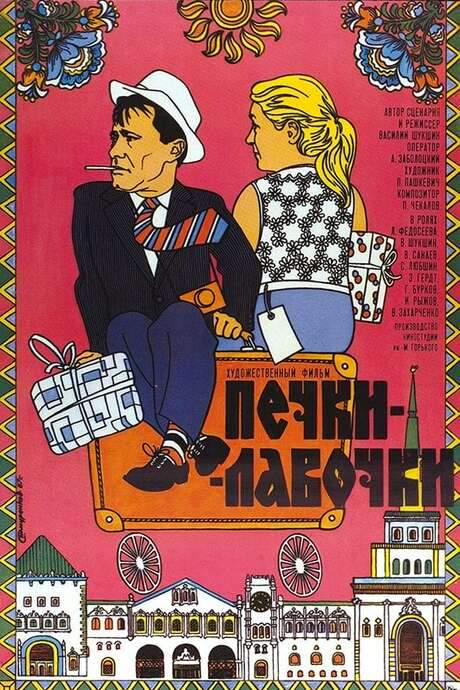
The Train Goes East (1948) movie poster

Plot Summary

The Train Goes East (1948) Plot Summary Explained

Release, runtime and language
1948 · 87 mins · Russian
Loading streaming availability…
Directed by
Yuli Raizman
Starring
Aleksei Alekseyev, Lyubov Sokolova, Ivan Ryzhov, Aleksandra Denisova, Muza Krepkogorskaya, Pyotr Glebov

On May 9 1945, as Moscow celebrates Victory Day, agronomist Zina Sokolova meets naval officer Lavrentyev in a compartment of the Moscow‑Vladivostok train. He takes her lively, direct nature for frivolity, and she replies with sarcasm. Traveling together, they encounter fellow passengers and glimpse the lives of post‑war Soviet citizens across the country.

On this page (6)
  1. 1 Where to watch
  2. 2 What happens: full plot
  3. 3 Plot questions answered
  4. 4 Movie threads
  5. 5 Movies like The Train Goes East
  6. 6 Every angle
Loading streaming availability…

Full plot summary · contains spoilers

What Happens in The Train Goes East: Full Plot Summary

The whole story of The Train Goes East (1948) explained, from the opening scene to the final frame: every key event, every twist and what it all adds up to. Read it as a quick recap before the sequel, to check a scene you missed, or to finally understand what really happened.

On the evening of May 9, 1945, as thousands celebrated Victory Day in the streets and squares of Moscow, a train pulled out from the Northern Station bound for Vladivostok. Among the passengers were Zina Sokolova, a young horticulturist from Moscow who had recently graduated from the Timiryazev Agricultural Academy, and Lavrentyev, a naval officer from Leningrad. They had met briefly earlier at the telegraph window in the station, and his first impression of her lively, spontaneous demeanor bordered on frivolity.

Their first meeting at the telegraph window had left him with that impression, but a growing rapport soon began to replace it as the journey unfolded. When they miss their train at a stop, fate intervenes, and they are forced to press onward together along an unplanned path.

They encounter a cross-section of life across the vast Soviet Union, catching glimpses of ordinary work, daily routines, and the quiet resilience that threads through different communities. The experience gradually turns from a simple coincidence of travel into a tentative companionship, as both travelers taste through observation and conversation the shared texture of the country they are traversing.

Their unplanned route takes them to a colossal factory built into the taiga, a striking emblem of Soviet industry. From there, they board a factory plane to push farther eastward. An emergency landing disrupts the flight, and they press on through the forest in a horse-drawn cart, followed by a night at a machine-tractor station at a collective farm—a rustic stop that adds depth to their journey—before they eventually make it back to the railway.

As Vladivostok draws near, the growing bond between Zina and Lavrentyev becomes undeniable: they have fallen in love. They share a heartfelt confession just before reaching their destination, and then part at the station with the quiet understanding that this separation will not last long.

Last updated: February 24, 2026 at 09:50

Was this helpful?

Plot questions answered

The Train Goes East Plot Explained: Your Questions Answered

The questions people ask most about The Train Goes East (1948): what happens in the confusing scenes, why the characters do what they do, the twists, hidden details and what the ending means. Each answer contains spoilers.

Q1

Why does Lavrentyev think Zina is frivolous at the telegraph window?

Lavrentyev misjudges Zina because her lively, spontaneous demeanor at the telegraph window reads to him as lighthearted or carefree. He interprets her energetic manner as a sign of frivolous character, not recognizing the intelligence and depth behind her spirited communication style.

Foreshadowing: Their first impression sets up the central tension of the film: as they travel together, Lavrentyev must revise his initial judgment.

  • Lavrentyev
  • Zina
  • first impression
  • telegraph window
  • misunderstanding
Q2

How do Zina and Lavrentyev end up continuing their journey together?

They miss their scheduled train at a stop along the route. This forced setback forces them to improvise and continue eastward together, transforming an accidental encounter into an unplanned partnership that becomes the foundation for their growing connection.

Foreshadowing: The missed train is the pivotal event that allows their relationship to develop beyond a brief meeting.

  • missed train
  • journey together
  • forced partnership
  • coincidence
Q3

What causes Zina and Lavrentyev's relationship to develop during the journey?

Their relationship evolves through shared experiences and forced cooperation. The missed train, travel delays, and improvisational travel create opportunities for them to reveal their true characters to each other, replacing his initial misjudgment with genuine understanding and mutual respect.

Foreshadowing: Each setback becomes a chance for deeper connection rather than a reason to separate.

  • relationship development
  • growing bond
  • shared experiences
  • character revelation
Q4

What is the significance of the taiga factory they visit?

The massive factory built into the taiga represents Soviet industrial scale and ambition. For Zina and Lavrentyev, it serves as a symbolic waypoint that broadens their horizons and provides a striking visual of post-war Soviet industry, contrasting with the personal intimacy forming between them.

Foreshadowing: The industrial landscape foreshadows their continued eastward movement toward a new life.

  • taiga factory
  • Soviet industry
  • industrial scale
  • travel waypoint
Q5

Why does the plane make an emergency landing in the forest?

The plane, produced by the factory they visited, experiences an emergency that forces an unscheduled landing in the taiga forest. This disruption forces them to continue their journey by horse-drawn cart, turning the crisis into an intimate adventure that deepens their bond.

Foreshadowing: The emergency landing shifts them from mechanized travel to more personal, slow movement through nature.

  • emergency landing
  • plane
  • taiga forest
  • flight disruption
Q6

How does traveling by horse-drawn cart through the forest affect their relationship?

The quiet forest journey in a horse-drawn cart provides intimate space for conversation and cooperation. The stark contrast between the earlier bustle of trains and the tranquil woods allows their connection to deepen as they share tasks and stories, strengthening their companionship.

Foreshadowing: The peaceful forest pace marks a turning point where their bond becomes undeniable.

  • horse cart
  • forest journey
  • intimate conversation
  • deepening bond
Q7

What happens when they stay at the collective farm machine-tractor station?

At the collective farm's machine-tractor station, they spend a night sharing meals and conversations with workers who welcome them warmly. The kindness they receive anchors their companionship and reveals the warmth of rural Soviet life, softening tensions and building trust between them.

Foreshadowing: The hospitality at the farm represents the human warmth underlying their journey.

  • collective farm
  • machine-tractor station
  • MTS
  • hospitality
  • rural life
Q8

Why do Zina and Lavrentyev confess their love just before reaching Vladivostok?

They confess their love in the final stretch of the journey because the road itself has become a catalyst for affection. Facing imminent separation at their destination, they acknowledge that the bond formed through shared adventure has grown into genuine love that transcends their original plans.

Foreshadowing: The approaching destination creates urgency for emotional honesty.

  • love confession
  • Vladivostok
  • final stretch
  • emotional honesty
  • urgency
Q9

What does their parting at Vladivostok station imply about their future?

Their parting carries quiet certainty that this separation is temporary. They leave with the shared understanding that their connection will continue beyond Vladivostok, suggesting their story has only begun and they will find each other again.

Foreshadowing: The hopeful parting reinforces the film's overall tone of optimistic new beginnings.

  • Vladivostok station
  • parting
  • separation
  • future together
  • new beginning

Movie threads

More Movies Like The Train Goes East, by Mood & Story

Curated lists built around what makes The Train Goes East tick: the same mood, the same kind of story or the same emotional payoff. Each list explains why these movies belong together.

Railway Romance Movies like The Train Goes East

Where love blossoms along the railway tracks, connecting cities and characters. Find more films that capture the unique charm of love stories set on trains, featuring scenic backdrops and steady pacing. If you enjoyed the romantic journey in The Train Goes East, you'll love these similar travel-centered tales.

  • wholesome
  • romantic
  • travel
  • nostalgic
  • lively
  • adventure
  • Tone: hopeful, romantic, nostalgic
  • Pacing: steady, travel-paced
Why these movies?

The story pattern: These stories leverage the linear progression of a train route to mirror the development of a relationship. Characters are brought together in a confined, moving space, leading to shared experiences, conversations, and a gradual, heartfelt connection.

Why they belong together: Movies are grouped here because they share the specific setting and narrative device of a train journey as a catalyst for romance, creating a steady, contained, and nostalgic atmosphere.

Movies about Post-War Optimism like The Train Goes East

Stories of love and life rediscovered in the optimistic aftermath of war. Discover other films that explore hopeful beginnings and romantic connections in the aftermath of war. If you liked the optimistic spirit of The Train Goes East, these movies capture a similar mood of rebuilding and new love.

  • hopeful
  • nostalgic
  • wholesome
  • romantic
  • lively
  • post-war
  • Tone: hopeful, romantic, nostalgic
  • Pacing: steady, character-driven
Why these movies?

The story pattern: The narrative follows characters as they navigate a world transitioning from conflict to peace. The central plot often involves rediscovering normalcy, forming new bonds, and looking toward the future with a sense of hope and possibility.

Why they belong together: These films are connected by their shared historical setting and a core theme of hopeful renewal. They replace the heaviness of war with a light, romantic, and forward-looking focus.

If you liked this

Movies Like The Train Goes East

Similar movies to The Train Goes East: the same genre, themes or kind of story. Each one comes with its own plot summary, timeline and ending explained.

Browse all movie summaries

Every angle

The Train Goes East (1948) Explained: Plot, Timeline & Characters

Everything about The Train Goes East in one place: what happens in the plot summary, the timeline in chronological order, the characters and meaning and a spoiler-free summary. What's After the Movie adds the cast, box office and post-credit scenes.

Coming soon on iOS and Android

The Plot Explained Movie Summary App

Plot summaries, endings explained and timelines on your phone. Catch up on any movie in minutes, save your favorites and never miss a twist again.

Be the first to know when we launch. Your email stays private, always.

Learn more about the app