





Plot Explained Spoilers guaranteed!
Plot Explained

Browse by genre

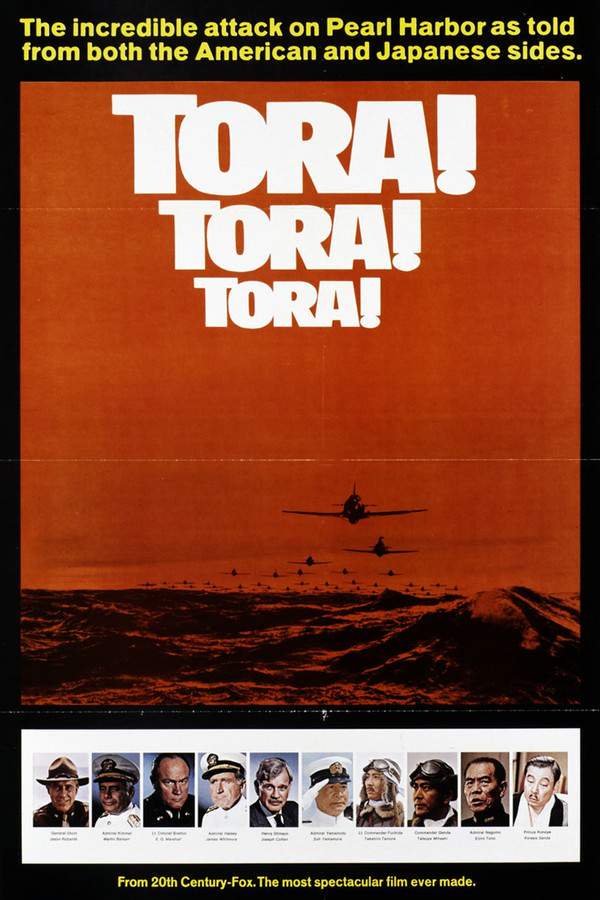
Tora! Tora! Tora! (1970) movie poster

Timeline

Tora! Tora! Tora! (1970) Timeline Explained – Every Event in Order

Release, runtime and language
1970 · 144 min · English
Directed by
Richard Fleischer, Kinji Fukasaku, Toshio Masuda
Starring
Joseph Cotten, Martin Balsam, Jason Robards, Tatsuya Mihashi, Eijirô Tôno, Sô Yamamura

As tensions rise between the United States and Japan, a pivotal moment approaches: the attack on Pearl Harbor. Diplomatic relations deteriorate due to an American embargo on vital resources, leading Air Staff Officer Minoru Genda to devise a surprise aerial assault. Despite intercepted Japanese communications hinting at a potential conflict, American intelligence dismisses the possibility of an attack on US soil. This misjudgment tragically sets the stage for a devastating surprise, forever changing the course of history.

On this page (6)
  1. 1 Where to watch
  2. 2 Events in order (15)
  3. 3 Timeline questions answered
  4. 4 Movie threads
  5. 5 Movies like Tora! Tora! Tora!
  6. 6 Every angle

Where to watch

Where to Watch Tora! Tora! Tora! (1970)

Where can you watch Tora! Tora! Tora!? Stream, rent or buy it in the US, including on Amazon Video, Apple TV Store and Fandango At Home: current JustWatch availability with up-to-date prices.

Streaming availability powered by JustWatch

15 events in order · contains spoilers

Tora! Tora! Tora! Timeline: Events in Chronological Order

Every key event of Tora! Tora! Tora! (1970) in order, scene by scene, with when and where it takes place. Use it to untangle flashbacks, time jumps and parallel storylines, to refresh your memory before the sequel or to find the exact scene you are thinking of.

  1. Change of Command at Nagato

    In Tokyo, aboard the battleship Nagato, a significant change-of-command ceremony takes place. Admiral Isoroku Yamamoto assumes his new role as Commander-in-Chief of the Combined Fleet, taking over from Fleet Admiral Zengo Yoshida amidst the backdrop of World War II.

    When
    1941
    Where
    Tokyo, Japan
  2. Discussion of Trade Embargo

    During a tense conversation between Yamamoto and Yoshida, they discuss the critical implications of America's trade embargo. This embargo restricts Japan's access to vital resources like oil and exacerbates the struggles arising from Japan's ongoing conflict in China.

    Where
    Nagato, Japan
  3. Consensus for Conflict

    A meeting convened by Prime Minister Fumimaro Konoye leads to a consensus among top officials, including Foreign Minister Yosuke Matsuoka and War Minister General Hideki Tojo. They decide that Japan must prepare for an attack on the United States, despite the catastrophic potential of such a conflict.

    Where
    Japan
  4. Signing the Tripartite Pact

    In a bid to strengthen military alliances, Japan signs the Tripartite Pact with Nazi Germany and Fascist Italy. This alliance alarms Yamamoto, who begins to consider a surprise attack as the best strategy to survive against an increasingly powerful American force.

    Where
    Japan
  5. Planning the Pearl Harbor Strike

    Japanese military commands convene to discuss the feasibility of attacking Pearl Harbor. They innovate solutions, such as modifying aerial torpedoes, to bypass American defenses as they prepare for a decisive strike on the U.S. Navy.

    Where
    Japan
  6. American Intelligence Breakthrough

    The U.S. intelligence community experiences a breakthrough by deciphering the Japanese Purple Code, allowing them to intercept and understand critical Japanese communications. Unfortunately, despite this success, their response remains slow and unprepared for the inevitable attack.

    Where
    United States
  7. Attempts to Fortify Pearl Harbor

    As the date of the attack nears, Admiral Husband Kimmel and General Walter C. Short make desperate attempts to bolster Pearl Harbor's defenses. However, communication lapses and intelligence failures hinder their effectiveness, leaving the base vulnerable.

    Where
    Pearl Harbor, Hawaii
  8. Coded Messages and Urgent Warnings

    On December 7, 1941, while decision-makers in Washington are engaged in leisurely pursuits, American intelligence scrambles to decode incoming messages. Unfortunately, urgent warnings of the impending attack are overlooked, leading to a lack of preparedness.

    When
    December 7, 1941
    Where
    Washington, D.C.
  9. USS Ward's Discovery

    Just before the attack commences, the American destroyer USS Ward reveals a Japanese midget submarine attempting to breach Pearl Harbor. The submarine is sunk, but instead of triggering an alert, the incident meets bureaucratic indifference, leading to complacency.

    Where
    Pearl Harbor, Hawaii
  10. The Attack Begins

    As the Japanese fleet approaches, a series of miscommunications leads to a critical delay in American defenses. The attack starts with utter devastation as Japanese forces catch U.S. defenders completely off guard, with fighter planes destroyed on the ground and personnel unprepared.

    Where
    Pearl Harbor, Hawaii
  11. The Code 'Tora, Tora, Tora'

    As the chaos unfolds during the attack on Pearl Harbor, the code 'Tora, Tora, Tora' is communicated among Japanese forces. This signals their complete surprise, leading to a rapid and overwhelming assault on American military installations.

    Where
    Pearl Harbor, Hawaii
  12. Acts of Heroism

    Amidst the turmoil, sailor Doris Miller performs an act of bravery by operating a machine gun despite the limitations placed on him due to racism. Additionally, pilots Ken Taylor and George Welch manage to take off and engage enemy planes, showcasing valiant efforts against overwhelming opposition.

    Where
    Pearl Harbor, Hawaii
  13. Destruction of USS Arizona

    A bomb lands on the USS Arizona, resulting in a catastrophic explosion that complicates rescue and recovery operations. The destruction highlights the severity of the attack and the heavy toll it takes on the U.S. fleet.

    Where
    Pearl Harbor, Hawaii
  14. No Third Wave of Attack

    In a critical decision, Japanese commanders choose not to launch a third wave of attacks, despite their earlier successes. This decision prevents them from fully crippling the American military, which could ensure Japan's long-term advantage.

    Where
    Japan
  15. Reactions in Washington

    Following the attack, U.S. leaders, including Secretary of State Cordell Hull, grapple with the shocking realization of the attack's enormity. As the Japanese ambassador arrives with an ultimatum, tensions rise, cementing the path towards open conflict.

    Where
    Washington, D.C.

Last updated: October 27, 2024 at 23:24

Was this helpful?

Timeline questions answered

Tora! Tora! Tora! Timeline Explained: Your Questions Answered

When does it happen, and why in that order? The questions people ask about the chronology of Tora! Tora! Tora! (1970): time jumps, flashbacks, cause and effect between scenes and the correct order of events, each answered with spoilers.

Q1

Why did Japan decide to attack the United States despite knowing the risks?

Japan decided to attack because the U.S. trade embargo cut off essential resources like oil, threatening Japan's war effort in China. Prime Minister Konoye convened a meeting where key officials, including War Minister Tojo, concluded that a preemptive strike was necessary for Japan's survival. Admiral Yamamoto supported the attack believing it was the only way to neutralize the American fleet before a longer conflict.

Foreshadowing: The trade embargo's devastating impact was discussed early between Yamamoto and Yoshida aboard the Nagato.

  • japan attack
  • pearl harbor
  • trade embargo
  • oil
  • konoye
  • tojo
  • military
Q2

Why did Admiral Yamamoto support the Pearl Harbor attack?

Despite believing war with the U.S. would be disastrous for Japan, Yamamoto supported the attack because he saw it as Japan's only chance to survive. He calculated that a surprise strike could destroy the American Pacific fleet quickly, buying Japan time to secure resources before America's superior industrial capacity could be fully mobilized.

Foreshadowing: Yamamoto's belief that a preemptive strike was Japan's only option was established early in the film.

  • yamamoto
  • commander
  • combined fleet
  • japan navy
  • survival
  • preemptive strike
Q3

How did the US have intelligence about the attack but still fail to prevent it?

The U.S. had broken the Japanese Purple Code and could intercept communications, but bureaucratic delays and slow decision-making prevented timely action. On December 7th, urgent warnings went unheeded while Washington officials were engaged in leisure activities. Despite the intelligence breakthrough, the system failed to connect the dots and alert Pearl Harbor in time.

Foreshadowing: The Purple Code was established as a breakthrough earlier in the timeline.

  • purple code
  • intelligence
  • washington
  • warnings
  • decoded messages
  • failure
Q4

Why didn't Japan launch a third wave of attacks on Pearl Harbor?

Japanese commanders chose not to launch a third wave despite their initial success, believing the element of surprise was lost and concerned about running out of daylight and fuel. This critical decision allowed the U.S. to recover more quickly than if the oil depots and shipyards had been destroyed.

Foreshadowing: The Japanese had achieved devastating success in the first two waves.

  • third wave
  • japanese commanders
  • oil depots
  • shipyards
  • military decision
Q5

What did "Tora, Tora, Tora" mean during the Pearl Harbor attack?

"Tora, Tora, Tora" was the code phrase Japanese aviators used to signal that they had achieved complete surprise over the American defenses. It was radioed from the lead aircraft to confirm the attack was proceeding without detection.

Foreshadowing: The attack succeeded because of complete surprise.

  • tora
  • code phrase
  • japanese
  • surprise
  • aviation
  • signal
Q6

What happened after the USS Ward sank a Japanese submarine before the attack?

The USS Ward sank a Japanese midget submarine attempting to infiltrate Pearl Harbor just before the main attack began. However, instead of triggering an immediate alert, the incident was met with bureaucratic indifference and failed to raise the base's defensive posture.

Foreshadowing: The Ward's discovery was one of several missed warnings.

  • uss ward
  • submarine
  • pearl harbor
  • warning
  • alert
  • midget submarine
Q7

What happened to the USS Arizona during the attack?

A Japanese bomb struck the USS Arizona, detonating its forward ammunition magazine in a catastrophic explosion that destroyed the battleship instantly. The blast killed over 1,100 sailors, making it the deadliest single loss from the attack.

Foreshadowing: The Arizona was anchored in a vulnerable position.

  • uss arizona
  • battleship
  • explosion
  • casualties
  • pearl harbor
  • bomb
Q8

Who was Doris Miller and what did he do during the attack?

Doris Miller was an African-American sailor who manned a machine gun to defend Pearl Harbor despite facing racial discrimination that normally limited his duties. He had no formal training on the weapon but managed to shoot down at least one Japanese plane, becoming a celebrated hero of the attack.

Foreshadowing: The film highlighted the heroism possible even amid institutional failures.

  • doris miller
  • hero
  • sailor
  • machine gun
  • african american
  • bravery
Q9

What did Admiral Yamamoto mean by awakening a sleeping giant?

Yamamoto recognized that the attack, though initially successful, would ultimately unite and mobilize America for total war. His famous quote reflected his understanding that the devastating surprise would transform American resolve from isolationism into overwhelming military power, sealing Japan's ultimate defeat.

Foreshadowing: This warning came despite the immediate tactical victory achieved.

  • yamamoto
  • sleeping giant
  • quote
  • consequences
  • defeat
  • america
Q10

Why weren't American pilots able to respond during the attack?

The surprise was so complete that most American aircraft were parked wing-to-wing on the ground when Japanese planes arrived, making them easy targets. While pilots Ken Taylor and George Welch managed to take off and engage the enemy, destroying several Japanese planes, the majority of aircraft were destroyed before they could respond.

Foreshadowing: Intelligence failures left the base in a vulnerable state.

  • pilots
  • aircraft
  • ground
  • surprise
  • destroyed
  • ken taylor
  • george welch

Movie threads

More Movies Like Tora! Tora! Tora!, by Mood & Story

Curated lists built around what makes Tora! Tora! Tora! tick: the same mood, the same kind of story or the same emotional payoff. Each list explains why these movies belong together.

Methodical Historical Disaster Movies like Tora! Tora! Tora!

Stories that methodically reconstruct pivotal historical failures leading to catastrophe. Explore movies like Tora! Tora! Tora! that meticulously chronicle real historical disasters. These films share a steady, dramatic pacing and a focus on the diplomatic, strategic, and intelligence failures that lead to catastrophic events, offering a sobering look at pivotal moments in history.

  • historical
  • methodical
  • somber
  • foreboding
  • tense
  • dramatic
  • Tone: tense, somber, foreboding
  • Pacing: steady, methodical build
Why these movies?

The story pattern: Narratives in this thread typically unfold from multiple perspectives, often showing both sides of a conflict or crisis. They build tension not through surprise, but through the audience's awareness of the impending tragedy, watching as characters misread signals and make fatal errors. The structure is often linear, focusing on the cause-and-effect chain that leads to an inevitable, devastating conclusion.

Why they belong together: These movies are grouped together because they share a specific approach to historical drama: a methodical, detail-oriented pacing, a tense and somber tone, and a narrative focus on the 'how' and 'why' of a disaster rather than just the 'what'. They prioritize historical accuracy and strategic explanation over purely emotional manipulation.

Movies with a Sense of Inevitable Tragedy like Tora! Tora! Tora!

Films where a palpable sense of doom makes disaster feel unavoidable. Find films similar to Tora! Tora! Tora! that create a powerful feeling of impending doom. If you liked the tense, foreboding atmosphere and the tragic misjudgments that lead to catastrophe, you'll appreciate these stories of unavoidable disaster driven by fatal errors.

  • foreboding
  • grim
  • anxious
  • tense
  • somber
  • tragic
  • Tone: foreboding, anxious, grim
  • Pacing: steady, dread-filled build
Why these movies?

The story pattern: The narrative pattern here is defined by dramatic irony—the audience knows more than the characters. The plot hinges on critical mistakes, ignored warnings, or diplomatic breakdowns. The journey is one of mounting dread, as every missed opportunity to avert disaster tightens the tension, culminating in a climax that is both chaotic and, in a tragic sense, fulfilling the established foreboding.

Why they belong together: These films are united by their shared emotional core: a heavy, anxious mood built on the foundation of inevitable tragedy. They utilize a steady or slow-burn pacing to let the dread simmer and feature high emotional weight. The experience is less about whether disaster will strike and more about the heartbreaking process of watching it become unavoidable.

If you liked this

Movies Like Tora! Tora! Tora!

Similar movies to Tora! Tora! Tora!: the same genre, themes or kind of story. Each one comes with its own plot summary, timeline and ending explained.

Browse all movie summaries

Every angle

Tora! Tora! Tora! (1970) Explained: Plot, Timeline & Characters

Everything about Tora! Tora! Tora! in one place: what happens in the plot summary, the timeline in chronological order, the characters and meaning and a spoiler-free summary. What's After the Movie adds the cast, box office and post-credit scenes.

Coming soon on iOS and Android

The Plot Explained Movie Summary App

Plot summaries, endings explained and timelines on your phone. Catch up on any movie in minutes, save your favorites and never miss a twist again.

Be the first to know when we launch. Your email stays private, always.

Learn more about the app