Year: 1970
Runtime: 144 min
Language: English
Directors: Richard Fleischer, Kinji Fukasaku, Toshio Masuda
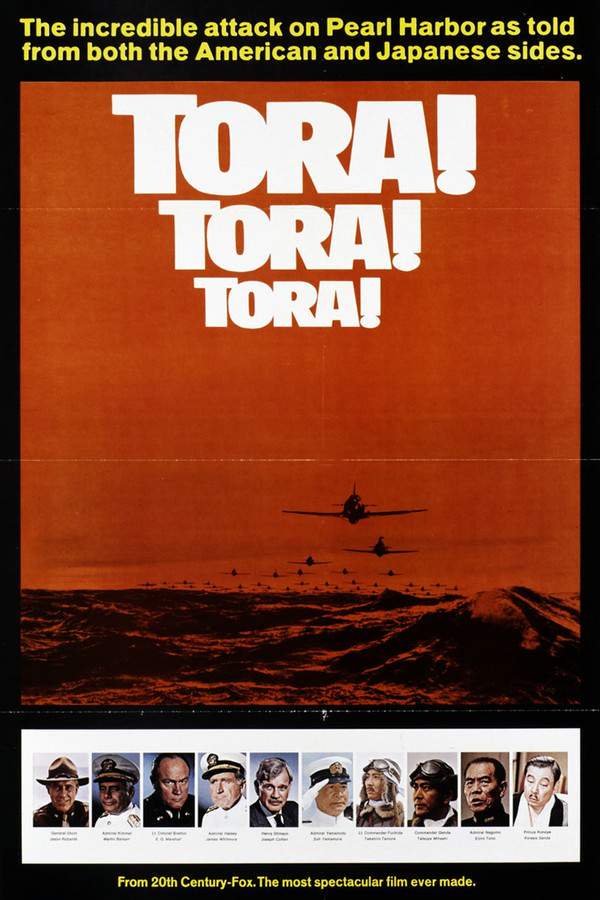
As tensions rise between the United States and Japan, a pivotal moment approaches: the attack on Pearl Harbor. Diplomatic relations deteriorate due to an American embargo on vital resources, leading Air Staff Officer Minoru Genda to devise a surprise aerial assault. Despite intercepted Japanese communications hinting at a potential conflict, American intelligence dismisses the possibility of an attack on US soil. This misjudgment tragically sets the stage for a devastating surprise, forever changing the course of history.
Warning: spoilers below!
Haven’t seen Tora! Tora! Tora! yet? This summary contains major spoilers. Bookmark the page, watch the movie, and come back for the full breakdown. If you're ready, scroll on and relive the story!
Read the complete plot breakdown of Tora! Tora! Tora! (1970), including all key story events, major twists, and the ending explained in detail. Discover what really happened—and what it all means.
Tokyo, 1941. Amid the chaos of World War II engulfing Europe, a significant change-of-command ceremony occurs aboard the Japanese battleship Nagato, which serves as the flagship for Admiral Isoroku Yamamoto](/actor/s-yamamura), the newly appointed Commander-in-Chief of the Combined Fleet. As he takes over from the outgoing Fleet Admiral Zengo Yoshida, a tense conversation unfolds between them in Yoshida’s cabin. They discuss the severe ramifications of America’s trade embargo that restricts Japan’s access to essential resources like oil, a situation worsened by Japan’s ongoing war in China since 1937. Despite their mutual understanding that a conflict with the United States would be disastrous, a meeting convened by Prime Minister Fumimaro Konoye ultimately leads to a consensus among key figures, including Foreign Minister Yosuke Matsuoka and the volatile War Minister General Hideki Tojo, to prepare for an attack on the U.S.
With tensions mounting, Yamamoto grows increasingly wary as Japan aligns itself with Nazi Germany and Fascist Italy by signing the Tripartite Pact. He believes that launching a surprise attack is the only way to ensure Japan’s survival against a potentially overwhelming American force. His fears are corroborated when he contemplates a bold preemptive strike aimed at annihilating the American Pacific fleet immediately to gain the upper hand in what could only be a short-lived yet fierce conflict.
In Japan, the military commands deliberate on the feasibility of striking Pearl Harbor. Recognizing its depth, they devise innovative solutions to bypass American defenses, such as modifying aerial torpedoes. Meanwhile, the Americans experience a crucial intelligence breakthrough by deciphering the Japanese Purple Code, allowing them to intercept and understand previously hidden communications. Unfortunately, their response is alarmingly slow, leaving them unprepared for the impending disaster.
As preparations are made, Admiral Husband Kimmel and General Walter C. Short make desperate attempts to fortify Pearl Harbor, but despite their diligence, lapses in intelligence reporting hinder effective defense. The situation becomes dire as Yamamoto, reflecting a portion of Japan’s military perspective, acknowledges the enormous challenges that lie ahead even if they succeed in destroying the U.S. fleet. Washington’s diplomatic tensions amplify as the clock ticks toward December 7.
On that fateful Sunday, December 7, 1941, while decision-makers in Washington indulge in leisurely activities, American intelligence scrambles to decipher the incoming coded messages. Urgent warnings go unheeded, and unanticipated movements by Japanese forces catch the U.S. Navy completely off guard. Just prior to the attack, a reconnaissance mission by the American destroyer USS Ward uncovers and sinks a Japanese midget submarine attempting to infiltrate Pearl Harbor. However, rather than spurring an immediate alert, it is met with bureaucratic apathy.
With the Japanese fleet nearing its target, a series of unfortunate misunderstandings lead to a delay in communication, giving Japanese aviators the element of surprise. As the attack commences, the sheer destruction unleashed decimates American aerial defenses, with critical aircraft destroyed on the ground while soldiers scramble to respond to what they initially perceive as a drill. The chaos unfolds as the Japanese commander’s voice echoes the fateful code “Tora, Tora, Tora,” signaling complete surprise.
Even amidst the devastation, there are tales of heroism, like that of Doris Miller, an African-American sailor who valiantly operates a machine gun despite the limitations imposed on him due to racial discrimination. Simultaneously, American pilots Ken Taylor and George Welch manage to take off and join the fray, shooting down several enemy planes against overwhelming odds.
As the carnage persists, a monumental blow is dealt to the U.S. fleet with a bomb landing on the USS Arizona, triggering a catastrophic explosion that further complicates rescue operations. In a twist of fate, the Japanese commanders, despite their success, make a critical decision not to execute a third wave of attacks that could have ensured America’s prolonged military disadvantage.
Back in Washington, the dawning realization of the magnitude of the attack leaves U.S. leaders, including Secretary of State Cordell Hull, in disbelief. As the Japanese ambassador arrives with an ultimatum, they are met with a cold reception, cementing the irrevocable shift toward open conflict.
Amidst the rubble and flames at Pearl Harbor, the U.S. aircraft carrier USS Enterprise arrives, witnessing the catastrophic impacts of the earlier assault. In Japan, Admiral Yamamoto reflects on the consequences of their actions, famously noting, > “I fear all we have done is to awaken a sleeping giant and fill him with a terrible resolve.”
As the closing credits roll, the devastation inflicted on the American fleet serves as a haunting reminder of the shocking unpreparedness faced by the nation on that historic day.
Last Updated: October 27, 2024 at 23:24
Discover curated groups of movies connected by mood, themes, and story style. Browse collections built around emotion, atmosphere, and narrative focus to easily find films that match what you feel like watching right now.
Stories that methodically reconstruct pivotal historical failures leading to catastrophe.Explore movies like Tora! Tora! Tora! that meticulously chronicle real historical disasters. These films share a steady, dramatic pacing and a focus on the diplomatic, strategic, and intelligence failures that lead to catastrophic events, offering a sobering look at pivotal moments in history.
Narratives in this thread typically unfold from multiple perspectives, often showing both sides of a conflict or crisis. They build tension not through surprise, but through the audience's awareness of the impending tragedy, watching as characters misread signals and make fatal errors. The structure is often linear, focusing on the cause-and-effect chain that leads to an inevitable, devastating conclusion.
These movies are grouped together because they share a specific approach to historical drama: a methodical, detail-oriented pacing, a tense and somber tone, and a narrative focus on the 'how' and 'why' of a disaster rather than just the 'what'. They prioritize historical accuracy and strategic explanation over purely emotional manipulation.
Films where a palpable sense of doom makes disaster feel unavoidable.Find films similar to Tora! Tora! Tora! that create a powerful feeling of impending doom. If you liked the tense, foreboding atmosphere and the tragic misjudgments that lead to catastrophe, you'll appreciate these stories of unavoidable disaster driven by fatal errors.
The narrative pattern here is defined by dramatic irony—the audience knows more than the characters. The plot hinges on critical mistakes, ignored warnings, or diplomatic breakdowns. The journey is one of mounting dread, as every missed opportunity to avert disaster tightens the tension, culminating in a climax that is both chaotic and, in a tragic sense, fulfilling the established foreboding.
These films are united by their shared emotional core: a heavy, anxious mood built on the foundation of inevitable tragedy. They utilize a steady or slow-burn pacing to let the dread simmer and feature high emotional weight. The experience is less about whether disaster will strike and more about the heartbreaking process of watching it become unavoidable.
Don't stop at just watching — explore Tora! Tora! Tora! in full detail. From the complete plot summary and scene-by-scene timeline to character breakdowns, thematic analysis, and a deep dive into the ending — every page helps you truly understand what Tora! Tora! Tora! is all about. Plus, discover what's next after the movie.
Track the full timeline of Tora! Tora! Tora! with every major event arranged chronologically. Perfect for decoding non-linear storytelling, flashbacks, or parallel narratives with a clear scene-by-scene breakdown.
Discover the characters, locations, and core themes that shape Tora! Tora! Tora!. Get insights into symbolic elements, setting significance, and deeper narrative meaning — ideal for thematic analysis and movie breakdowns.
Get a quick, spoiler-free overview of Tora! Tora! Tora! that covers the main plot points and key details without revealing any major twists or spoilers. Perfect for those who want to know what to expect before diving in.
Visit What's After the Movie to explore more about Tora! Tora! Tora!: box office results, cast and crew info, production details, post-credit scenes, and external links — all in one place for movie fans and researchers.
Discover movies like Tora! Tora! Tora! that share similar genres, themes, and storytelling elements. Whether you’re drawn to the atmosphere, character arcs, or plot structure, these curated recommendations will help you explore more films you’ll love.
Tora! Tora! Tora! (1970) Scene-by-Scene Movie Timeline
Tora! Tora! Tora! (1970) Movie Characters, Themes & Settings
Tora! Tora! Tora! (1970) Spoiler-Free Summary & Key Flow
Movies Like Tora! Tora! Tora! – Similar Titles You’ll Enjoy
Midway (2019) Ending Explained & Film Insights
Midway (1976) Detailed Story Recap
Pearl Harbor (2001) Movie Recap & Themes
Attack on Pearl Harbor: Minute by Minute (1000) Movie Recap & Themes
The War at Sea from Hawaii to Malaya (1942) Full Summary & Key Details
December 7th (1943) Film Overview & Timeline
Air Force (1943) Full Summary & Key Details
Torpedo Run (1958) Full Movie Breakdown
Thirty Seconds Over Tokyo (1944) Ending Explained & Film Insights
The Storm of the Pacific (1960) Plot Summary & Ending Explained
The Eagle of the Pacific (1953) Full Summary & Key Details
Admiral Yamamoto (1968) Spoiler-Packed Plot Recap
Battle of the Japan Sea (1969) Movie Recap & Themes
Okinawa (1952) Full Summary & Key Details
Stand by for Action (1942) Ending Explained & Film Insights