Plot Explained Spoilers guaranteed!
Plot Explained

Browse by genre

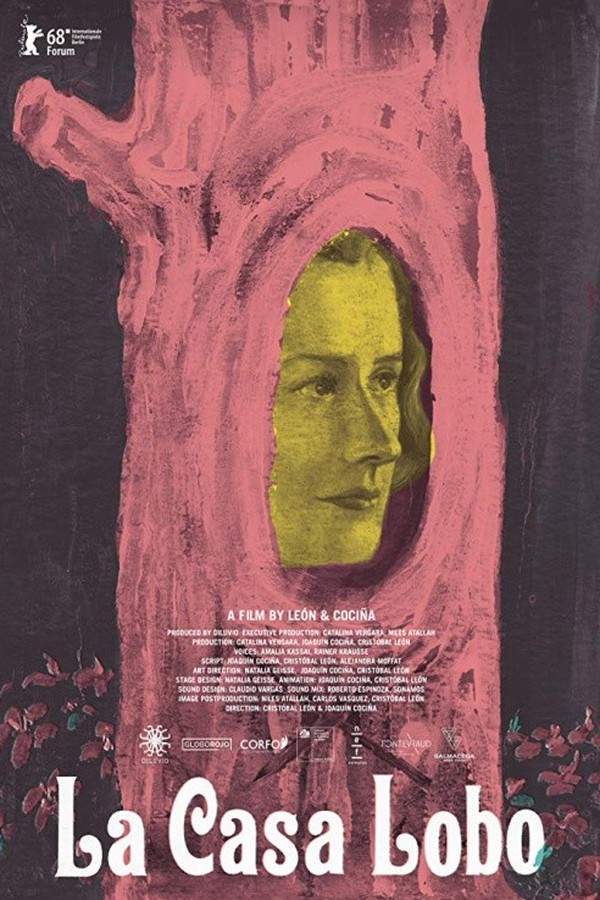
The Wolf House (2020) movie poster

Characters & Themes

The Wolf House (2020) Characters, Setting & Themes Explained

Release, runtime and language
2020 · 75 min · Spanish
Echo score 80
Loading streaming availability…
Directed by
Cristóbal León, Joaquín Cociña
Starring
Amalia Kassai, Rainer Krause
Budget
$245K

Fleeing a strict German religious group, Maria seeks refuge in a remote Chilean house and finds companionship with two pigs. As she confronts her past, her emotional turmoil manifests in increasingly bizarre and unsettling ways. The house and its surroundings begin to warp, blurring the lines between reality and nightmare as humans transform into animals and a sense of dread permeates the isolated location.

On this page (8)
  1. 1 Where to watch
  2. 2 Characters explained (4)
  3. 3 Where & when it takes place
  4. 4 Themes & meaning (3)
  5. 5 Character & meaning questions
  6. 6 Movie threads
  7. 7 Movies like The Wolf House
  8. 8 Every angle
Loading streaming availability…

4 main characters · contains spoilers

The Wolf House Characters Explained: Who Is Who

The main characters of The Wolf House (2020), heroes and villains: what drives them, how they change over the course of the story and what each of them reveals about the film's bigger ideas.

  • María

    played by Amalia Kassai

    María is portrayed as a lazy and irresponsible girl who initially seeks to escape the burdens of community life. However, her journey through isolation leads her to a profound transformation, ultimately embracing her industrious spirit. She evolves from a reluctant participant to someone who longs for belonging and connection.

    • 👩‍🎤 Protagonist
    • 🌱 Growth
    • 💔 Isolation
  • Ana

    played by Amalia Kassai

    Ana starts as a friendly companion who, along with Pedro, provides María with temporary comfort. However, her character becomes increasingly guarded and hostile as food scarcity looms, representing the darker side of survival and desperation. Ana's transformation from a supportive figure to a threat embodies the fragility of trust.

    • 🐷 Betrayer
    • 🚫 Guarded
    • 🍽️ Desperation
  • Pedro

    played by Amalia Kassai

    Pedro initially serves as a source of companionship and comfort for María but becomes cold and hostile as their situation deteriorates. His character symbolizes the internal conflict between self-preservation and camaraderie, ultimately revealing how dire circumstances can warp relationships.

    • 🐷 Betrayer
    • 🚫 Hostile
    • 🍽️ Desperation
  • Wolf

    played by Rainer Krause

    The Wolf is an ominous yet protective figure throughout the narrative. Initially perceived as a threat, he ultimately becomes María's savior, embodying the complexity of his role as a predator and protector. His character raises questions about the nature of danger and safety in the context of survival.

    • 🦊 Antagonist
    • 🛡️ Protector
    • 💔 Complexity

Last updated: October 22, 2024 at 21:26

Was this helpful?

Setting

Where and When Does The Wolf House Take Place?

The setting of The Wolf House (2020): the year and time period, the places and locations, and how they shape the characters, the mood and the tension of the story.

Time period

The story transcends a specific time period, instead embodying themes of timelessness and the universal struggle between duty and desire. This dream-like narrative takes place in a surreal temporal space, allowing the characters' experiences and transformations to resonate across generations.

Location

Colony, Woods, Abandoned House

The Colony is a secluded community that demands hard work and contributions from all its members. The surrounding Woods provide an escape for those seeking freedom, yet they are filled with dangers, especially the lurking Wolf. The Abandoned House serves as a significant refuge for María, transforming based on her emotions and thoughts, representing her sanctuary amidst chaos.

  • 🏡 Home
  • 🌲 Nature
  • 🐷 Transformation

Last updated: October 22, 2024 at 21:26

Was this helpful?

3 major themes

The Wolf House Meaning: Themes & Message Explained

What is The Wolf House (2020) really about? The emotional, social and philosophical themes the film keeps returning to, its symbolism and the message beneath the surface.

  • Freedom vs. Confinement

    The struggle between seeking freedom and the concept of confinement plays a critical role in the narrative. María’s desire to escape the responsibilities of the Colony contrasts sharply with her eventual realization of safety and belonging. The Abandoned House, while a sanctuary, ultimately reveals its own form of captivity, leading to her transformation.

  • Deception and Trust

    The theme of deception is prevalent as María initially trusts Ana and Pedro, only to discover their true intentions. This betrayal highlights the fragility of trust within precarious relationships and underscores how desperation can compel individuals to act against their own principles.

  • Transformation

    Transformation is a central theme in the film, illustrated through the characters' physical and emotional changes. María's metamorphosis into a bird symbolizes her journey to regain agency and reflects the overarching idea of personal growth and self-discovery amidst adversity.

Last updated: October 22, 2024 at 21:26

Was this helpful?

Character & theme questions

The Wolf House Characters & Meaning: Your Questions Answered

The questions people ask about The Wolf House (2020): who the characters really are, their relationships, what the symbols mean, where it takes place and what the movie is really about. Each answer contains spoilers.

Q1

Where is The Wolf House set?

The story takes place in three main locations: a strict religious Colony where María initially lives, the surrounding Woods filled with dangers including the Wolf, and an Abandoned House that becomes María's refuge. The house itself transforms based on her emotions, reflecting her psychological state rather than remaining a fixed physical space.

  • colony
  • woods
  • abandoned house
  • setting
  • location
Q2

What does the Colony represent in The Wolf House?

The Colony represents a restrictive, oppressive community that demands total compliance and hard work from its members. It functions as an allegory for real-world cult-like organizations, specifically referencing the Colonia Dignidad in Chile. For María, the Colony symbolizes confinement and the loss of personal freedom, prompting her desperate escape.

  • colony
  • cult
  • oppression
  • confinement
  • allegory
Q3

What does the Abandoned House symbolize in The Wolf House?

The Abandoned House serves as both sanctuary and prison. While it offers María temporary refuge from the Colony, it ultimately reveals its own form of captivity. The house physically warps and transforms based on María's emotions and thoughts, making it an extension of her psychological state rather than a stable location.

  • abandoned house
  • sanctuary
  • prison
  • transformation
  • psychology
Q4

When is The Wolf House set?

The film does not anchor itself to a specific time period. Instead, it exists in a timeless, dream-like narrative space that allows its allegorical themes about duty versus desire to resonate universally. This surreal temporal approach gives the story a mythic quality rather than historical specificity.

  • time period
  • timeless
  • era
  • setting
Q5

What is the Freedom vs Confinement theme in The Wolf House?

This theme explores María's desire to escape the Colony's oppressive responsibilities versus her eventual search for safety and belonging. While the Abandoned House offers initial freedom, it becomes another form of captivity. Her transformation into a bird symbolizes regaining agency, though the ambiguous ending suggests true freedom may remain elusive.

  • freedom
  • confinement
  • escape
  • colony
  • transformation
Q6

What does the Transformation theme represent in The Wolf House?

Transformation appears throughout the film as both physical and emotional change. Characters morph between human and pig forms, reflecting their inner states. María's metamorphosis into a bird symbolizes her journey toward agency and self-discovery. The pigs transforming into humans and back again represents the blurring of civilization and animalistic survival instincts.

  • transformation
  • metamorphosis
  • pigs
  • birds
  • change
Q7

What is the Deception and Trust theme about in The Wolf House?

María initially trusts Ana and Pedro as companions, only to discover their hostile intentions when food becomes scarce. This betrayal illustrates how desperation in survival situations can corrupt relationships and force people to act against their principles. The theme highlights the fragility of trust in precarious circumstances.

  • deception
  • trust
  • betrayal
  • ana
  • pedro
  • survival
Q8

Who is María in The Wolf House?

María is the protagonist who flees a strict religious Colony seeking freedom from community responsibilities. Initially portrayed as lazy and irresponsible, she undergoes profound transformation through isolation, ultimately embracing an industrious spirit and seeking genuine belonging. Her journey represents self-discovery amid psychological adversity.

  • maría
  • protagonist
  • protagonist
  • escape
  • transformation
Q9

Who is the Wolf in The Wolf House?

The Wolf is an ominous figure who lurks in the Woods surrounding the Colony and Abandoned House. Initially perceived as a threat, he ultimately becomes María's savior. His character embodies the duality of predator and protector, raising questions about the true nature of danger and safety in survival contexts.

  • wolf
  • predator
  • protector
  • danger
  • savior
Q10

What does the Wolf represent symbolically?

The Wolf represents the complex relationship between danger and protection. As both predator and savior, he symbolizes how threats in the external world can sometimes become allies or guardians. His sinister monologue at the end, which frames María's apparent escape as a return to the oppressive Cycle, suggests he may represent systemic control rather than mere physical threat.

  • wolf
  • symbolism
  • predator
  • protector
  • control
  • cycle
Q11

What is the tone of The Wolf House?

The film maintains a consistently dark tone throughout, exploring themes of control, trauma, and psychological manipulation. It blends psychological dread with surreal imagery, moving from frantic escape to eerie domestic calm before descending into paranoid nightmare. The intensity remains high due to the looming threat of the Wolf and the shocking betrayal leading to cannibalistic intent.

  • tone
  • mood
  • dark
  • psychological
  • dread
  • horror
Q12

Is The Wolf House based on a true story?

While not a direct adaptation, the film operates as a heavy allegory for real historical events, specifically referencing the Colonia Dignidad cult in Chile and the era of Pinochet's regime. The pig-to-human transformations and surreal narrative style use fantasy elements to explore themes of psychological manipulation, isolation, and trauma associated with cult environments.

  • true story
  • allegory
  • colonia dignidad
  • chile
  • pinochet
  • cult

Movie threads

More Movies Like The Wolf House, by Mood & Story

Curated lists built around what makes The Wolf House tick: the same mood, the same kind of story or the same emotional payoff. Each list explains why these movies belong together.

Fever dream horror movies like The Wolf House

Stories where reality dissolves into a subjective nightmare of trauma and paranoia. If you liked the nightmarish, psychological unraveling in The Wolf House, explore more movies where reality is distorted by trauma. These films use surreal imagery and unreliable narration to plunge you into a character's fractured mind, creating a similar feeling of claustrophobic dread and perceptual horror.

  • fever dream
  • surreal
  • unreliable narrator
  • psychological horror
  • disorienting
  • symbolic
  • Tone: dark, unsettling, delirious
  • Pacing: variable, dreamlike
Why these movies?

The story pattern: Narratives in this thread often follow a character grappling with severe psychological distress, trauma, or paranoia. The external world—be it a house, a landscape, or a community—begins to reflect their internal turmoil, transforming into a surreal and threatening dreamscape. The plot progresses not through logical events, but through a series of symbolic and increasingly disturbing impressions that chart the character's descent.

Why they belong together: These movies are grouped together because they share a core technique of undermining objective reality to explore psychological horror. They prioritize mood, symbolism, and subjective experience over conventional plotting, resulting in a uniquely intense and unsettling viewing experience that lingers long after the film ends.

Political horror allegories similar to The Wolf House

Chilling stories that use metaphor and symbolism to critique real-world oppression. Viewers seeking movies like The Wolf House will find similar chilling allegories in this thread. These films use their narratives as metaphors for real-world events, such as cults, dictatorships, and systemic oppression, blending horror with potent political and social commentary.

  • allegory
  • political
  • oppressive
  • critical
  • historical
  • symbolic
  • Tone: dark, critical, bleak
  • Pacing: variable, deliberate
Why these movies?

The story pattern: The narrative pattern involves a contained, often fantastical story that parallels a larger historical or political reality. Characters and events symbolize broader forces of oppression, resistance, and trauma. The horror arises not just from immediate threats, but from the understanding of the real-world suffering being reflected. The plot unfolds on two levels: the literal events within the film's world and the allegorical meaning they represent.

Why they belong together: These films are united by their use of allegory as a primary narrative device to deliver sharp political and social critique. They share a dark tone and a commitment to using genre conventions to explore complex, heavy themes, making the horror intellectually engaging as well as visceral.

If you liked this

Movies Like The Wolf House

Similar movies to The Wolf House: the same genre, themes or kind of story. Each one comes with its own plot summary, timeline and ending explained.

Browse all movie summaries

Every angle

The Wolf House (2020) Explained: Plot, Timeline & Characters

Everything about The Wolf House in one place: what happens in the plot summary, the timeline in chronological order, the characters and meaning and a spoiler-free summary. What's After the Movie adds the cast, box office and post-credit scenes.

Coming soon on iOS and Android

The Plot Explained Movie Summary App

Plot summaries, endings explained and timelines on your phone. Catch up on any movie in minutes, save your favorites and never miss a twist again.

Be the first to know when we launch. Your email stays private, always.

Learn more about the app