Plot Explained Spoilers guaranteed!
Plot Explained

Browse by genre

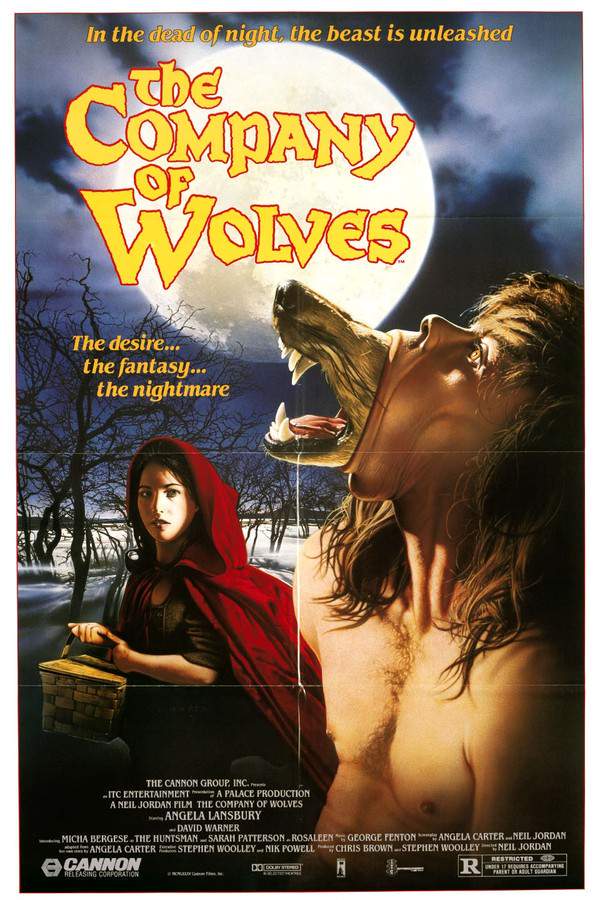
The Company of Wolves (1985) movie poster

Plot Summary

The Company of Wolves (1985) Plot Summary Explained

Release, runtime and language
1985 · 95 min · English
Loading streaming availability…
Directed by
Neil Jordan
Starring
David Warner, Stephen Rea, Angela Lansbury, Brian Glover, Georgia Slowe, Graham Crowden
Budget
$2M

Ten-year-old Rosaleen drifts into a vivid dreamscape filled with wolves and werewolves. Lost in a dark forest, she is drawn to a mysterious hunter whose intense presence awakens a dangerous curiosity within her. As she journeys deeper, the boundary between reality and nightmare dissolves, and she finds herself confronting primal desires and unsettling truths in a world where the familiar transforms into something terrifying.

On this page (6)
  1. 1 Where to watch
  2. 2 What happens: full plot
  3. 3 Plot questions answered
  4. 4 Movie threads
  5. 5 Movies like The Company of Wolves
  6. 6 Every angle
Loading streaming availability…

Full plot summary · contains spoilers

What Happens in The Company of Wolves: Full Plot Summary

The whole story of The Company of Wolves (1985) explained, from the opening scene to the final frame: every key event, every twist and what it all adds up to. Read it as a quick recap before the sequel, to check a scene you missed, or to finally understand what really happened.

In a quaint country house, a young girl named Rosaleen inhabits a fantastical realm where the enchanted forests of the 18th century spring to life. Her peaceful life with her parents and sister Alice is abruptly interrupted when darkness descends and Alice is savagely taken by wolves. As the family grieves the tragic loss of their cherished sibling, Rosaleen seeks comfort in the wisdom of her grandmother, a sagacious elder who crafts a crimson cloak imbued with age-old secrets.

The superstitious grandmother shares three chilling tales: never stray from the path, never indulge in windfall apples, and never trust a man whose brows converge. These eerie warnings echo in Rosaleen's mind as she grapples with the perilous waters of adolescence.

When Rosaleen ventures back to the village, she finds herself caught in a tangle of romantic advances from a dashing boy. Their pleasant walk through the forest turns sinister as the villagers' livestock fall victim to a wolf's assault. As the hunt for the creature intensifies, the peace of the community is shattered by a shocking revelation: the slain wolf transforms into a human being. Rosaleen's naive dreams are further disturbed when she crosses paths with a captivating huntsman, whose converging eyebrows raise unsettling suspicions.

On her way to her grandmother's cottage, Rosaleen, armed with a basket full of goods, unexpectedly encounters the enigmatic stranger, who challenges her to a race, claiming he can reach grandmother's house faster than she can. As they embark on this competitive journey, the huntsman reaches the cottage first, exposing his true, feral nature. Rosaleen arrives only to discover her grandmother cruelly slain, stripping away her innocence forever.

Faced with a choice between self-preservation and compassion, Rosaleen inadvertently causes the huntsman harm with his own weapon. As he writhes in agony, his body begins to shift, revealing a wounded wolf before her. In a moment of heartfelt tenderness, Rosaleen consoles the creature, sharing a story to ease its suffering.

As the night deepens, the villagers rush toward the grandmother's home, driven by a hunger for the supposed werewolf. Instead, they are met with the shocking sight of Rosaleen herself transformed into a wolf. In a twist of fate, she teams up with the now-familiar huntsman, and together they flee into the forest, soon joined by an increasing pack of wolves that seem to emerge from the very shadows of their world. The boundaries of reality appear to dissolve, as Rosaleen's childhood toys scatter across the floor, symbolizing the irreversible loss of her innocence.

As this cinematic tale draws to a close, a chilling whisper lingers in the air, warning young hearts against the beguiling charm of mysterious suitors. The wise words of Charles Perrault remind us all to remain vigilant against the deceitful tactics of strangers aiming to ensnare and mislead.

This richly woven narrative intricately blends various stories, with each thread seamlessly entwined in a complex and harmonious plot. These tales, told within the core story, converge and diverge in their own distinct rhythms, much like the intricate dance of life itself. The boundaries between fantasy and reality blur, beckoning viewers to delve into a world where myth and legend intertwine, where truth and fiction are indistinguishable, and where the very essence of storytelling unlocks the deepest reservoirs of magic.
Last updated: November 21, 2024 at 15:01

Was this helpful?

Plot questions answered

The Company of Wolves Plot Explained: Your Questions Answered

The questions people ask most about The Company of Wolves (1985): what happens in the confusing scenes, why the characters do what they do, the twists, hidden details and what the ending means. Each answer contains spoilers.

Q1

Why was the huntsman with converging eyebrows dangerous?

The huntsman was dangerous because his physical appearance matched the grandmother's warning about men whose eyebrows converge. This physical trait was meant to signal that he was a predator in human form. When Rosaleen encounters him, his converging eyebrows trigger her instinctive suspicion, which proves justified when he reveals himself to be a werewolf who murders her grandmother.

Foreshadowing: The grandmother explicitly warns Rosaleen about men with converging brows, planting the seed of suspicion before the huntsman appears.

  • huntsman
  • werewolf
  • converging eyebrows
  • danger
  • grandmother warning
Q2

Why did Rosaleen comfort the wounded wolf instead of running away?

After Rosaleen accidentally injures the huntsman with his own weapon, she discovers his true nature as a wounded wolf. Rather than fleeing in terror, she chooses to comfort him because she recognizes his pain and suffering. Having just witnessed her grandmother's brutal murder and having already lost her sister Alice, Rosaleen responds with compassion rather than violence, showing her capacity for empathy even toward those who have harmed her.

Foreshadowing: Rosaleen's journey has been about confronting the line between predator and prey, and her choice reflects her rejection of the village's fearful, bloodthirsty response to the werewolf.

  • rosaleen
  • compassion
  • wolf
  • huntsman
  • transformation
  • empathy
Q3

What happened to Rosaleen's sister Alice?

Rosaleen's younger sister Alice was savagely taken by wolves during a dark attack on their family. This traumatic event serves as the inciting incident of the film, shattering Rosaleen's peaceful childhood and sending the family into mourning. Alice's death marks the first major loss of innocence that Rosaleen experiences, setting her on the path toward her own transformation.

Foreshadowing: The film opens with this tragic loss, establishing the wolf threat that will define Rosaleen's psychological journey throughout the story.

  • alice
  • sister
  • death
  • wolves
  • loss
  • family
Q4

Why was the grandmother killed in the cottage?

The huntsman reaches grandmother's cottage first because, as a werewolf, he has supernatural abilities that allow him to travel faster than any human. He murders and presumably eats the grandmother before Rosaleen arrives, making this one of the most devastating moments in the film. The grandmother's death represents the ultimate loss of innocence for Rosaleen and the complete failure of the elderly woman's wisdom to protect her.

Foreshadowing: The race itself is a trap, the huntsman challenges Rosaleen knowing he can win, ensuring he reaches the cottage first to prepare his attack.

  • grandmother
  • death
  • huntsman
  • werewolf
  • cottage
  • murder
Q5

How did the huntsman reach the grandmother's cottage before Rosaleen?

The huntsman reaches the cottage first because he is a werewolf with supernatural abilities. When he challenges Rosaleen to a race, claiming he can arrive at grandmother's house faster than she can, this is not an ordinary competition. His true nature as a shapeshifter allows him to travel through the forest at inhuman speeds, ensuring he arrives long before Rosaleen despite her head start.

Foreshadowing: The huntsman's physical superiority and mysterious confidence during the race hint at his non-human nature.

  • huntsman
  • race
  • supernatural
  • werewolf
  • forest
  • cottage
Q6

What do the grandmother's three warnings mean?

The grandmother gives Rosaleen three superstitious warnings: never stray from the path, never eat windfall apples, and never trust a man whose eyebrows converge. These warnings represent traditional fairy tale wisdom about the dangers of the forest and predatory men. The path symbolizes safety and social norms, windfall apples represent forbidden temptation, and the converging eyebrows serve as a physical marker of dangerous men who hide their true predatory nature.

Foreshadowing: Each warning becomes relevant as Rosaleen faces corresponding temptations and dangers throughout her journey.

  • grandmother
  • warnings
  • superstition
  • path
  • apples
  • eyebrows
Q7

What does Rosaleen's transformation into a wolf represent?

Rosaleen's transformation into a wolf represents her complete departure from childhood and her acceptance of her own primal nature. Rather than being a victim of the werewolf, she becomes one with the very force she has been confronting throughout the film. This ambiguous ending is neither a clear victory nor tragedy, it symbolizes her liberation from the confines of childhood, her embrace of her own desires and power, and her integration with the wild, untamed world she has been navigating.

Foreshadowing: Throughout the film, Rosaleen is repeatedly drawn to wolves and the huntsman, suggesting an inner connection to this primal force that ultimately manifests as physical transformation.

  • transformation
  • wolf
  • freedom
  • innocence
  • liberation
  • ending
Q8

Why did the dead wolf turn into a human?

When the villagers kill what they believe is a dangerous wolf, they discover it transforms into a human body. This reveals that the creature was actually a werewolf, a human who can shapeshift into wolf form. The transformation upon death exposes the werewolf's true identity, shocking the villagers and confirming that the threat has been hiding in plain sight among them.

Foreshadowing: The discovery reinforces the film's central theme about the thin line between human and beast, and foreshadows Rosaleen's own later transformations.

  • werewolf
  • transformation
  • death
  • human
  • villagers
  • hunt
Q9

What is the significance of the red cloak?

The grandmother crafts a crimson cloak for Rosaleen, imbued with ancient secrets and protective magic. The red cloak serves as both literal protection and a symbol of the grandmother's wisdom and love being wrapped around Rosaleen. It connects to the Little Red Riding Hood fairy tale tradition while also representing Rosaleen's transition into adulthood, wearing her grandmother's wisdom as she faces the dangerous world outside the family home.

Foreshadowing: The crimson cloak marks Rosaleen as special, drawing the attention of the huntsman who recognizes her as someone connected to the magical world.

  • red cloak
  • crimson
  • grandmother
  • protection
  • symbolism
  • fairy tale
Q10

Is the ending of The Company of Wolves a happy or sad conclusion?

The ending is intentionally ambiguous, it's neither a clear victory nor a simple tragedy. Rosaleen transforms into a wolf and escapes into the forest with the huntsman, joining a growing pack of wolves. This can be read as either a liberating acceptance of her true self or a terrifying loss of humanity. The film suggests her transformation represents freedom from the constraints of childhood and conventional society, embracing her primal nature, but viewers are left to decide whether this represents empowerment or destruction.

Foreshadowing: The film's constant blurring of reality and dream throughout suggests this transformation may be both simultaneously, death and rebirth, loss and liberation.

  • ending
  • transformation
  • freedom
  • ambiguous
  • liberation
  • interpretation

Movie threads

More Movies Like The Company of Wolves, by Mood & Story

Curated lists built around what makes The Company of Wolves tick: the same mood, the same kind of story or the same emotional payoff. Each list explains why these movies belong together.

Dark fairy tale movies like The Company of Wolves

Horrifying and beautiful re-imaginings of classic folklore and myth. Explore more movies like The Company of Wolves that delve into dark, surreal re-imaginings of folklore. These films use fairy tale logic to create psychologically complex, often terrifying stories that explore mature themes of desire, fear, and transformation.

  • darkly enchanting
  • uncanny
  • gothic
  • mythological
  • symbolic
  • dreamlike
  • Tone: dark, surreal, threatening
  • Pacing: variable, atmospheric
Why these movies?

The story pattern: Movies in this thread often follow a symbolic journey, where a protagonist navigates a world governed by the unsettling rules of a dark fable. The plot structure may be episodic or dreamlike, presenting challenges and characters that are metaphors for internal psychological struggles, particularly around themes of maturation, desire, and corruption.

Why they belong together: These films are grouped by their shared foundation in folklore and myth, which they twist into adult-oriented, atmospheric horror or dark fantasy. They create a unique, darkly enchanting vibe by blending the familiar with the deeply uncanny, appealing to viewers who enjoy symbolic, visually rich, and thought-provoking storytelling.

Movies with surreal dream logic like The Company of Wolves

Stories where the boundary between dream and reality completely dissolves. Find more films like The Company of Wolves that use dream logic and surreal narratives. If you enjoyed its non-linear, symbolic storytelling and the feeling of being lost in a nightmare, these movies offer similar experiences of psychological exploration and unsettling atmosphere.

  • surreal
  • dreamlike
  • psychological
  • uncanny
  • disorienting
  • symbolic
  • Tone: dreamlike, uncanny, melancholic
  • Pacing: variable, contemplative
Why these movies?

The story pattern: The narrative pattern is non-linear and associative, prioritizing emotional and symbolic truth over conventional plot. Characters often journey through a landscape that is a direct reflection of their subconscious, facing manifestations of their anxieties, traumas, or hidden desires. The conflict is often internal, and resolution is ambiguous.

Why they belong together: These films are united by their commitment to a dreamlike or surreal narrative structure that challenges straightforward interpretation. They share a specific mood of unease and psychological intensity, appealing to viewers who enjoy being immersed in ambiguous, visually striking worlds that feel like waking dreams.

If you liked this

Movies Like The Company of Wolves

Similar movies to The Company of Wolves: the same genre, themes or kind of story. Each one comes with its own plot summary, timeline and ending explained.

Browse all movie summaries

Every angle

The Company of Wolves (1985) Explained: Plot, Timeline & Characters

Everything about The Company of Wolves in one place: what happens in the plot summary, the timeline in chronological order, the characters and meaning and a spoiler-free summary. What's After the Movie adds the cast, box office and post-credit scenes.

Coming soon on iOS and Android

The Plot Explained Movie Summary App

Plot summaries, endings explained and timelines on your phone. Catch up on any movie in minutes, save your favorites and never miss a twist again.

Be the first to know when we launch. Your email stays private, always.

Learn more about the app