Plot Explained Spoilers guaranteed!
Plot Explained

Browse by genre

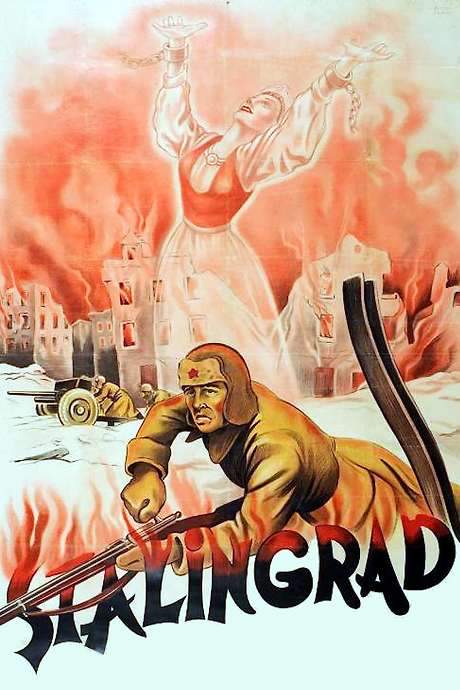
The Turning Point (1945) movie poster

Timeline

The Turning Point (1945) Timeline Explained – Every Event in Order

Release, runtime and language
1945 · 108 mins · Russian
Directed by
Fridrikh Ermler
Starring
Mikhail Derzhavin, Pavel Volkov, Mark Bernes, Andrei Abrikosov, Yuriy Tolubeev, Nikolai Korn

The film tells the story of those who took part in the Battle of Stalingrad in 1942, a decisive turning point in the Great Patriotic War. Over five brutal months the city withstood the relentless Nazi offensive. Surrender would have meant loss of the war, yet holding Stalingrad seemed almost impossible.

On this page (5)
  1. 1 Events in order (12)
  2. 2 Timeline questions answered
  3. 3 Movie threads
  4. 4 Movies like The Turning Point
  5. 5 Every angle

12 events in order · contains spoilers

The Turning Point Timeline: Events in Chronological Order

Every key event of The Turning Point (1945) in order, scene by scene, with when and where it takes place. Use it to untangle flashbacks, time jumps and parallel storylines, to refresh your memory before the sequel or to find the exact scene you are thinking of.

  1. German push toward the Volga city

    German forces advance eastward toward the Volga and target a Russian city on its banks. The Soviet high command fears that losing the city could trigger a broader disaster on the Eastern Front. The stage is set for a desperate defense to prevent a major strategic setback.

    Where
    Volga river city
  2. Muravyov named to lead the front

    General K. S. Muravyov is appointed to command the front and receives the direct order: 'The city must not be surrendered; prepare to defeat the German forces!' He arrives at the front, quickly assesses the battlefield, and reunites with his wife Liza, who also serves in the army. The burden of leadership becomes clear as the defense begins to take shape.

    Where
    Frontline near the Volga city
  3. Strategy: buy time without draining reserves

    Muravyov believes victory hinges on buying time and draining the enemy through attrition rather than a reckless rush. He argues that the German commander von Klaus overestimates his strength and underestimates the Red Army. General Vinogradov is reassigned as chief of staff to support the new plan.

    Where
    Frontline
  4. Industrial halt: 'An empty city will not be defended'

    Muravyov issues a hard-edged order to halt the evacuation of industrial enterprises, insisting that an empty city cannot be defended. The defense shifts to protecting valuable production capacity and infrastructure. The battle intensifies as German forces pour in more troops.

    Where
    City
  5. Shift in leadership for the city’s defense

    Vinogradov is reassigned as chief of staff, and Muravyov replaces General Krivenko with General Panteleev, a fortifications expert. The new leadership aims to strengthen the defensive posture and leverage the city’s fortifications. The command reshuffle signals a more cautious, methodical defense strategy.

    Where
    City fortifications
  6. Panteleev plans strong fortifications

    Panteleev argues that the city's defensive position can hinder German tank maneuvers and proposes measures for an active defense. He drafts plans to fortify key buildings and create chokepoints that neutralize German advantages. Muravyov emphasizes defending every building on the western bank of the Volga.

    Where
    Western bank and fortifications
  7. Preparing for a decisive trap

    Muravyov predicts the Germans will deploy their best divisions to seize the city, creating an opportunity for a Soviet counterstrike. He stresses exploiting the city’s terrain and fortifications to slow the enemy and set the stage for a counteroffensive.

    Where
    City defenses
  8. Intelligence and artillery planning

    Soviet intelligence reports the timing of the German final assault, allowing Muravyov to plan a concentrated artillery strike. The plan aims to weaken the approaching German concentrations before the main attack. The stage is set for a pivotal moment in the defense.

    Where
    Front line
  9. The 3 a.m. barrage

    At 3 a.m., a heavy artillery barrage smashes the German concentrations. The timing creates hesitation and forces von Klaus to decide whether to press the attack or halt for a moment of reconnaissance. The bombardment signals a turning point in the night battle.

    When
    3 a.m.
    Where
    Outskirts of the Volga city
  10. German assault and Soviet counterattack

    Von Klaus launches his offensive despite heavy losses, triggering a robust Soviet counterattack. Bolstered by strategic and front-line reserves, the Red Army pushes the Germans back and begins to turn the tide of the battle. The defense evolves into a decisive clash.

    Where
    City defenses
  11. Encirclement and capture of von Klaus

    Soviet forces trap and destroy the enemy’s main forces; von Klaus and his staff are captured. Muravyov refuses to engage with him directly, remarking that 'Now, it’s Manstein who interests me.' The victory is framed as a step in a broader offensive plan rather than a standalone triumph.

    Where
    Within the city defenses
  12. Victory and the road toward Berlin

    The city's defense ends in a triumphant Red Army victory, celebrated nationwide. Muravyov frames the victory as part of a larger offensive, declaring the objective 'To the west, to Berlin' and signaling continued operations beyond the Volga city. The episode closes with a renewed drive toward the broader strategic goal.

    Where
    Nationwide

Last updated: October 09, 2025 at 11:04

Was this helpful?

Timeline questions answered

The Turning Point Timeline Explained: Your Questions Answered

When does it happen, and why in that order? The questions people ask about the chronology of The Turning Point (1945): time jumps, flashbacks, cause and effect between scenes and the correct order of events, each answered with spoilers.

Q1

Why was General Muravyov appointed to lead the defense of the city?

Supreme Command appointed Muravyov after a heated debate between Generals Vinogradov, who advocated strategic withdrawal to preserve the army, and Krivenko, who insisted surrender was unacceptable. The direct order from Soviet leadership was unambiguous: the city must not be surrendered, and Muravyov was chosen for his calm, precise command style to execute a stubborn defense against overwhelming German force.

Foreshadowing: Early in the film, the high command's deliberation establishes that the city's defense is a matter of national survival, not just a military decision.

  • general muravyov
  • command appointment
  • soviet high command
  • defense order
Q2

Why did Muravyov refuse to evacuate the city's industrial sector?

Muravyov issued the order 'An empty city will not be defended' because he understood that abandoning the industrial infrastructure would strip the defenders of strategic resources and morale. The factories and production capacity were essential for sustaining the defense, and an abandoned city offered no incentive for troops to hold their positions.

Foreshadowing: This decision directly connects to Muravyov's broader strategy of exhausting the German assault through tenacious, built-from-the-ground defense.

  • industrial evacuation
  • empty city
  • strategic resources
  • defense strategy
Q3

What was Muravyov's overall strategy for defending Stalingrad?

Muravyov's strategy centered on buying time through attrition without expending strategic reserves. He planned to exhaust the German assault through stubborn, relentless defense, holding every building and position until the enemy was bled dry, then launching a decisive counteroffensive with conserved forces. He believed von Klaus overestimated German strength and underestimated Red Army resolve.

Foreshadowing: The strategy unfolds gradually as Muravyov refuses flashy counter-maneuvers and reserves, choosing instead to let the Germans exhaust themselves against fortified positions.

  • attrition strategy
  • strategic reserves
  • counteroffensive
  • buying time
Q4

Why was General Vinogradov reassigned as chief of staff?

Vinogradov advocated for a strategic withdrawal to spare the army from costly collapse, which directly contradicted the Supreme Command's explicit order to hold the city at all costs. After Muravyov received the unflinching mandate to defend rather than retreat, Vinogradov's strategic views became incompatible with the new defensive posture, leading to his reassignment to support the chief of staff role.

Foreshadowing: The debate between Vinogradov and Krivenko in the opening scene establishes the conflict that leads to Vinogradov's removal from command.

  • general vinogradov
  • reassignment
  • strategic withdrawal
  • command change
Q5

Why did Muravyov replace General Krivenko with General Panteleyev?

Muravyov replaced Krivenko with Panteleyev specifically because Panteleyev was a fortifications expert who understood how to leverage the city's geography against German tank tactics. Panteleyev argued that the western bank's structures and urban environment could neutralize German maneuver advantages, creating chokepoints where enemy tanks would be vulnerable, exactly the kind of active defense Muravyov needed.

Foreshadowing: This change reflects the shift from large-scale mobile defense to the methodical, building-by-building resistance that defines the city's defense.

  • general panteleyev
  • fortifications
  • tank tactics
  • defensive positions
Q6

What was the significance of the 3 a.m. artillery barrage?

The 3 a.m. artillery barrage was a pre-planned intelligence-driven strike that hit German concentrations before their final assault. Soviet intelligence had pinpointed the timing of the German attack, allowing Muravyov to execute a concentrated bombardment that disrupted enemy preparations and forced von Klaus to make a critical decision: attack now through the chaos or delay for reconnaissance. The barrage marked the turning point from defense to counteroffensive.

Foreshadowing: Earlier intelligence work and Muravyov's prediction of the German final assault set the stage for this precise strike.

  • artillery barrage
  • 3 a.m.
  • german assault
  • intelligence timing
Q7

What was the impact of Muravyov's wife's death during the battle?

Muravyov's wife Liza, who served alongside him in the army, died during the fighting. This personal tragedy steeled his commitment to the city's defense, deepening his resolve to hold Stalingrad rather than consider retreat. The loss transformed his leadership from strategic calculation to personal stakes in the battle's outcome.

Foreshadowing: The reunion scene early in the film establishes Liza's presence, making her death a devastating turning point in Muravyov's arc.

  • liza muravyova
  • personal tragedy
  • command resolve
  • death impact
Q8

What happened to German commander von Klaus at the end of the battle?

Soviet forces encircled and destroyed the main German units during the counterattack, capturing von Klaus and his staff. However, Muravyov refused to engage with him directly, dismissing the captured commander with the remark, 'Now it's Manstein who interests me,' indicating he viewed the victory as merely one step in a larger offensive rather than a final triumph.

Foreshadowing: Von Klaus's overconfidence, which Muravyov noted early in the film, leads directly to his miscalculation and capture.

  • von klaus capture
  • manstein
  • german commander
  • encirclement
Q9

Why was the order 'no retreat' so critical to the defense?

The 'no retreat' directive came directly from Soviet Supreme Command and reflected the strategic reality that losing Stalingrad could trigger Japan and other nations to attack the Soviet Union, collapsing the Eastern Front. The order transformed the defense from a tactical calculation into a matter of national survival, giving Muravyov the authority to demand unyielding resistance from every unit.

Foreshadowing: The opening scene establishes that the city's fall would invite broader international aggression against the Soviet Union.

  • no retreat order
  • eastern front
  • strategic significance
  • surrender prevention
Q10

What did Muravyov mean when he said the objective was 'to the west, to Berlin'?

After capturing von Klaus, Muravyov framed the Stalingrad victory as just one phase of a broader continental offensive. His declaration 'To the west, to Berlin' signaled that the defense of the Volga city was not an end goal but a strategic stepping stone toward the ultimate objective of advancing toward the German capital and achieving total victory in the war.

Foreshadowing: This statement closes the film on a note of continued military expansion, indicating the battle was part of a larger Soviet campaign.

  • berlin offensive
  • strategic goal
  • wester advance
  • soviet offensive

Movie threads

More Movies Like The Turning Point, by Mood & Story

Curated lists built around what makes The Turning Point tick: the same mood, the same kind of story or the same emotional payoff. Each list explains why these movies belong together.

Military Command Dramas Like The Turning Point

High-stakes military leadership films where command decisions shape history. If you liked the high-pressure command decisions in The Turning Point, explore other movies focused on wartime leadership. These films delve into the strategic minds, stubborn resolve, and immense burden of leaders shaping pivotal battles, offering a similar tense and heavy viewing experience.

  • tense
  • strategic
  • gritty
  • resolute
  • urgent
  • command-focused
  • Tone: tense, resolute, somber
  • Pacing: steady, methodical
Why these movies?

The story pattern: These films follow a leadership-centric narrative, often during a siege or pivotal battle. The central conflict is as much about internal strategic disagreements and the psychological toll of command as it is about the external enemy. The plot is driven by critical decisions, logistical challenges, and the human cost of war viewed from a top-down perspective.

Why they belong together: Movies are grouped here for their shared focus on high-command pressure, strategic stubbornness, and the weight of leadership during large-scale conflicts. They share a tense tone and heavy emotional weight, placing the viewer alongside commanders making impossible choices.


Movies With Hard-Won Victories Like The Turning Point

Stories where victory is achieved, but the personal and collective cost is profound. Fans of The Turning Point's bittersweet triumph will appreciate other films about costly, symbolic victories. These movies deliver a satisfying conclusion but emphasize the heavy emotional toll and personal sacrifices required to achieve it, creating a powerful and resonant ending.

  • determined
  • somber
  • triumphant
  • costly
  • resilient
  • bittersweet
  • Tone: tense, somber, ultimately hopeful
  • Pacing: steady, building
Why these movies?

The story pattern: The journey is defined by a prolonged, high-intensity conflict with a clear, critical goal. The narrative builds towards a decisive victory that carries immense symbolic importance, often for a nation or cause. However, the path to this victory is paved with significant personal loss and collective trauma, making the happy ending feel earned and deeply poignant rather than purely celebratory.

Why they belong together: This thread connects films that masterfully balance a triumphant, happy ending with a heavy emotional journey. They share a high-intensity, steady pacing that builds towards a climax where the victory is undeniable, yet the profound cost ensures the feeling is one of sober relief and solemn pride.

If you liked this

Movies Like The Turning Point

Similar movies to The Turning Point: the same genre, themes or kind of story. Each one comes with its own plot summary, timeline and ending explained.

Browse all movie summaries

Every angle

The Turning Point (1945) Explained: Plot, Timeline & Characters

Everything about The Turning Point in one place: what happens in the plot summary, the timeline in chronological order, the characters and meaning and a spoiler-free summary. What's After the Movie adds the cast, box office and post-credit scenes.

Coming soon on iOS and Android

The Plot Explained Movie Summary App

Plot summaries, endings explained and timelines on your phone. Catch up on any movie in minutes, save your favorites and never miss a twist again.

Be the first to know when we launch. Your email stays private, always.

Learn more about the app