Plot Explained Spoilers guaranteed!
Plot Explained

Browse by genre

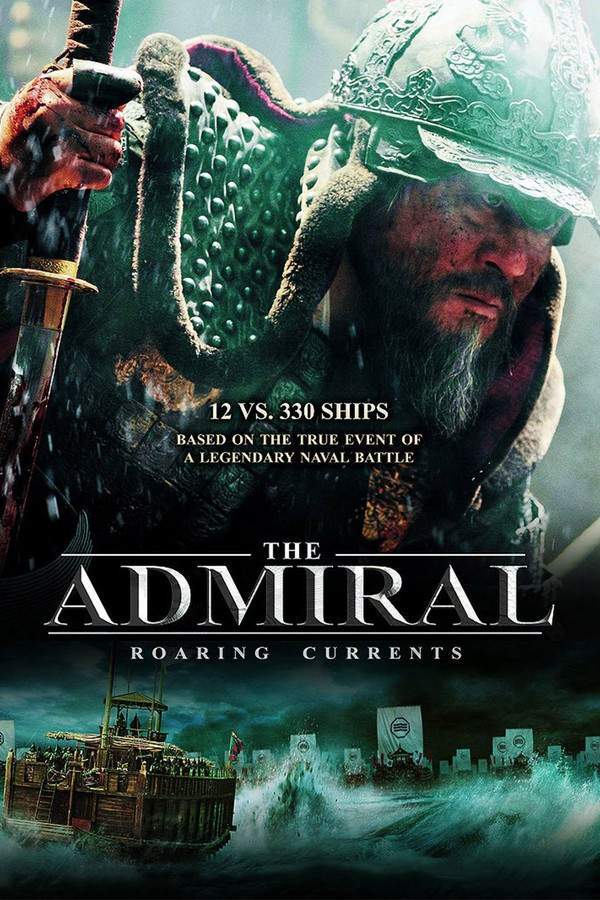
The Admiral: Roaring Currents (2014) movie poster

Plot Summary

The Admiral: Roaring Currents (2014) Plot Summary Explained

Release, runtime and language
2014 · 126 min · Korean
Directed by
Han-min Kim

In 1597, the Joseon Dynasty of Korea struggles against a relentless Japanese invasion. As the nation faces imminent defeat, Admiral Yi steps forward to lead the defense, assembling a diverse group of soldiers to confront the powerful Japanese forces led by Kurushima. The pivotal battle of Myeong-Nyang sees a small fleet of just twelve Korean ships bravely opposing a massive Japanese armada of 330 vessels, setting the scene for a dramatic and unequal clash.

On this page (5)
  1. 1 Where to watch
  2. 2 What happens: full plot
  3. 3 Plot questions answered
  4. 4 Movie threads
  5. 5 Every angle

Where to watch

Where to Watch The Admiral: Roaring Currents (2014)

Where can you watch The Admiral: Roaring Currents? Stream, rent or buy it in the US, including on Amazon Video and Apple TV Store: current JustWatch availability with up-to-date prices.

Streaming availability powered by JustWatch

Full plot summary · contains spoilers

What Happens in The Admiral: Roaring Currents: Full Plot Summary

The whole story of The Admiral: Roaring Currents (2014) explained, from the opening scene to the final frame: every key event, every twist and what it all adds up to. Read it as a quick recap before the sequel, to check a scene you missed, or to finally understand what really happened.

As the cinematic world unfolds, we are transported back to a critical moment in Korean history—the Battle of Myeongnyang in 1597. This legendary clash sets the stage for a gripping tale of courage and tactical brilliance, featuring Admiral Yi Sun-sin (character), who bravely commands a mere fleet of 12 ships against a formidable Japanese armada comprising an astonishing 333 vessels. The stakes couldn't be higher in this David versus Goliath scenario.

The Japanese forces, led by the cunning Tōdō Takatora, strike confidently at their stronghold in Haenam, convinced that their mission to capture King Seonjo in Hansong will meet with little resistance. Yet, their arrogance is tempered by the realization that Joseon's most esteemed admiral, Yi Sun-sin, has returned to duty following a previous defeat at Chilcheollyang, leaving the Korean navy with barely enough resources to mount an effective defense.

In a bid to ensure the success of their military campaign, Hideyoshi dispatches one of his top naval officers, Kurushima Michifusa (character), a master of naval strategy with a notorious pirate-like reputation. Upon arrival, he teams up with his lieutenant Kimura and encounters Wakizaka, an experienced admiral of the Japanese Left Army. Tension bubbles to the surface as Kurushima taunts Wakizaka over his loss at Hansan Island.

As the days pass, Kurushima seeks solace in the company of his sharpshooter Haru, indulging in sake-laden festivities. During these moments, he reveals his personal vendetta against Yi Sun-sin, driven by the tragic loss of his brother Michiyuki to the admiral earlier in the conflict. With emotions running high and the specter of battle looming, the scene is set for a confrontation that promises to alter the course of history.

Meanwhile, on Yi's side, despair festers as his officers and soldiers grapple with overwhelming hopelessness. The dread of facing an enemy force many times their size, compounded by the loss of their last turtle ship, weighs heavily on morale. Despite his stoic demeanor, Yi is troubled by his inability to instill confidence in his men, and the pressure to devise a solution to their grim situation intensifies. A critical turning point arises when General Bae Seol's treachery catalyzes chaos. After burning the turtle ship and attempting to assassinate Yi, he pushes the admiral to the brink—giving Yi a close call with death, but also igniting a spark of vengeance within him.

Undeterred by his setbacks, Yi sets his sights on the Myeongnyang Strait, a treacherous passage known for its perilous currents. This strategic location becomes crucial for demoralizing the enemy, who plans to traverse it on their way to Hansong. In a poignant moment of reflection with his son Hoe, Yi articulates that the only hope for victory lies in transforming the fear gripping his men into courage.

As the Japanese fleet prepares to strike, Yi moves his forces from their base to Usuyeong, setting fire to naval facilities as a last-ditch strategy. The following day, his fleet arrives at the strait, coming face to face with the Japanese vanguard led by Kurushima. A fierce conflict erupts, with Yi’s flagship becoming surrounded by enemy forces and facing boarding parties. In a desperate maneuver to change the battle's momentum, he orders a concentrated bombardment from his cannons, using the recoil to escape encirclement.

This courageous act serves as a rallying point for Yi’s compatriots, inspiring them to rise against the invading forces. As the tide shifts in favor of the Koreans, it becomes clear that Yi's unwavering leadership and tactical genius have paved the way for a historic resurgence.

As the ocean's currents conspire against Kurushima's fleet, Yi’s defensive position becomes as sturdy as a fortress. He orders an all-out assault on the Korean stronghold, deploying everything at his disposal. Haru, aboard her vessel loaded with explosive black powder, launches a furious attack against the Koreans fortified defenses. Despite their heroic efforts, the Korean forces, emboldened by Yi’s leadership, prove impenetrable. In desperation, Kurushima charges onto Yi's ship, engaging in a fierce and ultimately pointless duel. The confrontation concludes with Yi’s determination triumphing over Kurushima's aggression, resulting in the latter’s downfall—his head hanging from Yi’s ship as a grim trophy of victory.

As Yi's flagship becomes ensnared in a whirlpool, a brave group of civilian sailors and local fishermen rally to their commander’s side, working tirelessly to free the vessel from nature's clutch. With their fleet assembled, Yi orchestrates a devastating counteroffensive, decimating the Japanese forces and sending them fleeing in chaos. As the dust settles on the battlefield, the Koreans celebrate their hard-fought victory, forever marked by the memory of their initial confrontation with the Japanese—a harbinger of the bloodshed to follow in the year 1592.

Last updated: November 22, 2024 at 14:28

Was this helpful?

Plot questions answered

The Admiral: Roaring Currents Plot Explained: Your Questions Answered

The questions people ask most about The Admiral: Roaring Currents (2014): what happens in the confusing scenes, why the characters do what they do, the twists, hidden details and what the ending means. Each answer contains spoilers.

Q1

Why does Kurushima have a personal vendetta against Admiral Yi?

Kurushima's vendetta stems from Admiral Yi Sun-sin killing his brother Michiyuki in earlier battles during the Japanese invasions. This personal loss drives Kurushima's aggressive pursuit of Yi throughout the campaign, culminating in his direct confrontation during the Battle of Myeongnyang.

Foreshadowing: Kurushima's emotional drinking scenes with Haru early in the film hint at his deeper personal motivation beyond military duty.

  • kurushima
  • vendetta
  • michiyuki
  • yi sun-sin
  • brother
  • revenge
Q2

Why does General Bae Seol betray Admiral Yi?

General Bae Seol's treachery manifests when he burns the last turtle ship and attempts to assassinate Yi Sun-sin. While the exact personal motivation isn't detailed in the summary, this act creates a critical turning point that pushes Yi to desperate action and fuels his determination to victory.

Foreshadowing: The earlier despair among Yi's officers sets the psychological groundwork for internal betrayal.

  • bae seol
  • treachery
  • betrayal
  • assassination
  • turtle ship
Q3

How does Admiral Yi escape the Japanese encirclement during battle?

When Yi's flagship becomes surrounded by enemy forces and faces boarding parties, he orders a concentrated bombardment from his cannons. The recoil from the simultaneous cannon fire propels his ship backward, allowing him to break free from the encirclement and change the battle's momentum.

Foreshadowing: Yi's tactical brilliance is established early through his strategic planning at Myeongnyang Strait.

  • encirclement
  • cannon
  • flagship
  • breakout
  • tactics
Q4

Why is the Myeongnyang Strait strategically important?

The Myeongnyang Strait is a treacherous passage with powerful currents that the Japanese fleet must traverse on their way to capture King Seonjo in Hansong. Admiral Yi chooses this location deliberately, leveraging the dangerous currents to neutralize the Japanese numerical advantage and transform the strait into a natural defensive fortress.

Foreshadowing: Yi explicitly tells his son Hoe that their only hope lies in using the fearsome currents to their advantage.

  • myeongnyang strait
  • currents
  • strategy
  • fortress
  • japanese fleet
Q5

How do the civilian fishermen help Admiral Yi during the battle?

When Yi's flagship becomes trapped in a whirlpool, a brave group of civilian sailors and local fishermen rally to his side. They work tirelessly to free the vessel from nature's clutch, enabling Yi to coordinate his fleet for the devastating counteroffensive that ultimately defeats the Japanese forces.

Foreshadowing: Yi mentions transforming his men's fear into courage, suggesting the people's unity will be crucial.

  • fishermen
  • civilians
  • whirlpool
  • rescue
  • people power
Q6

How do the Koreans manage to win against 333 Japanese ships with only 12 vessels?

Yi Sun-sin achieves victory through superior tactics and strategic use of the Myeongnyang Strait's dangerous currents, which work as a natural barrier against the larger Japanese fleet. His personal leadership inspires extraordinary courage in his men, while the Japanese underestimate their opponent. The combination of defensive positioning, coordinated attacks, and exploiting the environment levels the playing field.

Foreshadowing: The film's premise establishes this as a David versus Goliath scenario from the opening.

  • 12 ships
  • 333 ships
  • odds
  • victory
  • tactics
  • currents
Q7

Why does Admiral Yi return to command after his defeat at Chilcheollyang?

Following his defeat at Chilcheollyang, Admiral Yi Sun-sin is reinstated because Joseon faces imminent defeat with the Japanese armada approaching to capture King Seonjo. Despite the desperate situation and minimal resources, barely enough ships for effective defense, Yi accepts command because the nation has no other experienced admiral capable of facing Kurushima's fleet.

Foreshadowing: The Japanese confidence in capturing King Seol's highlights the urgency requiring Yi's return.

  • chilcheollyang
  • defeat
  • reinstatement
  • command
  • national crisis
Q8

How does Kurushima die in the battle?

Kurushima launches an all-out assault against Yi's fortified positions, deploying Haru's ship loaded with explosive black powder in a desperate attack. When this fails, Kurushima personally charges onto Yi's flagship and engages in a one-on-one duel. Despite his aggression, Kurushima is defeated by Yi, and his head becomes a grim trophy displayed on Yi's ship.

Foreshadowing: Kurushima's earlier vendetta and personal emotions foreshadow his willingness to risk everything in direct combat.

  • kurushima
  • duel
  • death
  • defeat
  • haru
  • explosives
Q9

Why does Yi burn his own naval facilities at Usuyeong?

As the Japanese fleet approaches, Yi moves his forces from their base to Usuyeong and sets fire to the naval facilities there. This desperate last-ditch strategy prevents the Japanese from capturing and using these facilities against the Koreans, sacrificing his own resources to deny the enemy any advantage.

Foreshadowing: Yi mentions using any means necessary to defend against the invasion.

  • usuyeong
  • fire
  • naval facilities
  • deny enemy
  • desperation
Q10

What happens to Admiral Yi's flagship during the battle?

During the climax of the battle, Yi's flagship becomes ensnared in a powerful whirlpool, trapping the vessel and threatening to doom the admiral. This moment represents the film's lowest point for Yi, but it becomes a turning point when civilian fishermen rush to aid him, freeing the ship and allowing the final counteroffensive to proceed.

Foreshadowing: The treacherous currents of Myeongnyang Strait have been established as both danger and advantage throughout the battle.

  • flagship
  • whirlpool
  • trapped
  • circulation
  • climax
Q11

Why is the Battle of Myeongnyang considered a pivotal moment in the war?

The Battle of Myeongnyang represents a decisive Korean victory that halts the Japanese invasion attempt to capture King Seonjo. Despite facing 333 Japanese vessels with only 12 ships, Admiral Yi's tactical genius and the bravery of his forces turn the tide of the war. This victory marks a crucial turning point that shifts momentum toward Korea and is celebrated as one of history's greatest naval battles.

Foreshadowing: The meta notes establish this as a legendary historical clash with lasting significance.

  • myeongnyang
  • victory
  • turning point
  • invasion
  • king seonjo
  • historical

Movie threads

More Movies Like The Admiral: Roaring Currents, by Mood & Story

Curated lists built around what makes The Admiral: Roaring Currents tick: the same mood, the same kind of story or the same emotional payoff. Each list explains why these movies belong together.

Movies about desperate last stands like The Admiral: Roaring Currents

Stories of overwhelming odds and the desperate, brilliant defense that turns the tide. If you enjoyed the tense, high-stakes defense in The Admiral: Roaring Currents, this thread gathers similar movies about heroic last stands. These films feature protagonists facing overwhelming odds, relying on courage and strategy to achieve a seemingly impossible victory against a powerful enemy.

  • tense
  • heroic
  • desperate
  • underdog
  • rousing
  • anxious
  • Tone: tense, desperate, heroic
  • Pacing: fast, urgent
Why these movies?

The story pattern: The narrative follows a clear arc of imminent defeat, where a leader must rally demoralized forces and devise a clever strategy to exploit the enemy's weakness. The climax is a large-scale, intense confrontation where the underdog's resolve and tactics are put to the ultimate test, leading to a triumphant and satisfying conclusion.

Why they belong together: Movies are grouped here for their shared focus on the underdog narrative, the palpable tension of a high-stakes confrontation, and the emotional payoff of a hard-fought victory. They share a similar intensity, pacing, and emotional journey from despair to heroic triumph.

Tense historical war epics similar to The Admiral: Roaring Currents

Immersive historical battles where strategy and national pride hang in the balance. For viewers who liked the intense naval battle and historical setting of The Admiral: Roaring Currents, this section features similar war epics. These movies are known for their fast pacing, heavy emotional weight, and focus on a single, crucial military engagement that determines the fate of a nation.

  • tense
  • historical
  • war
  • strategic
  • grim
  • heroic
  • Tone: tense, grim, heroic
  • Pacing: fast, driven
Why these movies?

The story pattern: These narratives are often straightforward, centering on a specific, well-documented historical conflict. They build tension through the meticulous depiction of strategy and logistics on both sides, leading to a prolonged, fast-paced, and visceral battle sequence that serves as the film's core. The journey is grim and anxious, but typically ends with a clear, historically-informed resolution.

Why they belong together: These films are united by their historical basis, high intensity, and tense tone. They share a similar pacing driven by imminent combat, a straightforward narrative complexity focused on the battle itself, and a heavy emotional weight derived from the high cost of war.

Every angle

The Admiral: Roaring Currents (2014) Explained: Plot, Timeline & Characters

Everything about The Admiral: Roaring Currents in one place: what happens in the plot summary, the timeline in chronological order, the characters and meaning and a spoiler-free summary. What's After the Movie adds the cast, box office and post-credit scenes.

Coming soon on iOS and Android

The Plot Explained Movie Summary App

Plot summaries, endings explained and timelines on your phone. Catch up on any movie in minutes, save your favorites and never miss a twist again.

Be the first to know when we launch. Your email stays private, always.

Learn more about the app