Plot Explained Spoilers guaranteed!
Plot Explained

Browse by genre

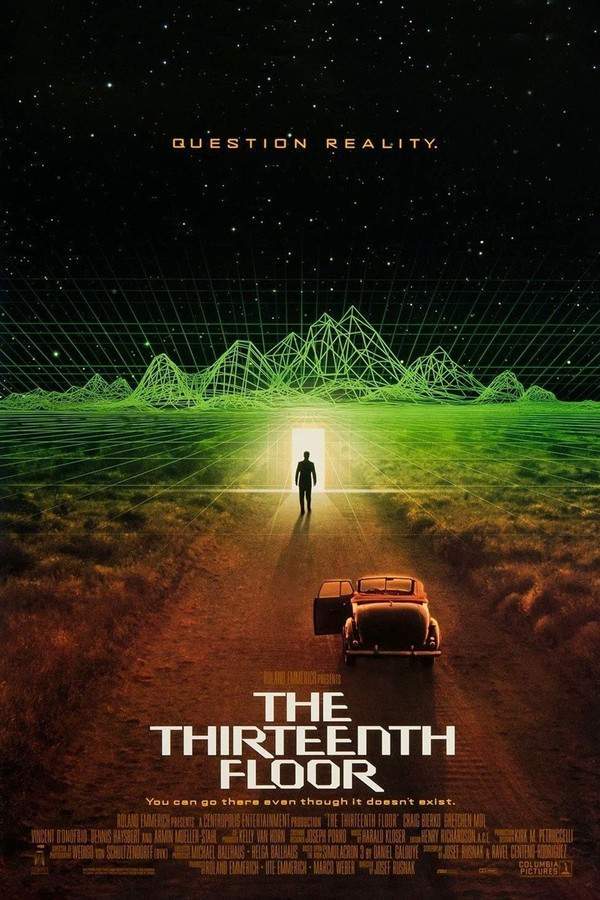
The Thirteenth Floor (1999) movie poster

Timeline

The Thirteenth Floor (1999) Timeline Explained – Every Event in Order

Release, runtime and language
1999 · 100 min · English
Loading streaming availability…
Directed by
Josef Rusnak
Starring
Craig Bierko, Armin Mueller-Stahl, Gretchen Mol
Budget
$16M

A software designer finds his world turned upside down when he awakens with amnesia and a mysterious bloodstain. He's implicated in his boss’s murder and must piece together the events leading up to the crime. As he investigates, he discovers that reality itself might be an elaborate simulation, forcing him to question everything he thought he knew and fight to uncover the truth behind the unsettling events.

On this page (7)
  1. 1 Where to watch
  2. 2 Events in order (15)
  3. 3 Timeline questions answered
  4. 4 The book behind the movie
  5. 5 Movie threads
  6. 6 Movies like The Thirteenth Floor
  7. 7 Every angle
Loading streaming availability…

15 events in order · contains spoilers

The Thirteenth Floor Timeline: Events in Chronological Order

Every key event of The Thirteenth Floor (1999) in order, scene by scene, with when and where it takes place. Use it to untangle flashbacks, time jumps and parallel storylines, to refresh your memory before the sequel or to find the exact scene you are thinking of.

  1. Introduction to Hannon Fuller

    In the summer of 1999, the visionary entrepreneur Hannon Fuller makes waves in Los Angeles with his groundbreaking virtual reality technology. This simulation perfectly captures the essence of 1937 Los Angeles, presenting a stunningly immersive experience for users.

    When
    1999
    Where
    Los Angeles
  2. Fuller's Murder

    Just before the testing of his innovative system, Hannon Fuller is murdered, sending shockwaves through the community and sparking a police investigation. This shocking crime raises questions about the safety and implications of his virtual reality project.

    When
    1999
    Where
    Los Angeles
  3. Douglas Hall's Predicament

    Douglas Hall, Fuller's loyal friend and protégé, finds himself in the crosshairs of the investigation following evidence that suggests his involvement in Fuller's murder. Faced with this mounting suspicion, his confidence falters as he grapples with his perceived guilt.

    When
    1999
    Where
    Los Angeles
  4. A Blossoming Romance

    Amidst the turmoil, Douglas discovers comfort in his growing relationship with Jane Fuller, Hannon's estranged daughter. Their love provides a respite from his chaotic life, yet it is quickly overshadowed by the allegations against him.

    When
    1999
    Where
    Los Angeles
  5. Arrest and Desperation

    The situation escalates when a bartender claims to have seen Douglas with Fuller on the night of the murder, leading to his arrest. Desperate to clear his name, he relies on Jane's support for an alibi that he hopes will redeem him.

    When
    1999
    Where
    Los Angeles
  6. Diving into Virtual Reality

    To uncover the underlying truth behind Fuller's death, Douglas and his friend Jason Whitney enter the virtual reality simulation. Here, Douglas adopts the persona of John Ferguson, a bank clerk, beginning an unexpected journey into the depths of the digital landscape.

    When
    1999
    Where
    Virtual Reality Simulation
  7. The Shocking Revelation

    While navigating the 1937 simulation, Douglas discovers that the bartender, Jerry Ashton, is an artificial creation with dangerous intentions. This revelation raises urgent concerns for his safety as he realizes the threats lurking within the virtual realm.

    When
    1999
    Where
    Virtual Reality Simulation
  8. The Truth About Jane

    Detective Larry McBain delivers a shocking twist to Douglas: Jane is not who she claims to be, and Hannon Fuller had no daughter. Despite this revelation, Douglas remains determined to uncover the truth and find Jane's lookalike, Natasha Molinaro.

    When
    1999
    Where
    Los Angeles
  9. Discovering the Real Los Angeles

    As Douglas delves deeper into the simulation, he realizes that the year 1999 Los Angeles itself is a mere facade, masking the truth of their existence. This mind-boggling discovery forces him to reevaluate everything about his reality and identity.

    When
    1999
    Where
    Los Angeles
  10. Jane's Legacy

    In a twist of fate, Jane reveals her spirit migrated to the digital realm after her untimely death, manipulating her father's company as a ghost of sorts. This revelation complicates Douglas's understanding of love and loyalty as Jane's true goals come to light.

    When
    1999
    Where
    Virtual Reality Simulation
  11. Whitney’s Transformation

    Whitney takes on Ashton's persona within the 1937 simulation, inadvertently becoming involved in a sinister scheme against Douglas. This dangerous transition highlights the blurred lines between identity and reality both in the virtual and real worlds.

    When
    1999
    Where
    Virtual Reality Simulation
  12. Chaos Unleashed

    The plot thickens as Ashton’s downfall within the simulation allows his digital consciousness to hijack Whitney's body in the real world, leading to a tense hostage situation. Douglas must cleverly navigate this turmoil to gain the upper hand.

    When
    1999
    Where
    Real World
  13. The Confrontation

    In a climactic moment, Douglas attempts to enlighten Ashton about their shared realities, but the malicious David reasserts his control over Douglas's digital self. The ensuing chaos pushes Douglas to fight for his existence both in the simulation and reality.

    When
    1999
    Where
    Virtual Reality Simulation
  14. Resolution and Reflection

    Detective McBain intervenes just in time to save Jane and stop David’s chaos. This critical moment brings about significant reflections on simulated life as McBain questions his own existence in a darkly humorous exchange with Jane.

    When
    1999
    Where
    Los Angeles
  15. New Beginnings

    With the conflict subdued, Douglas awakens in the year 2024, wielding control over David's body in the real world. The conclusion marks a poignant change as Douglas prepares to explore the complexities of their shared simulated reality with Jane.

    When
    2024
    Where
    Los Angeles

Last updated: November 19, 2024 at 18:10

Was this helpful?

Timeline questions answered

The Thirteenth Floor Timeline Explained: Your Questions Answered

When does it happen, and why in that order? The questions people ask about the chronology of The Thirteenth Floor (1999): time jumps, flashbacks, cause and effect between scenes and the correct order of events, each answered with spoilers.

Q1

Why was Douglas Hall suspected of killing Hannon Fuller?

Douglas Hall was suspected because a bartender claimed to have seen him with Fuller on the night of the murder. Combined with his position as Fuller's protégé and the fact that he had access to Fuller's office, this circumstantial evidence made him the primary suspect in Detective McBain's investigation.

Foreshadowing: Earlier scenes establish Douglas as Fuller's closest associate, making him the obvious suspect when the murder occurs.

  • douglas hall
  • hannon fuller
  • murder suspect
  • bartender testimony
  • detective mcbain
Q2

Who really killed Hannon Fuller?

Fuller was killed by David, another character in the simulation who sought to gain control over the virtual reality system. The murder was orchestrated within the 1937 simulation to prevent Fuller from revealing something about the nature of their reality.

Foreshadowing: The film hints at other entities within the simulation who oppose Fuller's plans, suggesting the murder was not a simple real-world crime.

  • hannon fuller killer
  • david
  • murder plot
  • virtual reality control
Q3

What is Jane Fuller's real identity?

Jane Fuller is not Hannon Fuller's daughter. She died prematurely, and her consciousness migrated into the digital simulation, manipulating Fuller's company as a ghost in the machine. She created the fiction of being Fuller's estranged daughter to get close to Douglas Hall.

Foreshadowing: Jane's mysterious background and unusual knowledge of the company hint at her non-human nature long before the reveal.

  • jane fuller identity
  • fuller daughter
  • digital consciousness
  • simulation ghost
Q4

How do the nested simulations work in the movie?

The movie features three layers of reality: the 1937 Los Angeles simulation created by Fuller, the 1999 Los Angeles that Douglas believes is real (which is itself a simulation), and presumably another layer above that. Characters can travel between these layers, and consciousness can transfer between bodies in different simulation levels.

Foreshadowing: Fuller's cryptic directions and the mysterious destinations Douglas discovers early on suggest his world is not what it seems.

  • nested simulations
  • 1937 simulation
  • 1999 simulation
  • multiple realities
  • vr system
Q5

What happened to Jason Whitney in the simulation?

Jason Whitney entered the 1937 simulation to help Douglas, taking on the persona of Jerry Ashton. However, when Ashton's digital consciousness was defeated within the simulation, it escaped by hijacking Whitney's body in the real world, leading to the hostage crisis.

Foreshadowing: Whitney's decision to take on Ashton's dangerous persona foreshadows the identity theft that follows.

  • jason whitney
  • jerry ashton
  • body swap
  • consciousness transfer
  • hostage crisis
Q6

Why does Jerry Ashton become dangerous in the 1937 simulation?

Jerry Ashton is revealed to be an artificial creation within the 1937 simulation, designed to look like a bartender. When Douglas investigates Fuller's murder within the simulation, Ashton becomes a physical threat who actively tries to harm Douglas, revealing that some virtual inhabitants are programmed to be dangerous.

Foreshadowing: Ashton's seemingly innocent presence as a bartender early in the simulation hides his true nature as an artificial threat.

  • jerry ashton
  • virtual bartender
  • dangerous ai
  • artificial creation
  • 1937 los angeles
Q7

What does the ending mean - does Douglas wake up in the real world?

The ending is deliberately ambiguous. Douglas awakens in 2024 with control over David's body, but since 1999 was also a simulation, there's no guarantee 2024 is any more "real." The film suggests it could be another layer of simulation. The screen fading to black like a monitor shutting off implies the possibility that even this new reality is just another level of the simulation.

Foreshadowing: Fuller's earlier revelations about multiple self-sustaining simulations prepare viewers for the possibility that any apparent reality could be artificial.

  • ambiguous ending
  • 2024
  • real world
  • simulation layers
  • film conclusion
Q8

Why is 1999 Los Angeles also a simulation?

Douglas discovers that his entire reality in 1999 is a fabrication created by forces beyond his understanding. This revelation mirrors Fuller's creation of the 1937 simulation - someone above their level created the 1999 world. The implication is that there are infinite layers of simulated realities, each unaware of being artificial.

Foreshadowing: Fuller's cryptic directions to "destinations he had never imagined" hint at the artificial nature of Douglas's world.

  • 1999 los angeles simulation
  • fabricated reality
  • multiple layers
  • nested reality
  • higher power
Q9

What was Hannon Fuller's message to Douglas in the simulation?

Fuller left a cryptic message for Douglas within the 1937 simulation, directing him to explore beyond the virtual world and discover the truth about their existence. This message prompts Douglas to question everything and ultimately leads to the revelation that their entire 1999 reality is simulated.

Foreshadowing: The mysterious message Fuller's spirit leaves behind drives Douglas to continue investigating despite mounting dangers.

  • fuller message
  • cryptic note
  • simulation discovery
  • truth revelation
Q10

How does Detective McBain react to learning the truth about simulations?

After witnessing the chaos caused by Ashton's body hijacking and seeing Jane's powers, McBain realizes he too may be a simulation. In a darkly humorous exchange, he asks Jane if she plans to "unplug" him. Jane's hopeful response - "When you get back to wherever it is you come from, just leave us the hell alone down here, okay" - suggests he is indeed another simulation inhabitant.

Foreshadowing: McBain's earlier questions about the nature of the investigation hint at his growing suspicions.

  • detective mcbain
  • simulation truth
  • discover existence
  • unplug
  • final scene
Q11

What allows Ashton's consciousness to escape into the real world?

When Douglas defeats Ashton within the 1937 simulation - effectively "killing" him - Ashton's digital consciousness has nowhere to go but upward. He escapes by transferring into Whitney's body in the 1999 simulation, which is actually Whitney's real body. This demonstrates that consciousness can move between simulation layers when threatened, revealing the dangerous implications of the nested reality system.

Foreshadowing: Whitney's involvement in the simulation as Ashton creates the perfect conduit for this consciousness transfer.

  • consciousness escape
  • simulation jump
  • whitney body
  • ashton transfer
  • dangerous ai escape

Movie threads

More Movies Like The Thirteenth Floor, by Mood & Story

Curated lists built around what makes The Thirteenth Floor tick: the same mood, the same kind of story or the same emotional payoff. Each list explains why these movies belong together.

Movies about simulated reality like The Thirteenth Floor

Stories where characters discover their world is not what it seems. If you liked the mind-bending premise of The Thirteenth Floor, you'll find more movies like it here. This collection features sci-fi and thriller stories where characters grapple with the terrifying possibility that their entire world is a simulation or construct, leading to intense existential questioning.

  • mind-bending
  • existential dread
  • paranoid
  • unsettling
  • thought-provoking
  • cerebral thriller
  • Tone: dark, mind-bending, unsettling
  • Pacing: steady, deliberate unraveling
Why these movies?

The story pattern: The narrative typically begins with a seemingly normal world that gradually reveals cracks in its facade. A protagonist, often through an investigation or a glitch, uncovers evidence that their reality is false, leading to a paradigm-shattering journey where they must confront the nature of their own existence and the powers that control it.

Why they belong together: They are grouped by their core philosophical threat: the destabilizing idea that reality is a lie. This creates a shared mood of profound paranoia, dread, and a desperate, cerebral struggle for truth that defines the viewing experience.
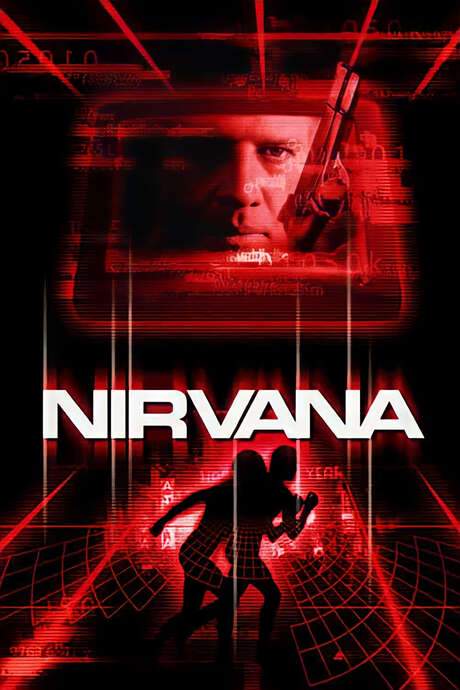
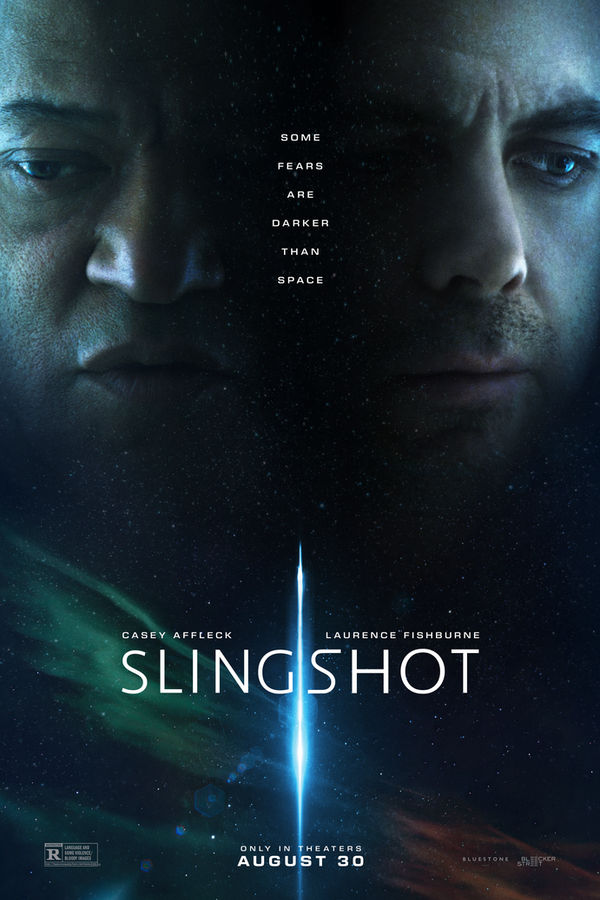
Mind-bending neo-noir mysteries like The Thirteenth Floor

Murder investigations that reveal darker truths about the world itself. Fans of The Thirteenth Floor's blend of murder mystery and existential sci-fi will enjoy these similar movies. This thread gathers neo-noir thrillers where a detective's investigation spirals into something much larger, uncovering truths that challenge perception and reality in a dark, steady-paced narrative.

  • noir-inspired
  • murder investigation
  • paranoid
  • mysterious
  • cynical
  • unraveling conspiracy
  • Tone: dark, mysterious, cynical
  • Pacing: steady investigative pace
Why these movies?

The story pattern: A protagonist, often an amateur or reluctant detective, is drawn into investigating a crime. As they follow clues, the case expands beyond a simple whodunit, revealing systemic corruption, technological conspiracies, or metaphysical truths. The personal mystery becomes a gateway to a much larger, more disturbing revelation.

Why they belong together: They share a specific tonal blend: the dark, cynical mood of film noir fused with the high-stakes, reality-questioning tension of a psychological thriller. The pacing is consistently steady, building paranoia and dread as the mystery deepens beyond its initial scope.

If you liked this

Movies Like The Thirteenth Floor

Similar movies to The Thirteenth Floor: the same genre, themes or kind of story. Each one comes with its own plot summary, timeline and ending explained.

Browse all movie summaries

Every angle

The Thirteenth Floor (1999) Explained: Plot, Timeline & Characters

Everything about The Thirteenth Floor in one place: what happens in the plot summary, the timeline in chronological order, the characters and meaning and a spoiler-free summary. What's After the Movie adds the cast, box office and post-credit scenes.

Coming soon on iOS and Android

The Plot Explained Movie Summary App

Plot summaries, endings explained and timelines on your phone. Catch up on any movie in minutes, save your favorites and never miss a twist again.

Be the first to know when we launch. Your email stays private, always.

Learn more about the app