Plot Explained Spoilers guaranteed!
Plot Explained

Browse by genre

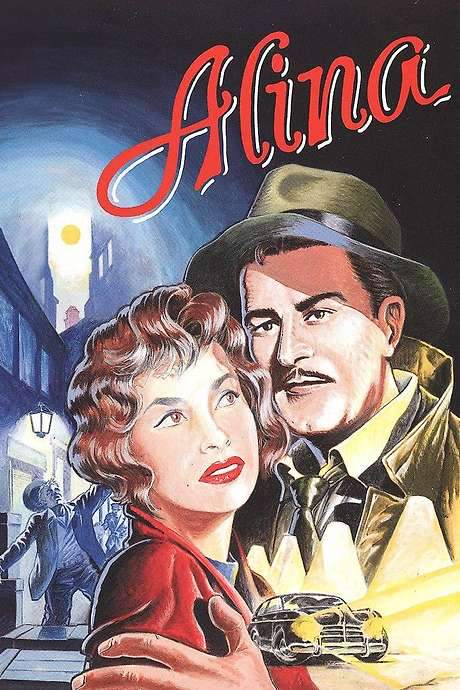
The Third Lover (1962) movie poster

Timeline

The Third Lover (1962) Timeline Explained – Every Event in Order

Release, runtime and language
1962 · 80 mins · French
Loading streaming availability…
Starring
Stéphane Audran, Claude Chabrol, Daniel Boulanger, Walther Reyer, André Badin, Jacques Charrier

During a work assignment in Germany, struggling journalist Albin meets successful writer Andreas and his wife Hélène. Hélène quickly captures Albin’s attention, and when Andreas departs on a business trip, Albin attempts to seduce her and ultimately usurp Andreas’s life.

On this page (6)
  1. 1 Where to watch
  2. 2 Events in order (12)
  3. 3 Timeline questions answered
  4. 4 Movie threads
  5. 5 Movies like The Third Lover
  6. 6 Every angle
Loading streaming availability…

12 events in order · contains spoilers

The Third Lover Timeline: Events in Chronological Order

Every key event of The Third Lover (1962) in order, scene by scene, with when and where it takes place. Use it to untangle flashbacks, time jumps and parallel storylines, to refresh your memory before the sequel or to find the exact scene you are thinking of.

  1. Sent to Germany to cover Hartmann

    Albin, a solitary French journalist, is sent to Germany to write an article about the noted novelist Andreas Hartmann who lives in a village outside Munich. He arrives with the assignment in mind and begins to observe Hartmann from within the local setting. The journey sets the stage for a tension between his professional façade and personal curiosity.

    Where
    Germany – village outside Munich
  2. Rents a flat in the village

    Albin rents a flat in the same village where Hartmann resides, establishing a base close to his subject. This accommodation gives him daily access to observe the couple and their social circle. The small setting intensifies his fixation as the assignment unfolds.

    Where
    Village outside Munich
  3. Meets Hartmann and Hélène through their circle

    Through Hartmann's French wife Hélène, Albin becomes acquainted with the writer and the couple's circle. The meetings pull him deeper into their world while he pretends to maintain professional distance. This early bond foreshadows the complications to come.

    Where
    Hartmann's residence / village
  4. He makes advances toward Hélène

    Obsessed with uncovering the dark spot behind their marriage, Albin makes advances to Hélène. She tactfully rejects him, but the tension between them remains unresolved. The encounter marks the start of his intrusive pursuit.

    Where
    Hélène's residence / Hartmann's home
  5. Albin begins spying

    After being rebuffed, Albin begins spying on Hélène, convinced she is having an affair. He stalks her routines and interactions in the hope of finding proof. This spying marks a moral descent tied to his investigative impulse.

    Where
    Hélène's residence and surrounding village
  6. He finds the affair and takes photos

    Albin locates Hélène with her lover and takes compromising photographs. He amasses evidence to use against her, crossing ethical lines in his pursuit of the truth. The act seals his transformation from journalist to voyeur.

    Where
    Secret meeting place in the village
  7. Confronting Hélène with the pictures

    Albin presents the photographs to Hélène, confronting her with the evidence. She begs him not to show them to her husband, arguing that their marriage provides stability after a life of instability. The confrontation reveals the fragile balance of their relationships.

    Where
    Hélène's residence
  8. Hélène reveals awareness and asks for discretion

    Hélène indicates that Andreas already knows about the affair but asks Albin not to disclose the pictures to him. She explains that their marriage has been a mainstay for both of them after earlier instability. The request deepens Albin's moral conflict.

    Where
    Hartmann's home
  9. Albin confronts Hartmann with the photos

    Albin confronts Andreas Hartmann with the photographs, hoping to expose the truth and perhaps ruin the pair. The confrontation escalates the emotional stakes as the couple's precarious balance hangs in the air. The scene sets the tragedy in motion.

    Where
    Hartmann's residence
  10. Hartmann kills Hélène and turns himself in

    In a fit of rage, Hartmann stabs Hélène to death after the confrontation. He then surrenders to the police, bringing the tragic unraveling to a head. The act leaves Albin alone with the consequences he helped to provoke.

    Where
    Hartmann's residence
  11. Albin seeks redemption but is ignored

    Trying to redeem his scheme, Albin confesses that he is responsible for Hélène's death, but the police ignore him. The rejection underscores the irreversibility of the tragedy he sparked. He accepts the grim outcome of his actions.

    Where
    Police station
  12. Final voice-over: no more journalism

    In the final voice-over, Albin states that he was unable to find work as a journalist afterwards. The closing narration leaves him as a man defined by his failure to influence events but unable to escape their consequences. The film ends on a somber note about ambition and guilt.

Last updated: March 05, 2026 at 18:41

Was this helpful?

Timeline questions answered

The Third Lover Timeline Explained: Your Questions Answered

When does it happen, and why in that order? The questions people ask about the chronology of The Third Lover (1962): time jumps, flashbacks, cause and effect between scenes and the correct order of events, each answered with spoilers.

Q1

Why does Albin become so obsessed with uncovering the Hartmanns' secrets?

Albin's obsession stems from his own isolation and professional frustration. As a solitary French journalist sent to Germany with no real connection, he projects his own emptiness onto the Hartmanns' seemingly harmonious marriage. The summary describes his 'dark undercurrent of fixation' - he's drawn to the idea that beneath their perfect exterior lies hidden fracture, perhaps because he craves to find something real beneath surfaces. His curiosity isn't purely journalistic; it's personal, driven by a need to prove that no relationship is truly stable.

Foreshadowing: The story opens with Albin as a solitary figure, establishing his detachment before he becomes entangled in the couple's life.

  • albin
  • hartmann
  • obsession
  • curiosity
  • journalist
Q2

Why does Hélène tell Albin that Andreas already knows about her affair?

Hélène's claim that Andreas knows about the affair is a manipulation to protect her marriage. When Albin confronts her with the photographs, she pleads with him not to reveal them to her husband, explaining that their marriage has been 'a steady anchor after years of instability.' By claiming Andreas already knows, she hopes to convince Albin that revealing the photos would serve no purpose and simply disrupt a stable relationship. It's a desperate attempt to maintain her world by making the evidence seem irrelevant.

Foreshadowing: Earlier, Hélène tactfully rejected Albin's advances, showing she's committed to preserving her marriage.

  • helene
  • affair
  • andreas
  • marriage
  • manipulation
Q3

Why does Andreas kill Hélène after seeing the photographs?

Andreas kills Hélène in a flash of rage because, contrary to what Hélène told Albin, he actually did not know about the affair. The photographs Albin presents are the first concrete proof Andreas sees of his wife's infidelity. Hélène's lie that Andreas knew was meant to protect her marriage, but it backfires catastrophically when Albin confronts Andreas anyway. The sudden revelation of betrayal triggers Andreas's violent act - he stabs Hélène and then immediately turns himself in to the police.

Foreshadowing: Hélène's claim that Andreas knew about the affair is revealed as false when Andreas reacts with rage rather than confirmation.

  • andreas
  • helene
  • kill
  • photographs
  • rage
  • betrayal
Q4

Why does Albin confront Andreas with the photographs despite Hélène's pleas?

Albin confronts Andreas because his obsession has transformed from curiosity into a desire for destruction. Though Hélène begs him not to show the pictures, explaining their marriage's importance, Albin proceeds anyway. His motivation appears to be a mix of professional ambition - wanting to expose the truth - and personal resentment after being rejected by Hélène. The summary notes he hopes to 'expose the truth and perhaps ruin the pair.' He wants to prove his suspicions correct and shatter the harmony he envied.

Foreshadowing: Albin's earlier advances were rejected, and his spying represents a moral descent from journalist to voyeur.

  • albin
  • andreas
  • photographs
  • confrontation
  • ruin
Q5

Why does Albin confess to the police and why is he ignored?

Albin confesses because he realizes his role in triggering the tragedy - by presenting the photographs to Andreas, he directly caused Hélène's death. He seeks redemption and wants his admission of responsibility acknowledged. However, the police ignore him because from their perspective, Andreas is the one who committed the murder and immediately turned himself in. The legal case is clear: Andreas killed his wife. Albin's confession about manipulation and provocation doesn't change the fact that Andreas acted violently. His suffering goes unacknowledged because the law focuses on the perpetrator, not the catalyst.

Foreshadowing: The confrontation scene sets the tragedy in motion, with Albin presenting the photographs to Andreas.

  • albin
  • confession
  • police
  • guilt
  • redemption
Q6

Why can Albin not work as a journalist after the events?

Albin cannot continue as a journalist because he becomes defined by his role in the tragedy. The final voice-over reveals he 'could not find work as a journalist afterwards.' His intrusion into the Hartmanns' lives, his voyeurism, and his role in provoking a murder have morally compromised him. More than that, the experience has stripped away his purpose - he entered the story as a journalist seeking to write about Hartmann, but his actions proved his own intrusion was more damaging than any story he could write. His professional failure is intertwined with his personal guilt.

Foreshadowing: The narrative opens with Albin as a journalist on assignment, and his inability to continue that career reflects the story's circular tragedy.

  • albin
  • journalist
  • guilt
  • career
  • consequences
Q7

What triggers Albin's spying behavior after Hélène rejects him?

After Hélène rejects his advances, Albin begins spying because his ego is bruised and his curiosity becomes pathological. He's convinced that if Hélène would reject him, she must be hiding something - specifically, having an affair. The summary states he becomes 'convinced she is having an affair' and starts 'recording glimpses of the couple's private moments.' His spying is less about proving infidelity and more about validating his own theories. He needs to be right about the marriage being flawed, because it would justify his own failed attempt at connection.

Foreshadowing: Albin's earlier advances and rejection set the stage for his descent into surveillance.

  • albin
  • spying
  • hélène
  • rejection
  • obsession
Q8

What is the cost of Albin's meddling in the Hartmanns' marriage?

The cost of Albin's meddling is catastrophic: Hélène dies, Andreas goes to prison, and Albin is left with permanent guilt and professional ruin. His intrusion into their lives - first as a journalist, then as a suitor, then as a spy - disrupts the fragile balance Hélène worked to maintain. The summary describes how Albin must 'confront the consequences of his own scheme' and notes 'the impossibility of turning back the clock after crossing a line that cannot be uncrossed.' His desire to uncover truth destroys the very thing he was curious about.

Foreshadowing: The story describes Albin's 'dark undercurrent of fixation' driving him to 'uncover what lies beneath' the marriage.

  • albin
  • cost
  • meddling
  • consequences
  • guilt
Q9

Why does Hélène fight so hard to protect her marriage to Andreas?

Hélène fights to protect her marriage because it represents stability after years of instability in her life. When she pleads with Albin not to reveal the affair, she explains that 'their marriage has provided a steady anchor after years of instability.' This suggests Hélène's past involved chaos or uncertainty, and Andreas provided the security she craved. She's willing to lie about Andreas knowing about the affair because losing that stability would be devastating. Her protection of the marriage is self-preservation as much as love.

Foreshadowing: Hélène's explanation about needing stability hints at a troubled past the audience never fully sees.

  • helene
  • marriage
  • stability
  • protection
  • Andreas
Q10

Why does Andreas immediately turn himself in after killing Hélène?

Andreas turns himself in immediately because the murder is an act of spontaneous rage, not premeditated. After seeing the photographs and learning of his wife's betrayal, he acts in a 'flash of rage' - stabbing Hélène impulsively. Once the act is done, the rage dissipates and he's left facing what he's done. Surrendering to the police is an immediate response to the horror of his actions. He doesn't flee or hide because he knows there's no way to escape what he's done, and perhaps he wants to accept the consequences of his crime.

Foreshadowing: The confrontation with photographs triggers Andreas's violent reaction, showing the murder isn't planned.

  • andreas
  • police
  • surrender
  • confession
  • murder
Q11

What is the nature of Albin's fixation on Hélène?

Albin's fixation on Hélène goes beyond romantic attraction - it's tied to his larger obsession with uncovering the 'hidden fracture' in the Hartmanns' marriage. When he first meets her, the story notes he becomes 'acquainted with the writer and the couple's circle' and his 'quiet curiosity' grows into 'dark undercurrent of fixation.' Hélène becomes the object through which he investigates his theory that no marriage is truly perfect. His advances and later spying are less about love and more about proving his hypothesis correct. He's drawn to her as a mystery to be solved, not as a person to be known.

Foreshadowing: The story establishes early that Albin is looking for 'what lies beneath' their outwardly harmonious marriage.

  • albin
  • hélène
  • fixation
  • obsession
  • mystery

Movie threads

More Movies Like The Third Lover, by Mood & Story

Curated lists built around what makes The Third Lover tick: the same mood, the same kind of story or the same emotional payoff. Each list explains why these movies belong together.

Movies about obsessive downfall like The Third Lover

Character studies where a single obsession spirals into tragic, irreversible consequences. Explore a curated list of psychological dramas similar to The Third Lover. If you were captivated by the story of a character's obsessive spiral into manipulation and its tragic consequences, you'll find these movies share a tense, melancholic mood and a focus on moral decay.

  • obsessive
  • tense
  • melancholic
  • claustrophobic
  • guilty
  • psychological
  • Tone: tense, melancholic
  • Pacing: steady, deliberate
Why these movies?

The story pattern: Narratives in this thread follow a clear arc: a character becomes fixated on an object of desire, leading them to increasingly manipulative and morally questionable actions. The tension escalates steadily as their obsession consumes them, ultimately resulting in a definitive, often sad, ending where they must face the repercussions of their actions.

Why they belong together: These movies are grouped together because they share a core focus on the psychological unraveling of a character driven by obsession. They create a tense, claustrophobic atmosphere, feature a steady, deliberate pacing that builds unease, and conclude with a sense of tragic inevitability and emotional weight.

Slow burn psychological thrillers like The Third Lover

Stories where a steady, deliberate pace creates a suffocating atmosphere of unease. Discover movies with a similar slow burn tension to The Third Lover. These films use a steady pace to build a claustrophobic, psychologically tense atmosphere, perfect for viewers who enjoy stories where dread and unease simmer beneath the surface until a powerful climax.

  • tense
  • psychological
  • claustrophobic
  • slow burn
  • uneasy
  • melancholic
  • Tone: tense, psychological
  • Pacing: steady, slow burn
Why these movies?

The story pattern: The narrative pattern is defined by a steady, often methodical pacing that allows tension to accumulate from character interactions, moral ambiguities, and psychological manipulation. The plot unfolds gradually, focusing on the internal states of characters as they navigate fraught relationships and ethical boundaries.

Why they belong together: These films are united by their shared approach to building tension. They prioritize a steady pace and a tense, melancholic tone over fast-paced action, creating a claustrophobic and psychologically rich experience. The emotional impact comes from the gradual escalation of unease and the consequences of complex character decisions.

If you liked this

Movies Like The Third Lover

Similar movies to The Third Lover: the same genre, themes or kind of story. Each one comes with its own plot summary, timeline and ending explained.

Browse all movie summaries

Every angle

The Third Lover (1962) Explained: Plot, Timeline & Characters

Everything about The Third Lover in one place: what happens in the plot summary, the timeline in chronological order, the characters and meaning and a spoiler-free summary. What's After the Movie adds the cast, box office and post-credit scenes.

Coming soon on iOS and Android

The Plot Explained Movie Summary App

Plot summaries, endings explained and timelines on your phone. Catch up on any movie in minutes, save your favorites and never miss a twist again.

Be the first to know when we launch. Your email stays private, always.

Learn more about the app