Plot Explained Spoilers guaranteed!
Plot Explained

Browse by genre

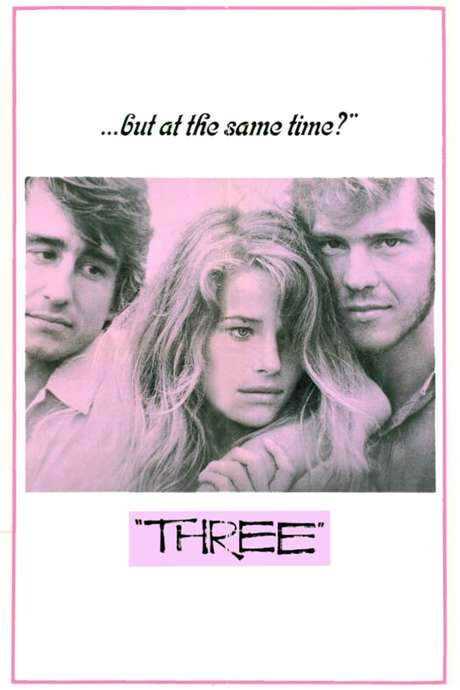
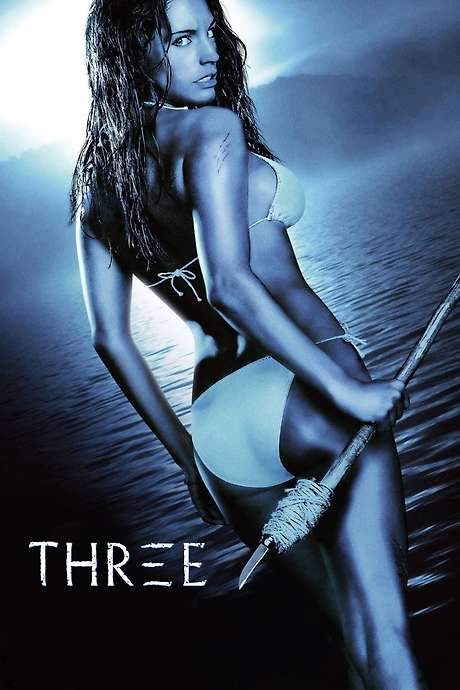
Three (2005) movie poster

Plot Summary

Three (2005) Plot Summary Explained

Release, runtime and language
2005 · 95 mins · English
Directed by
Stewart Raffill
Starring
Billy Zane, Gary Brockette, Juan Pablo Di Pace, Kelly Brook, Summer Davis, Gabrielle Jourdan

Looks can kill After a yachting accident, a millionaire and his wife are shipwrecked on a desert island along with their former deckhand, Manuel.

On this page (5)
  1. 1 What happens: full plot
  2. 2 Plot questions answered
  3. 3 Movie threads
  4. 4 Movies like Three
  5. 5 Every angle

Full plot summary · contains spoilers

What Happens in Three: Full Plot Summary

The whole story of Three (2005) explained, from the opening scene to the final frame: every key event, every twist and what it all adds up to. Read it as a quick recap before the sequel, to check a scene you missed, or to finally understand what really happened.

Jennifer Peters, Kelly Brook, is a writer who has just published a book about serial killers. She becomes entangled in a deadly game when her brother Roy is abducted by a sadistic killer known as the Riddle Killer, or R.K., who bases his murders on riddles. Following the clues left by R.K., Jennifer tracks the trail and discovers Roy, but can’t save him in time—the car he is trapped in explodes.

Kevin Parson, a seminary student, receives a chilling call from R.K. demanding that he confess a certain sin or his car will blow up. The killer also poses a riddle: "What falls but never breaks? What breaks but never falls?" Kevin barely escapes the car explosion and alerts the police, including Jennifer, but he omits the part about the sin, chalking it up to something he did years ago.

A separate chain of threats unfolds when Kevin’s childhood dog is targeted by a bomb. He travels to his Aunt Balinda’s house but cannot save the dog. Back home, he reconnects with his longtime friend Samantha Sheer, and the two set out to unravel the R.K. mystery, noting that the killer sometimes seems to be able to monitor Kevin from within his own home. Sam solves the first riddle; the answer is the pairing of night and day.

A new threat emerges when a bomb is attached to Kevin’s fellow student Henry, and a message written on Henry’s forehead cites Romans 6:23—the wages of sin is death. The police manage to remove the bomb. Kevin recalls a boy from his past whom he left behind in a warehouse, believing he died. He thinks the boy survived and might now be R.K.

Kevin finds his thesis papers scattered and discovers a TV in his refrigerator that shows R.K. delivering another riddle: "what takes you away but doesn't go anywhere?" He confesses his past lapse, hoping to placate the killer, but R.K. persists. Kevin and Sam manage to evacuate a bus on 3rd Avenue just before an explosion.

Jennifer visits Aunt Balinda and uncovers a bloody jacket in the warehouse, while Sam talks with Kevin in a hotel. R.K. sends a recorded message pointing to an empty building and the warehouse, and the two race to the site. In the warehouse, Sam sees a wall of enigmatic words and becomes trapped. Kevin enters, finds a bomb, and escapes with Sam while Jennifer and the police arrive to investigate. Sam leaves, and Kevin insists on not cooperating with Jennifer, as the killer demanded no police involvement or more deaths would follow. Jennifer resigns from the case, but Kevin ignores her stance.

Kevin then faces a new threat: a house fire at midnight where Aunt Balinda is in danger. He is reminded of the abuse she inflicted on him as a child. Sam notices that the handwriting on a note from R.K. matches Kevin’s own, leading them to suspect that Kevin's “evil half” may be involved. They realize the riddles point to opposites, like night and day, and conclude that R.K. could be a part of Kevin himself.

A dramatic turn occurs when Balinda is tied up and the killer is revealed as Slater. Sam looks through the door and confirms that Slater is real when she sees two pairs of shoes. Slater explains his plan: he intends to force Kevin to kill Balinda and then pin the crime on him, prompting Jennifer to confront Kevin with the fact that no police involvement will save anyone. Jennifer arrives to find Kevin pointing a gun at himself. It turns out that both Slater and Sam are figments of Kevin’s imagination—hardened by Aunt Balinda’s abuse, he had imagined his friend Sam and the boy from his past, and he had unconsciously mimicked the real Riddle Killer. Jennifer helps Kevin see the truth, and his visions of Slater and Sam vanish.

In a final twist, Jennifer discovers a photo of a hot dog vendor at the front of the crowd, holding a camera and clutching a book allegedly given by the killer to her. The vendor confesses that he hates copycats and had intended to kill Kevin for copying him.

The aftermath leaves Kevin placed in an institution, with Jennifer visiting him there, as the case closes and the line between memory and malice remains deeply blurred.
Last updated: October 09, 2025 at 15:13

Was this helpful?

Plot questions answered

Three Plot Explained: Your Questions Answered

The questions people ask most about Three (2005): what happens in the confusing scenes, why the characters do what they do, the twists, hidden details and what the ending means. Each answer contains spoilers.

Q1

Why does Kevin initially refuse to confess the sin that R.K. demands?

Kevin initially omits the confession because the 'sin' refers to a traumatic childhood event, he locked a young boy in a warehouse and left him there, believing he might have died. Kevin struggles to admit this shameful act from his past, even as the Riddle Killer uses it against him. He only confesses when further threats make him believe disclosure might stop the attacks.

Foreshadowing: Earlier scenes show Kevin's thesis papers scattered around his room, hinting at his fractured mental state.

  • kevin parson
  • confession
  • sin
  • riddle killer
  • childhood trauma
Q2

Why is Sam a figment of Kevin's imagination?

Sam Sheer is revealed to be a manifestation of Kevin's fractured psyche, created to cope with severe childhood abuse inflicted by his Aunt Balinda. Throughout the film, Sam only appears when Kevin is present or alone, and no other characters interact with her meaningfully. The handwriting analysis showing R.K.'s notes matching Kevin's own script confirms he has been mimicing the killer unconsciously while his mind invented an ally.

Foreshadowing: Sam is never seen speaking to anyone except Kevin, and her sudden appearances align with Kevin's psychological state.

  • samantha sheer
  • imaginary friend
  • kevin parson
  • psychological break
  • delusion
Q3

Who is the real Riddle Killer in the film?

The actual R.K. is the hot dog vendor visible in the background of a crowd photo Jennifer discovers. He confesses that he hates copycats and targeted Kevin because Kevin was unconsciously mimicking his riddles and methods, essentially creating a copycat killer. The real killer had given Jennifer a book directly, explaining his direct involvement in her case.

Foreshadowing: The hot dog vendor appears in the background of key scenes, holding a camera and book, but is never introduced or named.

  • riddle killer
  • hot dog vendor
  • real killer
  • copycat
  • identity reveal
Q4

What do the riddles 'night and day' and 'what breaks but never falls' mean?

The riddle 'What falls but never breaks? What breaks but never falls?'答案是 night and day, night falls but doesn't break, and day breaks but doesn't fall. This establishes the pattern of opposites that defines R.K.'s riddles. The second riddle 'what takes you away but doesn't go anywhere?' refers to time, specifically, the clock or hour that passes but goes nowhere physically. These riddle answers drive Kevin and Sam's investigation and ultimately reveal the psychological nature of the case.

Foreshadowing: Sam solves the first riddle early, establishing the opposites theme that later connects to Kevin's 'evil half' theory.

  • riddle answers
  • night and day
  • opposites
  • kevin parson
  • clues decoding
Q5

Why does Kevin believe the boy he left in the warehouse is R.K.?

Kevin suspects the warehouse boy survived and became the Riddle Killer because he had locked a child in a warehouse during his childhood and left him there, potentially causing the boy's death. This guilt haunts Kevin throughout the film and is the 'sin' R.K. threatens to expose. Kevin's belief that the boy returned for revenge stems from his traumatized psyche.

Foreshadowing: Kevin's memories of the warehouse are triggered when R.K. leaves clues connected to that location.

  • warehouse boy
  • childhood
  • kevin parson
  • guilt
  • revenge
Q6

What leads to Kevin being institutionalized at the end?

Kevin is institutionalized because the psychological truth emerges that he created imaginary companions, Sam and Slater, to cope with severe childhood abuse from Aunt Balinda. He unconsciously mimicked the real Riddle Killer while believing he was solving the case with allies who did not exist. The mental fragmentation, combined with his attempt to shoot himself when confronted with the truth, requires institutional care.

Foreshadowing: Kevin's visions of Slater vanish once Jennifer helps him confront reality, showing his mental state was consistently unstable.

  • kevin parson
  • institution
  • mental breakdown
  • psychological
  • ending
Q7

Why does Kevin refuse to cooperate with Jennifer and the police?

Kevin refuses to involve the police because R.K. explicitly threatened that more people would die if Kevin went to the authorities. This condition forces Kevin to operate outside official channels, even as Jennifer urges cooperation. The real reason, revealed later, is that Kevin's fractured mind could not trust real-world help, he was already operating within a delusion where only his imagined allies seemed trustworthy.

Foreshadowing: Kevin ignores Jennifer's pleas throughout the investigation, prioritizing the killer's demands over legal channels.

  • kevin parson
  • jennifer peters
  • police cooperation
  • riddle killer threats
Q8

Why does R.K. target Aunt Balinda in the finale?

R.K. targets Balinda as part of Slater's imagined plan to force Kevin into an impossible choice, kill Balinda and become a murderer, or refuse and watch her die. The deeper psychological truth is that Kevin's abused child-self wanted revenge against his tormentor, but his adult self could not act on that impulse. The fire and hostage situation represent the culmination of Kevin's internal conflict between his trauma and his conscience.

Foreshadowing: Kevin's memories of Balinda's abuse surface when she is in danger, showing his traumatic attachment to her.

  • aunt balinda
  • target
  • kevin parson
  • child abuse
  • final confrontation
Q9

Why does R.K.'s handwriting match Kevin's own?

The handwriting match occurs because Kevin himself is unconsciously writing the riddle notes while in a dissociative state. Sam and Jennifer realize the riddles follow opposite patterns, night/day, and that the notes resemble Kevin's script. This discovery leads them to theorize Kevin's 'evil half' might be the killer, not realizing yet that Kevin is both the investigator and the mimicked killer simultaneously.

Foreshadowing: Kevin's thesis papers being scattered suggests his mind is fragmenting and rewriting his own work.

  • handwriting analysis
  • kevin parson
  • riddle killer notes
  • forensic evidence
Q10

Why can't Jennifer save Roy before the car explodes?

Jennifer follows R.K.'s clues to locate Roy, who is trapped in a car with a bomb. Despite her urgency, the timer or trigger mechanism reaches zero before she can extract him, causing the vehicle to explode. This failure motivates Jennifer to personally pursue R.K. and establishes the killer's method, using victims as puzzles with deadly time limits.

Foreshadowing: R.K. specifically chose Jennifer because she wrote about serial killers, setting up their cat-and-mouse dynamic.

  • roy peters
  • jennifer peters
  • car explosion
  • riddle killer
  • rescue failure
Q11

Why does R.K. abduct Jennifer's brother Roy?

R.K. abducts Roy specifically because Jennifer wrote a book about serial killers and their psychology. The killer takes offense at her public analysis of murder methodology and uses her brother as bait to draw her into his deadly game. This personal motivation connects Jennifer directly to the Riddle Killer's ego and sets the entire investigation in motion.

Foreshadowing: The film opens with R.K. targeting Jennifer specifically, not random victims.

  • roy peters
  • jennifer peters
  • riddle killer
  • abduction
  • motive

Movie threads

More Movies Like Three, by Mood & Story

Curated lists built around what makes Three tick: the same mood, the same kind of story or the same emotional payoff. Each list explains why these movies belong together.

Movies about unreliable narrators and psychological collapse like Three

Stories where the protagonist's fractured mind blurs reality, suspicion, and danger. If you liked the psychological unraveling in Three, this list features movies with similar themes. Discover other thrilling stories where a character's fractured psyche is the central mystery, and reality is never what it seems.

  • psychological
  • unsettling
  • paranoid
  • mind-bending
  • suspenseful
  • disorienting
  • Tone: dark, paranoid, unsettling
  • Pacing: fast, driven by psychological tension
Why these movies?

The story pattern: These narratives often begin with a character facing a stressful or traumatic situation. Their grip on reality loosens, introducing allies, threats, or entire scenarios that may be projections of their mind. The plot structure hinges on a major twist or gradual revelation that re-contextualizes earlier events as part of the protagonist's breakdown.

Why they belong together: Movies in this thread share a core device: using the protagonist's unstable perspective as the primary source of tension and narrative complexity. They create a specific paranoid mood, forcing the audience to actively decipher what is real and what is a symptom of a psychological descent.

Thrillers about being trapped in high-stakes situations like Three

Characters are physically or psychologically trapped in a deadly situation with few escapes. Looking for more movies with the tense, trapped feeling of Three? Explore these high-stakes thrillers where characters are confined in deadly scenarios, testing their limits and creating gripping, fast-paced survival stories.

  • gripping
  • claustrophobic
  • desperate
  • suspenseful
  • anxious
  • survival
  • Tone: dark, tense, desperate
  • Pacing: fast, relentless
Why these movies?

The story pattern: The narrative follows a simple but effective structure: a group or individual is isolated in a hostile environment (an island, a room, a ship). External threats and internal conflicts rapidly escalate, stripping away civility and revealing primal instincts. The plot is driven by a series of crises that narrow the options for survival, leading to a desperate climax.

Why they belong together: These films are grouped by their shared core experience of claustrophobic tension and high-stakes survival. They prioritize a fast pace, high intensity, and a dark tone, creating a visceral viewing experience centered on the primal fear of being trapped with danger.

If you liked this

Movies Like Three

Similar movies to Three: the same genre, themes or kind of story. Each one comes with its own plot summary, timeline and ending explained.

Browse all movie summaries

Every angle

Three (2005) Explained: Plot, Timeline & Characters

Everything about Three in one place: what happens in the plot summary, the timeline in chronological order, the characters and meaning and a spoiler-free summary. What's After the Movie adds the cast, box office and post-credit scenes.

Coming soon on iOS and Android

The Plot Explained Movie Summary App

Plot summaries, endings explained and timelines on your phone. Catch up on any movie in minutes, save your favorites and never miss a twist again.

Be the first to know when we launch. Your email stays private, always.

Learn more about the app