Year: 1992
Runtime: 114 mins
Language: Italian
Director: Gianni Amelio
Antonio, a carabiniere, is ordered to escort two siblings, Rosetta, 11, and her brother Luciano, from Milan to an orphanage in Sicily after their mother is arrested for forcing Rosetta into prostitution. Their relationship starts strained, but as the journey progresses they grow closer, forming a tentative friendship.
Warning: spoilers below!
Haven’t seen The Stolen Children yet? This summary contains major spoilers. Bookmark the page, watch the movie, and come back for the full breakdown. If you're ready, scroll on and relive the story!
Read the complete plot breakdown of The Stolen Children (1992), including all key story events, major twists, and the ending explained in detail. Discover what really happened—and what it all means.
11-year-old Valentina Scalici as Rosetta and 9-year-old Giuseppe Ieracitano as Luciano live with their mother in the housing projects of Milan, two internal migrants from Sicily who face prejudice in their adopted city. Their mother is unemployed and their father has long since abandoned them. For the past two years, the mother has forced Rosetta into prostitution to survive. When authorities raid the dwelling, the mother and a client are arrested, and the children are slated to be sent to a Catholic orphanage in Civitavecchia, near Rome.
Two carabinieri, Enrico Lo Verso as Antonio and Fabio Alessandrini as Grignani, are assigned the thankless task of escorting the children by train. Grignani deserts Antonio in Bologna, leaving him to carry the burden alone. The siblings are unruly and often squabble, with Luciano sickly and reticent, while Rosetta is cynical, rebellious, and adept at manipulation. At the orphanage, the priest in charge (Agostino Zumbo as Sacerdote istituto) claims Rosetta’s medical file is missing, a pretext that Antonio suspects is tied to her past.
Desperate to protect the children, Antonio tries to contact Grignani for guidance, but Grignani offers little help. Ignoring proper orders, Antonio decides to improvise and take the children to another institute back in their native Sicily. The plan stalls when Luciano suffers an asthma attack on the way to the train station, forcing them to miss the train. They spend an awkward night at a carabiniere acquaintance’s bachelor pad, a moment that underlines the precariousness of their situation.
After a long train-and-coach journey, they arrive unannounced at Antonio’s sister’s home in Calabria, which doubles as a restaurant. There they celebrate a young girl’s First Communion. Antonio confesses to his family that Rosetta and Luciano are the children of a superior, and Rosetta is dressed in a stylish, age-appropriate summer dress to mingle with other girls. Luciano enjoys the warmth of Antonio’s grandmother, who gives him a photo of a six-year-old Antonio in a Zorro costume. Yet this fragile moment is shattered when a guest recognizes Rosetta from a tabloid article and reveals her past to the other guests. Humiliated, Rosetta darts outside while Antonio chases her down, offering quiet reassurance. That encounter marks a turning point for Antonio, who begins to feel genuine compassion for the siblings beyond a sense of duty.
With a renewed resolve, Antonio purchases an old Fiat 128 and moves to remove Rosetta and Luciano from Calabria, driving them to the ferry terminal at the Strait of Messina. On the ferry, he finally talks with Luciano, and instead of heading straight to the Gela orphanage, he takes a detour to a cheap hotel near Marina di Ragusa, where the three share adjoining rooms.
The following day, they visit the beach, and Antonio teaches Luciano to swim, deepening the bond between them. They meet two young French women who take a liking to Rosetta, and together they drive to Noto to visit the cathedral. A tourist hands Rosetta her camera, which is promptly snatched; Antonio pursues the thief and brings him to the local Carabiniere station. There, one tourist lightly confirms the family’s troubled past, and Rosetta overhears the word “prostitute,” which instantly dampens her affable mood. Antonio faces accusations of kidnapping, abuse, and failing to obey orders, and is forced to surrender his warrant card for a court-martial. After hours of uncertainty, they are all released.
Antonio drives the trio to Gela late at night, his silence a sign of concern for his career’s future. Near their destination, he parks at an abandoned block, where they fall asleep in the car. At dawn, the children wake and reflect on their prospects—what lies ahead for them in the orphanage and in a world that has already judged them so harshly.
Last Updated: October 09, 2025 at 09:24
Discover curated groups of movies connected by mood, themes, and story style. Browse collections built around emotion, atmosphere, and narrative focus to easily find films that match what you feel like watching right now.
Lonely figures form fragile bonds while escorting vulnerable characters through a harsh world.If you liked the journey of Antonio and the children in The Stolen Children, explore more movies about solitary figures forced into a protective role. These similar dramas feature slow-burn bonds formed during difficult travels, often ending on an ambiguous or bittersweet note.
The narrative follows a linear journey, physical or emotional, where a professional or unwilling guardian is responsible for a ward. The core conflict is internal, focusing on the guardian's emotional thawing and the burgeoning, fragile trust between them, all while navigating an unforgiving external world.
These films are grouped by their shared focus on the 'road trip' as a catalyst for a quiet, profound character transformation. They share a melancholic tone, slow pacing, and a heavy emotional weight centered on themes of responsibility, redemption, and the small lights of human connection in dark circumstances.
Grim dramas exposing the cracks in society through the eyes of its most vulnerable victims.Viewers seeking movies like The Stolen Children will find similar grim social realist dramas here. These films explore heavy themes like child exploitation and institutional neglect, featuring a slow, somber pace and a deeply melancholic mood that leaves a lasting impact.
Stories unfold in a linear, observational manner, documenting the plight of individuals caught in cycles of poverty, abuse, or neglect. The central conflict is often between the character and an uncaring or broken system, with the narrative emphasizing the emotional toll rather than providing neat solutions.
This thread groups films based on their commitment to social critique through a lens of grim realism. They share a slow, deliberate pacing that allows the weight of the themes to sink in, a melancholic to bleak tone, and a narrative that prioritizes emotional truth over conventional plot resolution.
Don't stop at just watching — explore The Stolen Children in full detail. From the complete plot summary and scene-by-scene timeline to character breakdowns, thematic analysis, and a deep dive into the ending — every page helps you truly understand what The Stolen Children is all about. Plus, discover what's next after the movie.
Track the full timeline of The Stolen Children with every major event arranged chronologically. Perfect for decoding non-linear storytelling, flashbacks, or parallel narratives with a clear scene-by-scene breakdown.
Discover the characters, locations, and core themes that shape The Stolen Children. Get insights into symbolic elements, setting significance, and deeper narrative meaning — ideal for thematic analysis and movie breakdowns.
Get a quick, spoiler-free overview of The Stolen Children that covers the main plot points and key details without revealing any major twists or spoilers. Perfect for those who want to know what to expect before diving in.
Visit What's After the Movie to explore more about The Stolen Children: box office results, cast and crew info, production details, post-credit scenes, and external links — all in one place for movie fans and researchers.
Discover movies like The Stolen Children that share similar genres, themes, and storytelling elements. Whether you’re drawn to the atmosphere, character arcs, or plot structure, these curated recommendations will help you explore more films you’ll love.
The Stolen Children (1992) Scene-by-Scene Movie Timeline
The Stolen Children (1992) Movie Characters, Themes & Settings
The Stolen Children (1992) Spoiler-Free Summary & Key Flow
Movies Like The Stolen Children – Similar Titles You’ll Enjoy
A Ciambra (2018) Full Summary & Key Details
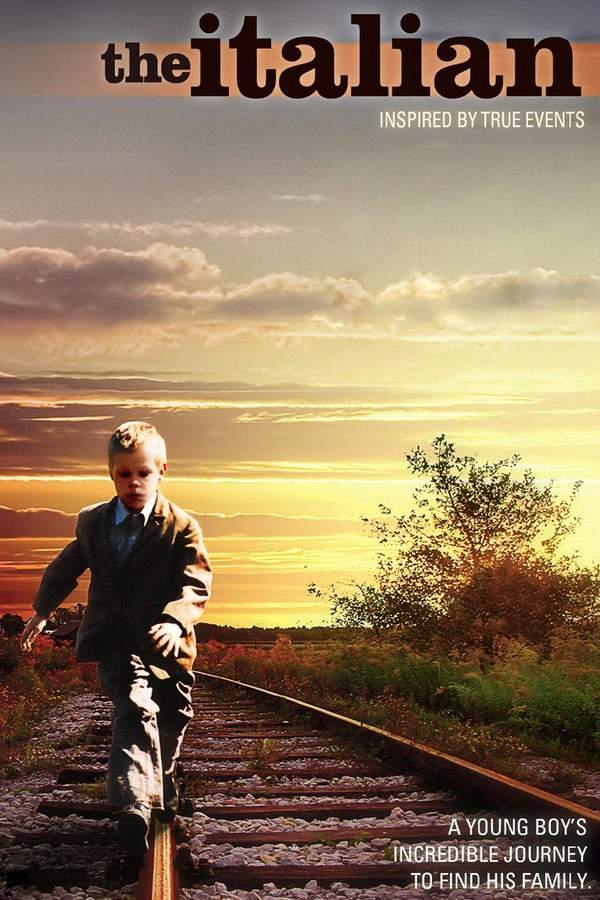
The Italian (2007) Movie Recap & Themes
Stolen Days (2019) Full Movie Breakdown
The Stolen Caravaggio (2018) Full Summary & Key Details
A Children’s Story (2004) Ending Explained & Film Insights
The Children Thief (1991) Plot Summary & Ending Explained
The Hidden Child (2021) Story Summary & Characters
Stranger on the Prowl (1952) Story Summary & Characters
Ostia (1970) Ending Explained & Film Insights
Sardinia Kidnapped (1968) Full Movie Breakdown
Bicycle Thieves (1948) Complete Plot Breakdown
Seduced and Abandoned (1964) Story Summary & Characters
Stolen Innocence (1995) Story Summary & Characters
Nobody’s Children (1951) Movie Recap & Themes
Esterina (1959) Movie Recap & Themes