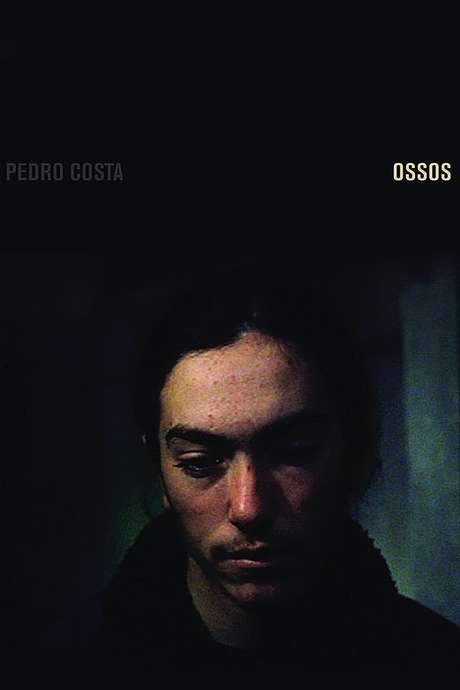
Tina, Mariya Lipkina, is a young mother who has just given birth to a newborn and lives in a cramped shanty in Fontainhas with her deadbeat live-in partner. Her sister Clotilde, Vanda Duarte, a housemaid, stays nearby with her daughter Mauda, The Girl. The damp walls and narrow corridors frame a tense daily life where care and neglect constantly collide, and the two sisters hinge their fragile routines on small acts of support.
One afternoon, the father Nuno Vaz searches for food at a local market and steadies himself by taking meals at a nearby diner. As night falls, he wanders the streets while Tina grows increasingly overwhelmed and contemplates ending her own life. In a desperate moment, she places a decompressed gas cylinder beside herself and the baby, a stark image that underscores the precariousness of their situation. When the father returns home, Tina drags him into a nearby room, seeking proximity to the child and to something that resembles family, even as the room feels more like a liminal space between hope and catastrophe. Meanwhile, Clotilde stares silently in her apartment, a quiet counterpoint to the chaotic emotions playing out in Tina’s life.
The next morning, Tina leaves the child in the father’s care. He has gone hungry for days and, with the baby in his arms, asks locals for food. A woman, later identified as Eduarda Gomes, Isabel Ruth, feeds the father and the infant a sandwich and milk from a nearby deli, a small kindness that becomes a turning point in the story. Afterward, the baby is taken to a hospital for urgent care. He sits on a bench outside and is approached by a nurse who, in turn, points to her colleague Eduarda. By nightfall, the hospital staff convey that the baby is quite ill, and Eduarda is involved in the ongoing care decisions. The father, conflicted and exhausted, returns to the hospital where Eduarda explains the severity of the child’s condition and the plan for tests with a pediatrician arriving the next day. Later, the father goes to Eduarda’s apartment where she feeds him a meal and offers a form of hospitality that hints at a deeper bond forming between them.
The following morning, Tina stays over at Clotilde’s apartment, a moment that reveals the fragility of Tina’s world when she’s apart from her infant. Back at Eduarda’s apartment, Eduarda asks the father about Tina; he responds that Tina does not seem to care about being a mother, a sentiment that casts a gray light on Tina’s motivations and fears. Eduarda then takes the child to her own apartment and becomes its new caregiver, a shift that re-routes the child’s life and the family dynamics surrounding him. Meanwhile, Clotilde continues to look after Tina, a quiet thread that ties the siblings’ destinies together.
The father returns and briefly converses with Clotilde, and soon after, the court of events marks a custody change, with the father being given custody of the child again. Later on, Eduarda hires Clotilde as a housemaid five days a week, expanding the network of daily labor and dependency around the child. That same night, Tina searches for Clotilde but is approached by her husband, Miguel Sermão, a reminder of the personal ties and obligations that complicate any attempt at rebuilding life. Clotilde returns, stating that she now works for Eduarda, and the house becomes a space where different loyalties intersect.
Sometime later, Tina arrives at Eduarda’s apartment only to find that no one is there. Instead, she discovers a list of cleaning instructions Eduarda had written for Clotilde, a stark reminder of the routines that organize their lives and the power dynamics at play. Hours later, Eduarda returns from work and finds Tina lying unconscious in the kitchen as a result of another suicide attempt. Tina begins to recover, and Eduarda offers to have Tina stay with her, a gesture that shifts the balance of safety and dependence for Tina, the child, and the whole precarious household.
Meanwhile, the father remains connected to a different form of precarious care, staying with a prostitute who offers to look after the child, a detail that underscores the multiple, sometimes conflicting, avenues people pursue to provide for a vulnerable infant. Eduarda then comes to Tina’s apartment and finds Tina alone, and the two women share a moment as they smoke cigarettes, a small but intimate connection that hints at a possible new solidarity beyond the confines of the earlier power struggles.
Clotilde returns to clean Eduarda’s apartment, a routine interruption that leads to a final quiet moment where Clotilde and Tina share a brief, fragile connection at Tina’s own apartment. In the end, Clotilde leaves and Tina shuts her door, leaving the film in a muted, unresolved space that reflects the lingering fragility of family, care, and survival in a neighborhood where every gesture toward help carries its own weight of consequence.