





Plot Explained Spoilers guaranteed!
Plot Explained

Browse by genre

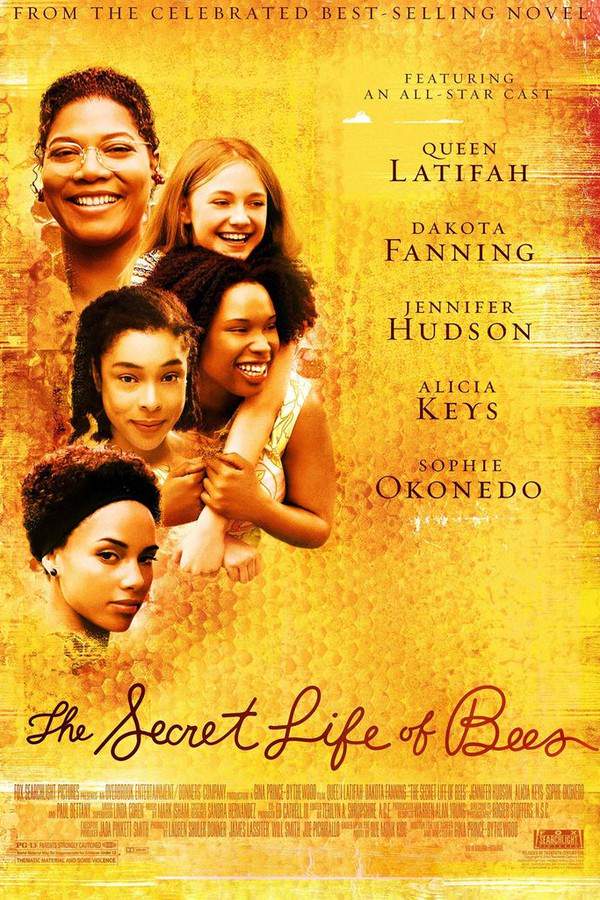
The Secret Life of Bees (2008) movie poster

Timeline

The Secret Life of Bees (2008) Timeline Explained – Every Event in Order

Release, runtime and language
2008 · English
Directed by
Gina Prince-Bythewood
Starring
Queen Latifah, Jennifer Hudson, Dakota Fanning
Budget
$11M

In 1964 South Carolina, fourteen-year-old Lily Owens runs away from her difficult home with Rosaleen, her caregiver and closest friend. Seeking safety and answers, she finds herself on the doorstep of the Boatwright sisters, who are beekeepers. As Lily integrates into their unique world, she begins to learn about her mother’s hidden history and the circumstances surrounding her death. Along the way, she confronts painful truths and discovers the power of female friendship and self-acceptance.

On this page (7)
  1. 1 Where to watch
  2. 2 Events in order (15)
  3. 3 Timeline questions answered
  4. 4 The book behind the movie
  5. 5 Movie threads
  6. 6 Movies like The Secret Life of Bees
  7. 7 Every angle

Where to watch

Where to Watch The Secret Life of Bees (2008)

Where can you watch The Secret Life of Bees? Stream, rent or buy it in the US, including on Amazon Video, Apple TV Store and Fandango At Home: current JustWatch availability with up-to-date prices.

Streaming availability powered by JustWatch

15 events in order · contains spoilers

The Secret Life of Bees Timeline: Events in Chronological Order

Every key event of The Secret Life of Bees (2008) in order, scene by scene, with when and where it takes place. Use it to untangle flashbacks, time jumps and parallel storylines, to refresh your memory before the sequel or to find the exact scene you are thinking of.

  1. The Struggle Begins

    In 1964, the story unfolds against the backdrop of the civil rights movement. We meet Lily, who is about to turn fourteen, and is dealing with the emotional scars left by her abusive father and the haunting memory of her mother.

    When
    1964
  2. A Tragic Accident

    The narrative is set in motion with a chilling scene where Lily’s mother, Deborah Owens, is seen in a frantic moment, attempting to flee with her child. A confrontation leads to a tragic accident that leaves young Lily traumatized, as she grapples with the guilt of having killed her mother at a tender age.

  3. A Troubling Home Life

    That night, Lily struggles with nightmares, symbolized by a swarm of bees in her room. In her quest for comfort, she reaches out to her father, T. Ray, only to be met with anger and punishment, further deepening her sense of isolation and despair.

  4. A Glimpse of Affection

    The next morning offers a brief respite as the housekeeper, Rosaleen, surprises Lily with a birthday cake, revealing her affection amidst the chaos of their household. However, T. Ray’s indifference dampens the celebration, signifying the emotional distance within their family.

  5. Civil Rights Unfolding

    In a poignant moment, T. Ray begrudgingly acknowledges Lily's birthday while a television announcement highlights the passing of the Civil Rights Bill. This moment captures the contrast between the external societal changes and Lily's confining domestic reality.

  6. Growing Bonds

    As Lily’s relationship with Rosaleen deepens, they both face the harsh realities of racial prejudice together. This shared experience not only strengthens their bond but also ignites a determination in Lily to uncover the truth about her mother’s past.

  7. Confronting the Past

    In a moment of desperation, Lily confronts T. Ray about her mother, seeking the truth she has long been denied. However, T. Ray's dismissive responses and fragmented memories only deepen her yearning for understanding and connection with her mother.

  8. Fleeing to Freedom

    Determined to escape her toxic environment, Lily and Rosaleen run away to a town where Lily's mother once lived. Their journey is fueled by hope and the desire to reclaim their identities and find answers.

  9. The Honey Shop

    Upon arriving in the new town, Lily and Rosaleen discover a honey shop run by August Boatwright and her sisters. This new setting brings them love, acceptance, and a sense of belonging that Lily has longed for.

  10. Tragic Loss

    Amid the sweetness of their new life, tragedy strikes when May succumbs to her despair, choosing to take her own life. This heart-wrenching event profoundly impacts the sisters and Lily, emphasizing the fragility of joy and the weight of sorrow.

  11. Creating New Beginnings

    In the aftermath of May's death, the sisters seek to honor her memory by renaming Rosaleen to July, marking a poignant attempt to foster new beginnings and heal from their collective losses.

  12. Unveiling the Truth

    A pivotal moment occurs when Lily shows August a photograph of her mother, leading to the revelation that August knew Deborah. This connection unveils painful truths about Lily's past and strengthens her bond with August.

  13. Facing Inner Demons

    As Lily contemplates her traumatic childhood, she experiences an overwhelming surge of guilt and confusion. This culminates in an emotional outburst against jars of honey, symbolizing her struggle with the messiness of her feelings and her desire for clarity.

  14. T. Ray's Return

    T. Ray returns to reclaim Lily, leading to unexpected moments of growth for both him and Lily. In a surprising twist, T. Ray allows August to care for Lily, acknowledging the truth about her mother’s intentions and creating a sense of closure.

  15. Embracing a New Future

    In a reflective closing scene, Lily contemplates her father’s departure and sees it as an opportunity for hope and a new beginning. With newfound strength, she envisions a brighter future surrounded by her chosen family, interpreting it as 'Good riddance' turning into 'Lily, you'll be better off here with all of these mothers.'

Last updated: November 03, 2024 at 13:53

Was this helpful?

Timeline questions answered

The Secret Life of Bees Timeline Explained: Your Questions Answered

When does it happen, and why in that order? The questions people ask about the chronology of The Secret Life of Bees (2008): time jumps, flashbacks, cause and effect between scenes and the correct order of events, each answered with spoilers.

Q1

Why does Lily believe she killed her mother?

Lily was four years old when her mother Deborah tried to leave with her during an argument with T. Ray. In the struggle over a gun, it went off accidentally. Lily has carried the guilt ever since, believing that her presence and her need for her mother somehow caused the tragedy. T. Ray reinforced this belief by letting her think she was responsible, rather than protecting her from the truth.

Foreshadowing: The opening scene shows young Lily with a marble and mirror, watching her mother pack frantically, establishing the traumatic memory she carries.

  • lily owens
  • deborah
  • guilt
  • mother death
  • t. ray
Q2

How did August know Lily's mother?

August reveals that she and Deborah were close friends and that Deborah had lived with the Boatwright sisters before Lily was born. This connection explains why Deborah's photograph and belongings had ties to this particular town, and why August feels a responsibility to help Lily understand her mother's true story.

Foreshadowing: Lily's decision to run away to the town where her mother once lived was driven by this very connection she suspected existed.

  • august boatwright
  • deborah
  • past connection
  • mother history
Q3

Why did T. Ray lie about Lily's mother?

T. Ray lied about Deborah's intentions to protect himself from accountability. He told Lily that her mother didn't want her and was leaving her behind, when in reality Deborah was trying to escape his abuse and take Lily with her. By the end, T. Ray admits this lie, finally allowing Lily to understand that her mother loved her and wanted her.

Foreshadowing: T. Ray's anger whenever Lily asked about her mother and his vague, dismissive answers hint at a deeper truth he was concealing.

  • t. ray
  • lies
  • deborah
  • abuse
  • mother intentions
Q4

Why did May Boatwright commit suicide?

May was deeply affected by the loss of her husband and struggled with profound depression that the sisters tried to manage through gentle care and the calming ritual of beekeeping. Her suicide, done by walking into the river with stones in her pockets, represents an overwhelming despair that despite the sisters' love and protection, became too heavy for her to bear.

Foreshadowing: May's tendency to retreat to the wall where she writes the names of people who've hurt the world, and her visible sadness throughout the film, establish her fragile emotional state.

  • may boatwright
  • suicide
  • depression
  • sadness
  • death
Q5

Why did Lily run away from home?

Lily ran away because she could no longer endure T. Ray's abusive treatment and because she desperately wanted to find answers about her mother. The passing of the Civil Rights Bill on the television, symbolizing change and possibility, motivated her to take action. She knew her mother had once lived in a particular town, and she believed running away was the only way to discover the truth about who her mother really was.

Foreshadowing: The Civil Rights Bill passing on TV directly precedes Lily's decision to leave, showing how external societal change mirrors her internal desire for freedom.

  • lily run away
  • escape
  • find mother
  • truth
  • civil rights bill
Q6

Why did the Boatwright sisters rename Rosaleen to July?

After May's death, the sisters decided to rename Rosaleen as July as a way to create new beginnings and honor May's memory. The sisters explained that they rename people when they come to them, giving them fresh starts. The timing after May's suicide suggests this was also an attempt to bring hope and transformation into their lives following profound loss.

Foreshadowing: The sisters' practice of renaming is established early when they explain their tradition to Lily and Rosaleen upon their arrival.

  • rosaleen
  • july
  • renamed
  • new beginnings
  • boatwright sisters
Q7

What is the significance of bees in the story?

Bees serve as a central symbol representing community, protection, and feminine strength. The Boatwright sisters are beekeepers who live by the principle that bees require a queen to function, symbolizing the nurturing female community that Lily has been missing. When bees appear in Lily's room on the night of her mother's death and later in the honey shop, they represent the maternal presence and guidance she has been searching for.

Foreshadowing: The opening scene features bees swarming in Lily's room, establishing the symbolic connection between bees and her emotional journey toward finding a maternal figure.

  • bees
  • symbol
  • queen
  • feminine community
  • protection
Q8

Why did T. Ray let Lily stay with August?

When T. Ray comes to reclaim Lily, something has changed in him. After confronting August and seeing Lily's attachment to this new family, T. Ray makes the unexpected choice to let her stay. He acknowledges that he had lied about Deborah, suggesting that finally accepting the truth and seeing Lily's healing allowed him to release her. His departure represents not an abandonment but a form of love he was previously unable to express.

Foreshadowing: The TV announcement about the Civil Rights Bill changing the world hints that T. Ray too might be capable of change, however small.

  • t. ray
  • let stay
  • august
  • release
  • change
Q9

Why did Lily smash the jars of honey?

After learning the truth about her mother from August, Lily is overwhelmed by the weight of her guilt and confusion. She explodes emotionally, smashing jars of honey in the shop. This violent outburst represents the release of years of suppressed grief, anger, and the pain of discovering her entire understanding of her mother's death was based on her father's lie. The honey spilling everywhere mirrors the messiness of her true feelings finally breaking through.

Foreshadowing: Earlier in the film, Lily struggles to contain her emotions, reaching for her mother's buried box and staring at the stars, showing her inner turmoil building throughout the story.

  • lily
  • smash jars
  • honey
  • emotional outburst
  • guilt

Movie threads

More Movies Like The Secret Life of Bees, by Mood & Story

Curated lists built around what makes The Secret Life of Bees tick: the same mood, the same kind of story or the same emotional payoff. Each list explains why these movies belong together.

Healing Journeys to Found Family like in The Secret Life of Bees

Characters escape painful pasts to find solace and self-acceptance within a nurturing community. If you liked The Secret Life of Bees, explore more movies about characters finding solace and a new home. These similar dramas feature emotional healing, escaping difficult pasts, and the life-changing power of found family and community support.

  • healing
  • burdened
  • warmth
  • melancholic
  • female solidarity
  • nostalgic
  • Tone: hopeful, melancholic
  • Pacing: steady, character-driven
Why these movies?

The story pattern: The narrative pattern begins with a character burdened by trauma or loss, often leading them to physically escape their circumstances. They find refuge in a new community or with a group of people who offer unconditional support. The central conflict shifts from external threats to internal healing, as the character learns to trust, forgive, and ultimately build a new identity rooted in love and acceptance.

Why they belong together: These movies are grouped together because they share a core emotional arc from profound sadness to hopeful healing. They balance a heavy emotional weight with a ultimately uplifting tone, focusing on the transformative power of community and the slow, steady process of overcoming trauma.
Southern Gothic Comfort dramas like The Secret Life of Bees

Stories set in the American South that balance oppressive histories with tender human connection. Find movies like The Secret Life of Bees that blend a Southern Gothic atmosphere with heartfelt human drama. These similar stories use their 1960s Southern setting to explore themes of racism and past trauma, while focusing on tenderness, female friendship, and emotional healing.

  • oppressive warmth
  • nostalgic
  • melancholic
  • healing
  • female solidarity
  • atmospheric
  • Tone: hopeful, oppressive warmth
  • Pacing: steady, atmospheric
Why these movies?

The story pattern: These narratives are often period pieces set in the mid-20th century American South. The societal tensions of the era—particularly racism and strict social codes—create an oppressive backdrop. The plot centers on personal relationships that defy these pressures, often highlighting the bonds between women. The pacing is steady, allowing the atmosphere and character development to breathe, leading to an emotionally resonant conclusion.

Why they belong together: Movies in this thread share a specific mood blend: the melancholic and sometimes oppressive weight of a Southern historical setting is contrasted with profound warmth and human connection. They offer a comforting yet sobering look at finding light within a dark historical context.

If you liked this

Movies Like The Secret Life of Bees

Similar movies to The Secret Life of Bees: the same genre, themes or kind of story. Each one comes with its own plot summary, timeline and ending explained.

Browse all movie summaries

Every angle

The Secret Life of Bees (2008) Explained: Plot, Timeline & Characters

Everything about The Secret Life of Bees in one place: what happens in the plot summary, the timeline in chronological order, the characters and meaning and a spoiler-free summary. What's After the Movie adds the cast, box office and post-credit scenes.

Coming soon on iOS and Android

The Plot Explained Movie Summary App

Plot summaries, endings explained and timelines on your phone. Catch up on any movie in minutes, save your favorites and never miss a twist again.

Be the first to know when we launch. Your email stays private, always.

Learn more about the app