Plot Explained Spoilers guaranteed!
Plot Explained

Browse by genre

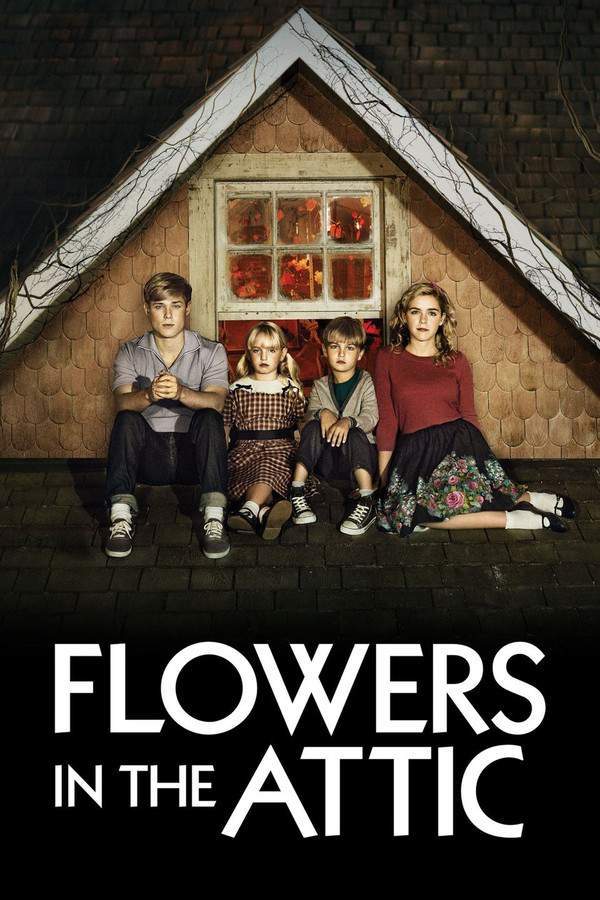
Flowers in the Attic (1987) movie poster

Plot Summary

Flowers in the Attic (1987) Plot Summary Explained

Release, runtime and language
1987 · 93 min · English
Loading streaming availability…
Directed by
Jeffrey Bloom
Starring
Louise Fletcher, Victoria Tennant, Jeb Stuart Adams, Kristy Swanson, Nathan Davis, Lindsay Parker

Following the sudden death of their father, four young siblings are forced to live with their cruel and manipulative grandmother. Confined to a secret room in the attic, they discover a dark family history and a sinister plot that threatens their very existence. As they struggle to uncover the truth and find a way to escape, the children must confront the secrets that bind them together and the dangers that lurk within their own family.

On this page (7)
  1. 1 Where to watch
  2. 2 What happens: full plot
  3. 3 Plot questions answered
  4. 4 The book behind the movie
  5. 5 Movie threads
  6. 6 Movies like Flowers in the Attic
  7. 7 Every angle
Loading streaming availability…

Full plot summary · contains spoilers

What Happens in Flowers in the Attic: Full Plot Summary

The whole story of Flowers in the Attic (1987) explained, from the opening scene to the final frame: every key event, every twist and what it all adds up to. Read it as a quick recap before the sequel, to check a scene you missed, or to finally understand what really happened.

In the charming town of Gladstone, Pennsylvania, the Dollanganger family, made up of patriarch Christopher, matriarch Corrine, and their three young children—Chris (14), Cathy (12), and the playful twins, Carrie and Cory (5)—enjoyed a peaceful existence prior to a tragic incident that turned their lives upside down. The sudden and untimely death of Christopher Sr. in a car crash left Corrine grappling with the weight of responsibility, teetering on the edge of financial ruin and potential foreclosure.

In a moment of desperation, Corrine confides in her children about a painful secret from her past: her marriage to Christopher had infuriated her wealthy father, Malcolm Foxworth, who disinherited her. Now, faced with Malcolm's declining health, she sees a chance to mend their fractured relationship and safeguard the family’s future by returning to her imposing childhood residence, Foxworth Hall in Virginia.

However, there’s a significant obstacle: Malcolm remains unaware of Corrine’s children. To prevent their discovery, she confines them in a distant upstairs room, promising that their stay will be brief. The children's life takes another dark turn with the interference of their grandmother, who imposes harsh restrictions, compelling Corrine to disclose the shocking truth of their lineage: the twins are the result of incest between Christopher and his half-sister.

As the grandmother enforces stringent rules about modesty and parental absence, an oppressive environment descends upon the children. Initially, Corrine checks in regularly, bringing gifts to brighten their days, but as time progresses, her visits dwindle, leaving the children in isolation. With no other refuge, Cathy and Chris seek solace in the attic, transforming it into a vibrant sanctuary, crafting delicate paper flowers to combat the starkness of their surroundings. Yet, as weeks turn into months, the hope for freedom significantly diminishes, marking their confinement as a long-lasting nightmare.

Over the years, the once-happy household has changed dramatically. Cathy and Chris, now navigating the turbulence of adolescence, confront blossoming emotions amid neglect and isolation, while the frail twins depend heavily on them for support. Increased scrutiny from the grandmother complicates their relationship; she punishes Chris brutally for his innocent longing looks towards Cathy, leading to severe hunger and despair among all four.

In their hunger-stricken conditions, Cathy and Chris devise a desperate plan to flee with the twins, yearning for life beyond the oppressive walls of Foxworth Hall. Just as they are ready to execute their escape, a brief reprieve arrives as the grandmother unexpectedly provides them with treats, only to fade away into foreboding silence and further confinement. Their health deteriorates as sickness infiltrates their weak bodies, amplifying the urgency to escape.

After another tedious year, Corrine reemerges, narrating stories of her leisurely European getaway with her new spouse, Bart Winslow. Anger simmers beneath the children’s composed surfaces as they grapple with feelings of betrayal, all while worrying about the twins’ health spiraling out of control. Their concerns push them to act again, crafting a plan with the hope of liberating themselves.

In a moment of intrigue, Cathy stumbles upon her slumbering stepfather, and in a fleeting act of audacity, kisses him. This provokes Chris' jealousy, leading him down a dark path that culminates in violence against Cathy. As the emotional turmoil escalates, the family teeters on the edge of disintegration when tragedy strikes—the youngest twin, Cory, falls gravely ill. Corrine’s refusal to seek help ignites Cathy’s indignation, and, fueled by desperation, she threatens to expose their existence. Reluctantly, Corrine seeks medical assistance, only to return the next day with heart-wrenching news: Cory has tragically passed away.

The remaining siblings are left shattered, existing in a whirlwind of grief and self-blame. As Chris resumes pilfering from Corrine’s belongings, he uncovers a shocking revelation: Corrine and Bart have fled Foxworth Hall without a glance back. Eavesdropping reveals that their grandfather had died a year ago, leaving only the cruel grandmother behind to perpetuate their dark reality. Connecting their suffering with the grandmother's sinister actions, Chris discovers that the food poisoning leading to Cory's death was a deliberate act of malice.

Finally, armed with this unsettling knowledge, Chris, Cathy, and the surviving twin embark on their long-awaited escape, boarding a train to Florida. At the station, Chris reveals that Corrine had forfeited her inheritance by having children from her previous marriage, retracting the blame from their grandmother and placing it squarely on Corrine herself. As they deliberate whether to alert the authorities, their bond takes precedence, but Cathy resolves that justice will eventually be served against Corrine, sealed by her fierce determination to reclaim their disrupted lives.
Last updated: November 17, 2024 at 19:45

Was this helpful?

Plot questions answered

Flowers in the Attic Plot Explained: Your Questions Answered

The questions people ask most about Flowers in the Attic (1987): what happens in the confusing scenes, why the characters do what they do, the twists, hidden details and what the ending means. Each answer contains spoilers.

Q1

Why were the children hidden in the attic at Foxworth Hall?

Corrine concealed her children in the attic because her wealthy father, Malcolm Foxworth, had disinherited her when she married Christopher. When Malcolm became ill, Corrine saw an opportunity to reclaim her inheritance by returning to Foxworth Hall, but she knew her father would not accept her marriage or children. To keep her presence a secret, she confined the children to an upstairs room, promising it would be temporary.

Foreshadowing: Corrine had previously told her children about her estrangement from her wealthy father, foreshadowing the need for secrecy.

  • corrine
  • foxworth hall
  • hidden children
  • malcolm foxworth
  • inheritance
Q2

How did Cory die in Flowers in the Attic?

Cory died from food poisoning that was deliberately inflicted by his grandmother. After the children discovered the poisoning and realized the grandmother had been slowly killing them, Chris, Cathy, and Carrie fled Foxworth Hall. The grandmother had been systematically starving and poisoning the children to keep them hidden and ensure they would never reveal their existence to Malcolm.

Foreshadowing: The grandmother's harsh rules and sudden treats that later turned to silence hinted at her malicious intent.

  • cory
  • death
  • poisoning
  • grandmother
  • food poisoning
  • foxworth hall
Q3

Why did Corrine abandon her children at Foxworth Hall?

Corrine ultimately abandoned her children because she prioritized reclaiming her inheritance and her new life with Bart Winslow over her own children. After her father died, she and Bart fled Foxworth Hall without the children, leaving them entirely in the grandmother's cruel hands. Chris later discovered that Corrine had forfeited her inheritance by having children from her previous marriage, making her choose between her children and her wealth, and she chose to abandon them.

Foreshadowing: Corrine's visits had become increasingly infrequent over the years, and her return with stories of European trips while the twins deteriorated showed where her priorities lay.

  • corrine
  • abandonment
  • bart winslow
  • inheritance
  • foxworth hall
Q4

What was the truth about the twins' parentage?

The twins, Carrie and Cory, were fathered by Christopher (the children's father) with his half-sister, making them the result of incest. This shocking secret was revealed by the grandmother when she imposed strict rules about modesty and separation between the children. The incestuous relationship had produced the twins, a fact that Corrine had kept hidden even from the children themselves.

Foreshadowing: The grandmother's emphasis on strict rules and separation between the children, particularly targeting Chris and Cathy, hinted at the forbidden nature of the family.

  • twins
  • cory
  • carrie
  • incest
  • christopher
  • parentage
  • family secret
Q5

Why did Corrine stop visiting her children in the attic?

Corrine's visits gradually stopped because she was focused on repairing her relationship with her dying father and reclaiming her inheritance. The grandmother enforced increasingly strict rules, telling Corrine that the children should not know her as their mother. As months turned into years, Corrine chose to distance herself, eventually abandoning them entirely to pursue her new life with Bart Winslow.

Foreshadowing: Early in their confinement, the grandmother began enforcing harsh rules about modesty and parental absence, gradually cutting off the children's access to their mother.

  • corrine
  • visits
  • attic
  • grandmother
  • isolation
Q6

Why was Chris severely punished for looking at Cathy?

Chris was brutally punished by the grandmother for looking at Cathy with longing because the grandmother was aware of the incestuous tensions in the household and used this as an opportunity to exert control and create further division between the children. The punishment involved severe hunger and isolation, intended to break the children's spirits and keep them compliant.

Foreshadowing: The reveal of the twins' incestuous parentage set the tone for the grandmother's surveillance of all the children's relationships.

  • chris
  • cathy
  • punishment
  • grandmother
  • incest
Q7

What role did the grandmother play in keeping the children trapped?

The grandmother was the primary architect of the children's prolonged captivity. She enforced brutal rules requiring the children to wear drab clothing, forbade them from making noise, and isolated them from their mother. When Malcolm died, she continued keeping the children hidden and systematically poisoned them to prevent their escape or discovery. She acted entirely out of malice to protect the family's reputation and maintain control.

Foreshadowing: From the moment she imposed harsh restrictions on modesty and parental contact, the grandmother demonstrated her willingness to go to extreme lengths to conceal the children.

  • grandmother
  • confinement
  • foxworth hall
  • malcolm
  • poisoning
  • control
Q8

Why did Cathy and Chris make paper flowers in the attic?

Cathy and Chris made paper flowers to transform their oppressive attic prison into a sanctuary and maintain their sanity. The attic became their only refuge from the harsh restrictions imposed by their grandmother. Creating the flowers was an act of creativity and hope, a way to beautify their bleak surroundings while enduring years of confinement and neglect.

Foreshadowing: The flowers served as a symbol of their resilience and their ability to find beauty even in captivity, foreshadowing their eventual escape and survival.

  • cathy
  • chris
  • paper flowers
  • attic
  • hope
  • sanctuary
Q9

What did Chris discover about Corrine and the inheritance?

When Chris searched through Corrine's belongings after she fled, he discovered that Corrine had forfeited her entire inheritance by having children from her previous marriage to Christopher. This meant there was no fortune waiting for her at Foxworth Hall, it had been lost years ago. This revelation shifted the children's understanding of their situation: the grandmother's cruelty was not driven by protecting an inheritance, but purely by malice.

Foreshadowing: Corrine had returned to Foxworth Hall seeking her inheritance, but the children's suffering continued even after Malcolm's death, suggesting something didn't add up.

  • chris
  • corrine
  • inheritance
  • forfeiture
  • revelation
  • foxworth hall
Q10

What happened when Cathy kissed Bart Winslow?

When Cathy found Bart sleeping one day, she kissed him in a moment of teenage desperation and rebellion against her confined existence. This act triggered Chris's jealousy and led to a violent confrontation between the siblings. The incident highlighted the emotional turmoil and twisted dynamics that years of isolation and incestuous tension had created among the children.

Foreshadowing: The kiss represented the psychological damage caused by their prolonged confinement and the unhealthy emotional dependencies that had developed.

  • cathy
  • bart winslow
  • kiss
  • chris
  • jealousy
  • conflict
Q11

Where did the children escape to at the end of Flowers in the Attic?

The three surviving siblings, Chris, Cathy, and Carrie, escaped Foxworth Hall and boarded a train bound for Florida. They chose Florida as their destination hoping to start fresh far from the traumatic memories of Foxworth Hall. The escape marked their physical liberation from years of abuse and captivity.

Foreshadowing: Their earlier failed escape plans and the desperate yearning for freedom throughout the story built toward this final successful departure.

  • escape
  • florida
  • train
  • chris
  • cathy
  • carrie
  • foxworth hall
Q12

Which twin survived at the end of the movie?

Carrie was the surviving twin. Cory fell gravely ill from the deliberate poisoning inflicted by their grandmother and died before the children could escape. Carrie survived the poisoning and made it out alive with Chris and Cathy, escaping Foxworth Hall together.

Foreshadowing: The twins' health had been deteriorating for months due to starvation and poisoning, with Cory being the weaker of the two.

  • cory
  • carrie
  • twins
  • survival
  • death
  • poisoning

Movie threads

More Movies Like Flowers in the Attic, by Mood & Story

Curated lists built around what makes Flowers in the Attic tick: the same mood, the same kind of story or the same emotional payoff. Each list explains why these movies belong together.

Gothic family secret thrillers like Flowers in the Attic

Stories where dark ancestral legacies are revealed within oppressive domestic walls. If you liked the oppressive atmosphere and shocking revelations of Flowers in the Attic, explore more movies like it. This collection features similar gothic thrillers and dramas about dark family secrets, confinement, and the desperate struggle for survival within a corrupted home.

  • gothic
  • claustrophobic
  • oppressive
  • tense
  • melancholic
  • desperate
  • Tone: dark, melancholic, tense
  • Pacing: variable, slow burn
Why these movies?

The story pattern: These narratives typically involve a naive or innocent character entering a dysfunctional, powerful family system, only to discover a deeply buried secret—often involving murder, madness, or forbidden relationships. The central conflict is the struggle to escape both a physical prison and the psychological grip of a toxic family legacy.

Why they belong together: Movies are grouped here for their shared focus on a decaying, often aristocratic family unit, a slow-burn reveal of a horrifying secret, and a claustrophobic setting that becomes a character itself. The tone is consistently dark, melancholic, and tense.

Movies about traumatic childhood survival like Flowers in the Attic

Heart-wrenching journeys of young protagonists enduring abuse and neglect. For viewers seeking more intense dramas about child abuse and survival like Flowers in the Attic. Discover films with similar heavy emotional weight, focusing on children enduring neglect, manipulation, and the fight to preserve their humanity in the face of unimaginable hardship.

  • anguished
  • desperate
  • heavy
  • disturbing
  • tense
  • traumatic
  • Tone: dark, anguished, desperate
  • Pacing: variable, steady build
Why these movies?

The story pattern: The narrative follows children or young adults as they are subjected to prolonged psychological and physical abuse, often from caregivers. The plot charts their emotional and physical deterioration, their strategies for coping and resistance, and their fraught journey toward either escape or a bittersweet, trauma-tinged resolution.

Why they belong together: These films are united by their unflinching portrayal of childhood trauma, their high emotional intensity, and their focus on the perspective of the young victims. They share a heavy, anguished mood and often explore themes of betrayal, lost innocence, and the complex bond between siblings in crisis.

If you liked this

Movies Like Flowers in the Attic

Similar movies to Flowers in the Attic: the same genre, themes or kind of story. Each one comes with its own plot summary, timeline and ending explained.

Browse all movie summaries

Every angle

Flowers in the Attic (1987) Explained: Plot, Timeline & Characters

Everything about Flowers in the Attic in one place: what happens in the plot summary, the timeline in chronological order, the characters and meaning and a spoiler-free summary. What's After the Movie adds the cast, box office and post-credit scenes.

Coming soon on iOS and Android

The Plot Explained Movie Summary App

Plot summaries, endings explained and timelines on your phone. Catch up on any movie in minutes, save your favorites and never miss a twist again.

Be the first to know when we launch. Your email stays private, always.

Learn more about the app