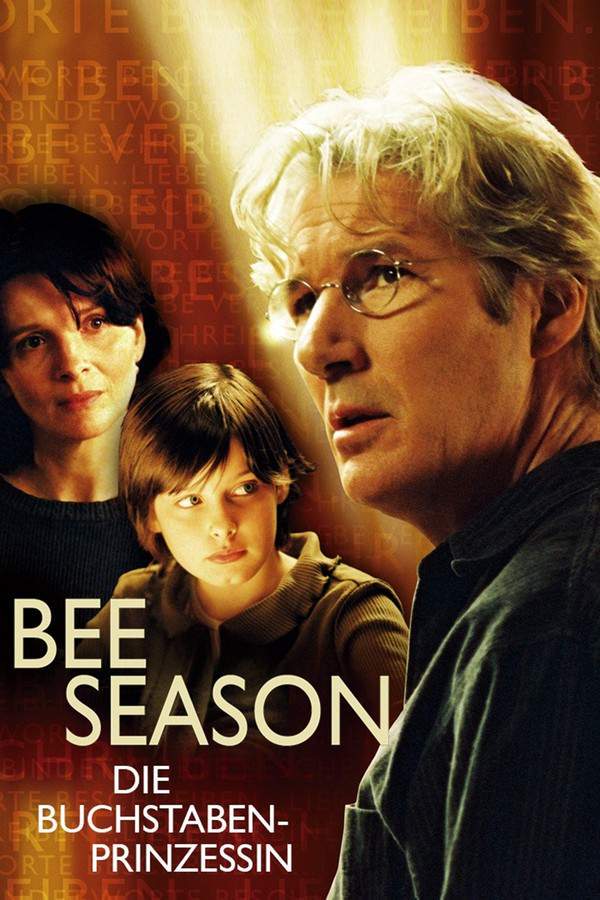
Saul Naumann, portrayed as a somewhat controlling Jewish husband and father, navigates the complexities of family life while working as a Religious Studies professor at UC Berkeley. His scholarly focus on the Kabbalah is profoundly intertwined with his family's experiences. Saul's deep commitment to his faith is evident; he supported his wife Miriam, played by Juliette Binoche, in converting to Judaism upon their marriage, and he raised their son Aaron, portrayed by Max Minghella, with traditional Jewish values.
The story takes a turn when daughter Eliza, played by Flora Cross, triumphantly wins her class spelling bee. This spurs the family to delve into Kabbalah study, shaping their spiritual quests significantly due to Saul’s influence. Each family member embarks on a personal journey: Miriam strives to find her own identity, Aaron grapples with his religious doubts, and Eliza yearns to connect more intimately with her father.
Miriam leads a dual existence throughout her marriage, unceasingly pursuing the religious ideal of tikkun olam, meaning "repairing the world" and "reuniting its shards." Through flashbacks, we catch glimpses of a car accident that has haunted her since childhood, an event that may have resulted in the loss of her parents and left her with deep emotional scars. The kaleidoscope she treasured as a child becomes a poignant symbol for her shattered past, which she desperately attempts to piece back together. As a coping mechanism, she compulsively creates beautiful light-gathering objects, even engaging in theft to collect these shards, stashing them away in a secret warehouse.
Meanwhile, Aaron begins to question the Judaism he has always known, leading him to explore new spiritual paths. His encounter with a woman named Chali in the park introduces him to the Hare Krishna movement, which causes tension between him and Saul. Eliza's desire to forge a closer bond with her father fosters her involvement in spelling bees, where she and Saul share discussions about their faith and enjoy musical sessions.
Saul's academic work on the Kabbalah, particularly the teachings of Abraham Abulafia, draws him and Eliza closer after her spelling bee success. However, as Saul becomes overly invested in coaching Eliza for her competitions, he unintentionally neglects Aaron, who struggles with his burgeoning interest in alternative spirituality. Eliza benefits from the attention from her father, but their relationship evolves into a contest of Saul's ambitions versus Aaron's growing disillusionment with their faith.
As Eliza excels in spelling bees by tapping into her spiritual intuition, which is reminiscent of Abulafia’s philosophy, Saul's fixation with her accomplishments blinds him to the disintegration of his family. On the eve of the national spelling bee's final round, Eliza channels her father's teachings to connect with a higher power, resulting in a profound mystical experience.
In a climactic moment, as she stands on the brink of victory, Eliza chooses to misspell the word "origami," a deliberate sacrifice intended to heal her fractured family. This pivotal act opens the door to reconciliation between Saul and Aaron, as they embrace and express deep emotions, while Miriam, confined in a sanitarium and following her tumultuous journey, appears to be on her path toward healing as well. This intertwining of individual journeys and spiritual quests encapsulates the essence of the film, highlighting the profound effects of faith, sacrifice, and familial bonds.