Plot Explained Spoilers guaranteed!
Plot Explained

Browse by genre

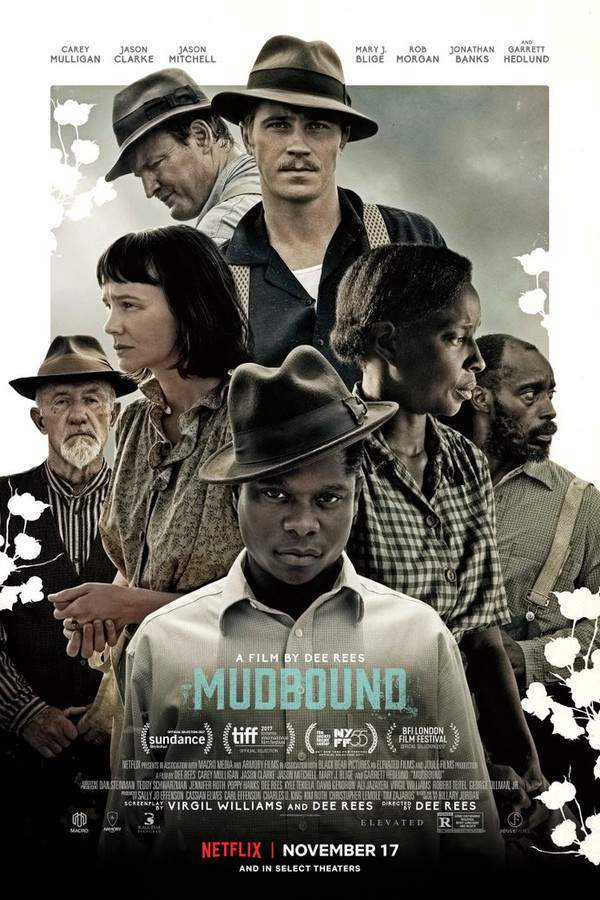
Mudbound (2017) movie poster

Plot Summary

Mudbound (2017) Plot Summary Explained

Release, runtime and language
2017 · 134 min · English
Echo score 80
JustWatch #4,903 53
Directed by
Dee Rees
Starring
Jason Mitchell, Kelvin Harrison Jr., Garrett Hedlund, Jason Clarke, Rob Morgan, Carey Mulligan
Budget
$10M

In the aftermath of World War II, two families navigate the challenges of rural life in the Mississippi Delta. The McAllans, seeking a fresh start after leaving Memphis, and the Jackson family, who have worked the land for generations, find their lives intertwined. As Henry McAllan's aspirations falter and Florence Jackson struggles against the social injustices of the time, returning soldiers from both families form an unexpected connection, exposing the harsh realities and racial tensions of the Jim Crow South.

On this page (7)
  1. 1 Where to watch
  2. 2 What happens: full plot
  3. 3 Plot questions answered
  4. 4 The book behind the movie
  5. 5 Movie threads
  6. 6 Movies like Mudbound
  7. 7 Every angle

Where to watch

Where to Watch Mudbound (2017)

Where can you watch Mudbound? Stream, rent or buy it in the US, including on Netflix and Netflix Standard: current JustWatch availability with up-to-date prices.

Streaming availability powered by JustWatch

Full plot summary · contains spoilers

What Happens in Mudbound: Full Plot Summary

The whole story of Mudbound (2017) explained, from the opening scene to the final frame: every key event, every twist and what it all adds up to. Read it as a quick recap before the sequel, to check a scene you missed, or to finally understand what really happened.

The film begins with Jamie McAllan (Garrett Hedlund) digging a grave for his father as rain and darkness approach. During the storm, he gets trapped, but his older brother Henry (Jason Clarke) comes to his rescue, despite Jamie's emotional fears of being left behind. The following morning, Laura (Carey Mulligan), Henry's wife, reflects on their life as they struggle to fit the coffin into the grave. As they toil, a black family, the Jacksons, passes by in their wagon, and Henry, against Laura's advice, asks them for assistance.

Laura's voice-over takes us back to 1939, recounting how she met Henry, who she felt was more of a rescuer than a true love. As the narrative unfolds, Jamie, looking to impress Laura, shares stories at a party that culminates in him dancing with her. Despite recently celebrating Henry and Laura’s commitment to a family, Laura secretly acknowledges her feelings for Jamie.

The tone shifts to the wartime period: Ronsel (Jason Mitchell), one of the Jackson family's sons, is preparing to fight, buoyed by his mother Florence's (Mary J. Blige) words of encouragement. Ronsel’s father, Hap (Rob Morgan), expresses his frustration about their family's land cultivation and dreams of ownership. Meanwhile, Henry reveals to Laura their impending move to a farm in Mississippi, surprising her as she was unaware of his aspirations.

Once they arrive, they discover the adverse reality of their new farmhouse and confront Pappy's (Jonathan Banks) disapproval regarding their new life. The differences between the Jackson and McAllan families begin to emerge, especially with the struggles both groups face. Throughout the war, Jamie fights as an army pilot while Ronsel experiences racial disparities in Europe, contrasting with his return home, where he's treated as a second-class citizen.

The film depicts Laura's struggles with her sick daughters, highlighting the unwavering bond of community as Florence helps take care of them despite her husband's reservations. Back at home, Jamie's mental health deteriorates as he grapples with the consequences of war. Ronsel, showing signs of emotional turmoil from his experiences, tries to reconnect with his roots while facing the harsh realities of life as a black man in the South.

As tensions rise, we witness a heartbreaking moment when Ronsel's friendship with Jamie leads to unforeseen consequences, culminating in violence fueled by deep-seated racism. Their bond, initially built on shared experiences, eventually crumbles under societal pressures as both families collide in tragic confrontation.

The narrative elegantly weaves through themes of love, loss, and racial inequality, emphasizing the personal stories that rise above the historical context. The film encapsulates a poignant reflection on the lives of those impacted by the struggles of war and societal expectations. With impactful voice-overs from Ronsel and Laura, the story ultimately highlights the complexities and resilience of love and kinship amid adversity, leaving the audience to ponder the effects of their choices on future generations.
Last updated: November 03, 2024 at 23:42

Was this helpful?

Plot questions answered

Mudbound Plot Explained: Your Questions Answered

The questions people ask most about Mudbound (2017): what happens in the confusing scenes, why the characters do what they do, the twists, hidden details and what the ending means. Each answer contains spoilers.

Q1

Why does Henry ask the Jacksons for help burying his father?

Henry asks the Jacksons for help because he needs additional hands to lower the heavy coffin into the grave. Despite Laura's warning to let them pass without drawing attention to their struggle, Henry's pride compels him to request assistance. This moment marks the first interaction between the two families and sets the tone for the power dynamics that will define their relationship, the white McAllans as landowners who summon help, and the Jacksons as the laboring class expected to serve.

Foreshadowing: This initial request for help establishes the pattern of dependency that characterizes both families' lives in Mississippi.

  • henry mcallan
  • jacksons
  • burying father
  • first meeting
Q2

Why does Laura develop feelings for Jamie while married to Henry?

Laura feels that Henry was more of a protector than a true love when they married in 1939. Though she committed to building a family with him, she secretly harbors stronger emotional feelings for Jamie. Jamie impresses her at a party by sharing captivating war stories, and their awkward dance creates a moment of genuine connection that Henry cannot provide. Laura's emotional vulnerability, being stuck in a difficult rural life with sick children, makes her susceptible to this attraction.

Foreshadowing: This emotional triangle between Laura, Henry, and Jamie creates tension that parallels the racial tensions between their families.

  • laura mcallan
  • jamie mcallan
  • feelings
  • attraction
  • henry
Q3

How does Ronsel's war experience change him?

Ronsel fights in Europe during World War II and experiences a stark contrast, he fights for a country that preaches freedom abroad but denies him basic rights at home. In Europe, he is treated as an equal soldier, but upon returning to Mississippi, he is relegated to second-class citizenship. This disillusionment manifests as emotional turmoil; he tries to reconnect with his roots but faces the harsh realities of the Jim Crow South, leaving him conflicted about his identity and place in society.

Foreshadowing: Ronsel's war experiences plant the seeds of his later conflict with Jamie, as their parallel wartime service leads to a friendship that society will not accept.

  • ronsel jackson
  • war
  • europe
  • discrimination
  • returning home
Q4

Why does Florence help care for Laura's sick daughters?

Florence helps Laura despite the racial divide because she possesses a deep sense of community and compassion that transcends social barriers. While Henry and Hap (her husband) express reservations about the families mixing, Florence recognizes Laura's desperation and the children's need for care. This act of kindness highlights the film's theme of human connection existing even within oppressive systems, showing how women often bridge racial divides through domestic and caregiving roles.

Foreshadowing: Florence's compassion creates a complex bond between the two families that makes the eventual tragedy more devastating.

  • florence jackson
  • laura
  • sick daughters
  • help
  • community
Q5

What causes the violence between Jamie and Ronsel?

Jamie and Ronsel form a genuine friendship based on their shared experiences as returning soldiers, which transcends racial boundaries in a time when such friendships were forbidden. However, this friendship provokes the violent backlash of the white community, particularly from members like Pappy who see interracial connection as a threat to the social order. The friendship that began as mutual understanding ultimately leads to tragic consequences when societal racism demands that the bond be destroyed.

Foreshadowing: The film foreshadows this collision between friendship and racism from the moment both men return home with different experiences of freedom and oppression.

  • jamie mcallan
  • ronsel jackson
  • friendship
  • violence
  • racism
  • confrontation
Q6

Why does Jamie's mental health deteriorate after the war?

Jamie suffers from post-traumatic stress disorder stemming from his experiences as an army pilot during the war. The psychological scars manifest in his daily life back home, causing nightmares, emotional instability, and difficulty readjusting to civilian life. His vulnerability makes him susceptible to the friendship with Ronsel, as both men share the unique bond of having fought for their country and returning to a home that no longer feels familiar.

Foreshadowing: Jamie's mental fragility sets the stage for his inability to protect Ronsel from the consequences of their friendship.

  • jamie mcallan
  • ptsd
  • mental health
  • war trauma
  • deterioration
Q7

Why does Ronsel face discrimination after returning from Europe?

Despite fighting for America in Europe and experiencing a degree of equality on the battlefield, Ronsel returns to Mississippi as a black man in the Jim Crow South. He encounters the same systemic racism he left behind, being denied basic rights, respect, and opportunities afforded to white veterans. Even his military service earns him no special status in his hometown, highlighting the stark disconnect between America's ideals overseas and its reality at home.

Foreshadowing: Ronsel's treatment contrasts sharply with Jamie's homecoming, emphasizing how race determines how veterans are received.

  • ronsel jackson
  • discrimination
  • jim crow
  • returning veteran
  • europe
  • inequality
Q8

Why does Pappy disapprove of Henry and Laura's move to the Mississippi farm?

Pappy disapproves because he represents the entrenched white supremacist values of the rural South. He views Henry's aspiration to be a farmer as beneath their family's status and sees the move as a step backward. More significantly, Pappy embodies the rigid racial hierarchy of the Delta, and his disapproval reflects the broader white community's resistance to any social mixing or equality between races.

Foreshadowing: Pappy's hostility foreshadows his role in the racial violence that later engulfs both families.

  • pappy mcallan
  • disapproval
  • mississippi
  • farm
  • racism
Q9

What triggers the tragic confrontation between the McAllan and Jackson families?

The tragic confrontation is triggered by the interracial friendship between Jamie and Ronsel, which white supremacists in the community view as an intolerable offense. The friendship itself becomes the catalyst for violence, as societal pressure demands punishment for crossing racial boundaries. Both families are ultimately caught in the collision between personal bonds and the violent enforcement of Jim Crow laws.

Foreshadowing: From the moment both soldiers return home with shared trauma, the narrative builds toward this inevitable clash.

  • mcallan
  • jackson families
  • confrontation
  • tragedy
  • racism
  • violence
Q10

Why does Henry move his family to Mississippi?

Henry decides to move his family to Mississippi because he aspires to own land and become a farmer, seeking what he believes will be a fresh start and a better life. This decision surprises Laura, who was not consulted about the move. Henry's dream of land ownership represents his attempt to prove himself as a provider, but the reality of the Mississippi Delta proves far harsher than his ambitions anticipated.

Foreshadowing: Henry's decision to move sets in motion the events that bring both families into conflict.

  • henry mcallan
  • mississippi
  • move
  • farm
  • aspirations
  • land ownership

Movie threads

More Movies Like Mudbound, by Mood & Story

Curated lists built around what makes Mudbound tick: the same mood, the same kind of story or the same emotional payoff. Each list explains why these movies belong together.

Multi-perspective historical dramas like Mudbound

Epic stories told through the intersecting lives of different characters. Discover movies like Mudbound that use multiple viewpoints to tell rich historical stories. If you enjoyed seeing the Mississippi Delta through the eyes of both families, you'll appreciate these epic dramas that weave together diverse perspectives to explore complex social landscapes.

  • epic
  • layered
  • thought-provoking
  • immersive
  • social commentary
  • character-driven
  • Tone: somber, reflective, tense
  • Pacing: steady, deliberate
Why these movies?

The story pattern: These narratives typically follow several characters whose lives intersect around a central historical event or social context. The story structure alternates between perspectives, building a comprehensive understanding of the era's complexities and tensions before converging in a powerful climax.

Why they belong together: They are grouped by their shared narrative approach of using multiple viewpoints to explore historical themes, creating a more nuanced and immersive experience of a specific time and place, often highlighting social divides and unexpected connections.

Southern Gothic social realism movies like Mudbound

Bleak stories exposing the harsh realities of the American South. Explore films with the same Southern Gothic social realism as Mudbound. If you appreciated its grim portrayal of racial injustice and rural life in the Mississippi Delta, you'll find similar heavy dramas that expose the dark undercurrents of Southern society through realistic, tense storytelling.

  • somber
  • grim
  • oppressive
  • tense
  • melancholic
  • tragic
  • Tone: dark, oppressive, tragic
  • Pacing: slow burn, methodical
Why these movies?

The story pattern: The narratives often center on families trapped by circumstance in rural Southern settings, where social hierarchies and historical baggage create inevitable conflicts. Characters grapple with systemic injustice, personal demons, and the weight of tradition, leading toward bleak but morally complex conclusions.

Why they belong together: They share a distinct combination of Southern Gothic atmosphere with realistic social commentary, creating films that are both culturally specific and universally resonant in their exploration of human nature under pressure.

If you liked this

Movies Like Mudbound

Similar movies to Mudbound: the same genre, themes or kind of story. Each one comes with its own plot summary, timeline and ending explained.

Browse all movie summaries

Every angle

Mudbound (2017) Explained: Plot, Timeline & Characters

Everything about Mudbound in one place: what happens in the plot summary, the timeline in chronological order, the characters and meaning and a spoiler-free summary. What's After the Movie adds the cast, box office and post-credit scenes.

Coming soon on iOS and Android

The Plot Explained Movie Summary App

Plot summaries, endings explained and timelines on your phone. Catch up on any movie in minutes, save your favorites and never miss a twist again.

Be the first to know when we launch. Your email stays private, always.

Learn more about the app