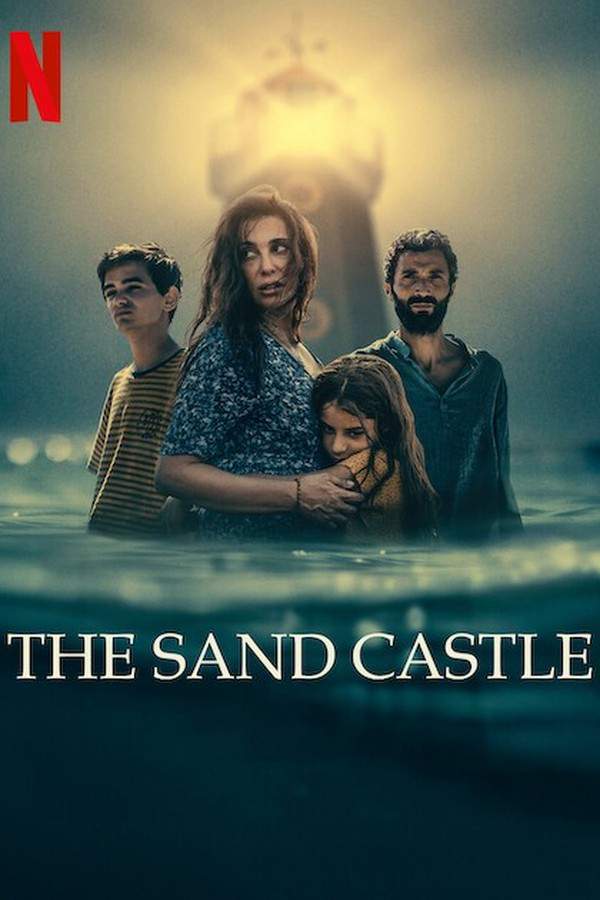
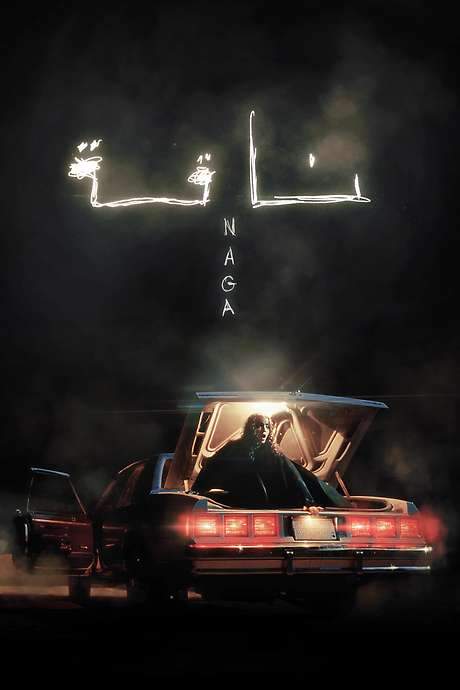
The entire narrative unfolds inside the imagination of Jana, a young girl whose family of Arab refugees is stranded on a lifeboat adrift in a vast, indifferent blue. In Jana's dream, they inhabit a Castle-like island with a lighthouse, a fragile sanctuary born of memory and fear, patiently awaiting rescue.
The family—the father Nabil, the mother Yasmine, and their son Adam—drifts in that imagined beacon as Jana clings to the fantasy to weather the unknown. The lifeboat doubles as a lighthouse and a shelter, while the shoreline remains a distant promise.
The outside world intrudes through a stark political backdrop: In February 2020, Turkish authorities urged immigrants and asylum seekers to travel to Greece without official permission or confirmation. Many did so under false pretenses, and Greece responded with strict border enforcement against illegal crossings by land and sea. A radio report at the film's start frames the peril: Nabil and his family were traveling from Turkey to Greece when their boat went under, drowning dozens of migrants.
The story hints at a larger history of displacement: the family likely hails from Lebanon or Syria, and Jana’s memory holds Yara, her sister who died in a school bombing, a trauma that reshapes the girl. The red shoe Yara left behind becomes a recurring motif—an emblem of innocence lost and guilt carried forward. The film also echoes Nabil’s own past actions, including a dive into the water to secure food, a moment that deepens his sense of responsibility and regret.
Jana’s island is tied to a real place: Rabbits Island, also known as Palm Island, a real location in Mina, Lebanon. The lighthouse protecting the family becomes the lifeboat in the middle of the sea. Jana discovers a yellow sheet printed with "Rabbit," a clue that their lifeboat might belong to a real company, and their pretend sandcastle begins to crumble as the waves close in.
Nabil first strives to steer the course, his leadership shadowed by memories of what went wrong. The burden then passes to Yasmine, who continues the effort until hunger and fatigue overwhelm her. The emotional weight is clear when the line is spoken: No one can escape the past. Broken spirits are worse than death. The sea claims what they fought to protect, and Yasmine dies from starvation.
With the mother gone, Adam grows more protective of Jana, hoping to reach help—perhaps by following a radio signal or a beacon on the horizon. Jana keeps the generator alive and leans on her imagination to endure, clinging to the faint light as a lifeline. Time presses on, and the lifeboat tilts toward the depths while Jana’s island sinks beneath the rising water, the lighthouse waning as hope flickers.
A rescue seems to appear on a ship, where adults in hazmat suits and masks signal intervention. The episode unfolds just before the COVID-19 lockdown era, suggesting the family may have been adrift for a week or more before authorities reached them. In the end, Adam is saved by the authorities, but Jana’s fate remains shrouded in ambiguity—did the dream endure, or did the sea finally claim her?
> No one can escape the past. Broken spirits are worse than death.