


Year: 2006
Runtime: 95 min
Language: Spanish
Director: Víctor Erice
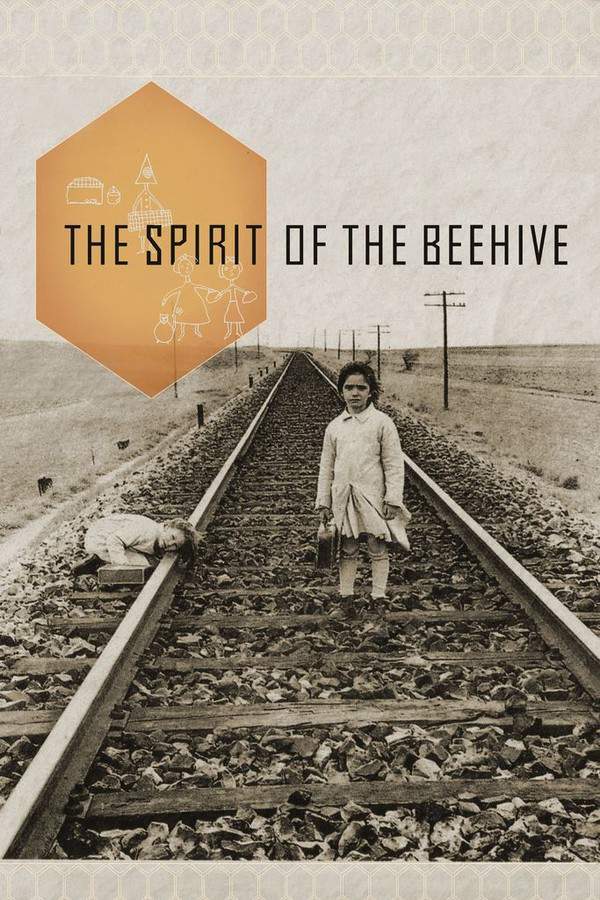
In a small village in post-Civil War Spain, two young sisters are captivated by a film they see at a traveling cinema. One of the girls, believing the film’s imagery to be real, sets out on a journey to find the monster she saw on screen. Her quest becomes a poignant exploration of childhood imagination, loss, and the lingering trauma of the Francoist era, as she seeks connection and understanding amidst a landscape still marked by conflict.
Warning: spoilers below!
Haven’t seen The Spirit of the Beehive yet? This summary contains major spoilers. Bookmark the page, watch the movie, and come back for the full breakdown. If you're ready, scroll on and relive the story!
Read the complete plot breakdown of The Spirit of the Beehive (2006), including all key story events, major twists, and the ending explained in detail. Discover what really happened—and what it all means.
Six-year-old Ana is a reserved child living in a secluded manor within a Spanish village located on the Castilian plateau, alongside her parents, Fernando Fernán Gómez and Teresa Gimpera, as well as her older sister, Isabel. The story unfolds in 1940, shortly after the civil war concludes with the Francoist forces overcoming the Republicans. Ana’s father, engrossed in beekeeping and documenting his observations, often neglects the emotional needs of his family, while her much younger mother becomes lost in fantasies about a distant love, frequently penning letters to him.
Ana’s main confidante is Isabel, who, while affectionate, tends to exploit her younger sister’s naïveté. The arrival of a mobile cinema showcasing Frankenstein captivates both sisters. The film leaves a lasting impact on Ana, who is particularly affected by the poignant scene where the monster inadvertently drowns a little girl. Confused, she inquires of Isabel, “Why did he kill the girl, and why did they kill him after that?” Isabel, attempting to reassure her, claims that the monster did not truly harm the girl and that he is not really dead; she explains that movies are merely illusions, suggesting the monster is akin to a spirit with whom Ana can communicate if she simply closes her eyes and calls out to him.
Ana’s intrigue deepens when Isabel leads her to an abandoned sheepfold, insisting it serves as the monster’s dwelling. Driven by curiosity, Ana revisits the site alone several times, ultimately stumbling upon a wounded Republican soldier seeking refuge. Instead of fleeing, she shows compassion, feeding him and even offering her father’s coat and watch to aid him. Unfortunately, one fateful night, the Francoist police discover the soldier and shoot him. They soon suspect Ana’s father of being complicit due to the items linked to the fugitive. The gravity of the situation dawns on her father when he observes Ana’s reaction upon his discovery of the pocket watch. When Ana next visits the sheepfold, she is met with a shocking scene—there’s no trace of the soldier, only bloodstains marking the ground. In a state of panic, her father confronts her, prompting Ana to flee in distress.
As night falls, Ana’s family and the villagers embark on a frantic search for her, mirroring a haunting moment from Frankenstein. Eventually, she finds herself kneeling beside a lake, where she envisions the monster emerging from the trees, also kneeling beside her. The following day, the community finds Ana unharmed, yet the physician reassures her mother that Ana must learn to cope with her undisclosed “trauma.” Instead of reconnecting with her family, Ana retreats into her own world, preferring to stand solitary by the window and silently summon the spirit, just as Isabel had encouraged her to do.
Last Updated: November 16, 2024 at 18:11
Discover curated groups of movies connected by mood, themes, and story style. Browse collections built around emotion, atmosphere, and narrative focus to easily find films that match what you feel like watching right now.
Stories where a child's fantasy world confronts a harsh adult reality.If you were captivated by the way The Spirit of the Beehive uses a child's perspective to explore post-war trauma, you'll find similar depth in these films. This collection features movies where young protagonists use their imagination to navigate and understand a broken world, blending poetic beauty with heavy emotional themes.
Narratives in this thread typically follow a child protagonist whose rich inner life or belief in a fantasy (a monster, a friend, a promised land) serves as a buffer against a difficult reality—be it war, family strife, or political oppression. The journey often involves a gradual, quiet shattering of this innocence, as the fantasy collides with an unforgiving truth, leading to a bittersweet or ambiguous loss of naivety.
These films are grouped together because they share a unique blend of a child's-eye view, a melancholic tone, and a focus on how imagination mediates trauma. They are united by their slow, atmospheric pacing, heavy emotional weight, and the powerful contrast between youthful wonder and adult sorrow.
Quiet, haunting stories set in the lingering aftermath of war.For viewers who appreciated the haunting, quiet atmosphere of post-Civil War Spain in The Spirit of the Beehive, this list features similar movies steeped in the melancholy of aftermath. These films explore the lingering effects of conflict on individuals and communities through slow, contemplative storytelling and a heavy emotional mood.
The narrative pattern often revolves around characters grappling with the invisible wounds of war—grief, isolation, and a fractured sense of normalcy. Plots are frequently subtle and character-driven, emphasizing mood over action. The conflict is internal and societal, exploring how people rebuild, remember, or retreat in the face of overwhelming loss, often leading to ambiguous or bittersweet conclusions.
Movies in this thread share a specific atmospheric quality: a slow, deliberate pace, a dominant melancholic or bleak tone, and a setting defined by the aftermath of violence. They are connected by their focus on the emotional and political residue of conflict rather than the conflict itself, creating a consistent vibe of quiet dread and sorrow.
Don't stop at just watching — explore The Spirit of the Beehive in full detail. From the complete plot summary and scene-by-scene timeline to character breakdowns, thematic analysis, and a deep dive into the ending — every page helps you truly understand what The Spirit of the Beehive is all about. Plus, discover what's next after the movie.
Track the full timeline of The Spirit of the Beehive with every major event arranged chronologically. Perfect for decoding non-linear storytelling, flashbacks, or parallel narratives with a clear scene-by-scene breakdown.
Discover the characters, locations, and core themes that shape The Spirit of the Beehive. Get insights into symbolic elements, setting significance, and deeper narrative meaning — ideal for thematic analysis and movie breakdowns.
Get a quick, spoiler-free overview of The Spirit of the Beehive that covers the main plot points and key details without revealing any major twists or spoilers. Perfect for those who want to know what to expect before diving in.
Visit What's After the Movie to explore more about The Spirit of the Beehive: box office results, cast and crew info, production details, post-credit scenes, and external links — all in one place for movie fans and researchers.